
Batteries & Energy Storage
ScienceGears supplies a complete toolkit for batteries and energy storage research—spanning precision charge–discharge cyclers, EIS-enabled cyclers, environmental and safety chambers, and advanced test cells for coin, pouch, cylindrical, solid-state, and metal–air systems. We also support battery materials and pilot-scale manufacturing equipment to help labs move from formulation to validated performance, with local guidance across Australia, New Zealand and also globally.

Battery Materials
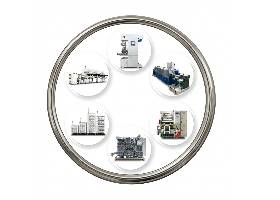
Overview
Battery and energy-storage R&D relies on repeatable electrochemical protocols (formation, cycling, rate capability, pulse tests) and controlled environments (temperature, safety containment, inert handling). The ScienceGears Batteries & Energy Storage group brings these elements together—from lab cell cyclers through to high-current and energy-feedback platforms, plus operando/ in-situ cells for structural and spectroscopic observation. For materials-to-device workflows, we also support battery materials (cathodes/anodes/electrolytes/collectors/binders) and pilot manufacturing equipment, aligned with common research and scale-up needs.
Key Features
- Charge–discharge cyclers for R&D cells (coin/pouch/cylindrical) with multi-range current measurement for accurate low-current studies.
- High-current, module/pack, and simulation systems, suitable for larger-format testing and dynamic profiles.
- EIS-enabled cycling for degradation, interfacial resistance, and kinetics tracking during cycling (e.g., Squidstat Cyclers).
- Environmental & safety chambers, including temperature cycling and explosion-proof containment for safer failure-mode testing.
- Specialised battery test cells & fixtures: half-cell, solid-state, metal–air, and operando designs for Raman/XRD/imaging workflows.
- Materials & consumables coverage (e.g., active materials, current collectors, binders, separators), supporting formulation-to-cell validation pipelines.
- Data workflow support: protocol design, method templates, and integration guidance for reproducible reporting.
Applications
- Lithium-ion, sodium-ion, and emerging chemistries: formation, cycling stability, and rate capability
- Solid-state electrolyte development and interface optimisation
- Metal–air batteries (e.g., zinc–air) and cathode air-electrode studies
- Operando studies using Raman/XRD/imaging to link electrochemistry with structural change
- Flow battery testing and charge–discharge validation at the single-cell or system level
Integration & Compatibility
Our battery platforms integrate cleanly with broader ScienceGears workflows, including potentiostats and EIS tools, electrochemical cells, and research instrumentation used alongside operando studies. EIS cyclers enable impedance trending without breaking test continuity, improving insight into ageing mechanisms over long campaigns.
Why Choose ScienceGears
ScienceGears supports researchers and engineers across Australia & New Zealand with practical system selection, commissioning guidance, and application-level troubleshooting—helping you match cycler accuracy/current range, chamber conditions, and cell geometry to your specific chemistry and publication goals.
FAQ Section
Q1. What should I prioritise when choosing a battery cycler for R&D cells (coin/pouch/cylindrical)?
Choose based on your required voltage range, current range, and—most importantly—measurement accuracy at the lowest current you will use (e.g., formation, self-discharge, impedance-related trends). Also consider channel count, sampling rate, and whether you need advanced functions like pulse profiles, DCIR, or EIS-enabled workflows for ageing analysis.
Q2. When do I need an EIS-enabled cycler instead of a standard charge–discharge system?
If you want to track resistance growth, SEI/CEI evolution, charge-transfer limitations, or electrolyte degradation during cycling, an EIS-enabled cycler is valuable. It lets you connect impedance changes to SoC and cycle number without disassembling cells. This is especially helpful for solid-state systems and high-rate performance studies.
Q3. Do I need a temperature chamber for battery testing, or is room temperature enough?
Room temperature can work for early comparisons, but chamber control is important for reproducibility and for studying temperature-dependent behaviour (power capability, diffusion limits, lithium plating risk, and accelerated ageing). Temperature cycling also improves the relevance of results for real deployment conditions (EV, grid storage, and harsh environments).
Q4. What is an operando/in-situ battery cell, and why would I use one?
Operando cells are designed to let you measure electrochemistry while simultaneously observing changes via tools like Raman, XRD, or imaging. They help answer “why” performance changes occur—such as phase transitions, cathode surface reconstruction, or electrolyte decomposition—rather than only reporting capacity fade. These setups are widely used in publishable mechanism studies.
Q5. Can ScienceGears support the full workflow from battery materials to pilot-scale cell building?
Yes. Many labs need a connected pathway: materials (active powders, binders, collectors), electrode preparation and handling, then validated cycling and safety testing. We can help you organise a scalable equipment stack—from lab QA tools through to pilot processing steps—so your data remains consistent as you move from small cells to larger formats.
Closing Summary
From precision cycling to controlled temperature and safety testing, the Batteries & Energy Storage group supports high-quality, publishable battery research and scale-up validation. ScienceGears helps labs in Australia and New Zealand select the right cycler capability, chamber configuration, and operando cell architecture—then integrate the setup with EIS and broader electrochemical tooling for deeper mechanistic insight.