
Anode materials
Anode materials control fast-charge behaviour, first-cycle efficiency and low-temperature performance by governing lithium insertion kinetics and SEI formation. This subcategory includes graphite and carbon platforms, silicon-based options and lithium titanium oxide (LTO), plus materials relevant to sodium-ion anodes, helping laboratories tune power, lifetime and safety for prototyping and validation.
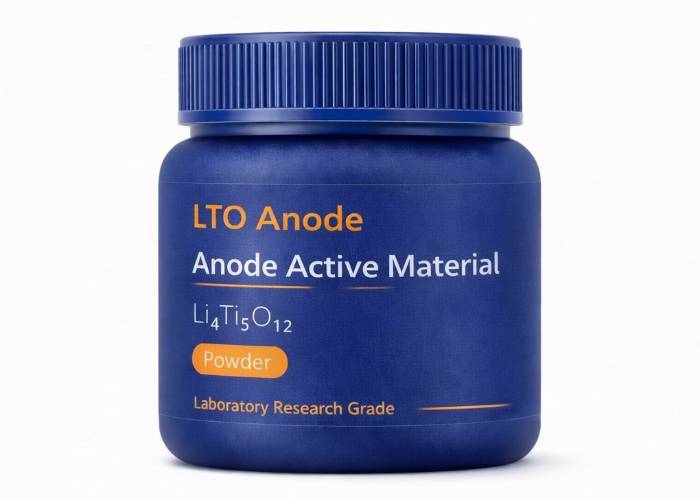
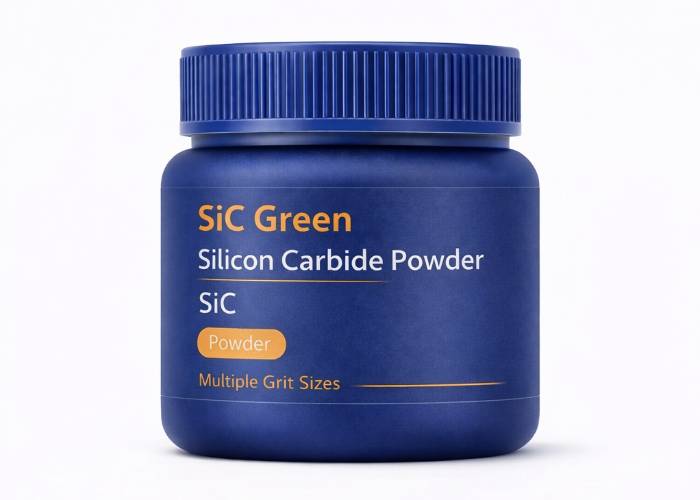
SiC Green Silicon Carbide (SiC) Powder – Multiple Grit Sizes
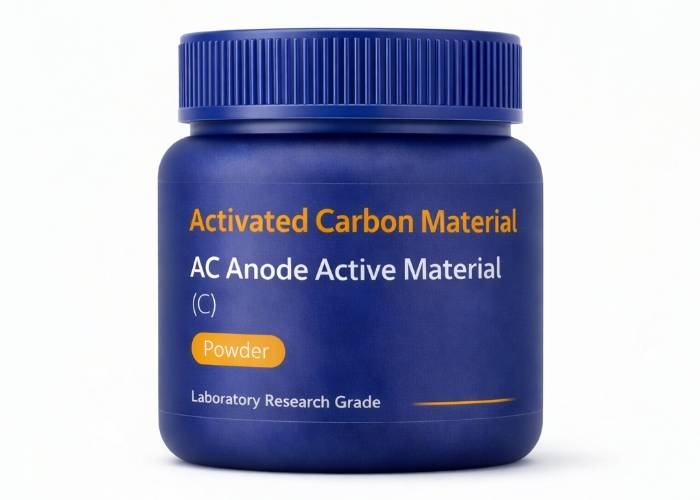


MCMB-S Anode Active Material (Mesoporous Carbon) Powder

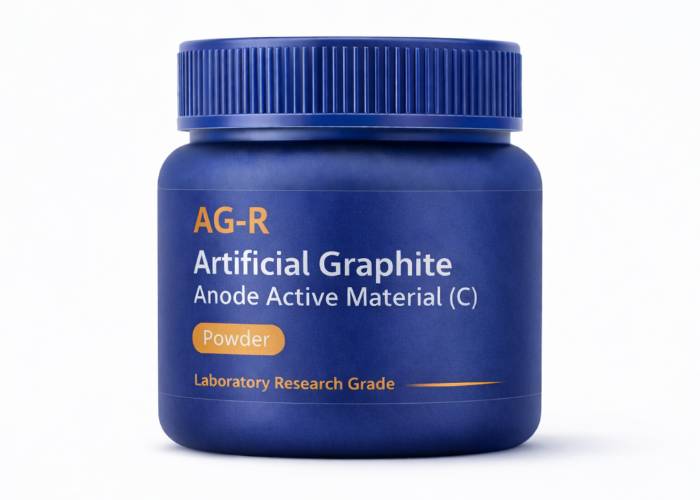
Artificial Graphite Anode Active Material (C) Powder

Overview
Anode active materials (AAM) are the powders in the negative electrode that store Li⁺ (or Na⁺) during charge. Most commercial lithium-ion cells use graphite, where lithium intercalates between graphene layers. Alternatives like silicon offer higher theoretical capacity but introduce large volume change and demanding SEI management, while LTO offers exceptional power and safety at lower energy density due to its higher operating potential. Carbon morphology, surface chemistry and particle size strongly influence initial irreversible loss, impedance and long-term cyclability.
What You Can Measure / Control (Key Capabilities)
- First-cycle coulombic efficiency and irreversible capacity
- SEI stability and impedance evolution (EIS)
- Fast-charge tolerance (Li plating resistance)
- Diffusion and rate limitation behaviour
- Swelling/volume change and electrode integrity
- Low-temperature performance and polarisation
- Compatibility with binder system (PVDF/CMC/SBR/PTFE)
- Full-cell balancing with cathode loading (N/P ratio)
Typical Applications
- Graphite benchmarking for lithium-ion coin and pouch cells
- Silicon-enabled high-energy anodes (blends, coatings, additives)
- High-power LTO systems for rapid charge/discharge studies
- Sodium-ion anode evaluation using hard carbon
- Research on SEI additives and formation protocols
- Academic modelling of diffusion and lithiation heterogeneity
Integration & Compatibility
Anode R&D typically requires reliable half-cell screening, then translation to full-cells. Pair anode materials with /battery-test-systems for formation and cycling statistics, and /potentiostats-galvanostats for EIS/CV diagnostics. Cell fixtures and separator choice strongly affect measured kinetics and safety margins, especially in silicon-rich systems.
Why Choose ScienceGears (AU & NZ)
ScienceGears supports AU/NZ battery labs with practical selection guidance, including graphite grade vs silicon strategy, LTO suitability, and sodium-ion hard-carbon choices. We help align materials with binders, electrolyte strategy and test protocols so you can reduce rework and get reproducible performance trends.
PRODUCT FAMILIES & MODELS
Graphite anodes
Baseline platform for lithium-ion; choice affects rate performance and SEI behaviour.
- Graphite-T Natural Graphite Powder — common benchmarking option
- Graphite-A Artificial Graphite — engineered structure for targeted rate/life trade-offs
Carbon microbeads and advanced carbons
For dense electrodes and controlled morphology studies.
-
CMB-S Mesocarbon MicroBeads — high tap density; uniform particle morphology
Silicon-based anode materials
For high energy; requires volume-change and SEI management.
- Si-400A Carbon Coated Silicon — silicon platform with improved conductivity/SEI control
- SiC-Green (different particle sizes) Green Silicon Carbide — additive/filler studies, mechanical stability investigations
LTO anodes (lithium titanate)
For power and safety-focused systems.
-
LTO Lithium Titanium Oxide (Li₄Ti₅O₁₂) — rapid charge/discharge; excellent cycle life
Hard carbon (sodium-ion anodes)
For sodium-ion prototypes; morphology impacts efficiency and capacity.
- N-HC01 Irregular Hard Carbon — baseline hard-carbon morphology
- N-HC02 High sphericity Hard Carbon — improved packing and processing consistency
HOW TO CHOOSE (MICRO-SELECTION GUIDE)
If you need a conventional lithium-ion baseline, start with graphite (natural vs artificial based on rate and density targets). For fast charge and long life, prioritise graphite optimisation (particle size distribution, binder/carbon network, formation protocol) before moving to silicon. If you require very high power and safety, LTO is often the most robust option, with the trade-off of lower cell voltage and energy density. For sodium-ion work, hard-carbon morphology and surface chemistry are key—focus on first-cycle efficiency, pore structure, and electrolyte compatibility.
FAQs
Q1: What does the anode do in a lithium-ion battery?
The anode stores lithium during charging and releases it during discharge. In most cells, lithium intercalates into graphite layers; the anode’s surface forms an SEI (solid electrolyte interphase) that must be stable for long cycle life. Anode choice influences first-cycle efficiency, fast-charge behaviour, impedance growth and low-temperature performance.
Q2: How do I choose between natural graphite and artificial graphite?
Natural graphite is commonly used for strong baseline performance and practical processing. Artificial graphite can offer more controlled structure and tailored rate/life behaviour depending on your design goals. The best choice depends on your electrode loading, porosity targets, and how your electrolyte/additive package stabilises the SEI under your cycling conditions.
Q3: Why is silicon attractive, and what are its downsides?
Silicon offers much higher theoretical capacity than graphite, enabling higher energy density. The challenge is large volume expansion during lithiation, which can crack particles, destabilise the SEI, and increase impedance. Successful silicon anodes typically use coatings, conductive networks, and carefully chosen binders/electrolyte additives to maintain electrode integrity.
Q4: What is LTO and when should I use it?
LTO (Li₄Ti₅O₁₂) is a “zero-strain” anode material known for outstanding cycle life, rapid charge/discharge capability, and strong safety margins. It operates at a higher potential than graphite, reducing lithium plating risk, but lowers overall cell energy density. It’s often selected for high-power applications and rigorous durability studies.
Q5: How should I test anode materials in the lab?
Start with half-cells to quantify first-cycle loss, rate performance and impedance. Use controlled formation and consistent electrode processing. For mechanistic insight, /potentiostats-galvanostats enable EIS and CV; for long-term cycling statistics and formation, /battery-test-systems are typically preferred. Full-cell tests are essential to confirm balancing and real-world behaviour.
Q6: Do you offer local support in Australia & New Zealand?
Yes. ScienceGears supports anode selection, compatibility checks (binder/electrolyte/separator), and test planning across AU & NZ, helping research groups build repeatable workflows and interpret performance differences with confidence.
CLOSING SUMMARY
Anode choice determines how fast and how safely a battery can charge, and how stable it remains over long cycling. ScienceGears supports AU/NZ researchers with graphite, silicon, LTO and hard-carbon options plus practical guidance to translate half-cell screening into reliable full-cell outcomes.