
Electrolyser Test Stations
Integrated electrolyser test stations for precise control of current, voltage, temperature and gas flow in water electrolysis research. Ideal for evaluating cell performance, durability and efficiency from single cells to stack-level tests, with flexible configurations to match academic and industrial R&D needs. Optimised for hydrogen production laboratories seeking robust, reproducible data.

PEMWE - Proton Exchange Membrane Water Electrolyser

AEMWE – Anion Exchange Membrane Water Electrolyser
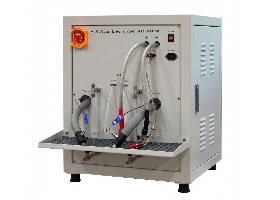
AlkalineWE – Alkaline Water Electrolyser

PEAL – PEM & Alkaline Water Electrolyser
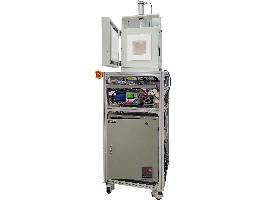
SOEC – Solid Oxide Water Electrolyzer

Special Water Electrolyzer Test Station
Overview
Electrolyser test stations provide a controlled environment for studying water electrolysis and hydrogen production. They combine precision power electronics, flow and pressure control, gas handling and data acquisition so researchers can safely operate single cells or small stacks over a wide current and voltage range. Stable control of temperature, humidification and gas composition is essential for obtaining reproducible performance and durability data.
ScienceGears supplies advanced electrolyser test stations from SciTech Korea, tailored for green hydrogen R&D in Australia and New Zealand.
Types of available Electrolyzer Test Stations
Key Features
- Wide current and voltage ranges suitable for PEM, alkaline and AEM electrolysers
- Independent control of anode and cathode gas flow, pressure and humidification
- Integrated safety systems with interlocks, leak checks and emergency shut-down
- High-resolution data logging of cell voltage, current, efficiency and impedance
- Modular design that can be adapted from single-cell to stack testing
- Compatible with external reference electrodes, sensors and analytical instruments
- Robust construction for long-duration testing and accelerated stress protocols
Applications
Electrolyser test stations from ScienceGears support a broad range of hydrogen research:
- Electrocatalyst screening for oxygen evolution (OER) and hydrogen evolution (HER)
- MEA and diaphragm optimisation, including new membranes and electrode structures
- Stack development, characterisation and durability testing under realistic load profiles
- System efficiency studies, including power-to-gas and renewable integration scenarios
- Education and training laboratories focused on green hydrogen technologies
Why Choose ScienceGears
ScienceGears partners with SciTech Korea to bring proven electrolyser test stations to laboratories across Australia and New Zealand. Researchers benefit from local consultation on system configuration, installation support, and ongoing technical troubleshooting. With strong links to universities and industry, ScienceGears helps ensure that each test station is configured for the specific hydrogen research goals and safety requirements of the laboratory.
FAQ Section
Q1. What is an electrolyser test station and why is it important?
An electrolyser test station is an integrated system that provides controlled power, gas, temperature and safety infrastructure for operating electrolysis cells. Instead of building a custom setup from separate components, the test station delivers stable current and voltage control, accurate measurement and automated protection. This enables reproducible performance, efficiency and durability studies for hydrogen production research in universities and industrial laboratories.
Q2. Which types of electrolysers can these test stations support?
Most modern test stations can support several electrolyser types, including proton-exchange membrane (PEM), alkaline and anion-exchange membrane (AEM) designs. By adjusting the current range, flow control and materials in the fluid path, the same platform can be adapted to different chemistries. ScienceGears can advise on configuration options to match your specific cell design, operating pressure and safety requirements.
Q3. What operating parameters can be controlled and monitored?
Key operating parameters include cell current and voltage, gas flow rate, pressure, temperature and humidification at both anode and cathode. Many systems also record stack voltage distribution, efficiency and sometimes electrochemical impedance for diagnostic purposes. Continuous data logging allows researchers to track degradation over hundreds or thousands of hours and correlate performance changes with operating conditions.
Q4. How are hydrogen safety and gas handling addressed?
Hydrogen and oxygen handling requires careful safety design. Electrolyser test stations incorporate leak checks, interlocks, emergency stop functions and clearly defined operating limits. Gas lines and fittings are chosen for compatibility with hydrogen service, and exhaust handling is designed to prevent accumulation in the laboratory. ScienceGears works with local safety officers to ensure the installation meets institutional guidelines.
Q5. How does ScienceGears support electrolyser test station users in AU & NZ?
ScienceGears provides end-to-end support for electrolyser test stations in Australia and New Zealand. This includes pre-sales discussions to define specifications, liaison with the manufacturer, installation planning and on-site commissioning. After delivery we offer training for students and staff, troubleshooting assistance and coordination of any warranty or upgrade requirements throughout the life of the system.
Summary
Electrolyser test stations provide the stable, controllable platform needed to translate electrochemical concepts into practical hydrogen technologies. By partnering with ScienceGears in Australia and New Zealand, laboratories gain access to proven systems, local expertise and long-term support, ensuring each installation delivers reliable data for green hydrogen innovation, training and education.