
Cathode materials
Cathode materials set the cell voltage, capacity and rate capability by controlling lithium (or sodium) storage and transport in the positive electrode. This subcategory covers common layered oxides, phosphates, spinels and emerging high-capacity chemistries used in coin cells, pouch cells and lab-scale prototypes for performance benchmarking and formulation optimisation.


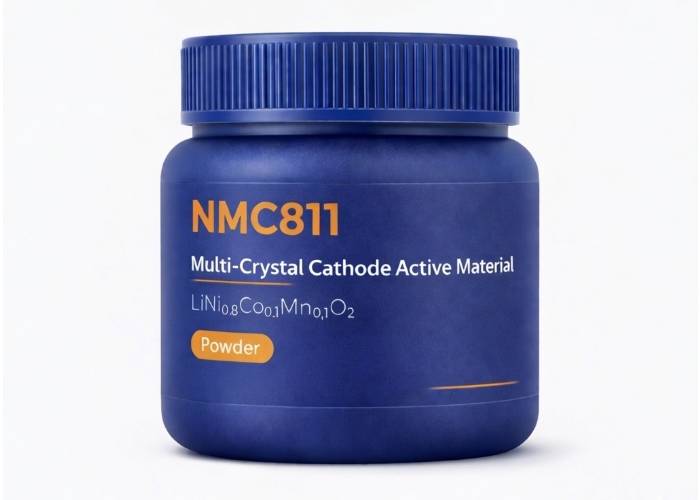
NMC811 Multi-Crystal Cathode Active Material


NCA-88 Lithium Nickel Cobalt Aluminum Oxide Powder
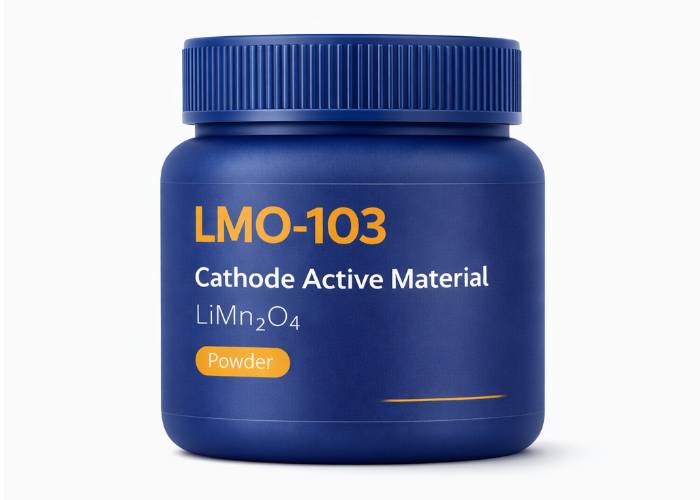
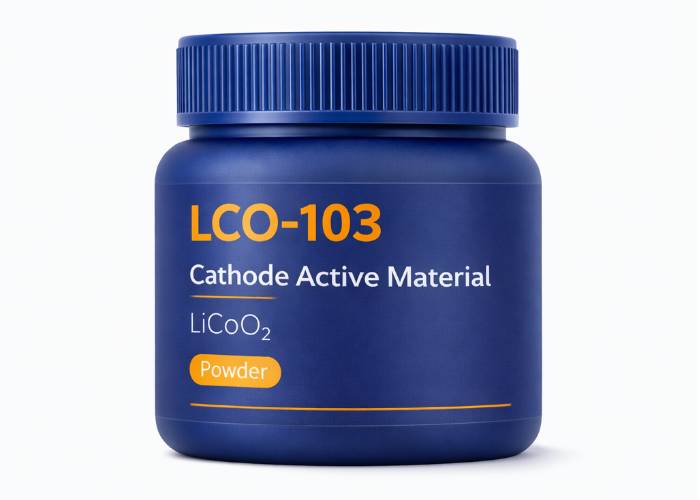
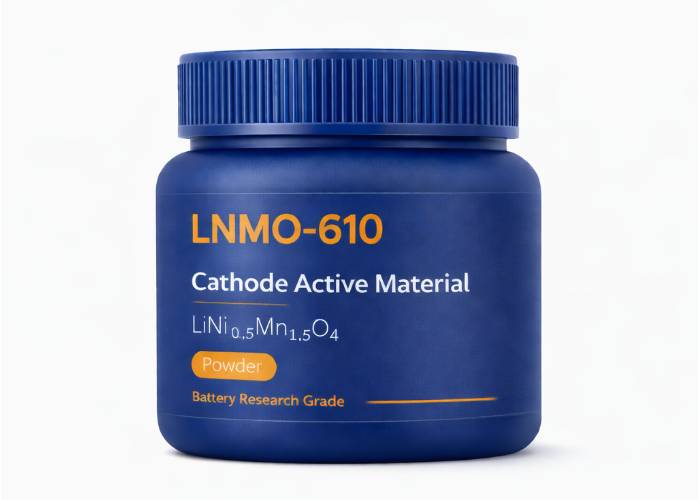
LNMO-610 Cathode Active Material (LiNi₀.₅Mn₁.₅O₄) Powder
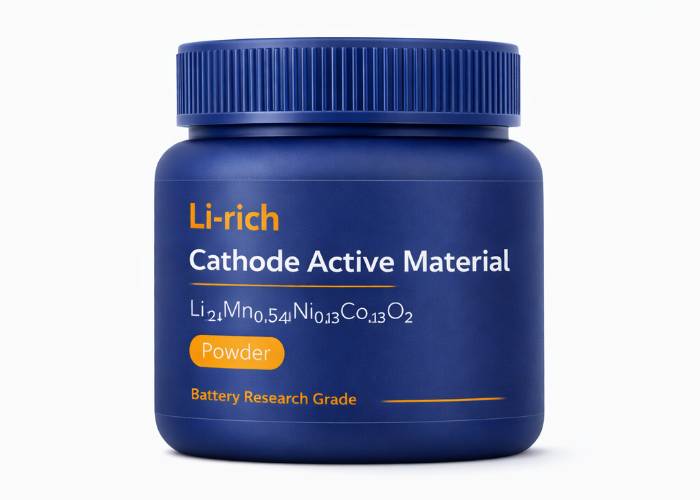
Li-rich Cathode Active Material Powder



Overview
Cathode active materials (CAM) are the electrochemically active powders in the positive electrode that host Li⁺ (or Na⁺) during charge/discharge. In most lithium-ion batteries, the cathode reaction involves reversible (de)intercalation coupled to transition-metal redox (e.g., Ni/Co/Mn, Fe, Mn). Cathode selection strongly affects energy density, safety, power performance, thermal stability, and cycle life, and also dictates electrolyte and binder choices.
What You Can Measure / Control (Key Capabilities)
- Specific capacity and energy density (gravimetric/volumetric)
- Voltage profile and polarisation vs C-rate
- Impedance growth and interfacial stability (EIS)
- Rate capability (power) and diffusion limitations
- Thermal stability and safety margin (chemistry dependent)
- Electrode formulation effects (binder, carbon, porosity, loading)
- Moisture sensitivity/handling requirements (especially Ni-rich materials)
- Compatibility with electrolyte additives and separators
Typical Applications
- Benchmarking NCM/NCA vs LFP/LMFP for lithium-ion prototypes
- High-power screening for fast-charge cells and hybrid systems
- Sodium-ion cathode evaluation (PB/PBA, layered oxides, phosphates)
- Development of sulphur-based cathodes and conductive composites
- Academic studies on degradation, cracking, and surface coatings
- Pilot-scale validation of new electrode formulations
Integration & Compatibility
Cathode development is tightly coupled to half-cell and full-cell testing, electrode processing and electrochemical characterisation. Cathode powders are typically evaluated using /battery-test-systems (cycling, formation and ageing) and often paired with /potentiostats-galvanostats for mechanistic studies (CV, EIS, GITT). Cell hardware and formats (coin/pouch/prismatic fixtures) must match the chosen cathode loading and electrolyte system.
Why Choose ScienceGears (AU & NZ)
ScienceGears supports researchers across Australia and New Zealand with chemistry selection guidance, formulation troubleshooting, and test planning (half-cell vs full-cell, voltage windows, formation protocols). We can help align cathode choice with your available electrolyte, separator, cell format and instrumentation—reducing iteration time and improving data repeatability.
PRODUCT FAMILIES & MODELS
Layered oxide cathodes (NCM / NCA)
For high energy density lithium-ion cells; chemistry choice balances capacity, stability and handling sensitivity.
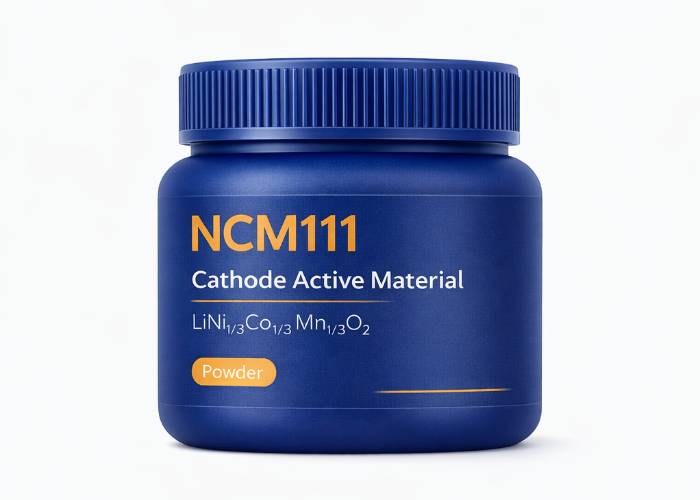
- NCM-111 — balanced baseline for benchmarking
- NCM-532 — higher capacity, moderate stability
- NCM-622 — higher Ni, higher energy, more demanding interfaces
- NMC-811 Multi Crystal — high energy; particle cracking sensitivity
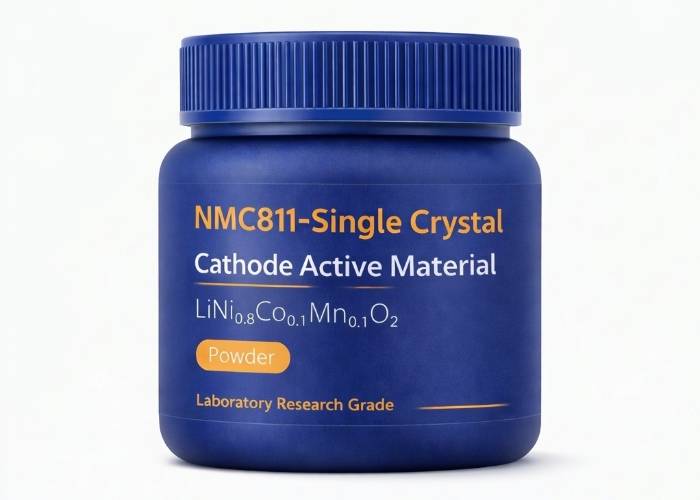
- NMC-811 Single Crystal — improved structural robustness at high Ni
- NCA-88 — very high energy; careful control of electrolyte/additives needed
Phosphate cathodes (LFP / LMFP)
For safety-focused and long-life cells; strong thermal stability and flat voltage.
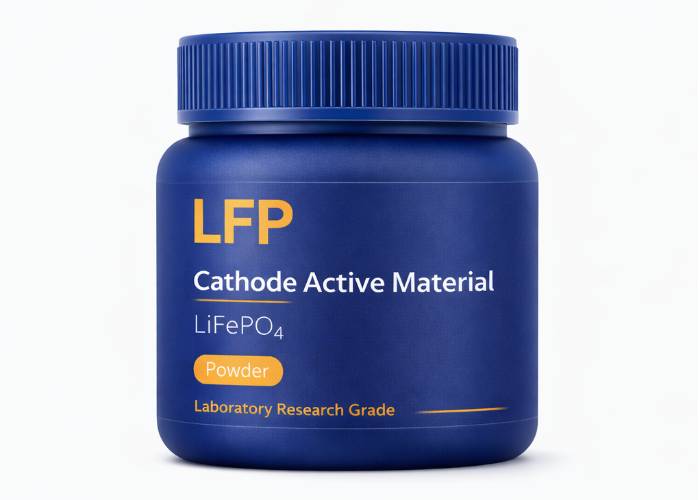
- LFP (Lithium iron phosphate, LiFePO₄) — excellent cycle life and safety
- LMFP (Lithium manganese iron phosphate) — higher voltage than LFP; improved energy
Spinel and cobalt oxide cathodes
For power-oriented or reference studies.
- LMO-103 (LiMn₂O₄) — high power; Mn dissolution considerations
- LCO-103 (LiCoO₂) — classic reference chemistry; high voltage studies
- LNM-610 — Ni–Mn oxide option for targeted performance windows
Emerging / specialty cathode materials
For research exploration and interface engineering.
- Li-rich Lithium-rich cathode material — high capacity; voltage fade studies
- LC75 Sulfur-carbon composite material — sulphur cathode composite for Li–S R&D
- LNO Lithium replenishment material — capacity compensation strategies
- LFC (LiFO) Lithium replenishment material for LFP — replenishment concept for LFP platforms
HOW TO CHOOSE (MICRO-SELECTION GUIDE)
Start with your target voltage window and safety requirements: LFP/LMFP for stability and long life; NCM/NCA for higher energy density. Then match Ni content (e.g., 622 vs 811) to your electrolyte/additive capability and moisture control. For high power, consider LMO-type spinels and optimise particle size/carbon network. If you’re studying degradation, choose chemistries that amplify the mechanism (e.g., Ni-rich for interface growth, Li-rich for voltage fade, sulphur composites for shuttle/porosity effects). Confirm compatibility with your separator and cell format.
FAQs
Q1: What is a cathode material in a rechargeable battery?
A cathode material is the active powder in the positive electrode that reversibly stores lithium (or sodium) during cycling. Its crystal structure and transition-metal redox chemistry set the cell voltage, usable capacity, and much of the safety and ageing behaviour. Cathode choice also influences electrolyte formulation, carbon additive needs, and the formation protocol required to stabilise interfaces.
Q2: How do I choose between NCM, NCA and LFP/LMFP?
Use LFP/LMFP when you prioritise thermal stability, long cycle life and robust performance across conditions. Choose NCM or NCA when you need higher energy density and are equipped to manage interface stability (electrolyte, additives, moisture control and formation). For fast-charge or high-power, the best option often depends on particle morphology and electrode design, not chemistry alone.
Q3: Why do Ni-rich cathodes need more careful testing?
Ni-rich materials can be more reactive at high state-of-charge and may show stronger impedance growth if the electrolyte/additive package isn’t well matched. They can also be more sensitive to moisture and micro-cracking under cycling. Controlled formation, strict voltage windows and consistent electrode processing improve repeatability and help isolate true material behaviour.
Q4: Can I test cathode powders with a potentiostat, or do I need a battery cycler?
For mechanistic studies (CV, EIS, diffusion experiments), a potentiostat is extremely useful—especially in half-cells. For long-duration cycling, formation, and high-throughput ageing, a dedicated cycler in /battery-test-systems is typically more practical. Many labs use both: potentiostat for insight, cycler for reliability and statistics.
Q5: What are the key safety considerations with cathode materials?
Safety risks are mainly linked to voltage, thermal stability and reactivity. Ni-rich layered oxides at high voltage can accelerate gas generation and heat release if abused. LFP is generally more thermally stable, but the overall cell safety still depends on electrolyte, separator shutdown behaviour and mechanical design. Always control moisture exposure and follow SDS guidance.
Q6: Do you support cathode selection and testing in Australia & New Zealand?
Yes. ScienceGears can help you select an appropriate cathode chemistry for your target performance and available testing infrastructure, and advise on practical set-ups and protocols. We also assist with matching cathodes to compatible electrolytes, separators and test methods across AU & NZ.
CLOSING SUMMARY
Cathode materials drive battery voltage, energy density and long-term stability. ScienceGears helps AU/NZ researchers compare cathode chemistries, optimise electrode formulations and build repeatable test workflows across half-cells and full cells—so your material screening translates into defensible performance data.