
AlkalineWE – Alkaline Water Electrolyser
Alkaline water electrolysers are widely used for durable, cost-effective hydrogen generation using aqueous alkaline electrolyte (commonly KOH). ScienceGears’ AlkalineWE test station range supports single-cell research through to high-power stack validation, with automated control of electrolyte circulation, temperature, gas handling, back-pressure and safety interlocks. Use these systems to characterise performance, stability, crossover and operating envelopes under realistic lab and pilot conditions.

University Alakaline Water Electrolyser Test Station – SE300U-AL (Up to 300 W)

Single Cell Alkaline Water Electrolyser Test Station (SE300-AL / SE500-AL)

Stack Test Station (1–3 kW) – Alkaline Water Electrolyser (SE1K-AL / SE3K-AL)
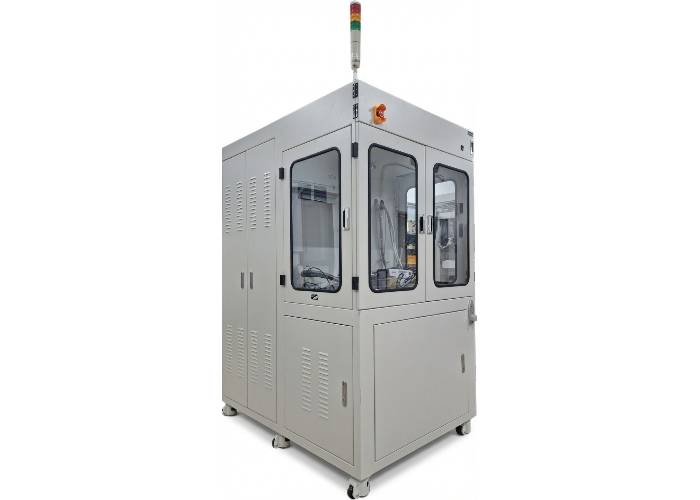
Alkaline Water Electrolyser Stack Test Station (5–10 kW) (SE5K-AL, SE10K-AL)

Stack Test Station (30–50 kW) – Alkaline Water Electrolyser (SE30K-AL / SE50K-AL)

Stack Test Station (100 kW) – Alkaline Water Electrolyser (SE100K-AL)

SE200K-AL Stack Test Station (200 kW) — Alkaline Water Electrolyser
Overview
Alkaline water electrolysis produces hydrogen by splitting water in an alkaline electrolyte environment (typically potassium hydroxide, KOH). In an alkaline electrolyser, hydroxide ions (OH⁻) carry charge through a separator/diaphragm while hydrogen evolves at the cathode and oxygen evolves at the anode. Because alkaline electrolysers often operate with circulating electrolyte and strong gas–liquid management requirements, a dedicated test station is essential for controlled, repeatable R&D and validation.
ScienceGears’ AlkalineWE test stations are designed for research labs, engineering teams and pilot-scale programs that need stable operation across a wide power range. Systems include automation control and monitoring software to support consistent testing, data capture and safe shutdown logic during long-duration runs.
Key Capabilities
- Programmable DC power delivery for electrolysis testing (single cell to stack)
- Electrolyte circulation management (e.g., KOH loop) with temperature control up to ~95 °C
- Gas–liquid separation, condensation trapping, and gas cooling for clean measurement
- Mass-flow measurement with wide turndown and automated N₂ purge capability
- Back-pressure control (typically up to 10 bar; higher pressure options may be available)
- Crossover monitoring using gas concentration sensing (H₂-in-O₂ / O₂-in-H₂)
- Cell voltage monitoring on nominated channels for diagnostic insight
- Automated alarms, interlocks, and repeatable test sequencing via control software
Typical Applications
- Material and component screening for alkaline electrolysers (electrodes, separators, hardware)
- Performance mapping (polarisation curves), efficiency studies and operating window definition
- Durability and stability testing under controlled temperature and pressure
- Crossover and gas purity monitoring under dynamic load conditions
- Balance-of-plant validation: electrolyte circulation, gas handling, purge sequences and safety logic
- Scale-up validation from single-cell R&D to multi-kW and higher-power stack programs
Integration & Compatibility
AlkalineWE stations often sit alongside broader electrochemical and gas-handling workflows. Many teams pair test station data with electrochemical diagnostics and gas analysis to strengthen interpretation and troubleshooting.
Relevant categories (link only where useful):
Why Choose ScienceGears
ScienceGears supports alkaline electrolyser testing programs across Australia and New Zealand with practical system guidance—configuration support, commissioning readiness, and troubleshooting workflows aligned to research and engineering needs. We help teams translate test objectives (power, pressure, electrolyte management, measurement requirements) into a system configuration that produces reliable, defensible results, and supports sustained operation during long-duration validation.
PRODUCT FAMILIES & MODELS
University Test Station
A compact, university-friendly alkaline electrolyser test station format suited to early-stage research, demonstrations, and controlled single-cell experiments where footprint and simplicity matter. Ideal for teaching labs and R&D groups needing automated gas measurement, purge logic, and baseline safety monitoring without the space requirements of full-height cabinets.
Models:
-
SE300U-AL — Best for compact alkaline single-cell testing with a small lab footprint.
Single Cell Test Station
Designed for single-cell alkaline electrolyser testing where repeatability, stable operation and clean gas handling are priorities. This family supports controlled electrolyte management, gas trapping/cooling and optional diagnostic add-ons depending on configuration. It is a practical step-up for R&D teams that need more operating headroom than a bench-top university unit.
Models:
-
SE300-AL — Best for baseline single-cell studies and method development.
-
SE500-AL — Best when you need additional power headroom for more demanding single-cell conditions.
Stack Test Station (1–3 kW)
Entry stack-testing systems for small stacks and scale-up from single-cell work. These stations suit engineering teams validating early stack designs, balance-of-plant behaviours and stable operation across longer test runs, while keeping infrastructure requirements manageable.
Models:
-
SE1K-AL — Best for first-stage stack validation and scaled operating procedures.
-
SE3K-AL — Best for higher-throughput stack testing and broader operating envelopes.
Stack Test Station (5–10 kW)
Mid-range stack stations for expanded R&D and pre-pilot validation where higher hydrogen production rates and longer duty cycles are required. Suitable for iterative design cycles, verification testing and repeatability across operating conditions.
Models:
-
SE5K-AL — Best for sustained mid-power stack testing with robust automation.
-
SE10K-AL — Best for higher output validation and more demanding test programs.
Stack Test Station (30–50 kW)
High-power stack testing platforms intended for pilot-scale validation and engineering verification, including broader safety and operating envelope evaluation. Suitable when teams need meaningful production rates, advanced control logic, and stable operation during long endurance tests.
Models:
-
SE30K-AL — Best for pilot-scale R&D and controlled high-power operation.
-
SE50K-AL — Best for expanded pilot programs and higher-throughput validation.
Stack Test Station (100 kW)
A step into large-format alkaline stack validation, suited to advanced development and pilot demonstration programs. This class is typically selected when control stability, back-pressure management and repeatable automation become critical for operational safety and data quality at higher production rates.
Models:
-
SE100K-AL — Best for large-stack validation and high-output pilot workflows.
Stack Test Station (200 kW)
A high-power platform for large alkaline stack programs where end-to-end system behaviour, reliability and extended testing protocols must be validated under controlled conditions. Selected for advanced pilot and demonstration settings needing higher power capacity and robust measurement/control integration.
Models:
-
SE200K-AL — Best for high-power pilot-scale stack validation and demonstration testing.
HOW TO CHOOSE (MICRO-SELECTION GUIDE)
Start by selecting the power range that matches your intended operating current and hydrogen output (university/bench single-cell vs multi-kW stack vs pilot-scale). Next decide single cell vs stack, including active area and number of cells, as this drives gas flow rates and thermal/electrolyte management needs. Confirm requirements for electrolyte circulation (KOH loop), including temperature control and level/alarm logic. If you need pressurised testing, specify back-pressure targets and safety interlocks. Finally, define measurement needs: mass-flow ranges, crossover sensing (H₂-in-O₂ / O₂-in-H₂), voltage monitoring channels, and any optional diagnostic features for single-cell characterisation.
FAQ SECTION
1) What is an alkaline water electrolyser test station?
An alkaline water electrolyser test station is a controlled platform that powers an electrolyser cell or stack while managing electrolyte circulation, temperature, gas separation, flow measurement and safety logic. It enables repeatable testing of performance, stability and operating limits under defined conditions. Compared with a basic power supply setup, a test station adds automation, sensors, alarms/interlocks and structured data capture for research-grade validation.
2) How does alkaline electrolysis work in simple scientific terms?
Alkaline electrolysis splits water into hydrogen and oxygen in an alkaline electrolyte (commonly KOH). When current is applied, hydrogen forms at the cathode and oxygen forms at the anode, while hydroxide ions (OH⁻) transport charge through a separator/diaphragm. Because gas evolution and electrolyte circulation strongly affect results, controlled flow, temperature, gas–liquid separation and measurement are essential for reliable interpretation.
3) How do I choose between a university station, single-cell station, and stack station?
Choose a university station for compact, lower-power single-cell work and teaching/research environments. Select a single-cell station when you need more operating headroom, structured automation and improved gas/electrolyte handling for R&D repeatability. Move to a stack station when you are validating multi-cell designs, scaling hydrogen output, or assessing system behaviours (flow, pressure, stability) that only appear during stack operation.
4) What measurements are typically included for safety and crossover monitoring?
Common safety-related measurements include back-pressure control, automated purge logic, gas trapping/cooling, and gas concentration monitoring for crossover (H₂-in-O₂ and O₂-in-H₂). These signals help detect abnormal operation, manage risk during start/stop events, and provide data to improve stack design and operating procedures. For teams doing gas purity work, you may also integrate external verification tools via /gas-analysis.
5) Can alkaline electrolyser stations be run pressurised? What should I consider?
Many test programs require elevated pressure to emulate real operating conditions or to increase gas delivery stability. Key considerations are the maximum allowable pressure of your cell/stack hardware, stable back-pressure control behaviour, safe venting and purge strategy, and appropriate alarms/interlocks. Also confirm how moisture/condensate is managed at pressure, and ensure gas–liquid separation and cooling/trapping are specified for your expected flow rates.
6) Do these systems support EIS or HFR measurements?
Electrolysers are typically high-current systems, so many programs rely primarily on DC polarisation, efficiency and durability testing. However, some single-cell configurations may support optional AC-impedance/HFR-style diagnostics depending on the power/control integration and measurement setup. If impedance-style diagnostics are critical, define this upfront so the station configuration (sensing, wiring, software workflow) is aligned to your experimental method.
7) What utilities and lab infrastructure are usually required?
Typical requirements include stable electrical supply suitable for the station power class, safe venting for hydrogen/oxygen lines, and provision for electrolyte handling and drainage. Many setups also require cooling (e.g., chiller integration) and space for gas handling components (traps, dryers, sensors). Your required DI water/electrolyte management approach should also be specified early to ensure the circulation and level-control features match your workflow.
8) Can ScienceGears support procurement and commissioning in Australia and New Zealand?
Yes. ScienceGears supports AU & NZ teams with configuration guidance, procurement support and practical commissioning readiness—helping you define power range, measurement requirements, electrolyte loop needs, pressure targets and safety logic for your application. This reduces rework and helps ensure your station produces consistent, defensible data. Where your program includes broader electrochemical workflows, you may also link supporting tools such as /potentiostats-galvanostats for complementary diagnostics.
CLOSING SUMMARY
AlkalineWE test stations provide the controlled power delivery, electrolyte management, gas handling and safety monitoring needed for credible alkaline electrolyser research and validation—from compact university setups to high-power stack programs. By aligning station capability to your power, pressure and measurement goals, you can improve repeatability, reduce risk and accelerate development decisions. ScienceGears supports AU & NZ teams with practical configuration and commissioning guidance for research-grade outcomes.