

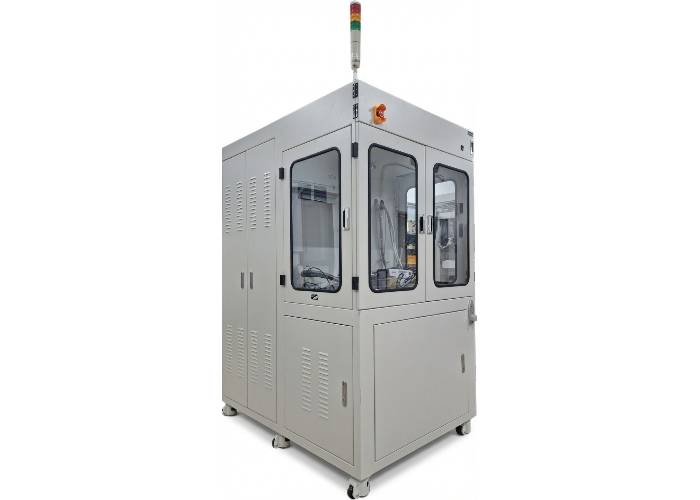
SE200K-AL Stack Test Station (200 kW) — Alkaline Water Electrolyser
SE200K-AL Stack Test Station (200 kW) for Alkaline Water Electrolyser Stacks
Overview and working principle
The SE200K-AL is a high-power stack test station designed to commission, characterise, and validate alkaline water electrolyser (AWE) stacks up to 200 kW. The system operates as an integrated balance-of-plant (BoP) and measurement platform, combining controlled electrolyte management with gas handling, safety monitoring, and synchronised data acquisition. By regulating operating conditions (temperature, flow, pressure and purge sequences) while logging stack electrical behaviour, researchers can generate reproducible performance maps and durability datasets under realistic operating loads.
Key specifications and test functions
- Power class: up to 200 kW (stack-level testing)
- Station dimensions (W × D × H): 1800 × 4000 × 2200 mm
- Gas flow measurement (typical maxima): H₂ up to 1000 slpm, O₂ up to 500 slpm (high turndown flow measurement for broad operating ranges)
- Electrolyte circulation: pump-driven loop with liquid/gas separation, level monitoring & alarms, and temperature control from RT to ~95°C (alkaline circulation commonly configured for KOH electrolyte)
- Pressure management: automated back-pressure control (high-pressure operation support)
- Safety monitoring: gas concentration detection for cross-over risk management and automated purge capability (N₂ purge via mass flow control)
- Optional electrochemical diagnostics: AC-impedance / HFR capability across a wide frequency range for resistance and health tracking
Compatibility and typical applications
The SE200K-AL is suited to multi-cell alkaline stacks used in scale-up programmes and pilot-line validation. Common applications include:
- stack commissioning and acceptance testing
- polarisation curves, efficiency analysis, and load-following studies
- long-duration durability and degradation mechanism screening
- BoP validation for industrial hydrogen systems and renewable integration
Why choose ScienceGears
ScienceGears supports Australian and New Zealand teams with local technical guidance, commissioning assistance, and application-focused configuration—and can align the test workflow with related research tools such as electrochemical instrumentation (e.g., EIS-capable platforms), gas handling accessories, and complementary energy test systems.
Customer Reviews
Related Product
Explore our precision instruments designed for electrochemical research and energy applications




Still Wondering About Something?
Explore our FAQ for fast, clear answers to the most common questions—available 24/7.