

Stack Test Station (1–3 kW) – Alkaline Water Electrolyser (SE1K-AL / SE3K-AL)
Stack Test Station (1–3 kW) – Alkaline Water Electrolyser
Overview
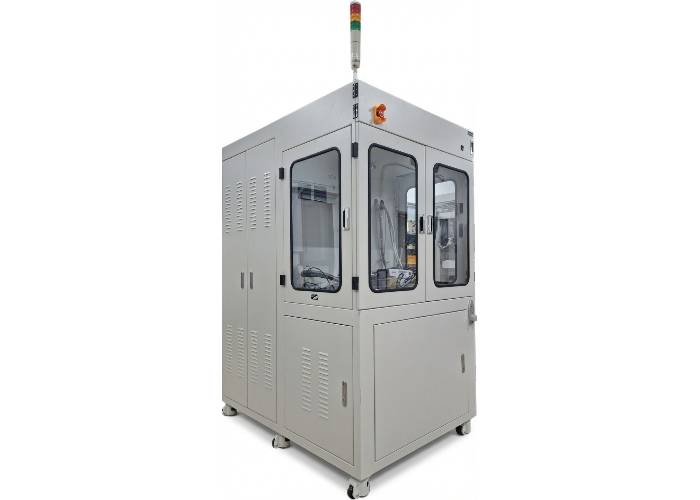
The SE1K-AL / SE3K-AL Alkaline Stack Test Station is a compact, instrumented platform for controlled testing of alkaline water electrolyser (AWE) single-cells and small stacks, enabling reproducible evaluation of performance, stability, and gas quality under laboratory and pilot-style operating conditions.
Working principle
The station supplies DC power for electrolysis (typically galvanostatic / constant-current control for the electrolyser and constant-voltage operation for stack-level testing), while managing electrolyte handling and gas conditioning. An integrated electrolyte circulation loop supports alkaline operation (e.g., KOH-based electrolyte) with heating/cooling capability, liquid-level monitoring, and automated fill options. Generated gases pass through gas–liquid separation, cooling/condensation trapping, and optional drying + dewpoint monitoring before measurement and safety checks.
Key features and specifications
- Models / power range: SE1K-AL (~1 kW) and SE3K-AL (~3 kW)
- Cabinet dimensions: 800 (W) × 1300 (D) × 2000 (H) mm
- Gas flow measurement (typical): H₂ up to ~5 slpm (1 kW) / ~15 slpm (3 kW); O₂ up to ~2.5 slpm (1 kW) / ~7.5 slpm (3 kW)
- Mass flow measurement turndown: 100:1 (typical configuration)
- Liquid temperature control: RT to ~95 °C (application dependent)
- Back-pressure control: automated control (commonly up to 10 bar, with higher-pressure options depending on configuration)
- Diagnostics (optional): multi-channel cell voltage monitoring (CVM) and optional AC-impedance / HFR capability (10 mHz to 10 kHz range where configured)
- Safety & automation: gas detection, alarms, shutdown logic, and data acquisition with configurable software workflows
Compatibility and applications
Ideal for AWE stack development, electrode/catalyst validation at stack scale, balance-of-plant studies (flow/temperature/pressure), durability testing, and gas crossover/quality monitoring. Researchers often use this station after early screening with potentiostats and benchtop electrochemical cells, and alongside broader energy test stations and hydrogen research instrumentation available via ScienceGears.
Why ScienceGears
ScienceGears supports Australian and New Zealand labs with local technical guidance, configuration alignment to your stack requirements, and practical integration advice across adjacent categories (electrochemical test systems, diagnostics, and hydrogen R&D workflows).
Customer Reviews
Related Product
Explore our precision instruments designed for electrochemical research and energy applications




Still Wondering About Something?
Explore our FAQ for fast, clear answers to the most common questions—available 24/7.