
Power Supplies & Electronic Loads
Programmable power supplies, bidirectional DC sources, AC/AC-DC sources, DC electronic loads and digital power meters for controlled electrical testing in research, engineering and quality-control laboratories. ScienceGears supports Australian and New Zealand researchers with power-electronics test solutions for battery development, clean-energy systems, electronics validation and automated laboratory workflows.
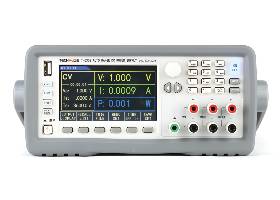
Programmable DC Power Supplies

Bidirectional DC Power Supplies

AC Power Supplies & AC/DC Sources

DC Electronic Loads
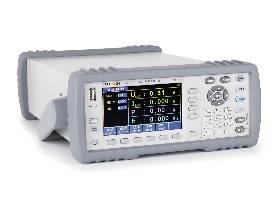
Power Meters & Power Analysis
Overview
Power supplies and electronic loads are essential instruments for applying, absorbing and measuring electrical power under controlled laboratory conditions. They are widely used in research, product development, manufacturing validation and quality-control environments where stable voltage/current control and repeatable electrical loading are required.
A programmable power supply delivers a defined voltage or current to a device under test. This allows researchers and engineers to power electronic circuits, charge batteries, operate electrochemical systems, validate converters or simulate controlled electrical input conditions. A DC electronic load performs the complementary function by drawing controlled current or power from a source, allowing the behaviour of batteries, power supplies, solar modules, fuel-cell systems, chargers and converters to be evaluated under repeatable load conditions.
For more advanced workflows, bidirectional DC power supplies combine source and load behaviour in one platform, allowing energy to flow in both directions. AC power supplies and AC/DC sources provide controlled AC voltage, frequency and waveform conditions for mains simulation, appliance testing and power-electronics development. Digital power meters and power analysers support accurate measurement of voltage, current, power, frequency, efficiency, power factor and harmonic behaviour.
This product group is designed for laboratories working across battery research, renewable energy, hydrogen systems, fuel cells, electrolysers, power conversion, embedded electronics, industrial testing and educational engineering laboratories.
Key Features
- Programmable voltage and current control for repeatable laboratory and engineering tests.
- DC electronic loads for constant current, constant voltage, constant resistance, constant power and dynamic load testing.
- Bidirectional source-load systems for regenerative energy-flow studies and battery charge/discharge workflows.
- AC and AC/DC source options for controlled mains simulation, frequency variation and power-line testing.
- Digital power meters for voltage, current, power, frequency, efficiency, power factor and harmonic analysis.
- Suitable for benchtop research, automated testing, production screening and long-duration reliability studies.
- Flexible integration with battery test systems, electrochemical setups, energy test stations, environmental chambers and custom fixtures.
Applications
Battery and Energy Storage Research
Power supplies and electronic loads are used for battery charging, controlled discharge, pack/module validation, DCIR-type studies, pulse testing, battery management system evaluation and auxiliary power control. Bidirectional systems are especially useful where charge and discharge behaviour must be studied in a single integrated workflow.
Power Electronics and Converter Testing
DC supplies, AC sources and electronic loads are commonly used to test DC-DC converters, AC-DC power supplies, inverters, chargers, LED drivers and embedded power modules. They help evaluate regulation behaviour, transient response, efficiency, protection limits and performance under different loading conditions.
Hydrogen, Fuel Cell and Electrolyser Systems
Clean-energy laboratories use power supplies, electronic loads and power meters to support electrolyser operation, fuel-cell testing, auxiliary component control, pump or heater operation, stack monitoring and balance-of-plant validation. These instruments can support both component-level and system-level energy research.
Solar, Renewable Energy and DC Source Simulation
Electronic loads and programmable supplies can assist in solar module testing, source simulation, DC bus studies, renewable-energy integration and power-conditioning research. Controlled load profiles help researchers evaluate stability, response behaviour and operating limits.
Electronics Manufacturing and Quality Control
In production and quality-control environments, these instruments support burn-in testing, ageing studies, incoming inspection, functional testing, reliability screening and automated pass/fail validation of electronic devices and power modules.
Product Categories
Programmable DC Power Supplies
Programmable DC power supplies provide controlled voltage and current output for electronic device testing, component validation, battery charging, electrochemical systems, power-converter development and automated R&D workflows.
Bidirectional DC Power Supplies
Bidirectional DC power supplies combine source and load behaviour in one platform, allowing energy to flow in both directions. They are suitable for regenerative battery testing, DC bus simulation, inverter validation, motor-drive testing and energy-storage research.
AC Power Supplies & AC/DC Sources
AC power supplies and AC/DC programmable sources generate controlled AC or combined AC/DC output for mains simulation, frequency variation, appliance testing, charger validation, inverter studies and power-electronics development.
DC Electronic Loads
DC electronic loads absorb current from a device under test and simulate real operating conditions. They are commonly used for testing power supplies, batteries, chargers, DC-DC converters, fuel cells, solar modules and electronic power systems.
Power Meters & Power Analysis
Digital power meters and power analysers measure voltage, current, power, frequency, efficiency, power factor and harmonic behaviour. They are used in R&D, quality control, energy-efficiency studies and production testing.
Integration & Compatibility
Power supplies, electronic loads and power meters can be integrated with broader ScienceGears workflows, including battery cyclers, electrochemical test systems, fuel-cell and electrolyser test stations, environmental chambers, data acquisition systems and custom laboratory fixtures.
For battery and energy-storage research, programmable sources and electronic loads can support charge/discharge studies, pulse profiles, auxiliary power control and module-level validation. For electrochemistry and clean-energy research, they can assist with electrolyser operation, fuel-cell loading, heater control, pump operation, power monitoring and balance-of-plant testing. For electronics R&D, they can be paired with oscilloscopes, sensors, data loggers and automated test software.
ScienceGears can help match voltage range, current range, power rating, accuracy, transient response, channel count and communication interface to the intended research or production workflow.
Why Choose ScienceGears
ScienceGears supports researchers, engineers and technical teams across Australia and New Zealand with practical advice on power-electronics instrument selection. Our team understands electrochemistry, battery testing, clean-energy research, spectroscopy integration and applied laboratory workflows.
Rather than supplying instruments in isolation, ScienceGears helps customers choose systems that fit the real application. This includes understanding voltage/current requirements, source/load behaviour, power rating, measurement accuracy, automation needs, safety considerations, test duration and future scalability.
FAQ Section
Q1. What is the difference between a programmable power supply and an electronic load?
A programmable power supply delivers controlled voltage or current to a device under test. An electronic load absorbs current and simulates the behaviour of a real electrical load. In many test setups, both instruments are used together to evaluate batteries, chargers, converters, power supplies, fuel-cell systems and electronic modules under repeatable conditions.
Q2. When should I choose a bidirectional DC power supply?
A bidirectional DC power supply is useful when the same instrument must both source and absorb power. This is important for battery charge/discharge testing, regenerative DC bus studies, inverter validation, motor-drive testing and energy-storage research. It can reduce system complexity because one platform can perform both power delivery and load functions.
Q3. What can a DC electronic load test?
A DC electronic load can test how a power source behaves under controlled load conditions. It is commonly used for testing DC power supplies, DC-DC converters, chargers, batteries, fuel cells, solar modules and LED drivers. Depending on the model, it may support static loading, dynamic loading, battery discharge testing, short-circuit simulation and protection-limit testing.
Q4. Why use an AC power supply instead of normal mains power?
An AC power supply allows voltage, frequency and waveform conditions to be controlled rather than relying on fixed wall power. This is useful for testing appliances, chargers, inverters, power modules and electronic equipment under different mains conditions. It helps researchers and engineers evaluate start-up behaviour, low-voltage response, frequency sensitivity and performance under controlled AC input conditions.
Q5. What is the role of a digital power meter in electrical testing?
A digital power meter measures electrical parameters such as voltage, current, real power, apparent power, frequency, power factor and, in some instruments, harmonic behaviour. It is useful for efficiency testing, power-loss analysis, product validation, standby power measurement and quality-control reporting in electronics, battery, renewable-energy and power-conversion applications.
Q6. Can ScienceGears help select the right power supply or electronic load?
Yes. ScienceGears can help match the instrument to your voltage range, current range, power rating, accuracy requirement, number of channels, source/load mode, automation interface and application. This is especially important for battery systems, power converters, clean-energy test setups and long-duration reliability testing where incorrect sizing can limit performance or safety.
Closing Summary
The Power Supplies & Electronic Loads group brings together essential instruments for controlled electrical sourcing, loading and measurement. Through ScienceGears Australia and New Zealand, researchers and engineers can access programmable DC supplies, bidirectional DC systems, AC/AC-DC sources, DC electronic loads and power meters with local technical guidance for reliable laboratory, energy and production testing.