
Regenerative DC Electronic Loads
Regenerative DC electronic loads absorb high-power DC energy from batteries, fuel cells, converters and energy systems while reducing heat dissipation by returning energy to the electrical system where supported. They are suitable for high-power discharge, renewable-energy validation, EV component testing and long-duration power-system evaluation.
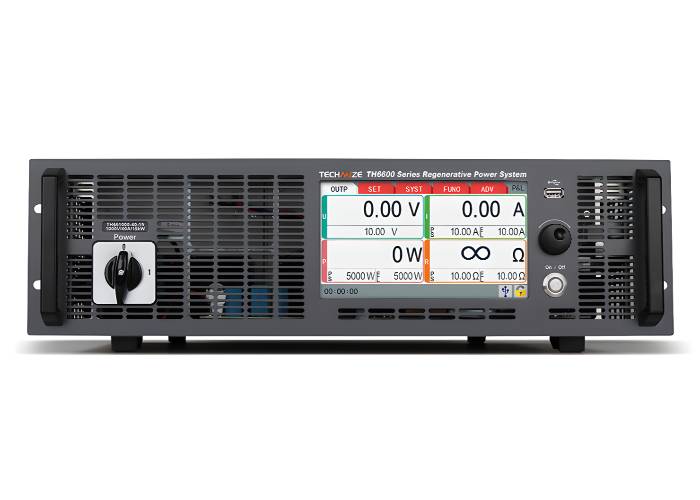
Overview
Regenerative DC electronic loads are advanced load systems designed for high-power applications where absorbed electrical energy should not simply be wasted as heat. Like conventional DC electronic loads, they draw controlled current or power from a device under test. However, regenerative loads are designed to return a portion of the absorbed energy back to the electrical system, depending on system configuration and installation requirements.
This makes them highly useful for battery packs, fuel-cell systems, EV components, DC power supplies, renewable-energy devices and industrial power-conversion systems. In long-duration high-power discharge testing, conventional loads can generate significant heat, requiring large cooling capacity. Regenerative loading can reduce heat burden and improve energy efficiency.
These systems are especially relevant for laboratories working with battery modules, fuel cells, electrolysers, DC buses, inverters, converters and pilot-scale clean-energy systems. Correct selection requires careful consideration of voltage, current, power, grid compatibility, safety, protection limits and installation environment.
Key Capabilities
- High-power DC loading for batteries, fuel cells and power sources.
- Regenerative operation to reduce heat dissipation and energy waste.
- Controlled current or power discharge workflows.
- Suitable for long-duration and high-energy validation.
- Useful for EV, renewable-energy and industrial power testing.
- Integration with power meters, safety systems and data acquisition.
- Supports pilot-scale energy-system evaluation.
Typical Applications
- Battery pack and module discharge testing.
- Fuel-cell stack loading and performance validation.
- DC power supply and converter testing.
- EV component and DC bus studies.
- Renewable-energy and solar source evaluation.
- Long-duration high-power reliability testing.
Integration & Compatibility
Regenerative DC loads can be integrated with high-power DC supplies, bidirectional DC systems, power meters, /battery-test-systems, /fuel-cell-test-stations and custom ScienceGears safety fixtures. They are often part of larger test stands requiring appropriate wiring, ventilation, protection and installation planning.
Why Choose ScienceGears (AU & NZ)
ScienceGears helps laboratories assess whether regenerative loading is needed based on energy level, test duration, heat generation, electrical infrastructure and safety requirements. We support Australian and New Zealand customers with practical guidance for high-power battery, fuel-cell, renewable-energy and power-electronics testing.
PRODUCT FAMILIES & MODELS
TH6600L Series — Regenerative DC Electronic Loads
The TH6600L Series is suitable for high-power regenerative DC loading where batteries, fuel cells, DC sources, converters or energy systems must be tested under controlled discharge conditions. It is appropriate for laboratories needing kilowatt-level load capability and reduced energy dissipation compared with conventional load systems.
Available Products:
- TH6600L Series — Regenerative DC electronic load for high-power battery, fuel-cell, DC source, converter and renewable-energy validation workflows.
→ Suggested product page: /th6600l-series-regenerative-dc-electronic-load
HOW TO CHOOSE
Choose a regenerative DC electronic load when power level, discharge duration or heat dissipation makes a standard electronic load impractical. Define the maximum voltage, current and power required, then review energy recovery capability, grid or facility requirements, cooling, wiring, protection functions, emergency stop, communication interface and safety compliance. For smaller benchtop tests, a conventional programmable load may be simpler and more cost-effective.
FAQs
Q1. What is a regenerative DC electronic load?
A regenerative DC electronic load is a high-power load system that absorbs energy from a DC source and can return part of that energy to the electrical system, depending on installation and configuration. It is used to test batteries, fuel cells, converters, power supplies and renewable-energy devices under controlled discharge conditions.
Q2. How is a regenerative load different from a standard electronic load?
A standard electronic load usually dissipates absorbed energy as heat. A regenerative load is designed to reduce this energy loss by feeding energy back to the electrical system where supported. This is especially useful in high-power or long-duration tests where heat generation, energy waste and cooling requirements become significant.
Q3. When should I choose a regenerative DC electronic load?
Choose a regenerative load when testing high-power batteries, fuel cells, DC sources, EV components or renewable-energy systems for extended periods. It is also useful where the laboratory wants to reduce heat output and improve energy efficiency. For small benchtop devices, a standard programmable load is usually sufficient.
Q4. What safety factors are important for regenerative loads?
High-power regenerative loads require careful attention to voltage, current, power rating, cable sizing, grounding, emergency stop, protection limits, ventilation and facility electrical requirements. Installation should be reviewed before operation because regenerative systems interact with the wider electrical infrastructure more than simple benchtop loads.
Q5. Can regenerative loads be used for battery pack testing?
Yes. They are suitable for controlled discharge of battery modules and packs, especially when the energy level is high. They can support battery performance evaluation, protection testing and long-duration discharge. For full battery cycling, they may be integrated with charging sources, bidirectional supplies or /battery-test-systems.
Q6. Are regenerative loads useful for fuel-cell testing?
Yes. Fuel cells produce electrical power that must be drawn under controlled conditions to evaluate voltage-current behaviour, power output, stability and durability. A regenerative DC load can provide controlled loading for higher-power fuel-cell systems and can be integrated with /fuel-cell-test-stations and power-analysis instruments.
Q7. Can ScienceGears assist with high-power load integration?
Yes. ScienceGears can help assess voltage, current, power, wiring, safety, cooling, control interface and facility considerations for regenerative DC loads. We support Australian and New Zealand laboratories working with batteries, fuel cells, renewable-energy devices, EV components and power-electronics systems.
CLOSING SUMMARY
Regenerative DC electronic loads are designed for high-power testing where controlled discharge, energy recovery and reduced heat burden are important. ScienceGears supports Australian and New Zealand laboratories with practical guidance for selecting and integrating regenerative load systems for battery, fuel-cell, renewable-energy and power-electronics applications.