
Pumps & Fluid Handling
Reliable liquid handling is essential in many scientific experiments and engineering processes. ScienceGears offers laboratory peristaltic and syringe pumps for liquid transfer, circulation, controlled flow and precise dosing. Our fluid-handling portfolio helps researchers and engineers identify appropriate pumping mechanisms, flow-control methods and fluid-path configurations for their applications, from routine laboratory work to automated experimental systems.
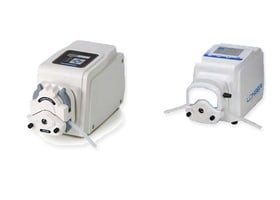
Peristaltic Pumps
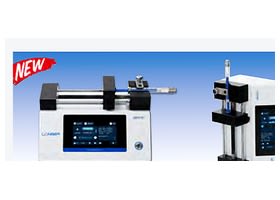
Syringe Pumps
Laboratory Pumps and Fluid Handling for Research and Development
Scientific experiments often depend on liquids reaching the correct location, at the required rate and in a controlled manner. Whether the task involves recirculating an electrolyte, introducing a reagent into a reactor or delivering a small volume into a microfluidic device, the pumping mechanism influences how the overall system performs.
ScienceGears brings together laboratory pumping technologies for research, analytical measurement, experimental development and specialised engineering applications.
The portfolio is organised around two complementary approaches: peristaltic pumping, which moves liquid through flexible tubing, and syringe pumping, which controls liquid displacement through the movement of a syringe plunger.
These technologies address different fluid-handling requirements. Understanding their operating characteristics helps laboratories select equipment that fits both their scientific method and the practical constraints of the installation.
Key Fluid Handling Capabilities
Depending on the pump and configuration selected, the range can support:
- Liquid circulation and transfer: Moving compatible solutions between reservoirs, reaction vessels, laboratory instruments and flow systems.
- Flow-rate control: Adjusting liquid delivery to suit experimental procedures and operating requirements.
- Reagent metering and dispensing: Providing controlled liquid addition, programmed dosing and repeat-delivery functions.
- Small-volume liquid delivery: Managing defined volumes and low-flow processes for specialised research applications.
- Infusion and withdrawal: Delivering or withdrawing liquids using suitable syringe-drive configurations.
- Multichannel operation: Supporting experiments involving multiple liquid paths, subject to the available control architecture.
- Instrument integration: Connecting compatible pump models with external controllers and automated laboratory systems.
The capabilities available depend on the exact drive, pump head, syringe mechanism and control system. Not every pump provides all functions.
Applications Across Scientific and Industrial Research
Electrochemistry and energy research
Laboratory pumps can support compatible electrolyte-circulation arrangements, electrochemical flow cells, redox flow battery experiments and other energy-conversion research systems. The required flow characteristics, chemical compatibility and operating pressure must be assessed for each application.
Analytical chemistry and laboratory testing
Controlled reagent delivery and sample transfer can assist experimental method development, analytical instrument integration and laboratory procedures requiring repeatable liquid addition.
Microfluidics and small-volume experiments
Syringe-pump configurations can provide controlled liquid delivery to compatible microfluidic devices, laboratory chips and experimental flow channels.
Chemical synthesis and reactor development
Fluid-handling equipment can be incorporated into suitable reaction systems for reagent addition, liquid circulation and investigation of flow-dependent processes.
Laboratory automation and instrument development
Pumps with appropriate communication interfaces can form part of automated experimental platforms, prototype instruments and programmed liquid-handling systems.
Fluid Paths, Control and System Integration
A successful pumping system depends on more than the drive unit.
For peristaltic pumping, the combination of pump head, tubing material, tubing dimensions and operating conditions determines the practical liquid-delivery characteristics. Tubing compression, wear and flow pulsation can influence performance.
Syringe-pump selection introduces different considerations, including syringe diameter, usable volume, plunger movement, mounting arrangements and mechanical force.
Across both technologies, researchers should evaluate fluid chemistry, viscosity, allowable pressure, operating duration and required flow stability.
Where experimental reproducibility is important, the delivered flow or volume should be checked using a suitable calibration procedure under representative operating conditions.
For automated installations, external-control functions and communication compatibility should be confirmed against the exact pump model and the wider experimental system.
ScienceGears Technical and Procurement Support
ScienceGears assists researchers, laboratory managers and engineering teams in identifying suitable fluid-handling equipment and configurations.
Our support includes reviewing application requirements, comparing available pumping approaches and coordinating product enquiries for compatible pump drives, fluid-path components and control options.
As an Australian-based scientific equipment supplier, ScienceGears also welcomes international enquiries for eligible product ranges. Supply arrangements and destinations are confirmed according to the applicable manufacturer agreements.
AVAILABLE CATEGORIES
Peristaltic pumps provide a tubing-based liquid-transfer mechanism for laboratory circulation, general pumping, flow-rate control and repeat dispensing. This category includes basic speed-controlled pumps, flow-rate and metering pumps, and dispensing-oriented systems. It is a useful starting point for researchers who require liquid movement through a flexible tubing path, particularly where sustained transfer or recirculation is important.
Syringe pumps control liquid movement by driving a syringe plunger, making them suitable for selected low-flow, defined-volume, infusion and withdrawal applications. This category includes integrated digital laboratory pumps and modular or split-type systems. It is particularly relevant when syringe capacity, controlled displacement, programmable operating sequences or flexible drive positioning are important to the experiment.
HOW TO CHOOSE
Selecting the Appropriate Laboratory Pump
Begin by defining the liquid-handling task rather than selecting a pump solely by its advertised flow-rate range.
1. Identify the delivery requirement
Determine whether the experiment needs ongoing liquid circulation, transfer between containers, repeated dispensing or controlled delivery of a finite volume. Peristaltic pumps are often a practical starting point for circulation and general transfer, while syringe pumps may be more appropriate for defined-volume infusion or withdrawal.
2. Establish the working flow range and volume
Identify the minimum and maximum flow rates, total liquid volume and expected operating duration. For syringe systems, consider how the available syringe capacity affects experimental runtime.
3. Consider the liquid properties
Evaluate chemical compatibility, viscosity, temperature and the materials that will contact the liquid. A suitable pump drive does not automatically make the tubing, syringe or fittings suitable for every solution.
4. Assess the connected system
Consider pressure drop, acceptable flow pulsation, flow stability and any calibration requirements. These factors can be particularly important for sensitive analytical measurements and experimental flow devices.
5. Determine control and automation requirements
Decide whether manual adjustment is sufficient or whether the experiment requires programmed delivery, multichannel operation, external triggering or digital communication.
6. Confirm the complete configuration
Review the required pump head, tubing, syringe, connectors and control accessories before ordering. ScienceGears can assist with identifying appropriate configurations based on the information provided.
For a more detailed comparison, explore the Peristaltic Pumps and Syringe Pumps categories.
FREQUENTLY ASKED QUESTIONS
1. Which types of laboratory pumps does ScienceGears offer?
The Pumps & Fluid Handling group currently includes peristaltic pumps and syringe pumps. Peristaltic systems are used for various liquid-transfer, circulation, metering and dispensing tasks. Syringe systems are used for controlled displacement of liquid from or into a syringe. Each category contains configurations designed for different laboratory control requirements.
2. How do I decide between a peristaltic pump and a syringe pump?
Start with the desired flow behaviour and total working volume. Peristaltic pumps can be suitable for ongoing circulation and tubing-based transfer. Syringe pumps are often selected for defined-volume delivery and controlled infusion or withdrawal. The final choice also depends on flow-rate range, liquid compatibility, pulsation, operating pressure and automation requirements.
3. Can these pumps be used for electrochemical experiments?
Yes, suitable pump configurations can support electrochemical flow cells, electrolyte circulation and other experimental electrochemistry systems. However, compatibility is application-specific. Researchers should evaluate electrolyte chemistry, wetted materials, flow requirements, tubing or syringe selection, and the operating limits of the connected experimental equipment.
4. Are laboratory pumps suitable for microfluidic applications?
Some syringe pumps and selected peristaltic-pump configurations can be used with compatible microfluidic systems. The appropriate choice depends on the required flow range, working volume, allowable pulsation and pressure characteristics. Very small channels and sensitive experiments may require particular attention to flow stability and fluid-path design.
5. Can pumps be controlled through a computer or external instrument?
Selected models provide communication interfaces, external-control inputs or other automation functions. The available features vary between pump families and individual configurations. Before integration, confirm the required interface, supported control functions, software compatibility and any additional accessories.
6. What determines the actual liquid-delivery accuracy?
Practical delivery performance depends on the pumping mechanism, fluid-path components and operating conditions. For peristaltic pumps, tubing and pump-head characteristics are important. For syringe pumps, syringe dimensions and plunger movement influence displaced volume. Fluid properties, pressure conditions and calibration can also affect actual delivery. Published performance values should be interpreted for the specified configuration.
7. Can laboratory pumps handle corrosive or chemically aggressive solutions?
Suitability depends on every material exposed to the liquid, including tubing, syringe barrels, plunger seals, connectors and other wetted components. Mechanical operating limits and relevant laboratory safety requirements must also be considered. Chemical compatibility should be verified for the actual solution rather than assumed from the general pump type.
8. Can ScienceGears assist with international pump enquiries?
ScienceGears welcomes enquiries from research institutions, laboratories and engineering organisations internationally for eligible equipment ranges. Customers can provide details of their intended application, liquid characteristics, flow requirements and operating configuration. Product suitability, available supply arrangements and delivery destinations are assessed according to the relevant manufacturer and supplier conditions.
CLOSING SUMMARY
From laboratory liquid circulation to carefully controlled reagent addition, reliable fluid handling contributes to consistent experimental workflows. ScienceGears provides pathways to peristaltic and syringe-pump technologies, helping researchers select equipment according to the task, liquid properties and required operating functions. Explore the two pump categories or contact our team for assistance with configuration and procurement. International enquiries are welcome for eligible products, subject to applicable supply arrangements.