
NEWARE CE-6000 Series
The NEWARE CE-6000 Series is a modular battery testing platform delivering exceptional precision. Combining regenerative energy technology with high-frequency isolation architecture, these systems achieve ±0.02% voltage accuracy and ±0.05% current accuracy. Supporting voltage ranges from 5V to 1000V and current up to 300A, the CE-6000 accommodates cell, module, and pack testing. Featuring 5ms current response and 100Hz acquisition, systems execute demanding HPPC and dynamic drive protocols. The regenerative design recovers 96% discharge energy, reducing facility power consumption by 75% while minimizing cooling needs. Compatible with environmental chambers and monitoring equipment, the platform enables comprehensive battery characterization with adaptability to emerging technologies.
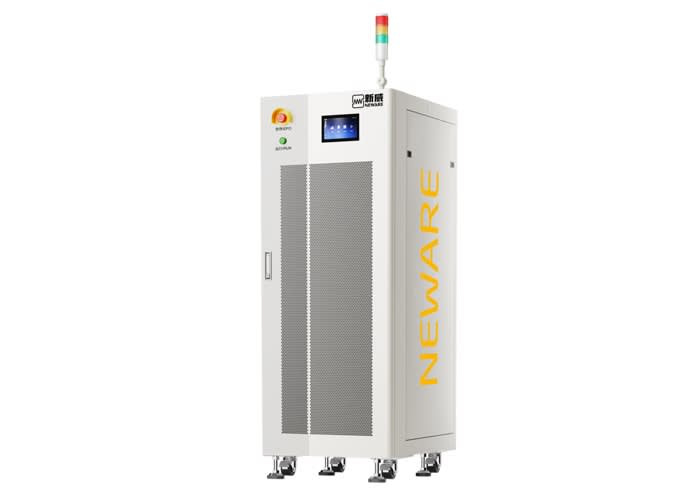
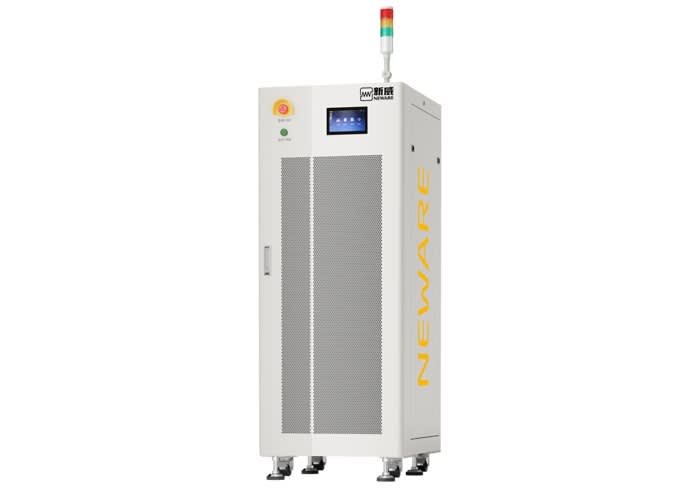
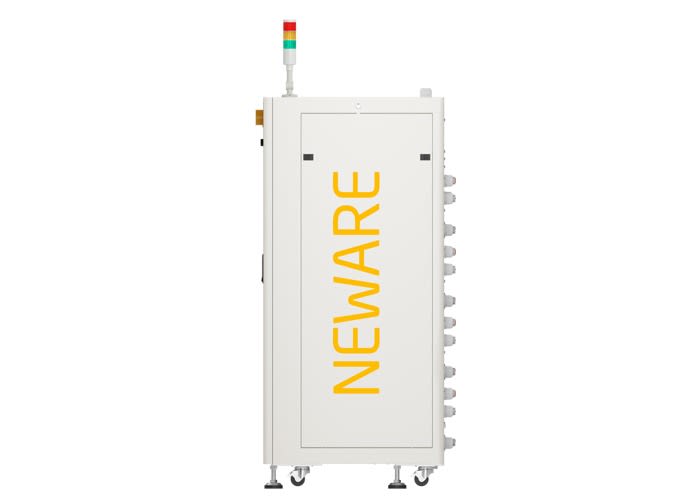
NEWARE CE-6000 Series Battery Testing Systems
What is the CE-6000 Series Battery Testing System?
The CE-6000 Series represents the next generation of battery testing systems designed specifically for manufacturers seeking high-accuracy charge and discharge control across consumer, industrial, and electric vehicle battery applications. These advanced battery testers provide comprehensive testing capabilities for capacity grading, cycle life evaluation, and quality control throughout production lines, ensuring that every battery meets stringent performance standards before reaching end-users.
Engineered with regenerative energy technology, the NEWARE CE-6000 Series sets new benchmarks in battery testing efficiency by recovering up to 85-96% of discharge energy and redistributing it back to the grid or charging channels. This innovative approach drastically reduces operational costs while maintaining exceptional testing precision, making these systems indispensable for battery manufacturers, electric vehicle producers, and energy storage companies worldwide.
Why Battery Testing Matters in Modern Manufacturing
Battery testing serves as the critical quality control checkpoint that determines product reliability, safety, and longevity. During battery production, even cells from the same batch can exhibit performance variations due to differences in raw materials, manufacturing processes, and environmental factors. Without proper testing and capacity grading, these inconsistencies can lead to premature battery pack failure, reduced efficiency, and serious safety concerns including thermal runaway.
The CE-6000 Series addresses these challenges by providing manufacturers with the tools needed to perform comprehensive performance testing throughout the production lifecycle. From incoming raw material inspection through final quality assurance, these systems enable manufacturers to detect variations in material composition, electrode uniformity, and cell capacity while maintaining the high throughput demands of modern production environments.
Advanced Features That Define the NEWARE CE-6000 Series
High-Precision Measurement and Control
The NEWARE CE-6000 Series features a dual-stage, high-frequency isolation modular design that combines AC/DC and DC/DC functionality with low-temperature drift and high-performance multichannel 24-bit ADC chips. This architecture delivers steady-state accuracy superior to traditional equipment, with voltage accuracy reaching ±0.02% F.S. and current accuracy of ±0.05% F.S.. Such precision enables manufacturers to distinguish subtle capacity differences during battery grading processes, ensuring only cells with matching performance characteristics are grouped for battery pack assembly.
Regenerative Energy Technology
Unlike conventional battery testers that dissipate discharge energy as heat, the CE-6000 Series incorporates regenerative technology that recovers discharged energy and feeds it back to the AC power grid or redistributes it to charging channels. This breakthrough feature reduces overall system energy consumption by up to 75% while significantly lowering heat output and environmental cooling requirements. For high-volume manufacturing facilities testing thousands of batteries daily, these energy savings translate to substantial reductions in operational costs and carbon footprint.
Rapid Response and High-Speed Data Acquisition
With current response times under 5ms and data acquisition frequencies up to 100Hz, the CE-6000 Series excels at demanding test protocols including HPPC (Hybrid Pulse Power Characterization), DCIR (DC Internal Resistance), and dynamic driving simulation tests. These capabilities prove essential for electric vehicle battery validation, where understanding battery performance under rapidly changing load conditions directly impacts vehicle safety and efficiency.
Flexible Channel Configuration
The modular design supports independent channel control, allowing simultaneous testing of different batteries with unique test protocols on separate channels. Adjacent channels can be paralleled to accommodate higher current testing requirements, significantly expanding the system's application range while reducing capital equipment investment. This flexibility enables manufacturers to optimize testing capacity utilization and adapt quickly to changing production requirements.
Comprehensive Testing Capabilities Across Battery Types
State of Charge (SOC) and Depth of Discharge (DOD) Testing
Accurate SOC and DOD measurement forms the foundation of effective battery management system validation. The CE-6000 Series provides precise SOC estimation through advanced coulomb counting and voltage monitoring, enabling manufacturers to verify BMS accuracy under various operating conditions. Understanding DOD characteristics proves particularly critical for assessing battery cycle life, as the depth of regular discharge directly impacts long-term battery health and performance degradation.
Cycle Life and Capacity Testing
Cycle life evaluation represents one of the most time-intensive yet essential battery testing requirements. The CE-6000 Series automates this process, repeatedly charging and discharging batteries according to manufacturer-specified profiles while continuously monitoring capacity retention. This data enables manufacturers to predict real-world battery longevity and identify design improvements that extend operational lifespan.
Float Performance and Working Conditions Assessment
Float performance testing simulates batteries maintained in charged states for extended periods, particularly relevant for backup power and energy storage applications. The CE-6000 Series monitors float current stabilization and validates battery readiness to return to service, ensuring batteries can deliver rated capacity when called upon after long standby periods.
NEWARE CT-6000 Cell Testing System: Foundation of Battery Quality
What is the CT-6000 Cell Testing System?
The NEWARE CT-6000 Cell Testing System targets power batteries, energy storage batteries, and consumer battery applications where individual cell validation determines final product quality. Operating across voltage ranges of 5V/6V with current capabilities from 75A to 1200A, this system provides the precision and throughput necessary for high-volume cell production environments.
Why Cell-Level Testing Matters
Individual battery cells represent the building blocks of all larger battery systems. Testing at the cell level enables early detection of manufacturing defects, capacity variations, and internal resistance anomalies before cells enter module or pack assembly. This approach prevents faulty cells from compromising entire battery systems while reducing costly rework and warranty claims downstream.
Cell Testing Applications and Benefits
The CT-6000 Cell Testing System supports comprehensive performance indicator testing, including cycle life analysis, capacity verification, efficiency measurement, and rate capability assessment. Battery manufacturers utilize these systems for formation and grading processes, where newly manufactured cells undergo initial charging cycles that activate their electrochemical systems. The capacity grading function sorts cells into performance groups based on measured capacity and internal resistance, ensuring cells combined into modules exhibit consistent characteristics that maximize pack performance and longevity.
Energy storage companies and research laboratories employ cell testing systems for detailed characterization work, developing baseline performance profiles that inform battery management system algorithms and application-specific design decisions. The regenerative energy recovery feature proves particularly valuable in these high-throughput environments, where hundreds or thousands of cells may undergo simultaneous testing.
NEWARE CT-6000 Module Testing System: Mid-Scale Battery Validation
What is the CT-6000 Module Testing System?
The CT-6000 Module Testing System addresses the unique requirements of battery module testing, offering voltage ranges from 20V to 200V with current capabilities spanning 50A to 1200A, depending on configuration. This flexibility accommodates the diverse module designs employed across electric vehicles, industrial equipment, and energy storage applications.
Critical Module Testing Parameters
Module testing validates both electrical performance and mechanical integrity of cell assemblies. The system verifies secure cell connections capable of managing anticipated current loads without overheating or failure while ensuring proper cell balancing and accurate voltage reporting. Temperature sensor functionality receives particular attention during module testing, as thermal management directly impacts battery safety and performance.
Module Testing in EV and Energy Storage Applications
Electric vehicle manufacturers rely on module testing to simulate real-world driving conditions through dynamic drive cycle profiles. The CT-6000 Module Testing System executes these complex test sequences, evaluating how modules perform under acceleration, regenerative braking, and sustained highway driving scenarios. This validation ensures modules deliver the power and energy density required for acceptable vehicle range and performance.
Energy storage companies utilize module testing to verify grid integration capabilities, assessing how modules respond to variable charge and discharge demands characteristic of renewable energy management. The comprehensive performance testing supported by the CT-6000 system—including SOC, DOD, float performance, and working condition evaluation—provides the data necessary to optimize energy storage system design and operation.
NEWARE CT-6000 Pack Testing System: Complete Battery System Validation
What is the CT-6000 Pack Testing System?
The CT-6000 Pack Testing System delivers high-voltage, high-power testing capabilities essential for complete battery pack validation, with power ratings from 100kW to 300kW, voltage ranges up to 1000V, and current capabilities reaching 300A. This system targets the final assembly testing stage where complete battery packs undergo comprehensive validation before integration into electric vehicles or energy storage installations.
End-of-Line Pack Testing Requirements
Pack-level testing ensures all subsystems perform correctly, including safety mechanisms, external hardware connections, and Battery Management System communications. The CT-6000 Pack Testing System validates pack-level functions such as cell authentication, overcharge and overdischarge protection, fault detection and reporting, and communication interface operation. These tests confirm that protective mechanisms activate appropriately and that the pack can communicate reliably with vehicle controllers or grid management systems.
Safety and Performance Validation
Battery pack safety testing represents perhaps the most critical validation phase, particularly for lithium-ion technologies where thermal runaway risks demand rigorous evaluation. The CT-6000 system supports comprehensive safety testing protocols, including thermal stress testing, vibration and shock simulation, and abuse condition evaluation. Environmental testing capabilities enable validation across temperature extremes, humidity variations, and altitude simulations that packs may encounter in service.
Working condition assessment through dynamic power profiles ensures packs deliver rated performance under application-specific demand patterns. For electric vehicles, this includes executing standardized drive cycles that represent urban, highway, and mixed driving conditions. Energy storage applications require validation of charge and discharge profiles matching grid frequency regulation, peak shaving, and renewable energy integration scenarios.
Why Choose the NEWARE CE-6000 Series Battery Testing Systems
Industry-Leading Accuracy and Reliability
The combination of 24-bit ADC measurement systems, dual-stage isolation design, and low-temperature drift characteristics positions the CE-6000 Series at the forefront of battery testing technology. This precision enables detection of subtle performance variations that competitors' systems might miss, supporting tighter quality control and improved product consistency.
Sustainable and Cost-Effective Operation
Regenerative energy technology transforms the economics of high-volume battery testing by recovering up to 96% of discharge energy. Facilities operating multiple testing systems achieve significant utility cost reductions while simultaneously decreasing cooling infrastructure requirements due to reduced heat generation. These operational savings compound over the system's lifetime, improving return on investment while supporting corporate sustainability goals.
Comprehensive Ecosystem Integration
The CE-6000 Series integrates seamlessly with environmental test chambers and auxiliary monitoring equipment, enabling comprehensive multi-dimensional battery evaluation from a single control interface. This unified approach streamlines testing workflows, reduces operator training requirements, and improves data consistency across different test conditions.
Future-Proof Flexibility
Modular architecture and customizable voltage/current configurations ensure CE-6000 systems adapt to evolving battery technologies and testing requirements. As battery chemistries advance and application demands change, these systems maintain their relevance through software updates and hardware expansion options, protecting equipment investment over extended operational lifespans.
Frequently Asked Questions About CE-6000 Series Battery Testing
What makes CE-6000 Series regenerative testing more efficient?
The regenerative design recovers 85-96% of discharge energy and returns it to the grid or redistributes it to charging channels, dramatically reducing facility power consumption and cooling costs compared to traditional resistance-based testing.
How does the CE-6000 Series improve battery capacity grading accuracy?
High-precision 24-bit ADC measurement systems with ±0.05% current accuracy enable detection of subtle capacity differences between cells, supporting tighter grading tolerances that improve battery pack consistency and performance.
Can CE-6000 systems test different battery chemistries?
Yes, the flexible voltage and current configurations accommodate lithium-ion, lithium-polymer, nickel-based, and lead-acid batteries across cell, module, and pack levels.
What testing standards does the CE-6000 Series support?
The systems support international testing standards, including HPPC, DCIR, IEC protocols, USABC procedures, and custom test profiles for specific application requirements.
How does regenerative testing reduce environmental impact?
By recovering discharge energy and reducing heat generation, CE-6000 systems lower facility power consumption by up to 75%, decrease cooling infrastructure requirements, and support manufacturers' carbon reduction initiatives.
Ready to Transform Your Battery Testing Operations?
Discover how the CE-6000 Series can enhance your battery manufacturing quality, reduce operational costs, and accelerate product development. Contact ScienceGears today for detailed specifications, custom configuration options, and expert consultation on implementing advanced battery testing solutions tailored to your specific requirements.