
Overview
Microelectrodes—often called ultramicroelectrodes (UMEs)—are micron-scale working electrodes used when conventional macroelectrodes produce unstable currents, excessive iR drop, or large capacitive backgrounds. By reducing the electrode diameter to the micrometre range, mass transport shifts toward radial (hemispherical) diffusion. This commonly leads to faster establishment of steady-state currents and more reliable measurements in challenging electrolytes or microvolume environments.
In practice, microelectrodes help researchers obtain cleaner voltammetry and more reproducible kinetic information when signals are inherently small (low analyte concentration, low conductivity media, or limited sample volume). They are widely used for fundamental electrochemical studies, sensor development, electrocatalysis screening, and method validation where stable limiting currents and reduced charging artefacts matter.
What You Can Measure / Control
- Steady-state and transient voltammetric responses at low currents
- Electron-transfer kinetics (rate constants, mechanism comparisons)
- Diffusion-limited currents with improved stability and repeatability
- Measurements in high-resistance or low-supporting-electrolyte media
- Experiments in small volumes (microcells, droplets, limited samples)
- Lower capacitive background for improved signal-to-noise
- Faster time response for dynamic electrochemical studies
Typical Applications
- Low-concentration redox mediator studies and analytical method development
- Electrocatalyst screening where stable diffusion control is required
- Non-aqueous electrochemistry and other high-impedance environments
- Microvolume experiments and limited-availability samples
- Kinetic studies (e.g., fast electron-transfer systems and mechanism mapping)
- Sensor R&D and validation workflows using low-current signatures
Integration & Compatibility
Microelectrodes are typically used as the working electrode in standard 2- or 3-electrode configurations with appropriate reference and counter electrodes. They integrate naturally with:
- Potentiostats/galvanostats for low-current control and measurement
- Suitable cells and electrodes for controlled experiments
For best results, consider shielding and low-noise setup practices, especially when working at nanoamp to microamp current levels.
Available Products
-
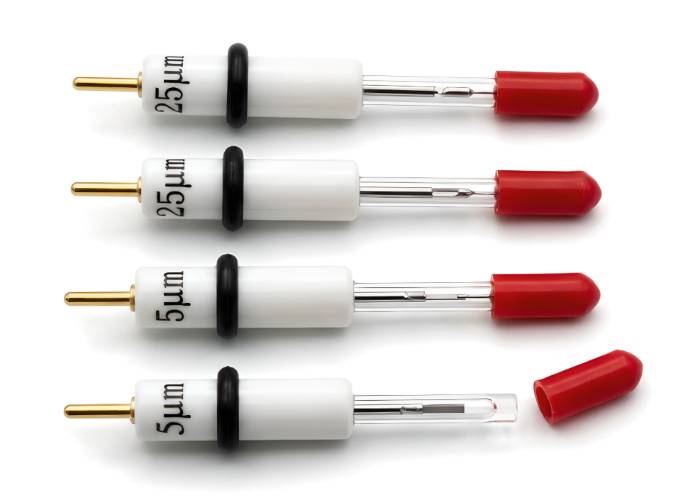
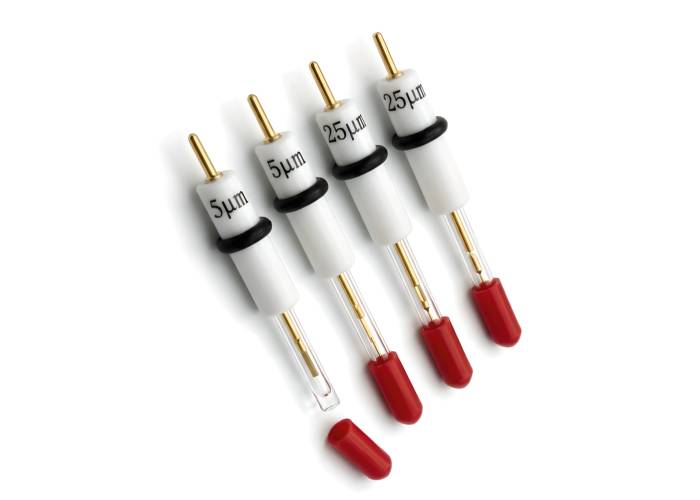
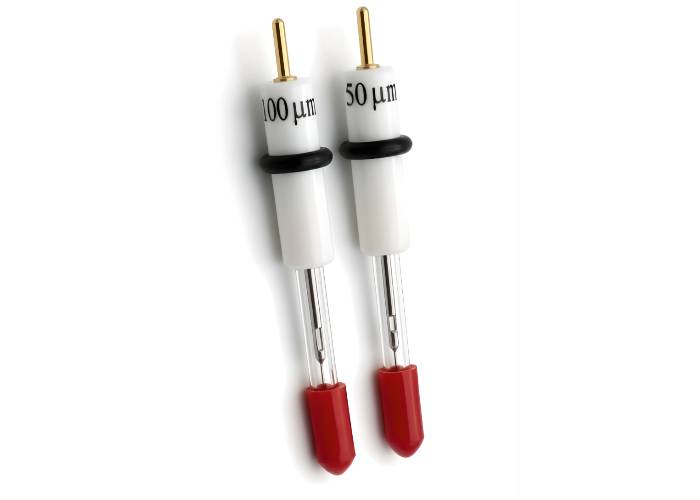
Platinum Microelectrode (10 µm, 25 µm, 50 µm, 100 µm or 200 µm) — https://www.sciencegears.com.au/platinum-microelectrode
A versatile, polishable UME for low-current voltammetry and kinetics in aqueous or non-aqueous systems, including high-resistance media. -
Gold Microelectrode (10 µm, 25 µm, 50 µm, 100 µm, 200 µm) — https://www.sciencegears.com.au/gold-microelectrode
Ideal for studies where gold surface chemistry matters (e.g., adsorption-sensitive systems), while still benefiting from stable radial diffusion at small diameters. -
Nickel Microelectrode – 50 µm or 100 µm — https://www.sciencegears.com.au/nickel-microelectrode
Useful for alkaline electrochemistry and nickel-relevant reaction systems, offering microelectrode benefits with a practical handling size range. -
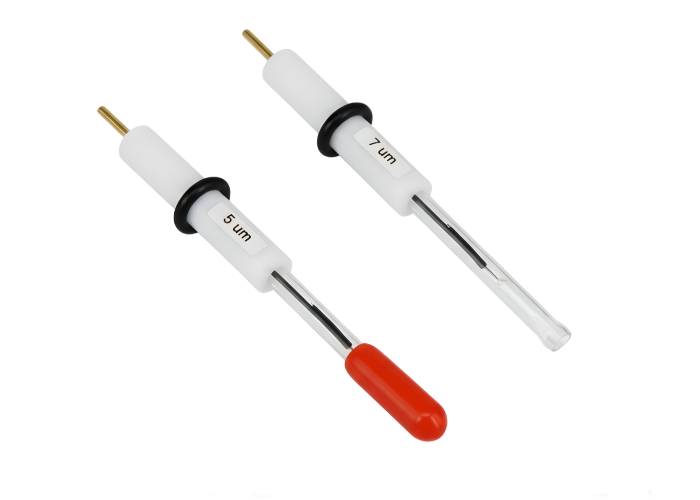
Carbon Fibre Microelectrode – 5 µm or 7 µm — https://www.sciencegears.com.au/carbon-fibre-microelectrode
Very small-diameter carbon microelectrodes suited to ultra-low currents, microvolume work, and experiments needing a carbon working surface.
How to Choose (Micro-Selection Guide)
Start with electrode material based on surface chemistry and the system you study (platinum for broad general use; gold for gold-surface-sensitive studies; nickel for nickel-relevant/alkaline systems; carbon fibre when a carbon surface is preferred). Next, choose diameter by balancing signal and microelectrode behaviour: smaller diameters generally improve steady-state stability and reduce artefacts, but currents become very small and demand low-noise measurement practice. Also consider sample volume, electrolyte conductivity, and whether your setup needs additional shielding or careful cabling for nanoamp–microamp work.
Why Choose ScienceGears
ScienceGears supports researchers across Australia and New Zealand with practical guidance on microelectrode selection (diameter and material choice), experimental setup for low-current measurements, and integration advice with potentiostats, cells, and electrode accessories. Support is focused on getting reliable, repeatable data in real lab conditions—particularly where noise, iR drop, and microvolume handling can limit outcomes.
FAQ (AEO-Ready)
1) What is a microelectrode (ultramicroelectrode) and how does it work?
A microelectrode is a working electrode with a micron-scale diameter. At this size, diffusion to the electrode becomes predominantly radial (hemispherical), which often produces more stable, near steady-state currents compared with macroelectrodes. This helps reduce iR drop and capacitive artefacts, making microelectrodes useful for low-current measurements, high-resistance media, and microvolume experiments.
2) Why would I use a microelectrode instead of a standard electrode?
Microelectrodes are preferred when conventional electrodes give noisy signals or distorted voltammograms due to solution resistance, large charging currents, or limited sample volume. They can improve signal stability and measurement repeatability in dilute electrolytes, non-aqueous systems, or small cells. They’re also helpful for kinetic studies and screening where stable diffusion control improves comparability between experiments.
3) How do I choose the right microelectrode diameter (e.g., 10 µm vs 200 µm)?
Choose smaller diameters when you need the strongest microelectrode behaviour (stable low currents, microvolumes, high-resistance media). Choose larger diameters when you need higher signal-to-noise and more measurable current while still retaining many UME benefits. Also match diameter to your instrument’s current measurement range and your lab’s noise environment (shielding and cabling matter more as currents drop).
4) Which material should I select: platinum, gold, nickel, or carbon fibre?
Platinum is a general-purpose choice for many redox systems and is widely used for kinetics and method development. Gold is useful when gold surface chemistry is important (adsorption-sensitive studies or gold-specific systems). Nickel is often selected for nickel-relevant reactions, commonly in alkaline electrochemistry. Carbon fibre provides a carbon surface at very small diameters for ultra-low-current work and microvolume measurements.
5) Are microelectrodes compatible with my potentiostat and standard cell setup?
In most cases, yes—microelectrodes are used as the working electrode in standard 2- or 3-electrode configurations with an appropriate reference and counter electrode. The key requirement is that your potentiostat can measure low currents reliably and your setup minimises noise. If you’re selecting instrumentation for low-current work, see /potentiostats-galvanostats for suitable options and ranges.
6) What practical setup tips help with low-current microelectrode measurements?
Use short, well-shielded leads where possible, keep connections clean, and minimise electrical noise sources near the experiment. A Faraday cage or shielding can be helpful when measuring nanoamp-level currents. Ensure the microelectrode surface is clean and consistently prepared (many disk microelectrodes are polishable). Stable temperature and vibration control can also improve repeatability.
7) What safety or handling considerations apply to microelectrodes?
Microelectrodes are physically small and can be easy to damage if mishandled. Avoid scraping or impacting the tip, and store the electrode to protect the working surface. Use compatible cleaning/polishing methods for the electrode material, and follow safe chemical handling for your electrolyte and solvents. For cell selection and safe integration, an appropriate cell and electrode mounting approach matters—see /electrochemical-cells if you’re building a low-noise setup.
8) Do you provide support for selecting and using microelectrodes in AU & NZ?
Yes. ScienceGears supports researchers across Australia and New Zealand with practical selection guidance (material and diameter), setup advice for low-current measurements, and integration help with potentiostats, cells, and complementary electrodes. The goal is reliable data in real lab conditions, especially where iR drop, noise, and microvolume constraints can limit performance.
Closing Summary
Microelectrodes are a practical route to stable, low-current electrochemistry—especially in microvolumes, high-resistance media, or dilute electrolytes where conventional electrodes struggle. With platinum, gold, nickel, and carbon fibre options across multiple diameters, you can match the electrode surface and current range to your experiment. ScienceGears supports AU & NZ researchers with selection and integration guidance to help you generate repeatable, research-grade results.