



Overview
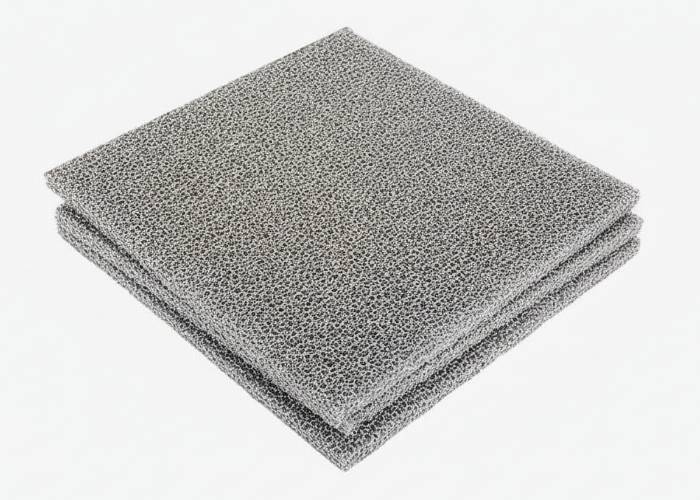
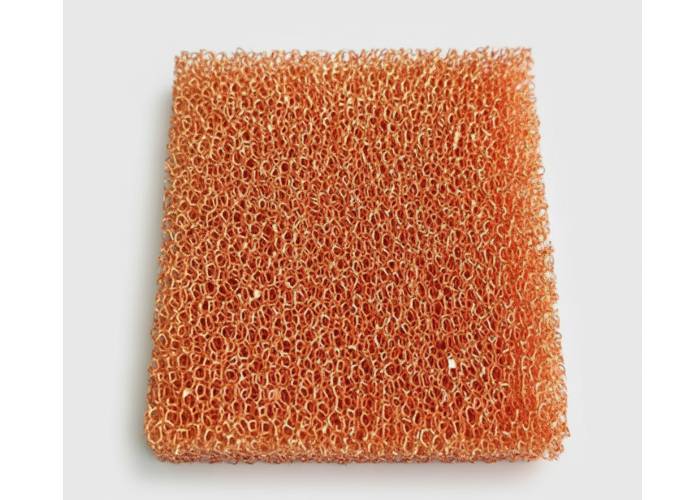
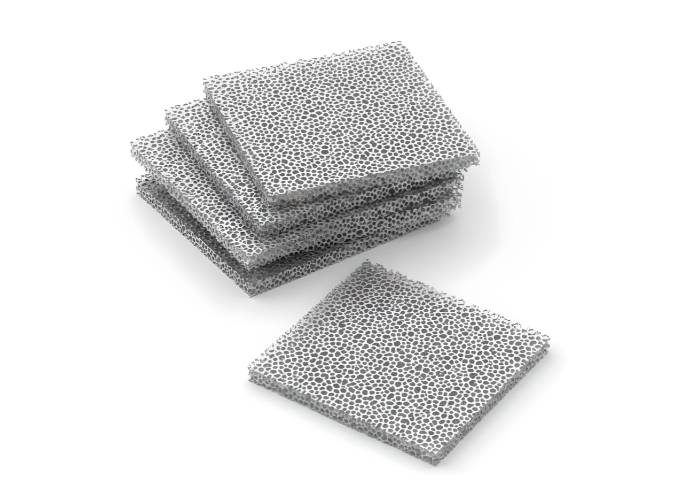
Metal foam electrodes & porous current collectors are open-cell, conductive metal scaffolds used to build and evaluate advanced electrode architectures. Their interconnected pore network provides (i) continuous electronic conduction, (ii) large effective surface area, and (iii) through-thickness permeability, which supports electrolyte wetting and improved mass transport.In research workflows, metal foams are used as:
- Current collectors for thick or structured electrodes
- Substrates for catalyst coating, electrodeposition, or slurry infiltration
- Flow-through electrodes where reactant delivery and gas removal are critical
What You Can Measure / Control (Key Capabilities)
- Build high-surface-area electrodes without complex microfabrication
- Improve electrolyte penetration and wetting for thick/porous electrodes
- Enhance gas transport and bubble release during gas-evolving reactions
- Support catalyst coating / electrodeposition / infiltration workflows
- Reduce contact resistance vs loosely packed powders (when well bonded)
- Enable flow-through / porous-electrode designs and rapid mass transport
- Tune electrode behaviour via pore size, thickness, and compression
- Create repeatable geometries via custom cutting and defined area
Typical Applications
- Electrocatalysis screening (HER, OER, ORR) using foam as a robust substrate
- CO₂ reduction (CO₂RR) and gas-diffusion style electrode builds
- Battery and supercapacitor electrodes (high-loading or 3D scaffold concepts)
- Flow-through electrochemical cells and porous electrode prototypes
- Sensor electrodes and functional coatings on conductive porous substrates
- Corrosion / deposition studies where surface area and transport are critical
Integration & Compatibility
Metal foams are commonly paired with:- Potentiostats-galvanostats for control (CV, CA/CP, EIS) and performance benchmarking
- Electrochemical-cells for sealed, gas-managed, or flow-assisted experiments
- Electrodes (clamps, holders, leads) for reliable electrical connection and defined exposed area
- Battery-test-systems when the foam is used as a battery current collector or scaffold in cycling studies
Product Families & Models
- Nickel Foam - 3D porous nickel substrate used for electrocatalysis, alkaline electrochemistry, supercapacitors, and battery electrode backings where corrosion resistance and conductivity matter.
- Copper Foam - Highly conductive 3D copper scaffold suited to CO₂RR, catalyst deposition, metal plating/deposition studies, and porous current-collector concepts.
- Gold Foam - High-conductivity, noble-metal porous substrate for specialised electrochemistry where chemical inertness and surface stability are critical.
- Silver Foam - Conductive porous silver substrate used in selected electrochemical architectures and functional porous electrodes where Ag chemistry is desired.
- Iron Nickel Foam - Fe–Ni porous metal sheet used as a robust current-collector backing, catalyst support, and flow/filtration-style porous medium in demanding environments.
- Iron Foam - Porous iron substrate used in materials research, porous electrode concepts, and specialised electrochemical screening.
- Titanium Foam Sheet - Porous titanium sheet for corrosion-resistant, gas-evolving, or flow-through electrochemical architectures (including electrolysis-style electrodes).
- Cobalt Foam - Porous cobalt substrate for catalyst-support concepts and materials screening where cobalt-based surfaces are relevant.
- Aluminium Foam - Aluminium foam current collector sheet for battery/electrode prototypes where a lightweight porous Al scaffold is beneficial.
- Stainless Steel Foam - Porous stainless steel substrate offering mechanical robustness and broad lab compatibility for porous current collector and flow-through electrode concepts.
- Customised Size Metal Foam - Cut-to-size metal foam option for matching your exact cell window, clamp geometry, and exposed area requirements (useful for repeatability across experiments).
Notes on custom sizing
Most foam electrodes are routinely cut to custom dimensions for your cell geometry (coin/pouch fixtures, flow cells, clamp cells, etc.). If you need a specific exposed area, thickness, or pore structure for repeatability, request a quote with your target dimensions and application (reaction, electrolyte, temperature range, current density).
How to Choose (Micro-Selection Guide)
Start by matching the metal chemistry to your electrolyte and potential window (e.g., nickel often suits alkaline work; titanium suits harsher/corrosion-sensitive conditions; copper is popular for deposition/CO₂RR studies). Then select thickness and pore structure based on your build method (slurry infiltration vs coating vs pressed layers) and whether gas transport is critical. Finally, plan the electrical connection (clamp/contact area) and define the active geometric area to keep impedance, current density, and repeatability under control.
Why Choose ScienceGears (AU & NZ)
Australia and New Zealand researchers often need practical advice on “what will actually work” in real cells—pore structure vs loading, wetting, contact strategy, and repeatability. ScienceGears supports selection, procurement, and application guidance (including cut-to-size requests), plus integration tips across electrochemical instrumentation and cell hardware for faster, cleaner experimental outcomes.
FAQs
1) What is a metal foam electrode, and how does it work?
A metal foam electrode is an open-cell, 3D porous metal scaffold used as a conductive substrate. The pore network increases effective surface area and provides through-thickness pathways for electrolyte access and gas movement. Researchers typically coat, infiltrate, or deposit active materials onto the foam so it functions as a current collector plus structural support—often improving mass transport compared with flat foils.
2) How do I choose between nickel, copper, aluminium, iron–nickel, and titanium foam?
Choose primarily based on chemical compatibility and your reaction environment. Nickel is widely used in alkaline electrochemistry and as a durable conductive backing. Copper is popular for deposition and CO₂-related electrocatalysis workflows. Aluminium is often used as a lightweight porous current collector concept in battery prototypes. Titanium is preferred when corrosion resistance and stability are critical. Iron–nickel foams can suit robust backings and harsh service.
3) What pore size and thickness should I select for my experiment?
Use smaller pores / thinner foams when you need tighter control of geometric area and lower solution resistance through the structure. Use larger pores / thicker foams when you need easier wetting, higher permeability, or thicker infiltrated electrodes. If you plan to infiltrate slurry or press powders into the foam, ensure the pore structure can accept the loading without blocking transport. For gas-evolving reactions, favour structures that release bubbles efficiently.
4) Are metal foams compatible with potentiostats and EIS measurements?
Yes. Metal foams are commonly used with standard electrochemical methods (CV, CA/CP, and EIS). The key is to ensure a stable electrical contact and a defined active area, because porous structures can introduce additional distributed resistances/capacitances if the connection is inconsistent. If you’re comparing samples, keep compression, contact geometry, and electrolyte wetting time consistent. See /potentiostats-galvanostats for measurement platforms.
5) What are common safety and handling considerations for metal foams?
Handle foams carefully to avoid particle shedding from cutting and to prevent sharp edges. Wear gloves to reduce contamination (especially for catalyst-coated foams). After cutting, remove loose debris (e.g., gentle rinse compatible with your workflow) and dry appropriately. When running high currents or gas-evolving reactions, confirm your cell can vent safely and that wiring/clamps won’t overheat. Always assess compatibility with your electrolyte and operating temperature.
6) Can I coat catalysts or active materials onto metal foams?
Yes—metal foams are widely used as catalyst supports and porous current collectors. Typical approaches include drop-casting/slurry coating, dip-coating, spray coating, electrodeposition, and impregnation followed by drying and (if needed) thermal treatment. For repeatability, control loading by mass/area, ensure uniform wetting, and use consistent drying/pressing conditions. If you need defined exposed area and sealing, pair with suitable fixtures from /electrochemical-cells.
7) Do you supply cut-to-size metal foams in Australia and New Zealand?
Yes. Many labs need foams cut to match a specific cell window or electrode footprint to improve repeatability and simplify assembly. When requesting a quote, share material (Ni/Cu/Al/Fe–Ni/Ti), thickness, approximate pore structure requirement, finished dimensions, and intended application (electrocatalysis, CO₂RR, battery, flow-through). This helps ensure the recommended foam format fits both performance and practical assembly constraints.
Closing Summary
Metal foam electrodes enable practical, high-surface-area electrochemistry by combining conductivity with permeability for electrolyte and gas transport. Whether you’re building a catalyst-coated electrode, a porous current collector concept, or a flow-through architecture, selecting the right metal and pore structure is key to repeatable results. ScienceGears supports researchers across AU & NZ with product guidance, custom sizing options, and integration support for electrochemical testing workflows.