

Stainless Steel Foam Electrode (Porous SS Current Collector)
Stainless Steel Foam Electrode (Porous SS Current Collector)
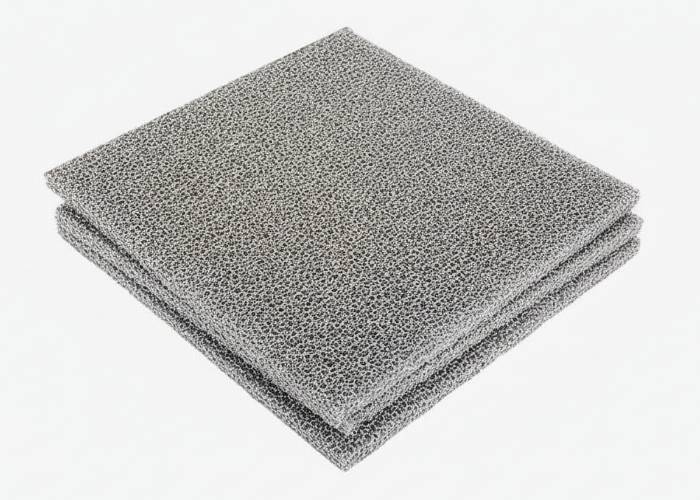
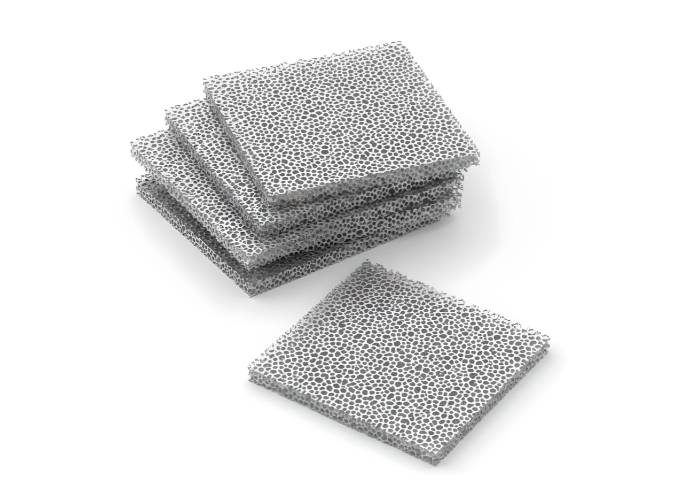
Stainless steel foam is an open-cell porous metal scaffold used as a mechanically robust current collector and flow-through electrode substrate. Its interconnected pores provide continuous electronic conduction and through-thickness permeability, enabling electrolyte access and improved mass transport compared with flat stainless steel foils. This makes it well-suited to practical laboratory prototyping where durability, form stability, and broad compatibility are important.
Key features and specifications (typical)
Stainless steel foams are often supplied in common laboratory grades (selected for corrosion resistance and mechanical strength) and offered with tunable pore structures and thicknesses. Practical benefits include:
- High mechanical robustness for repeated clamping and handling
- Stable porous geometry for reproducible electrode builds
- Good compatibility with many aqueous and non-aqueous workflows (subject to electrolyte/potential window)
- Excellent scaffold utility for catalyst coatings, slurry infiltration, and porous-interface studies
Compatibility and integration
Stainless steel foam integrates directly with potentiostats/galvanostats and common electrochemical methods (CV, CA/CP, EIS). It can be mounted in sealed electrochemical cells, gas-managed fixtures, and flow cells. For best data quality, use a defined exposed area, consistent compression, and stable electrical contact points to minimise contact resistance—particularly important for impedance measurements.
Typical applications
- Porous current collectors for battery and supercapacitor electrode concepts
- Flow-through electrodes and porous-electrode prototypes where transport matters
- Catalyst-support and coating studies requiring a tough, reusable scaffold
- Corrosion and deposition experiments on porous metallic architectures
Why choose ScienceGears
ScienceGears helps AU/NZ researchers match stainless steel foam specifications to their cell design (area, thickness, pore structure) and supports integration across electrochemical cells and test platforms for faster, more repeatable R&D outcomes.
Customer Reviews
Related Product
Explore our precision instruments designed for electrochemical research and energy applications




Still Wondering About Something?
Explore our FAQ for fast, clear answers to the most common questions—available 24/7.