
DC Electronic Loads
DC electronic loads absorb controlled current or power from a device under test, allowing engineers to simulate real electrical loading conditions. They are used for testing power supplies, batteries, chargers, DC-DC converters, fuel cells, solar modules and electronic power systems under constant, dynamic and protection-limit conditions.

Programmable DC Electronic Loads

Economical Programmable DC Electronic Loads
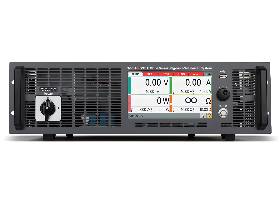
Regenerative DC Electronic Loads
Overview
DC electronic loads are instruments designed to draw controlled electrical power from a source. They allow engineers and researchers to simulate real load conditions when testing power supplies, batteries, converters, chargers, solar modules, fuel cells and DC power systems.
A DC electronic load typically supports several operating modes, including constant current, constant voltage, constant resistance and constant power. Dynamic load operation can be used to evaluate transient response, regulation behaviour, protection limits and stability under changing demand. This makes electronic loads essential for both R&D and quality-control workflows.
In battery testing, electronic loads support controlled discharge and performance evaluation. In power-electronics testing, they are used to validate converter response, power-supply regulation and protection functions. In renewable-energy and clean-energy research, they help evaluate fuel cells, solar modules, DC power systems and energy-conversion components.
Key Features
- Constant current, constant voltage, constant resistance and constant power loading modes.
- Dynamic load profiles for transient response and regulation testing.
- Useful for power supplies, batteries, chargers, converters, solar modules and fuel cells.
- Benchtop, modular and high-power configurations depending on application needs.
- Supports discharge testing, protection testing, burn-in and reliability validation.
- Can be integrated with programmable power supplies and power meters.
- Suitable for research, product development, education and production quality control.
Applications
DC electronic loads are used for battery discharge testing, power-supply validation, charger testing, converter development, fuel-cell loading, solar module evaluation, LED driver testing and production screening. They are also valuable for ageing studies, burn-in testing and automated reliability workflows.
Integration & Compatibility
Electronic loads can be integrated with programmable DC supplies, bidirectional supplies, AC sources, power meters, environmental chambers, battery fixtures and automated test software. In ScienceGears workflows, they can support battery, power-electronics, fuel-cell, solar and clean-energy testing.
Why Choose ScienceGears
ScienceGears helps customers choose electronic loads based on voltage, current, power rating, load mode, transient response, channel count, regenerative capability and automation requirements. This ensures the selected system fits the actual test application rather than only the headline power rating.
FAQs
Q1. What does a DC electronic load do?
A DC electronic load absorbs current or power from a device under test. It simulates a controlled electrical load so engineers can evaluate how batteries, power supplies, converters, chargers, solar modules or fuel cells behave under defined operating conditions. It is the opposite function of a power supply, which delivers power.
Q2. What operating modes are used in DC electronic loads?
Common operating modes include constant current, constant voltage, constant resistance and constant power. Many electronic loads also support dynamic loading, where the load changes rapidly between setpoints. This helps test transient response, regulation stability, protection behaviour and performance under changing electrical demand.
Q3. Can an electronic load be used for battery discharge testing?
Yes. A DC electronic load can discharge a battery under controlled current, power or resistance conditions. It is useful for capacity checks, performance evaluation, protection testing and comparative studies. For advanced battery cycling, it may be combined with a programmable power supply, bidirectional DC source or dedicated battery cycler.
Q4. How is a regenerative electronic load different?
A standard electronic load usually dissipates absorbed energy as heat. A regenerative electronic load can return part of the absorbed energy back to the electrical system, depending on configuration. This is useful for high-power battery, fuel-cell, EV and renewable-energy testing where long-duration discharge would otherwise generate significant heat and energy loss.
Q5. Can ScienceGears help with electronic load selection?
Yes. ScienceGears can help define voltage, current, power, dynamic response, load mode, safety and automation requirements. This is important because an undersized load may not test the device properly, while an oversized or poorly matched system may add unnecessary cost or complexity.
Closing Summary
DC electronic loads are essential tools for controlled load simulation, battery discharge testing and power-system validation. ScienceGears supports Australian and New Zealand laboratories with electronic load solutions for batteries, converters, power supplies, fuel cells, solar devices and automated quality-control workflows.