
PEAL – PEM & Alkaline Water Electrolyser
PEAL systems are integrated test stations designed for controlled PEM and alkaline (or AEM-compatible) water electrolysis experiments, from single-cell validation through to high-power stack testing. They combine DC power delivery, fluid and gas management, safety interlocks, and automated monitoring to generate repeatable performance and durability data. Typical users include university labs, pilot-line teams, and hydrogen technology developers requiring stable operating control and research-grade data acquisition.

Single Cell Electrolyser Test Station (PEM/AEM/Alkaline) – SE300-PEAL / SE500-PEAL (Up to 500 W)
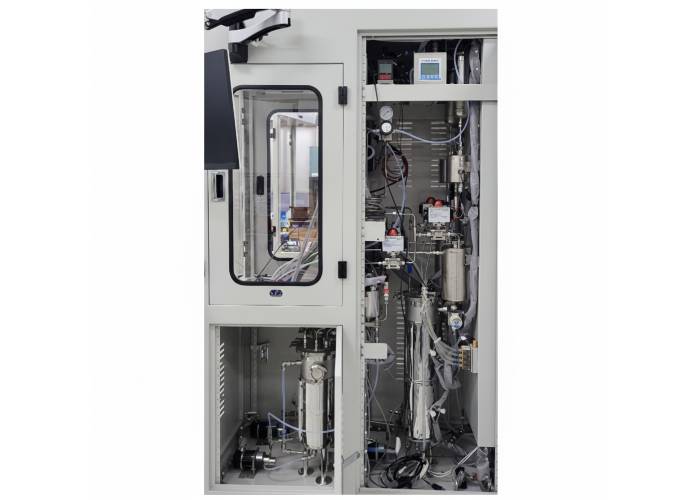
Water Electrolyser Stack Test Station (1–3 kW) – SE1K-PEAL / SE3K-PEAL

Stack Test Station (5–10 kW) – PEM & Alkaline (or AEM) Water Electrolyser Test Station (SE5K-PEAL, SE10K-PEAL)

Water Electrolyser Stack Test Station (30–50 kW) — SE30K-PEAL / SE50K-PEAL

SE100K-PEAL Stack Test Station (100 kW) for PEM & Alkaline/AEM Water Electrolysers
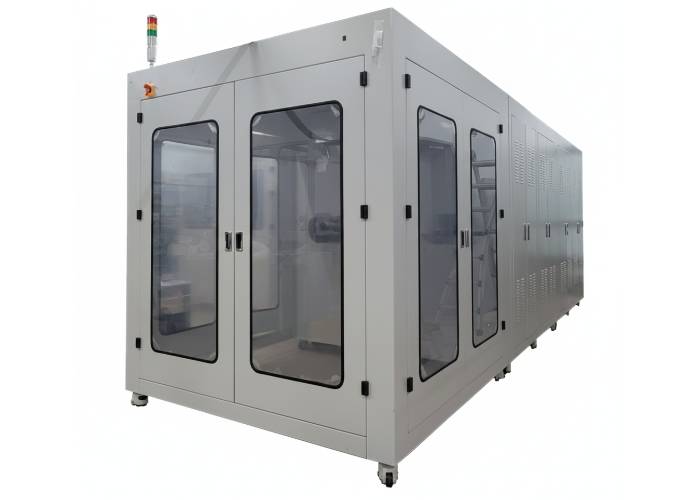
SE200K-PEAL Stack Test Station (200 kW) for PEM & Alkaline (or AEM) Water Electrolysis
Overview
PEAL (PEM & Alkaline) water electrolyser test stations are engineered platforms for generating reliable hydrogen electrolysis data under tightly controlled operating conditions. In water electrolysis, a DC power supply drives the splitting of water into hydrogen at the cathode and oxygen at the anode. The station provides the “balance-of-plant” required to run experiments safely and reproducibly—managing liquids, gas separation, flow control, temperature, pressure, and automated shutdown logic.
These PEAL systems are suited to teams working across multiple electrolyser chemistries or development phases. PEM operation typically focuses on high-purity DI water management and stable control of single-cell or stack operating points, while alkaline/AEM-compatible operation emphasises robust liquid circulation, gas–liquid separation, and consistent operating environments for performance and durability validation. Common specifications on the reference page include mass flow control (turndown 100:1) with automated N₂ purge, temperature/level controls, gas cooling and trapping, cross-over monitoring (H₂-in-O₂ and O₂-in-H₂), back-pressure control (10 bar standard; higher pressure optional), and optional impedance/HFR capability.
What You Can Measure / Control (Key Capabilities)
- Programmable DC power delivery for polarisation and durability testing
- Controlled liquid temperature (RT to ~95 °C) and level monitoring with alarms
- Mass-flow-based purge and gas handling for safer start-up/shutdown sequences
- Gas cooling, condensation trapping, and gas–liquid separation to protect analysers and sensors
- Cross-over concentration monitoring (H₂-in-O₂ / O₂-in-H₂) for safety and diagnostics
- Back-pressure control for realistic operating envelopes (with higher-pressure options)
- Multi-channel cell voltage monitoring for stack diagnostics
- Optional AC impedance / HFR measurements for resistance tracking and degradation studies
Typical Applications
- Baseline performance characterisation (I–V curves, power curves, efficiency mapping)
- Durability and stress testing (load cycling, start/stop, hold tests)
- Component and materials validation (membranes, electrodes, PTLs, catalysts, coatings)
- Stack development and scale-up studies (cell-to-cell uniformity, voltage distribution)
- Safety-focused diagnostics (gas cross-over, pressure stability, purge validation)
- Pilot and pre-production verification for hydrogen technology developers
Integration & Compatibility
PEAL stations are often deployed alongside supporting tools that strengthen interpretation and reproducibility:
Relevant categories (link only where useful):
- potentiostats-galvanostats
- electrochemistry-accessories
- fuel-cell-test-stations
Why Choose ScienceGears (AU & NZ)
ScienceGears supports PEAL deployments across Australia and New Zealand with practical commissioning guidance, operator training, and troubleshooting aligned to research and engineering workflows. We help teams scope fit-for-purpose configurations (single cell vs stack, instrumentation, safety, data logging), coordinate delivery and installation planning, and maintain continuity from early R&D datasets to higher-power validation and pilot testing.
PRODUCT FAMILIES & MODELS
Single Cell Test Station
Designed for controlled single-cell electrolysis studies where repeatability and diagnostic access matter most. This family is typically used for early-stage research—screening catalysts and MEAs, validating operating protocols, and building a stable baseline before stack scale-up. Cabinet-format integration supports safer operation with automated purge, temperature control, gas handling and monitoring.
-
SE300-PEAL — Entry-level single-cell platform for controlled method development and repeatable baseline datasets.
-
SE500-PEAL — Higher-power single-cell platform for expanded operating envelopes and longer durability protocols.
Stack Test Station (1–3KW)
A stack-oriented platform intended for multi-cell testing where current distribution, cell-to-cell behaviour, and longer validation campaigns are key. Suitable for R&D groups moving beyond single cells into small-stack development and verification.
-
SE1K-PEAL — Small-stack testing for controlled characterisation and early scale-up validation.
-
SE3K-PEAL — Higher-capacity small-stack testing for broader load profiles and durability studies.
Stack Test Station (5–10KW)
A mid-power stack station family for labs and engineering teams needing stronger thermal and gas-handling robustness, with capability suited to extended runtime and higher-throughput testing. (Models listed on the reference page are shown below as provided.)
-
SE30K-PEAL — Configurable stack platform used where higher power capability is required and system robustness is prioritised.
-
SE50K-PEAL — Configurable stack platform for wider operating windows and scale-up verification.
Stack Test Station (30–50KW)
High-power stack test stations intended for pilot-oriented validation, longer endurance runs, and engineering verification at meaningful throughput. Appropriate when you need stable pressure/temperature/flow control and comprehensive monitoring under sustained power.
-
SE30K-PEAL — High-power validation platform for pilot-oriented stack testing and repeatable control.
-
SE50K-PEAL — Higher-capacity validation platform for demanding load profiles and longer campaigns.
Stack Test Station (100KW)
A large-scale stack test station for engineering validation and scale-up workflows where robust balance-of-plant and automated monitoring are essential. Well suited to teams bridging R&D data into pilot demonstrations.
-
SE100K-PEAL — Large stack validation for higher-throughput hydrogen production testing and engineering verification.
Stack Test Station (200KW)
A high-power platform for advanced pilot validation and industrially relevant stack testing, where system-level integration, safety logic, and stable control under high load are critical.
-
SE200K-PEAL — Highest-power PEAL platform listed; suited to pilot/scale-up validation and extended high-load operation.
HOW TO CHOOSE
Start by selecting single cell vs stack: single-cell systems are best for fundamental method development and materials screening, while stack stations support scale-up validation and cell-to-cell diagnostics. Next, choose the power range that covers your maximum current/voltage envelope with margin for transients and future stacks. Confirm required temperature and liquid-loop behaviour (DI-water-focused vs alkaline/AEM-compatible circulation), then define pressure requirements (standard vs higher-pressure options). Finally, prioritise the diagnostics you will rely on—cross-over monitoring, multi-channel voltage monitoring, and (if needed) impedance/HFR for resistance tracking and degradation interpretation.
FAQ SECTION
1) What is a PEAL water electrolyser test station, and how does it work?
A PEAL test station is an integrated platform that provides controlled DC power, liquid circulation, gas handling, and safety interlocks for running water electrolysis experiments. It supports reproducible operation by managing temperature, flow, gas–liquid separation, purge sequences, and monitoring signals (e.g., cell voltage and gas cross-over). This lets researchers generate comparable performance and durability data across operating conditions and device generations.
2) Can one station be used for both PEM and alkaline (or AEM) electrolysis testing?
PEAL platforms are intended to support PEM and alkaline (and in some configurations AEM-compatible) operation using a common balance-of-plant approach. In practice, your configuration should match the chemistry you will run—especially the liquid loop materials, sensors, and operating protocols. ScienceGears can help scope the correct configuration based on your electrolyte choice, target current density, and how frequently you intend to change operating modes.
3) How do I choose between SE300-PEAL/SE500-PEAL and the stack test stations?
Choose SE300-PEAL/SE500-PEAL when you need high diagnostic access, fast iteration, and controlled single-cell datasets for publications or early development. Move to stack stations when your goal is scale-up validation—tracking voltage distribution, stability under higher loads, and longer endurance protocols. If your work includes stack engineering, consider whether multi-channel monitoring and higher power headroom are required from the start.
4) What measurements are most useful for electrolyser durability and degradation studies?
For durability work, stable control of temperature, flow, and pressure is as important as electrical control. Useful signals include multi-channel cell voltage (for stack uniformity), cross-over monitoring (H₂-in-O₂ and O₂-in-H₂), and optional impedance/HFR to track resistance changes over time. Pairing the station with complementary diagnostics (e.g., /gas-analysis) can strengthen root-cause interpretation when performance drifts.
5) What safety features should I consider when running electrolysis in the lab?
Key safety considerations include controlled purge sequencing, robust gas–liquid separation and condensation trapping, cross-over monitoring, and automated shutdown logic for abnormal conditions (pressure excursions, leaks, or sensor alarms). Your lab should also plan ventilation, gas detection strategy, and operating procedures appropriate to hydrogen service. A well-configured station reduces risk by integrating these controls into repeatable workflows rather than relying on manual steps.
6) Do I need back-pressure control, and what does it change experimentally?
Back-pressure control helps you run electrolysis under more realistic operating conditions and stabilises gas management across varying loads. It can improve repeatability in studies where pressure affects gas solubility, bubble behaviour, and water management. If your research involves pilot-oriented validation or comparisons to industrial conditions, specifying pressure control early can avoid rework later when moving from benchtop protocols to scaled systems.
7) How do PEAL stations integrate with other hydrogen test infrastructure?
Many teams use electrolysis and fuel-cell testing together—electrolysers generate hydrogen, while fuel-cell stations validate utilisation, contamination sensitivity, or system-level workflows. ScienceGears supports integrated planning across categories such as /fuel-cell-test-stations, including configuration guidance so datasets remain consistent across generation and utilisation experiments.
8) Can ScienceGears support procurement and commissioning in Australia and New Zealand?
Yes. ScienceGears supports AU & NZ procurement with configuration guidance, installation planning, operator training, and practical troubleshooting aligned to research workflows. We help ensure your system specification matches your experimental protocol (chemistry, power range, sensors, and automation) and that your team can generate repeatable data from day one.
CLOSING SUMMARY
PEAL water electrolyser test stations provide a practical pathway from controlled single-cell science to high-power stack validation, with integrated safety logic, monitoring, and automated control suited to research-grade electrolysis work. Whether you are characterising new materials or validating pilot-scale stack operation, ScienceGears can help you select and deploy the right platform for your laboratory or engineering workflow across Australia and New Zealand.