
Battery Materials
ScienceGears supplies research-grade battery materials for lithium-ion, sodium-ion, lithium–sulfur, supercapacitor and solid-state studies—covering cathode/anode actives, electrolyte salts, separators, binders, conductive carbons, current collectors, and cell hardware. These materials support reproducible electrode formulation, coin/pouch/cylindrical cell prototyping, and performance benchmarking across Australian and New Zealand labs.

Cathode materials

Anode materials

Electrolytes & salts

Separators & membranes

Binders / solvents / additives

Conductive carbons

Current collectors (foil)

Battery tabs / consumables / packaging
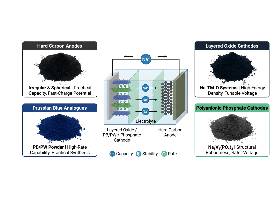
Sodium-ion battery materials
Battery Materials for Li-ion, Na-ion & Solid-State Research
Battery performance is ultimately governed by materials chemistry and interfaces: lithium/sodium-ion transport through electrolyte, charge-transfer at the electrode/electrolyte boundary, and microstructure within the composite electrode. This category brings together the essential “building blocks” used in modern cell R&D—aligned with TOB’s battery materials portfolio (cathodes, anodes, electrolytes, separators, binders, carbons, current collectors and cell cans).
Key Materials & Options
- Cathode materials (Li-ion): NCM111/532/622, NMC811 (single/multi-crystal), LFP, LCO, NCA, LMO, LNMO/LMNO, Li-rich; plus Li–S carbons (HPC, mesoporous carbon).
- Cathode materials (Na-ion): layered oxides (e.g., NMO), polyanion (NVP/C), and Prussian blue analogues/Prussian white.
- Anode materials: graphite grades, LTO (white/blue), silicon composites (Si/Graphite, Si/Carbon, SiOx blends), and hard carbon for Na-ion.
- Electrolytes & salts: common lithium salts (e.g., LiPF₆, LiBOB, LiTFSI) and supporting electrolyte materials used across Li-ion/Na-ion/Li–S and supercapacitors.
- Solid-state electrolytes: LLZO variants (incl. doped compositions), LATP/LAGP families for ceramic electrolyte research.
- Separators & membranes: PP/PE separators, trilayer concepts, ceramic/PVDF-coated options.
- Binders / additives: PVDF, CMC, SBR, PTFE formats, aqueous binders, NMP and functional additives (e.g., lithium polyacrylate).
- Conductive carbons: Super P-type carbons, carbon black, CNTs, graphene oxide and conductive graphite powders for percolation and rate capability tuning.
- Current collectors & foils: Cu/Al foils (incl. porous/etched and carbon-coated options), metal meshes and foams; plus tabs, tapes, and cell cans for prototyping.
Applications
- Cathode/anode screening: composition comparisons (NCM vs LFP vs LNMO; graphite vs SiOx blends).
- Electrolyte optimisation: salt selection and concentration studies; impedance and low-temperature behaviour.
- Solid-state batteries: ceramic electrolyte processing, interfacial engineering, and symmetric cell testing.
- Li–S / Na-ion research: porous carbon hosts, Prussian white/blue cathodes, hard-carbon anodes.
- Cell prototyping: coin/pouch/cylindrical builds using compatible separators, foils, tabs and cases.
Integration & Compatibility
These materials are typically paired with electrode processing tools (mixing, coating, calendaring), cell assembly hardware (coin/pouch tooling), and electrochemical test systems. For characterisation workflows, they integrate naturally with potentiostats and specialised cells/fixtures used in half-cell and full-cell testing.
Why Choose ScienceGears
ScienceGears supports AU & NZ researchers with local technical guidance, material selection help (chemistry vs performance trade-offs), and practical recommendations for pairing materials with assembly/testing workflows—so your results are defensible and repeatable.
FAQ Section
Q1. What battery materials do I need to build a lab-scale Li-ion coin cell?
At minimum you need a cathode active, anode active, conductive carbon, binder, a suitable separator, and an electrolyte (salt + solvent system), plus current collectors (Al for cathode, Cu for anode) and coin-cell hardware. The exact choices depend on voltage window, target capacity, rate, and safety constraints.
Q2. How do NCM111, NCM532, NCM622 and NMC811 differ in practice?
They mainly differ by Ni/Co/Mn ratio, which shifts the balance between energy density, stability, and cost. Higher-Ni grades (e.g., 622/811) typically target higher capacity, while lower-Ni compositions can be more forgiving in processing and cycling. Selection should match your cycling protocol, electrolyte, and formation strategy.
Q3. What’s the role of electrolyte salts like LiPF₆, LiTFSI and LiBOB?
Electrolyte salts provide the mobile ions (Li⁺/Na⁺) and strongly influence conductivity, SEI/CEI formation, and high-voltage stability. Many lithium battery electrolytes are formulated around a lithium salt plus organic solvents; changing the salt can shift impedance growth, gas generation risk, and temperature behaviour, so it’s often a key optimisation lever.
Q4. When should I consider ceramic solid-state electrolytes like LLZO, LATP or LAGP?
Consider them when you want improved thermal stability and to study solid–solid interfaces (electrode/electrolyte contact, interlayers, and mechanical pressure effects). Ceramic electrolytes also enable research into lithium metal compatibility and dendrite suppression strategies—though processing, densification, and interfacial resistance become major design variables.
Q5. What materials are commonly used for sodium-ion batteries?
Sodium-ion research often uses hard carbon anodes and cathodes such as layered oxides, polyanion frameworks (e.g., NVP-type), and Prussian blue/Prussian white analogues. These chemistries are attractive for cost and resource availability, but require electrolyte and binder choices tuned for Na⁺ transport and stable interphases.
Closing Summary
Battery Materials are the foundation of credible cell R&D—whether you are screening NCM/LFP cathodes, optimising graphite/SiOx anodes, developing Na-ion chemistries, or evaluating solid-state electrolytes. ScienceGears supports researchers across Australia and New Zealand with curated material options and practical guidance to help translate material choices into reproducible electrode fabrication and defensible electrochemical data.