
Programmable DC Power Supplies
Programmable DC power supplies provide controlled voltage and current output for research, product development and quality-control testing. They are used for electronic device biasing, battery charging, power-converter validation, electrochemical systems and automated laboratory workflows where stable, repeatable and adjustable DC power delivery is required.

Linear Programmable DC Power Supplies
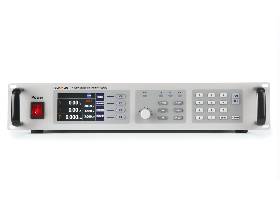
Switching Programmable DC Power Supplies
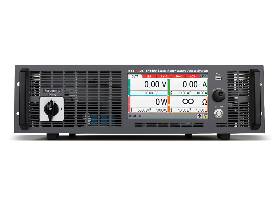
High-Power Programmable DC Power Supplies

Multi-Channel Source-Load DC Power Supplies
Overview
Programmable DC power supplies are essential instruments for delivering controlled direct-current voltage and current to a device under test. Unlike simple fixed-output supplies, programmable DC sources allow users to define voltage limits, current limits, ramp profiles, step sequences and remote-control workflows for repeatable electrical testing.
In research and engineering laboratories, DC power supplies are used to power electronic circuits, charge batteries, drive electrochemical systems, test DC-DC converters, validate embedded devices and simulate controlled input conditions. Depending on the application, users may require low-noise linear output, wide-range switching output, multi-channel operation, high-voltage capability or high-current/high-power performance.
ScienceGears supports laboratories across Australia and New Zealand with programmable DC power supply solutions suitable for electronics R&D, battery development, clean-energy systems, electrochemistry, education and production testing.
Key Features
- Programmable voltage and current control for repeatable laboratory testing.
- Constant voltage and constant current operation for device protection and stable output.
- Linear, switching, multi-channel and high-power configurations depending on application needs.
- Suitable for benchtop use, automated test systems and long-duration validation.
- Useful for battery charging, converter testing, circuit development and electrochemical workflows.
- Remote-control and data-logging options depending on model configuration.
- Selection support for voltage range, current range, power rating, ripple, resolution and interface requirements.
Applications
Programmable DC power supplies are used in battery and supercapacitor charging, BMS development, DC-DC converter testing, LED driver validation, embedded electronics, electrochemical cell operation and research instrument control. They are also valuable in quality-control environments where repeatable voltage/current conditions are needed for production screening, ageing studies and functional testing.
Integration & Compatibility
These systems can be integrated with battery cyclers, electrochemical cells, environmental chambers, data acquisition systems, oscilloscopes, power meters and custom ScienceGears test fixtures. They can also support auxiliary functions in fuel-cell, electrolyser, solar and power-conversion test setups.
Why Choose ScienceGears
ScienceGears helps researchers and engineers select programmable DC power supplies based on real test requirements rather than model numbers alone. We can assist with voltage/current sizing, channel selection, power-rating calculation, interface requirements and integration with existing laboratory workflows across Australia and New Zealand.
FAQs
Q1. What is a programmable DC power supply used for?
A programmable DC power supply delivers controlled direct-current voltage and current to a device under test. It is commonly used for electronics development, battery charging, converter testing, electrochemical systems, sensor biasing and automated validation. The programmable function allows users to define output conditions, limits and test sequences for repeatable laboratory or production testing.
Q2. What is the difference between linear and switching DC power supplies?
Linear DC power supplies generally provide lower-noise output and are useful for sensitive electronics or precision research. Switching DC power supplies are usually more efficient and better suited for wider voltage/current ranges and higher-power applications. The right choice depends on noise sensitivity, power rating, efficiency, size, heat generation and test requirements.
Q3. How do I choose the correct voltage and current range?
The selected power supply should cover the maximum voltage and current required by the device under test, while leaving enough safety margin for transient behaviour and future experiments. It is also important to consider power rating, resolution, ripple, response speed, protection limits, communication interface and whether single-channel or multi-channel output is required.
Q4. Can programmable DC power supplies be used for battery testing?
Yes. Programmable DC power supplies can support controlled battery charging, pack/module evaluation, auxiliary power supply, BMS testing and pre-conditioning workflows. For full charge/discharge cycling, they are often paired with electronic loads, bidirectional DC supplies or dedicated battery cyclers depending on the level of automation and measurement accuracy required.
Q5. Can ScienceGears help select a suitable DC power supply?
Yes. ScienceGears can help match the DC power supply to your voltage, current, power, accuracy, noise, channel-count and automation requirements. This is useful for universities, R&D laboratories, clean-energy groups and electronics teams needing practical guidance before selecting equipment for long-term laboratory or production use.
Closing Summary
Programmable DC power supplies are fundamental tools for controlled electrical testing, supporting electronics, battery, electrochemistry and clean-energy research. Through ScienceGears Australia and New Zealand, laboratories can access suitable DC power supply solutions with technical guidance for model selection, system integration and reliable experimental operation.