
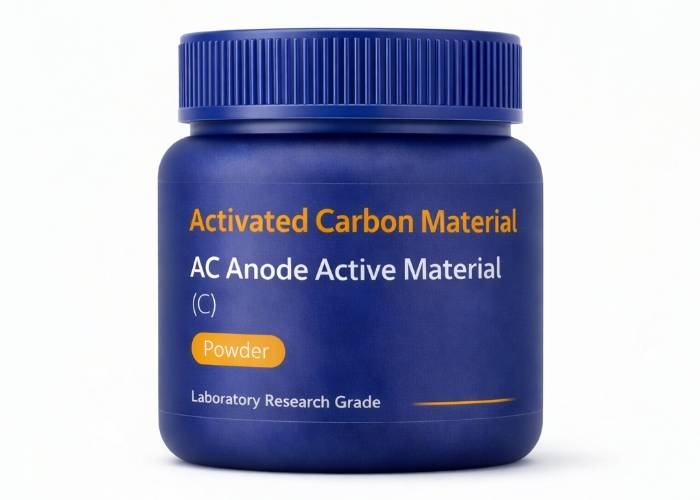
Overview
Activated carbon (AC) is a porous, conductive carbon material widely used as an anode (or EDLC electrode) in supercapacitors and hybrid supercapacitor–battery (SCB) systems. Its energy storage mechanism is dominated by electric double-layer capacitance (EDLC), where electrolyte ions reversibly adsorb at the internal surface of a high-surface-area pore network. This enables fast charge–discharge, low polarisation, and strong cycling stability—particularly valuable for power-focused energy storage research.
Available Grades and Key Specifications
Organic electrolyte grade
- Surface area: 2000–2500 m²/g; D50: ~10 µm
- Ash: 0.21% (spec <0.5%); moisture: <3%
- Iron salt: <0.003%; bulk density: >0.4 g/mL
- Reference capacitance (organic): ~160 F/g
Aqueous electrolyte grade
- BET: 2000–2500 m²/g; D50: ~10 µm
- Ash: <0.5%; moisture: <10%; bulk specific weight: >0.4 g/mL
- Reference capacitance (water): ~260–300 F/g
High-conductivity grade
- BET: 1600–1700 m²/g; fine pore volume: 0.6–0.8 mL/g
- Fe impurity: <50 ppm; conductivity: 0.30–0.40 S/mm
- D50: 5–8 µm; capacitance: >140 F/g
Typical Applications
- EDLC electrodes and hybrid SCB anodes (organic/aqueous systems)
- High-power storage studies (rate capability, impedance, ageing)
- Electrode formulation optimisation (slurry casting, conductive networks)
Why Source via ScienceGears
ScienceGears supports Australian & NZ researchers with material selection guidance (organic vs aqueous compatibility), integration advice, and workflow alignment with related platforms such as battery cyclers, potentiostats/EIS, and in-situ spectroscopy/electrochemical cell hardware for deeper mechanistic studies.
Resources & Downloads
Everything you need to get started
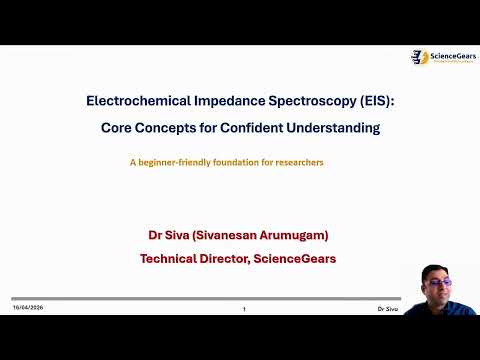
Electrochemical Impedance Spectroscopy (EIS): Core Concepts for Confident Understanding
Squidstat - Admiral
Customer Reviews
Related Product
Explore our precision instruments designed for electrochemical research and energy applications



Still Wondering About Something?
Explore our FAQ for fast, clear answers to the most common questions—available 24/7.