
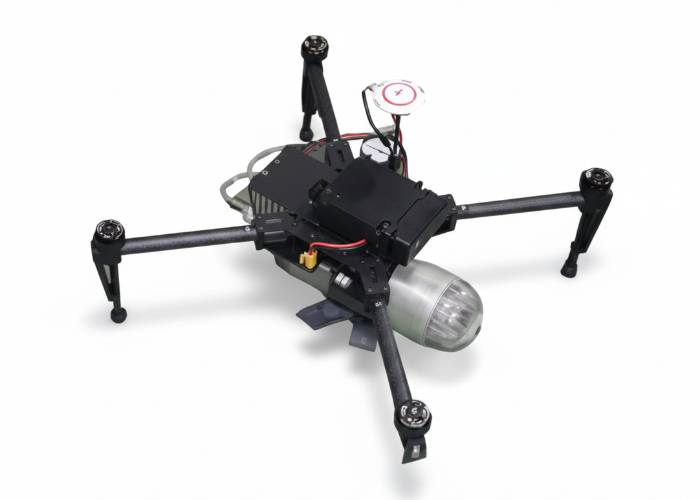
Drone (Sensor-Integrated Research UAV System)
Drone (Sensor-Integrated Research UAV System)
Principle of operation and working mechanism
A research drone (UAV) is a mobile measurement platform that carries instrument payloads to collect spatially resolved data across hard-to-access sites. The working mechanism combines stabilised flight control (IMU + GNSS), mission planning (waypoints or manual piloting), and real-time sensor acquisition. Payload data are time-stamped and geo-tagged, enabling quantitative mapping of gases, temperature fields, and surface features relevant to energy and electrochemistry research environments.
Key features and technical highlights
- Payload-ready architecture: modular mounts for gas sensors, optical heads, sampling inlets, or compact spectroscopic modules.
- Stable data quality in motion: vibration isolation and gimbal stabilisation options to improve signal integrity for imaging and sensing.
- Sensing modalities (typical):
- electrochemical gas sensors (e.g., H₂, O₂, CO) for rapid screening
- optical/IR imaging for hotspot detection and thermal diagnostics
- spectroscopic add-ons where required (compact optical sensing modules) - Data workflow: onboard logging plus telemetry for live monitoring; exportable datasets for post-processing, reporting, and AI-assisted analysis.
- Safety-first operation: geofencing, return-to-home logic, and configurable mission constraints suitable for controlled research sites.
Compatibility and integration
This drone platform is typically integrated with broader system-integration workflows, including sensor calibration benches, test rigs, and lab data systems. It can complement ScienceGears’ instrumentation ecosystem by pairing field measurements with lab validation (e.g., electrochemical characterisation of sensor materials, battery testing for UAV power systems, and spectroscopic confirmation workflows).
Typical applications
- Hydrogen and electrolysis facility monitoring (leak screening, ventilation assessment)
- Thermal inspections of energy systems and balance-of-plant components
- Environmental mapping around pilot plants and research infrastructure
- Site surveys supporting experimental design and safety documentation
Why choose ScienceGears
ScienceGears supports researchers with practical, measurement-led integration—helping you select payload types, data workflows, and complementary lab instruments so drone-acquired results remain scientifically defensible and reproducible.
Customer Reviews
Still Wondering About Something?
Explore our FAQ for fast, clear answers to the most common questions—available 24/7.