

LATP Lithium Aluminum Titanium Phosphate
LATP Cathode Active Material (Li₁.₃Al₀.₃Ti₁.₇(PO₄)₃) Powder
Overview
Lithium Aluminium Titanium Phosphate (LATP) is a NASICON-type lithium-ion conducting ceramic widely studied for solid-state battery and electrochemical energy storage research. With the chemical composition Li₁.₃Al₀.₃Ti₁.₇(PO₄)₃, LATP exhibits a three-dimensional framework that enables fast lithium-ion transport through interconnected channels, offering high ionic conductivity at room temperature.
Unlike conventional liquid electrolytes, LATP functions as a solid lithium-ion conductor, improving thermal stability, chemical robustness, and safety. The partial substitution of Ti⁴⁺ with Al³⁺ introduces lithium vacancies, which significantly enhances Li⁺ mobility within the crystal lattice.
Key Material Features
- High lithium-ion conductivity suitable for solid-state electrochemical systems
- NASICON-structured phosphate framework for structural stability
- High chemical purity with impurity levels controlled at ppm scale
- Excellent thermal and electrochemical stability
- Fine, white ceramic powder suitable for sintering and composite fabrication
Material Specifications
- Appearance: White powder
- Chemical Formula: Li₁.₃Al₀.₃Ti₁.₇(PO₄)₃
- Crystal Structure: NASICON-type
- Purity: Impurity content controlled at unit ppm levels (Fe, Cu, Ni, Na, K, Mg, Si, Zr)
Compatibility and Research Use
LATP powder is compatible with:
- Solid-state battery prototyping
- Composite polymer–ceramic electrolytes
- Symmetric and asymmetric electrochemical cells
- Electrochemical impedance spectroscopy (EIS) using potentiostats
- Structural characterisation via XRD, SEM, and Raman spectroscopy
Typical Applications
- Solid-state lithium battery research
- Ceramic electrolyte development
- All-solid-state cell testing
- Ionic conductivity and interfacial studies
- Advanced electrochemistry and materials science research
Why Choose ScienceGears
ScienceGears supplies research-grade LATP materials tailored for advanced electrochemistry and battery testing in Australia and New Zealand. Our portfolio integrates seamlessly with potentiostats, electrochemical cells, battery cyclers, and in-situ spectroscopy systems, enabling researchers to move from materials development to full electrochemical evaluation with confidence.
Resources & Downloads
Everything you need to get started
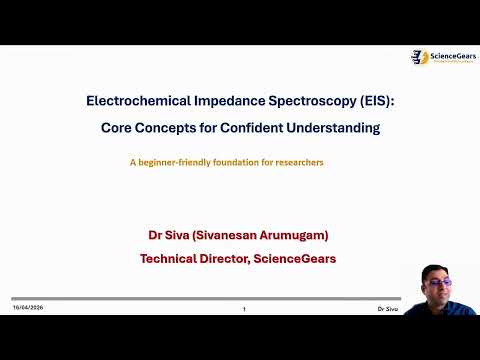
Electrochemical Impedance Spectroscopy (EIS): Core Concepts for Confident Understanding
Squidstat - Admiral
Customer Reviews
Related Product
Explore our precision instruments designed for electrochemical research and energy applications

Still Wondering About Something?
Explore our FAQ for fast, clear answers to the most common questions—available 24/7.