
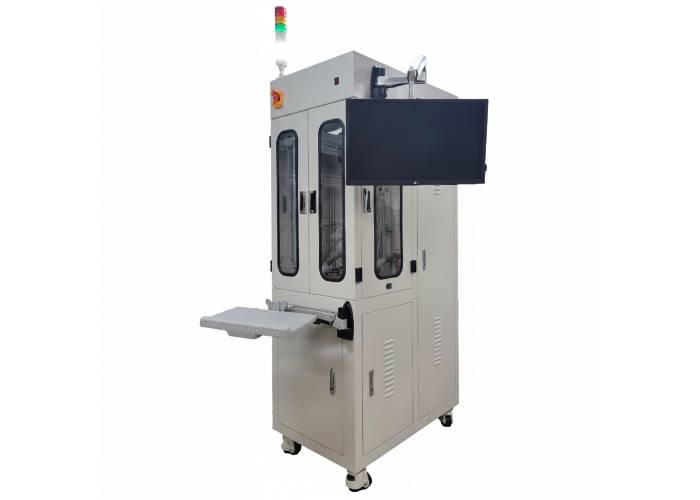
Single Cell CO₂ Conversion (Reduction) Test Station (≈300 W)
Single Cell CO₂ Conversion (Reduction) Test Station (≈300 W)
Overview
The Single Cell CO₂ Conversion (Reduction) Test Station (≈300 W) is an integrated electrochemical test platform designed to run repeatable CO₂ electroreduction (CO2RR) experiments under tightly controlled gas, liquid, temperature and pressure conditions. It combines precision gas delivery, humidification, electrolyte circulation and automated safety logic with a configurable DC power/load stage suitable for single-cell CO₂ conversion studies in the ~300 W class.
Principle of operation
CO₂ (often with optional co-feeds such as N₂ or CO, depending on the experiment) is metered via mass flow control and conditioned through CO₂ humidification before entering the cathode side of a single-cell reactor (e.g., GDE-based or membrane-separated architectures). The station stabilises critical boundary conditions—flow, dew point, pressure, and temperature—while the electrical subsystem applies controlled current/voltage for catalyst activity, selectivity and durability testing. Product gases can be routed via a sampling outlet for downstream analysis workflows.
Key features and specifications
- ≈300 W test range for single-cell CO₂ conversion experiments
- CO₂ supply MFC + CO₂ mass flow measurement (MFM) for stable feed control
- CO₂ humidifier and dryer/dewpoint monitoring for water management studies
- Electrolyte circulation system with: flow control, liquid temperature control (heating/cooling), and gas–liquid separation
- Automatic pressure control (up to ~10 bar class) to support pressurised operation
- Integrated gas concentration sensing (CO, O₂, CO₂) plus N₂ auto purge system for safer operation
- Full automation software control for recipe-based testing and reproducibility
Compatibility and typical applications
Compatible with common single-cell CO2RR hardware (flow-field cells, membrane-separated cells, GDE setups) and lab analytics via sampling lines. Typical use cases include:
- Catalyst and GDE screening for CO₂-to-CO and other CO2RR pathways
- Membrane, electrolyte and humidity optimisation
- Operando parameter sweeps (flow/pressure/dew point/current density)
- Durability and stability testing under realistic gas management conditions
Why choose ScienceGears
ScienceGears supports Australian and New Zealand researchers with local technical guidance, system configuration support, and integration advice across related platforms such as potentiostats, electrochemical cells, and spectroscopy-enabled electrochemistry where relevant to CO2RR workflows.
Customer Reviews
Still Wondering About Something?
Explore our FAQ for fast, clear answers to the most common questions—available 24/7.