

SOEC Stack Test Station (5–10 kW) — SE5K-SO / SE10K-SO
SOEC Stack Test Station (5–10 kW) — SE5K-SO / SE10K-SO
Overview
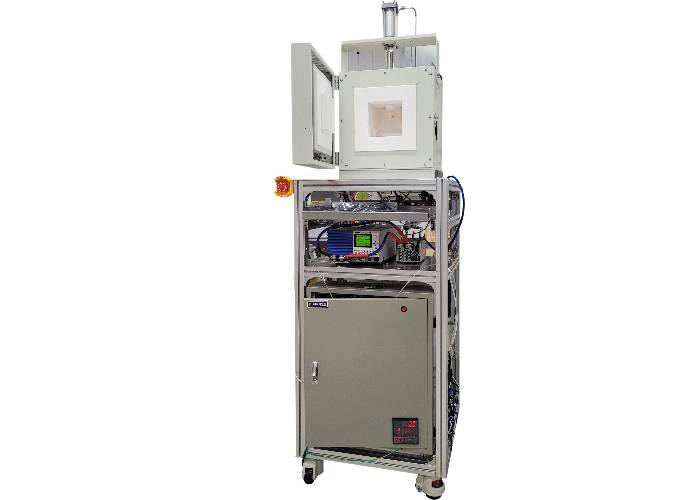
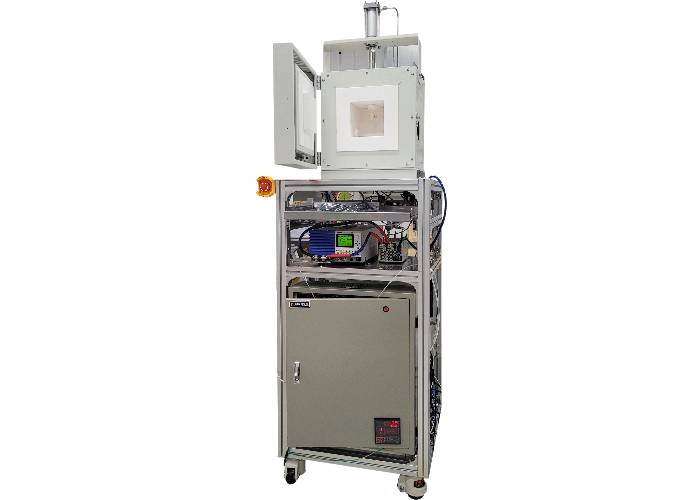
The SE5K-SO and SE10K-SO are integrated SOEC (solid oxide electrolyser cell) stack test stations engineered for controlled evaluation of 5 kW and 10 kW-class high-temperature water electrolysis stacks. The platform combines DC power delivery, gas handling, safety monitoring and automated control software in a floor-standing cabinet to support repeatable performance and durability testing.
Principle of operation
SOEC stacks operate at elevated temperature, converting steam to hydrogen electrochemically. The station regulates and logs the key balance-of-plant variables that govern stack behaviour—current/voltage, gas/steam flow, temperature, and pressure—while separating and conditioning product gases for measurement and safe exhaust.
Key features and specifications
- Models: SE5K-SO (5 kW class), SE10K-SO (10 kW class)
- Cabinet (typ.): 1000 (W) × 1800 (D) × 2000 (H) mm
- Gas flow measurement: mass flow metering with wide turndown capability for H₂/O₂ streams
- High-temperature gas line heating: direct-gas line heating up to 600 °C (application-dependent)
- Water–gas management: separation, drying and filtering architecture for stable measurements
- Control & software: automated operation with LabVIEW-based multi-function programs and Excel-compatible data outputs
- Optional add-ons:
- Cell loading pressure control (auto control; high-force loading capability)
- Exhaust gas cooling (air radiator or water heat exchanger)
- Back-pressure control (up to 3.5 bar class)
- Integrated AC-impedance/EIS option for frequency-domain diagnostics
Compatibility and typical applications
Designed for SOEC stack development across universities, CSIRO-style research labs, and industrial R&D groups working on:
- stack polarisation and efficiency mapping (5–10 kW class)
- long-duration durability/degradation studies
- validation of seals, manifolds and balance-of-plant controls
- materials and interconnect optimisation under realistic operating pressure/flow conditions
Why ScienceGears
ScienceGears supports end-to-end deployment in Australia and New Zealand—helping you specify utilities, safety interfaces and measurement upgrades, and integrate complementary tools such as potentiostats/EIS modules, gas analysis, and electrochemical test cells to build a complete hydrogen research workflow.
Customer Reviews
Related Product
Explore our precision instruments designed for electrochemical research and energy applications

Still Wondering About Something?
Explore our FAQ for fast, clear answers to the most common questions—available 24/7.