

Introduction: Why Understanding This Distinction is Critical for the Future
Welcome to the detailed guide comparing two pillars of modern electrochemistry and clean energy: batteries and fuel cells. This comprehensive resource is designed to help you not only excel in exams for engineering, chemistry, or environmental science courses but also to understand the technologies shaping our sustainable future. We’ll move beyond memorisation to build a robust conceptual framework, supported by clear visuals, key equations, and real-world context.
As global energy systems transition, the debate between battery electric vehicles (BEVs) and fuel cell electric vehicles (FCEVs) highlights the need to grasp these technologies' core principles. This guide breaks down complex topics into digestible segments, ensuring you grasp the fundamental differences, operational mechanisms, and practical implications of each system. This guide is designed to strengthen your understanding.
Fundamental Principles: How They Work at the Core
The most fundamental distinction lies in their core function: one stores energy, the other converts it.
Batteries: Self-Contained Energy Storage Devices
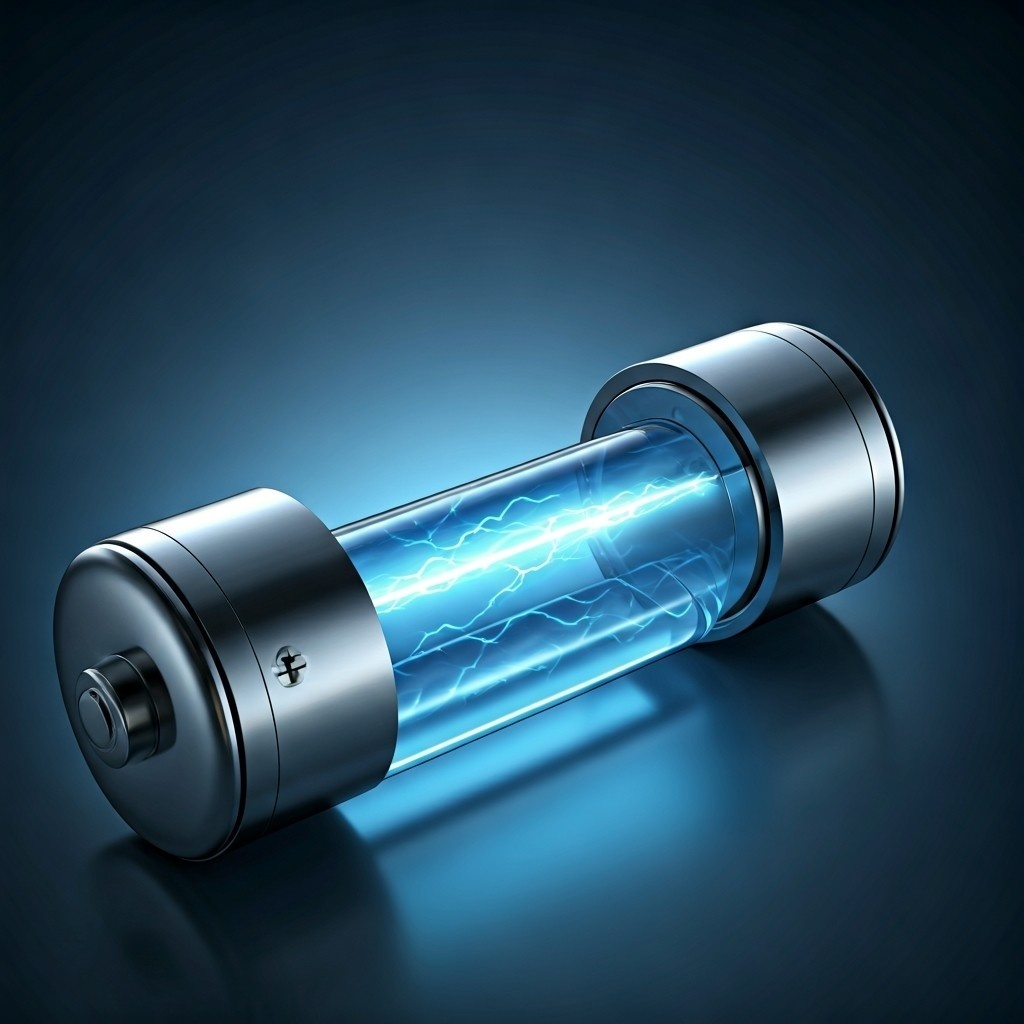
A battery is an electrochemical device that stores energy in chemical form within its structure and converts it to electrical energy on demand. It is a closed system. The key reactants are sealed inside at the time of manufacture (primary batteries) or during charging (secondary/rechargeable batteries).
- The Process (Discharge): During discharge, a spontaneous redox reaction occurs. The anode (negative electrode) undergoes oxidation, releasing electrons. These electrons travel through an external circuit—powering your device—to the cathode (positive electrode), which undergoes reduction. Ions move internally through the electrolyte to maintain charge balance.
- The Limitation: A battery's energy capacity is finite, determined by the amount of active chemical material within it. Once depleted, a primary battery is discarded, while a secondary battery must be recharged. Recharging forces the reactions to reverse using an external power source, restoring the original chemical conditions.
Fuel Cells: Continuous Energy Conversion Systems
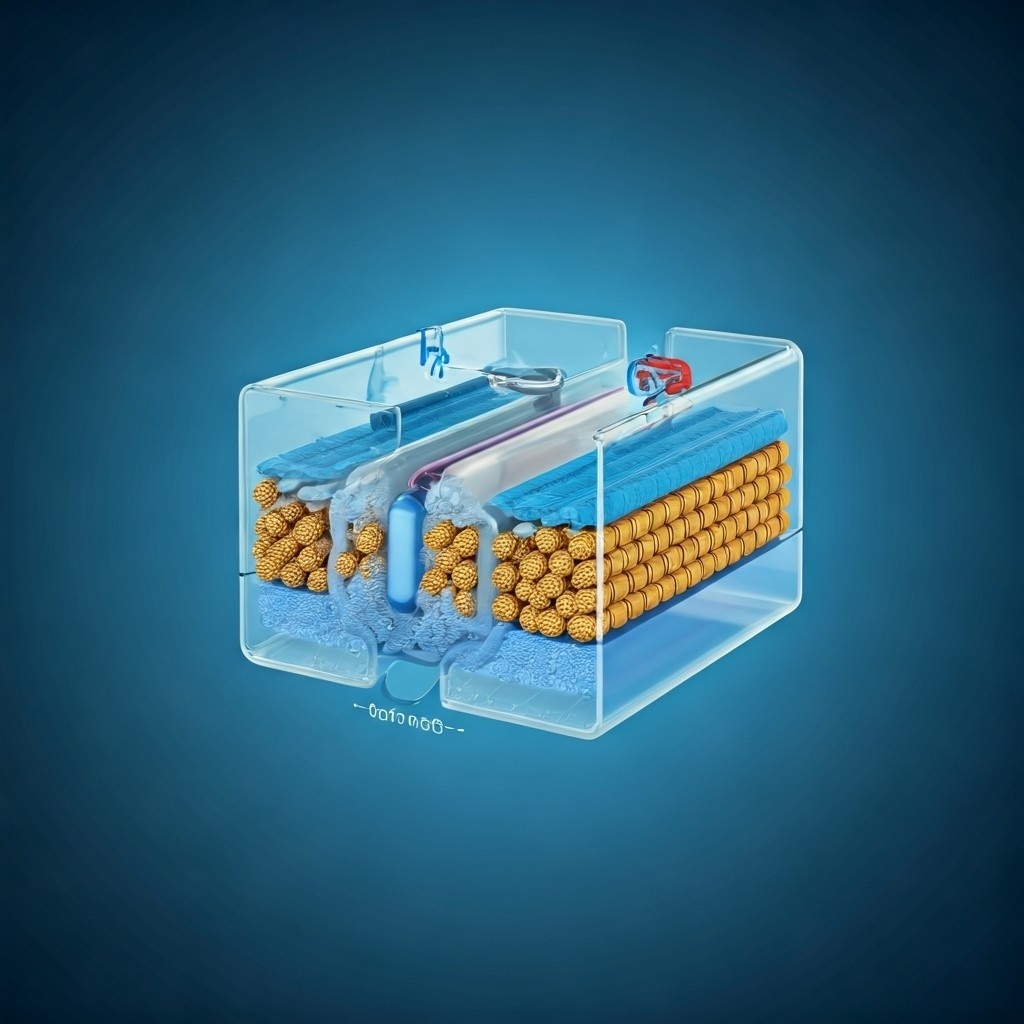
A fuel cell is an electrochemical device that continuously converts the chemical energy of an external fuel into electricity. It is an open system. Think of it as a "power plant" where fuel (e.g., hydrogen, methanol) and oxidant (e.g., oxygen from air) are supplied from outside sources.
- The Process: Fuel is fed to the anode, and an oxidant to the cathode. Electrochemical reactions occur at the electrodes, generating electrons, ions, and by-products (like water and heat). The electrons flow through an external circuit, creating a continuous electric current.
- The Advantage: The cell will produce electricity as long as fuel and oxidant are supplied. There is no "discharge" in the battery sense; it does not store meaningful energy internally. Refuelling is a matter of replenishing the fuel supply, not waiting for an electrical recharge cycle.
Key Chemical Equations and Reactions: The Language of Electrochemistry
For exams, you must be able to write, interpret, and distinguish between the half-reactions and overall reactions for each technology.
Battery Chemistry: The Reversible Reaction (Lithium-Ion Example)
Lithium-ion batteries dominate portable electronics and EVs due to their high energy density and rechargeability.
- Discharge Phase (Spontaneous, Powering a Device):
- Anode (Oxidation):
LiC₆ → C₆ + Li⁺ + e⁻- Lithium atoms intercalated in graphite lose an electron, becoming Li⁺ ions that travel into the electrolyte.
- Cathode (Reduction):
Li₁₋ₓCoO₂ + xLi⁺ + xe⁻ → LiCoO₂- Li⁺ ions and electrons are reincorporated into the lithium cobalt oxide structure.
- Overall Discharge Reaction:
LiC₆ + CoO₂ → C₆ + LiCoO₂
- Anode (Oxidation):
- Charge Phase (Non-Spontaneous, Requires External Power):
- The reactions above are forced to run in reverse by applying an external voltage greater than the battery's own potential.
Exam Tip: Note that the reactants (LiC₆ and CoO₂) are contained within the cell. As the discharge proceeds, they are consumed and transformed into products (C₆ and LiCoO₂).
Fuel Cell Chemistry: The Continuous Flow Reaction (PEMFC Example)
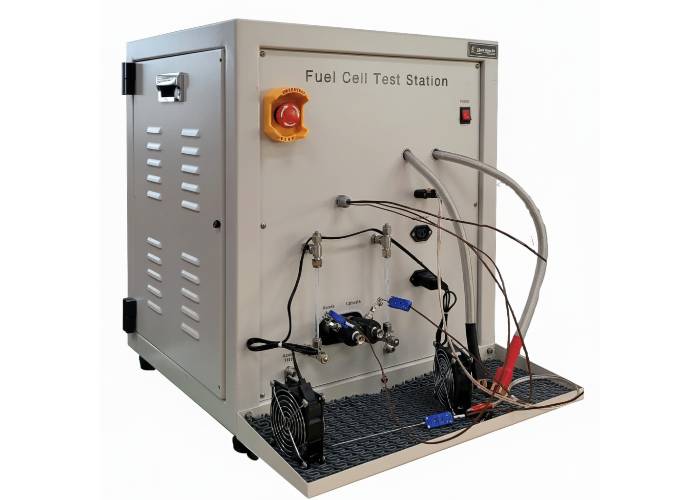
The PEMFC – Proton Exchange Membrane Fuel Cell is the leading type for automotive and portable applications.
- Continuous Operation (At Anode & Cathode):
- Anode (Oxidation of Hydrogen):
H₂ → 2H⁺ + 2e⁻- Hydrogen gas is split into protons and electrons.
- Cathode (Reduction of Oxygen):
½O₂ + 2H⁺ + 2e⁻ → H₂O- Oxygen, protons, and electrons combine to form water.
- Overall Fuel Cell Reaction:
H₂ + ½O₂ → H₂O + Electrical Energy + Heat
- Anode (Oxidation of Hydrogen):
Exam Tip: The reactants (H₂ and O₂) flow in from external tanks. The products (H₂O and heat) flow out. The electrodes and catalyst are not consumed; they merely facilitate the reaction.
Core Difference Summary: In a battery, the "fuel" and "oxidizer" are integral solid (or liquid) components that get used up. In a fuel cell, the fuel and oxidizer are external gaseous (or liquid) streams that are continuously supplied.
Performance Metrics and Efficiency: Comparing Apples to Apples
Choosing between a battery and a fuel cell depends on the application's demands. Here are the critical figures of merit.
Battery Performance Metrics
| Metric | Definition & Importance | Typical Values/Examples |
|---|---|---|
| Energy Density | Energy stored per unit mass (Wh/kg) or volume (Wh/L). Dictates range for EVs and runtime for devices. | Li-ion: often ~250–300 Wh/kg (depending on chemistry and cell format); Lead-acid: often ~30–50 Wh/kg |
| Power Density | The rate at which energy can be delivered per unit mass/volume (W/kg). Dictates acceleration and ability to handle high loads. | Li-ion: High; Supercapacitors: Extremely High |
| Cycle Life | Number of complete charge/discharge cycles before capacity falls to 80% of original. Defines lifespan and cost-effectiveness. | Li-ion: often ~500–1500 cycles (definition and duty cycle dependent); LFP chemistry: can exceed ~3000 cycles in well-managed applications |
| C-rate | Charge/discharge rate relative to capacity. A 1C rate discharges a full battery in 1 hour; a 2C rate in 0.5 hours. | Some fast-charging EV cells can operate at higher C-rates (e.g., ~3–6C), depending on design and thermal management |
| Self-Discharge Rate | Rate of energy loss when idle. Impacts shelf life. | Li-ion: often ~2–3%/month; NiMH: typically higher; Primary lithium: typically very low (chemistry dependent) |
Fuel Cell Performance Metrics
| Metric | Definition & Importance | Typical Values/Examples |
|---|---|---|
| Efficiency | Electrical energy output / Chemical energy input (LHV of H₂). Key for operating cost and sustainability. | PEMFC: 50-60%; SOFC (with CHP): Up to 85% total |
| Power Density | Power generated per unit mass/volume of the stack. Determines system size and weight. | Automotive PEMFC: ~2-3.5 kW/L (stack level) |
| Durability/Lifetime | Operating hours before performance degrades below a threshold (e.g., 10% voltage loss). Critical for commercial viability. | Automotive target: 5000-8000 hrs; Stationary: 40,000+ hrs |
| Start-up Time | Time from cold start to full power. Impacts suitability for vehicles. | PEMFC: Minutes (faster from warm); SOFC: Hours |
| Fuel Utilisation | Percentage of input fuel electrochemically reacted. Balance with efficiency and system design. | Typically >95% for hydrogen in PEMFCs |
Key Insight: Batteries excel in energy density for storage, while fuel cells, when considered with their fuel tank, can offer superior energy density for long-range, heavy-duty applications, as hydrogen's energy-per-kg is very high. However, fuel cells face challenges in power density (often requiring a hybrid battery for peak loads) and system efficiency when considering the full "well-to-wheel" energy chain.
Advantages and Disadvantages: The Balanced Perspective
Batteries: The Portable Powerhouse
Advantages:
- High Round-Trip Efficiency: Excellent for storing renewable electricity (80-95% for Li-ion).
- Established Infrastructure: Ubiquitous charging (from outlets to fast-chargers).
- Instant Power & Responsiveness: Deliver peak power instantly, ideal for acceleration.
- Zero Emissions at Point of Use: Critical for urban air quality.
- Declining Costs: Steadily falling $/kWh due to mass production and innovation.
Disadvantages:
- Limited Energy Density: Creates a "range vs. weight" challenge for vehicles and aircraft.
- Long Recharge Times: Even fast charging takes significantly longer than liquid refuelling.
- Resource & Supply Chain Concerns: Dependency on lithium, cobalt, nickel; mining impacts.
- Degradation: Capacity fades over time and cycles, affected by temperature and usage.
- Recycling Challenges: While improving, large-scale, cost-effective recycling is still developing.
Fuel Cells: The Continuous Performer
Advantages:
- High Energy Density of Fuel: Hydrogen enables long range with minimal weight penalty, ideal for trucks, ships, planes.
- Fast Refuelling: Comparable to gasoline (3-5 minutes for a car), enabling fleet operations.
- Minimal Degradation with Cycling: Performance drop is gradual, not cycle-linked like batteries.
- Versatile Fuel Sources: Hydrogen can be produced from diverse sources (renewables, natural gas with CCS).
- Scalability & Grid Services: Large-scale fuel cells provide baseload power; hydrogen can be seasonal grid storage.
Disadvantages:
- "Well-to-Wheel" Efficiency: Lower than batteries when considering hydrogen production, compression, and conversion.
- Lack of Infrastructure: Sparse hydrogen refueling network, a major barrier to adoption.
- High System Cost: Expensive catalysts (platinum) and balance-of-plant components.
- Hydrogen Production & Purity: Most H₂ today is "grey" (from fossil fuels); "green" H₂ from electrolysis is costly. Fuel cells require very pure H₂.
- Storage & Transportation Challenges: Hydrogen is low-density, requiring high-pressure tanks or cryogenic liquids.
Real-World Applications and Future Trends: Where Each Technology Shines
The market isn't choosing one over the other; it's deploying each where its strengths are most impactful.
Dominant Battery Applications
- Light-Duty Electric Vehicles (BEVs): Perfect for daily commutes, urban delivery vans, and cars with accessible charging.
- Consumer Electronics & Tools: The undisputed king of portability.
- Grid-Scale Energy Storage (BESS): Essential for frequency regulation, storing solar/wind energy, and deferring grid upgrades.
- Short-Range/Last-Mile Mobility: E-bikes, e-scooters, warehouse robots.
Dominant Fuel Cell Applications
- Heavy-Duty Transport: Long-haul trucks, buses, regional trains, and maritime vessels where battery weight would be prohibitive.
- Backup & Off-Grid Power: For telecom towers, data centres, and critical infrastructure where diesel generators are currently used.
- Material Handling: Forklifts in warehouses (where central H₂ refuelling is feasible and emissions-free operation is vital).
- Aerospace: Exploration for aircraft, especially regional and commuter planes.
Convergence and Future Trends
- Hybrid Systems: Many FCEVs use a small battery (a "hybrid" system) for recapturing braking energy and providing peak power, marrying the strengths of both.
- Solid-State Batteries: The next frontier, promising higher energy density, safety, and potentially faster charging, could expand battery dominance.
- Green Hydrogen & Electrolyser Growth: Green Hydrogen & Electrolyser Growth: As renewable electricity costs continue to fall in some regions, “green hydrogen” production may become cheaper over time, improving lifecycle emissions and the economics of some fuel-cell pathways.
- Beyond Lithium: Research into sodium-ion, lithium-sulfur, and other chemistries aims to reduce resource constraints and costs for batteries.
Exam Survival Guide: Key Takeaways and Study Strategy
To excel in your exam, internalise these distilled points and practice applying them.
Essential Distinctions (The "A" Grade Differentiators)
| Feature | Batteries | Fuel Cells |
|---|---|---|
| Core Function | Energy Storage Device | Energy Conversion Device |
| Reactants | Contained & Finite within the cell. | Supplied Externally & Continuously. |
| Recharging/Refuelling | Recharge by reversing reactions with electricity. | Refuel by replenishing the fuel supply (e.g., H₂ tank). |
| Primary Output/Byproduct | Electricity (and heat). Chemical composition changes. | Electricity, Water, and Heat. |
| Energy vs. Power | Often a trade-off: High energy density can limit power density. | Energy capacity set by fuel tank size; power by cell stack size. |
Must-Know For Exams:
- Write the Reactions: Be fluent in the half-reactions and overall reactions for a common battery (like Li-ion) and fuel cell (like PEMFC).
- Define Metrics: Explain energy density, power density, cycle life, and efficiency in your own words.
- Match Tech to Application: Justify why a city bus fleet might choose fuel cells, while a suburban commuter vehicle uses a battery.
- Discuss Challenges: Don't just list pros/cons. Explain why hydrogen infrastructure is a challenge or how battery degradation occurs.
- Understand the Big Picture: Both are crucial for decarbonisation. Batteries optimise efficiency in a renewable grid; fuel cells (via hydrogen) enable energy density and seasonal storage.
Final Study Tip: Create a comparative mind map or table using the categories in this guide. Teaching the concepts to a peer is the best way to solidify your understanding.
Good luck with your exams! By mastering this material, you're not just preparing for a test—you're building a foundation for understanding the energy technologies that will define the 21st century.