

Contents
- Introduction: Why Choosing the Right Potentiostat Matters
- Potentiostats and Galvanostats — A Technical Primer
- Single-Channel Potentiostats — Deep Dive
- Multichannel Potentiostats — Deep Dive
- Single-Channel vs Multichannel — Technical Comparison
- How to Choose: A Decision Framework
- Competitor Landscape — Who Else Is on the Market?
- Frequently Asked Questions
- Conclusion: Making the Right Choice for Your Lab
Introduction: Why Choosing the Right Potentiostat Matters
If you're setting up an electrochemistry laboratory, whether at a university in Brisbane, a materials science institute in Auckland, or an industrial R&D facility in Melbourne, one of the most consequential decisions you will make is selecting the right potentiostat or galvanostat. These instruments sit at the very heart of electrochemical experimentation, controlling and measuring electrical signals with extraordinary precision to reveal the behaviour of materials, reactions, and interfaces.
Yet the market can feel bewildering. There are single-channel instruments, multichannel systems, benchtop workstations, portable devices, and modular platforms — each with its own combination of voltage range, current capability, impedance spectroscopy (EIS) support, and software ecosystem. Knowing which configuration suits your research not only saves budget; it determines whether your experiments produce high-quality, reproducible data or are hampered by throughput bottlenecks and compromised signal integrity.
This guide — the first entry in the ScienceGears Electrochemistry Basics Series — cuts through the complexity. We compare Single Channel Potentiostats and Multichannel Potentiostats in depth, explain the key technical differences, review our product range, and provide a clear framework for making the right choice for your specific application.
1 Potentiostats and Galvanostats — A Technical Primer
1.1 What Is a Potentiostat?
A potentiostat is an electronic instrument that controls the electric potential (voltage) difference between a working electrode (WE) and a reference electrode (RE) within an electrochemical cell, while simultaneously measuring the resulting current flowing through the counter electrode (CE). By holding the voltage at a user-defined setpoint or sweeping it through a defined waveform, a potentiostat enables researchers to probe the kinetics and thermodynamics of electrochemical processes with high precision.
In practical terms, the potentiostat continuously samples the actual WE–RE potential, compares it to the target setpoint, and adjusts the output current in real time to correct any deviation. This closed-loop control is essential for techniques such as cyclic voltammetry (CV), linear sweep voltammetry (LSV), chronoamperometry (CA), and electrochemical impedance spectroscopy (EIS).
1.2 What Is a Galvanostat?
A galvanostat performs the complementary function: it controls the current flowing through the electrochemical cell and measures the resulting potential. Where a potentiostat asks "how much current flows at a given voltage?", a galvanostat asks "what voltage develops when a given current is applied?"
Galvanostatic operation is essential for processes where current — rather than potential — is the meaningful variable. Battery charge/discharge cycling, electroplating, electrosynthesis, and galvanostatic intermittent titration technique (GITT) are all examples where controlling current is the experimentally correct approach.
1.3 Potentiostat/Galvanostat: Two Modes, One Instrument
In modern instruments, both modes are integrated into a single platform. A potentiostat/galvanostat can switch between potentiostatic and galvanostatic control on demand, and many advanced platforms support hybrid modes such as potentiostatic EIS with a galvanostatic DC bias. This dual capability is why these instruments are typically referred to simply as "potentiostats" in commercial literature, even when they fully support galvanostatic operation.
1.4 Key Electrochemical Techniques Supported
A research-grade potentiostat/galvanostat supports a broad palette of techniques. The most important include:
- Cyclic Voltammetry (CV) — sweeping potential to characterise redox processes, determine analyte concentration, and study reaction mechanisms
- Linear Sweep Voltammetry (LSV) — single-direction potential sweep for onset potential and Tafel slope measurements
- Chronoamperometry (CA) — step potential, measure current vs. time; essential for diffusion studies
- Chronopotentiometry (CP) — step current, measure potential vs. time; used in battery research
- Electrochemical Impedance Spectroscopy (EIS) — frequency-domain analysis of electrode interfaces; requires integrated FRA (Frequency Response Analyser)
- Galvanostatic Cycling (GCPL) — repeated charge/discharge at constant current; standard for battery testing
- Tafel Analysis — logarithmic polarisation curves for corrosion rate determination
- Open Circuit Potential (OCP) — monitoring equilibrium potential over time
- Differential Pulse Voltammetry (DPV) / Square Wave Voltammetry (SWV) — high-sensitivity detection for trace analysis and biosensors
2 Single-Channel Potentiostats — Deep Dive
2.1 Architecture and Operating Principle
A single-channel potentiostat dedicates its entire measurement chain — signal generator, control amplifier, current-to-voltage converter, analogue-to-digital converters, and (optionally) a frequency response analyser — to a single electrochemical cell. This focus allows instrument designers to maximise the quality of that single measurement: ultra-low noise floors, wide dynamic range across multiple current ranges, and (depending on model) EIS capability that can extend up to the MHz range.
Because there is only one cell to manage, the user benefits from a simpler experimental setup, straightforward troubleshooting, and uncompromised signal fidelity. For studies where a single, well-defined electrochemical interface is the subject of investigation — such as a rotating disc electrode (RDE) system, a photoelectrochemical cell, or a bespoke corrosion coupon — a single-channel instrument is often preferred where maximum signal fidelity and troubleshooting simplicity are priorities.
2.2 ScienceGears Single-Channel Portfolio
ScienceGears sources single-channel potentiostats from three carefully selected global manufacturers: Admiral Instruments (Squidstat series), Zahner Elektrik, and CorrTest Instruments. Each addresses a distinct research profile.
2.2.1 Admiral Instruments — Squidstat Series
The Squidstat range from Admiral Instruments (USA) is a modern, API-first potentiostat platform that combines portable hardware with powerful, open-architecture software. All units communicate via USB and are supported by a Python API, making them popular in automation-heavy labs and start-up environments.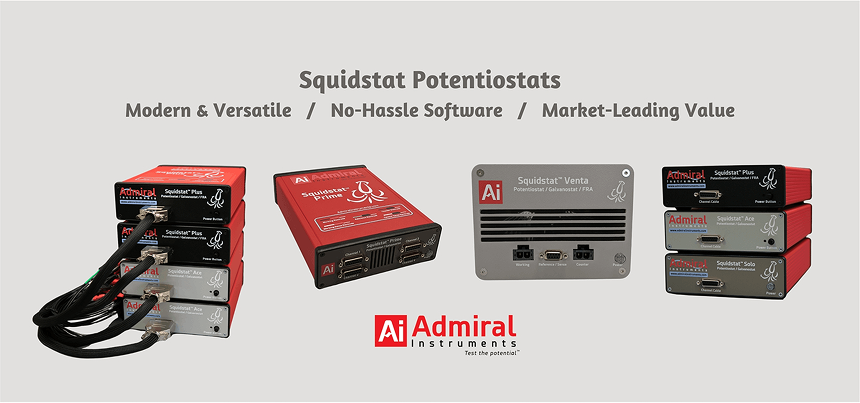
| Model | Voltage Range | Max Current | EIS Range | Current Accuracy | Notes |
|---|---|---|---|---|---|
| Squidstat Solo | ±10 V | ±100 mA | No | 1 nA | DC only, no EIS |
| Squidstat Plus | ±10 V | ±1 A | 10 µHz – 2 MHz | 1 nA | Full EIS/FRA |
| Squidstat Penta | ±10 V | ±5 A | 10 µHz – 2 MHz | 1 nA | High-current EIS |
| Squidstat Decka | ±10 V | ±10 A | 10 µHz – 2 MHz | 1 nA | High-current EIS |
| Squidstat Venta | ±6 V | ±20 A | 10 µHz – 2 MHz | 1 nA | Max-current EIS |
The Squidstat series is particularly popular in university labs for its approachable price point, Bluetooth-enabled mobile connectivity, and open-source Python library, which facilitates integration with automated test rigs, gloveboxes, and custom LabVIEW or MATLAB environments.
2.2.2 Zahner Elektrik — Zennium XC
Zahner Elektrik (Germany) represents the premium tier of research-grade electrochemical instrumentation. The Zennium XC is a compact potentiostat/galvanostat with an integrated frequency response analyser covering (depending on configuration) from 10 µHz up to 5 MHz, as specified by the manufacturer.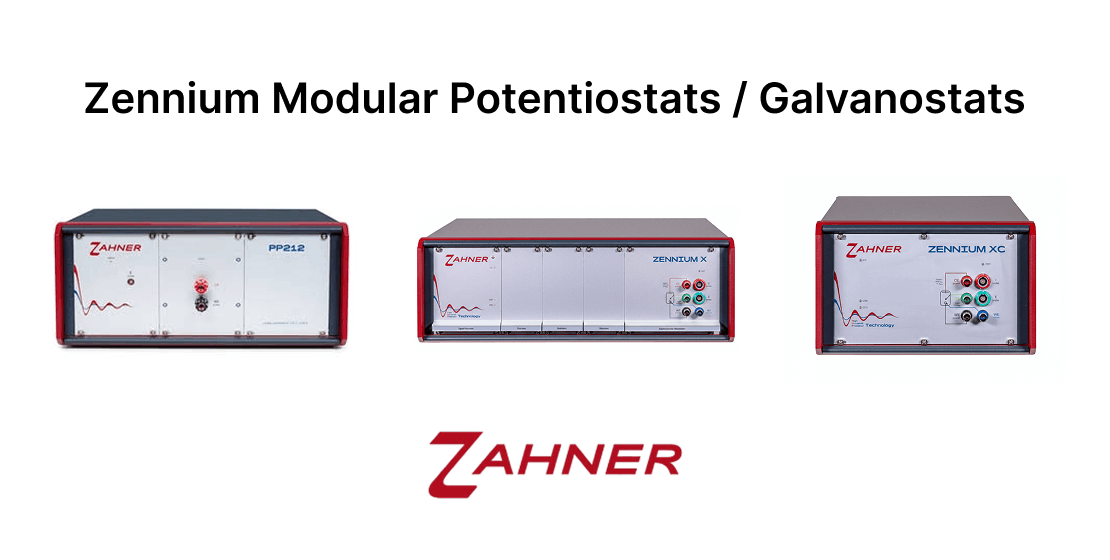
| Parameter | Specification |
|---|---|
| Voltage range | ±5 V (precision) and ±14 V (full range) |
| Max current | ±2 A (expandable with boosters) |
| EIS frequency range | 10 µHz to 5 MHz |
| Current accuracy | Sub-nA resolution |
| Key strengths | Ultra-low noise; modular expansion; photoelectrochemistry support |
| Ideal for | Fuel cells, solar cells, advanced corrosion, spectroelectrochemistry |
Zahner's Thales software suite is renowned in the EIS community for its comprehensive fitting algorithms and scripting capability. The Zennium XC is the instrument of choice for researchers requiring the highest possible EIS data quality across a wide frequency window.
2.2.3 CorrTest Instruments — CS300M, CS310M, CS350M
CorrTest (China) produces robust, value-for-money electrochemical workstations that are well-suited to corrosion science, university teaching labs, and general-purpose electrochemistry. The CS-series offers:
| Model | Voltage | Current | EIS | Best Use |
|---|---|---|---|---|
| CS300M | ±10 V | ±2 A | No EIS | Basic DC corrosion and general electrochemistry |
| CS310M | ±10 V (up to ±12 V) | ±2 A (10 ranges) | 10 µHz – 1 MHz | Full EIS workstation; popular in AU corrosion labs |
| CS350M | ±10 V (up to ±12 V) | ±2 A (10 ranges) | 10 µHz – 1 MHz | Advanced single-channel with enhanced software |
2.3 Typical Applications for Single-Channel Instruments
Single-channel potentiostats are the preferred choice for the following research scenarios:
- In-depth mechanistic studies: When your goal is to fully characterise the electrochemical behaviour of a single interface — understanding reaction intermediates, measuring exchange current densities, or resolving subtle features in CV curves — a single-channel instrument offers the best signal-to-noise ratio and measurement resolution.
- Rotating disc electrode (RDE) and RRDE experiments: These techniques require precise potential control of a single working electrode while monitoring hydrodynamic current as a function of rotation rate. The dedicated measurement chain of a single-channel instrument is ideal.
- Photoelectrochemistry: Solar water splitting, dye-sensitised solar cells, and photocatalysis studies typically involve one cell at a time, often with optical coupling. Zahner's modular platform is particularly powerful here.
- Corrosion testing of individual coupons: Standards-based tests (ASTM B117, ISO 8407) require precise polarisation of a single specimen. CorrTest instruments are purpose-built for this application.
- Biosensor development: Amperometric and impedimetric biosensors require high-sensitivity current measurement of a single modified electrode. The 1 nA accuracy of the Squidstat range is well-suited.
- Field and portable applications: The compact Squidstat Solo and Plus units can run from a laptop battery, making them viable for on-site corrosion surveys and environmental monitoring.
3 Multichannel Potentiostats — Deep Dive
3.1 Architecture and Operating Principle
A multichannel potentiostat contains multiple independent electrochemical measurement channels within a single chassis. Each channel operates as a functionally complete potentiostat/galvanostat, with its own signal generation, control loop, and measurement circuitry. Critically, the channels are galvanically isolated from one another — typically with an insulation resistance exceeding 100 MΩ — so that grounding, leakage currents, and noise on one channel cannot corrupt the measurement on any other.
This architecture enables true simultaneous operation: all channels run their experiments in parallel, collecting data at the same time. The result is a dramatic increase in experimental throughput without any compromise to data quality, provided the isolation is correctly implemented.
3.2 Galvanic Isolation: The Critical Design Requirement
Galvanic isolation is the defining technical challenge in multichannel potentiostat design. Without it, channels sharing a common ground reference will interact electrically: current injected by one channel will partially flow through adjacent cells, distorting both the applied stimulus and the measured response. In practice, this manifests as unexplained offsets, crosstalk artefacts, and irreproducible data.
Well-engineered multichannel systems — such as the CorrTest CS310X series available from ScienceGears — specify insulation resistance of >100 MΩ between channels, achieved through transformer-isolated power supplies and optically coupled signal paths. This level of isolation is typically adequate for most multichannel electrochemical applications; highly sensitive or unusual grounding cases may require additional validation.
3.3 ScienceGears Multichannel Portfolio
3.3.1 Admiral Instruments — Squidstat Prime
The Squidstat Prime extends the Squidstat platform to four independent DC channels in a single compact enclosure. It shares the same open Python API as the single-channel Squidstat units and is particularly popular for parallel battery cell testing and combinatorial sensor screening.
| Parameter | Specification |
|---|---|
| Channels | 4 fully independent DC channels |
| Compliance voltage | ±10 V per channel |
| Voltage scan range | ±10 V per channel |
| Max current | ±250 mA per channel |
| Current accuracy | 1 nA |
| Onboard memory | 16 GB |
| EIS | Not included (DC only) |
| Software | Admiral Squidstat Python API + Windows software |
The Squidstat Prime is an excellent choice for labs transitioning from single-channel to parallel testing without a large capital outlay. Its 16 GB onboard memory allows autonomous operation — disconnected from a host computer — which is valuable for long-duration battery cycling experiments.
3.3.2 CorrTest — CS310X Multichannel Series
The CorrTest CS310X series represents the most versatile multichannel offering in the ScienceGears catalogue. Available in 4-channel and 8-channel configurations, and with EIS included on one or all channels, the CS310X can be precisely matched to your throughput and analytical requirements.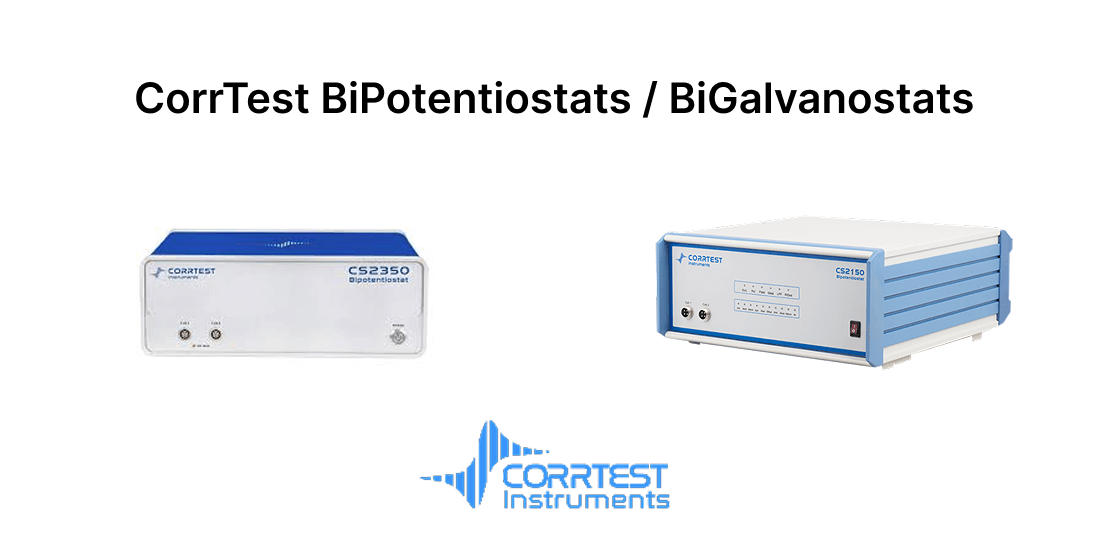
| Model | Channels | EIS Channels | V/I Range | Notes |
|---|---|---|---|---|
| CS310X-A (4-Ch, 1-EIS) | 4 | 1 | ±10 V / ±1 A | 10 µHz – 1 MHz on EIS channel |
| CS310X-B (4-Ch, 4-EIS) | 4 | 4 | ±10 V / ±1 A | All channels EIS-capable |
| CS310X-C (8-Ch, 1-EIS) | 8 | 1 | ±10 V / ±1 A | Max throughput, single EIS |
| CS310X-D (8-Ch, 8-EIS) | 8 | 8 | ±10 V / ±1 A | Full 8-channel EIS capability |
All CS310X models share the following core specifications:
- Potential accuracy: 0.1% of full range ±1 mV
- Current accuracy: 0.1% of full range
- Inter-channel insulation resistance: >100 MΩ
- Communication: Ethernet (ideal for rack-mounted lab automation)
- Supported techniques: CV, CA, CP, LSV, EIS (where equipped), GITT, galvanostatic cycling, Tafel analysis
3.4 Typical Applications for Multichannel Systems
- Battery materials screening: Evaluating multiple electrode compositions, electrolyte formulations, or surface coatings in parallel. An 8-channel system can complete in one week what a single-channel setup would take two months to accomplish.
- Redox flow battery testing: Multiple cell stacks at different states of charge can be monitored simultaneously, providing a more complete picture of system-level behaviour.
- Corrosion studies with replicate specimens: Statistical validity in corrosion testing demands multiple replicates. Multichannel potentiostats allow simultaneous polarisation of n=4 or n=8 coupons under identical conditions.
- Electrosynthesis optimisation: Screening reaction conditions (pH, temperature, substrate concentration) across multiple cells in parallel to rapidly identify optimal parameters.
- Sensor array characterisation: Testing multiple sensor prototypes under identical analyte conditions to compare performance metrics without temporal variation.
- Energy materials research: Evaluating solar cell photoelectrodes, supercapacitor materials, and fuel cell catalysts in high-throughput fashion to accelerate the materials discovery pipeline.
- Pharmaceutical and life science: Electrochemical detection of biomarkers, drug metabolites, and antioxidants across multiple sample types simultaneously.
4 Single-Channel vs Multichannel — Technical Comparison
4.1 Feature-by-Feature Comparison Table
| Feature | Single-Channel | Multichannel |
|---|---|---|
| Simultaneous cells | 1 | 4–8+ (independent) |
| Throughput | Sequential only | Parallel experiments |
| EIS capability | Yes (most models) | Yes (per-channel or shared) |
| Galvanic isolation | N/A (one cell) | Required; >100 MΩ between channels |
| Typical current range | ±100 mA – ±20 A | ±250 mA – ±1 A per channel |
| Voltage range | ±6 V – ±10 V | ±10 V per channel |
| Scalability | Fixed; no expansion | Modular; add channels over time |
| Best for | In-depth single-cell studies | High-throughput screening |
| Cost per experiment | Higher per cell (serial) | Lower per cell (parallel) |
| Data management | Simple; one dataset | Multi-stream; needs good software |
| Footprint | Compact to benchtop | Larger chassis or rack |
| Example models (ScienceGears) | Squidstat Plus/Penta/Decka, Zennium XC, CS310M | Squidstat Prime, CS310X 4-Ch/8-Ch |
4.2 Throughput and Experimental Efficiency
The most quantifiable difference between single-channel and multichannel instruments is throughput. Consider a researcher screening 12 different cathode materials for lithium-ion battery performance, with each galvanostatic cycling test taking 48 hours:
- Single-channel approach: 12 tests × 48 hours = 576 hours (24 days) of continuous instrument time
- 4-channel approach: 3 batches × 48 hours = 144 hours (6 days)
- 8-channel approach: 2 batches × 48 hours = 96 hours (4 days)
The time savings translate directly into faster publication cycles, reduced project costs, and the ability to run more experiments within a funding period. For groups working on competitive research areas such as next-generation batteries or green hydrogen, this acceleration can be decisive.
4.3 Signal Quality and Noise Performance
Single-channel instruments generally offer superior noise performance because their entire analogue signal chain is dedicated to one measurement. Multichannel instruments mitigate this through careful PCB layout, shielded channel modules, and isolated power supplies, but achieving the same noise floor as a premium single-channel unit (e.g., the Zahner Zennium XC) across 8 simultaneous channels is a significant engineering challenge.
For the majority of electrochemical applications — battery cycling, corrosion polarisation, CV of common redox couples, EIS of moderate-impedance systems — the noise performance of well-engineered multichannel systems such as the CS310X is entirely adequate. Researchers pushing the limits of EIS at very high frequencies (>1 MHz) or measuring extremely low currents (<1 pA) will still prefer a dedicated single-channel platform.
4.4 EIS Capability in Multichannel Systems
Electrochemical Impedance Spectroscopy adds complexity to the multichannel question. High-quality EIS requires a stable, low-noise frequency response analyser — hardware that is relatively straightforward to implement in a single-channel instrument but becomes expensive when replicated across every channel of a multichannel system.
ScienceGears addresses this with the CS310X's flexible EIS-channel configurations. Researchers who need EIS on all channels can choose the 4-Ch/4-EIS or 8-Ch/8-EIS variants. Those who primarily need parallel DC cycling with occasional EIS characterisation can select the lower-cost 1-EIS variants, using the single EIS channel for detailed characterisation of selected cells.
4.5 Cost Considerations
A multichannel system's higher upfront cost must be weighed against the cost per experiment over the instrument's lifetime. In a lab running continuous high-throughput testing, a single multichannel system replaces two to eight single-channel instruments — reducing not only capital expenditure but also maintenance, software licence, and lab space overhead.
For labs with limited budgets and sporadic parallelism needs, a single-channel instrument paired with judicious experimental scheduling remains perfectly viable. The ScienceGears team — led by PhD electrochemists who understand the realities of grant-constrained research environments — can help model the total cost of ownership for your specific scenario.
5 How to Choose: A Decision Framework
5.1 Questions to Ask Before Purchasing
Before contacting a vendor, work through the following questions with your team:
- How many cells or samples do I need to test per week?
- Do I need Electrochemical Impedance Spectroscopy? On all channels or just one?
- What is my required current range? (e.g., nA for sensors vs. A for batteries vs. 10+ A for electrolysers)
- Is portability important? (field testing, glovebox, shared equipment across buildings)
- Do I need software integration with automation systems, MATLAB, or Python?
- What is my 3–5 year research roadmap? Will my needs scale?
5.2 Recommended Configuration by Research Type
| Research Type | Recommended Config | ScienceGears Model | Rationale |
|---|---|---|---|
| Battery materials research | Multichannel (4–8 Ch + EIS) | CS310X-B or CS310X-D | Parallel cycling + impedance on all cells |
| Corrosion science | Single or multichannel | CS310M or CS310X-A | Depends on number of specimens per run |
| Electrocatalysis / RDE | Single-channel | Squidstat Plus / Zennium XC | High precision; single WE focus |
| Biosensor/diagnostics | Single-channel | Squidstat Solo or Plus | Compact; high sensitivity; portable |
| Fuel cell research | Single-channel premium | Zennium XC | Wide EIS range; modular expansion |
| High-current electrolysis | Single-channel high-current | Squidstat Venta (±20 A) | High current with EIS capability |
| Teaching/education | Single-channel entry | Squidstat Solo / CS300M | Affordable; easy to use |
| Drug discovery/biosensing | Multichannel | CS310X-A or Squidstat Prime | Parallel assays; cost-effective per test |
6 Competitor Landscape — Who Else Is on the Market?
6.1 Why Competitor Analysis Matters for Buyers
The global potentiostat market is served by a handful of well-established manufacturers and a growing number of newer entrants. For researchers in Australia and New Zealand, the choice of supplier is complicated by geographic distance: many premium European and American brands offer excellent instruments but limited local application support, slow delivery times, and limited service infrastructure.
Understanding the competitive landscape helps you evaluate whether a brand's reputation, feature set, and price point align with your actual needs — and where ScienceGears' local expertise and curated portfolio offer a distinct advantage.
6.2 Competitor Overview
| Competitor | Strengths | Weaknesses | ScienceGears Advantage |
|---|---|---|---|
| Gamry Instruments (USA) | Strong brand; EIS reference library; large user community | Expensive; limited regional AU/NZ support; complex upgrade path | Local expert support; competitive pricing; modular Zahner/CorrTest alternatives |
| Metrohm Autolab (CH) | Premium EIS; widely published; NOVA software ecosystem | High entry cost; proprietary lock-in; slow delivery times to AU/NZ | Faster local delivery; open software options; comparable EIS performance |
| BioLogic (FR) | Feature-rich EC-Lab software; wide channel range; strong academic base | High price; heavy chassis; limited AU/NZ distributor network | PhD-level application support; Zahner/CorrTest at lower cost; local training |
| PalmSens (NL) | Compact portable units; affordable entry-level | Limited high-current/EIS capability; narrow multichannel range | Squidstat range matches or exceeds for field + lab; better EIS specs |
| CH Instruments (USA) | Affordable; wide technique library; good for academia | Outdated interface; limited modular expansion; slow AU support | Modular scalability, modern software, local service and training |
6.3 The ScienceGears Difference
ScienceGears is not a catalogue distributor. It is a technology partner built by researchers, for researchers. Both co-founders hold PhDs and have extensive hands-on laboratory experience — Dr. Siva Arumugam with over 20 years in electrochemistry, nanomaterials, and biosensors, and Dr. Kalai Govindasamy with over 15 years spanning Raman spectroscopy, electrochemical sensors, and materials characterisation.
This means that when you contact ScienceGears to discuss an instrument purchase, you are not speaking to a sales representative reading from a product sheet. You are speaking to working scientists who have run the same experiments, faced the same instrumentation challenges, and can give you genuinely informed advice about which configuration will serve your research best.
Additionally, ScienceGears provides:
- On-site installation and commissioning across Australia and New Zealand
- Hands-on training sessions tailored to your experimental protocols
- Ongoing application support — including experimental design advice and data interpretation
- Fast local response times with regional stock and service partners
- A curated portfolio spanning three complementary brands — Zahner, Squidstat, and CorrTest — covering the full range from teaching labs to advanced research facilities
7 Frequently Asked Questions
Q: What is the difference between a single-channel and a multichannel potentiostat?
A single-channel potentiostat controls and measures one electrochemical cell at a time, and is often chosen for the simplest setup and very high signal fidelity for that single experiment (depending on configuration). A multichannel potentiostat contains multiple independent measurement channels in a single chassis, enabling parallel electrochemical experiments on multiple cells simultaneously. The key practical difference is throughput: multichannel systems can significantly accelerate workflows where many samples must be tested under identical or varied conditions.
Q: What is the difference between a potentiostat and a galvanostat?
A potentiostat controls the voltage (potential) between the working and reference electrodes and measures the resulting current. A galvanostat controls the current flowing through the electrochemical cell and measures the resulting voltage. Modern instruments typically combine both functions in one device and can switch between potentiostatic and galvanostatic modes as required by the experiment.
Q: Can a multichannel potentiostat run different experiments on each channel simultaneously?
Yes. In well-designed multichannel systems, each channel operates independently, so you can run different techniques on different channels (for example, CV on one channel and EIS or GITT on another) with different voltage and current settings. This is useful for comparing materials, electrolytes, or conditions side-by-side without waiting for sequential experiments.
Q: What is galvanic isolation in a multichannel potentiostat and why does it matter?
Galvanic isolation refers to electrical separation between channels so there is no shared DC current path that can cause leakage between cells. Without adequate isolation, one channel can influence another, distorting both the applied stimulus and measured response — especially when cells operate at different potentials or use different electrolyte formulations. Isolation performance is typically specified in the instrument datasheet (often quoted in the >100 MΩ range, depending on model) and should be matched to your sensitivity requirements.
Q: Do I need EIS (Electrochemical Impedance Spectroscopy) on all channels of a multichannel potentiostat?
Not necessarily. EIS is a powerful characterisation technique, but it adds hardware cost per channel. If your workflow is mainly battery cycling or parallel corrosion testing — and EIS is used periodically to characterise selected samples — having EIS on one or two channels can be a cost-effective approach. If you routinely need EIS on every sample at the same time, a fully EIS-equipped multichannel configuration is the better fit.
Q: What current range do I need in a potentiostat?
It depends on your application. Biosensors and trace electroanalysis often require nA–µA measurement capability, coin cells commonly operate in the mA range, and larger cells or electrolysers may require amps to tens of amps. Most potentiostats provide multiple ranges (often with auto-ranging) to balance resolution and accuracy, so the key is matching the instrument's ranges and compliance limits to your expected operating conditions.
Q: What does "compliance voltage" mean, and why does it matter?
Compliance voltage is the maximum voltage the instrument can apply to maintain the requested current or potential under load. If the cell resistance is high, the required voltage can exceed compliance and the instrument will no longer hold the setpoint accurately. This matters for high-resistance electrolytes, membranes, low-conductivity solutions, and high-current operation where iR drop can be significant.
Q: When should I use a battery cycler instead of a potentiostat/galvanostat?
A battery cycler is typically the better choice for long-duration charge/discharge cycling across many channels, especially when you need robust scheduling, safety limits, and high throughput. A potentiostat/galvanostat is often preferred when you need broader electrochemical techniques beyond cycling (such as CV, EIS, pulse methods, or mechanistic studies). Many labs use both: cyclers for routine cycling and potentiostats for characterisation and diagnostics.
Q: Do multichannel potentiostats introduce crosstalk between channels?
They can if the system lacks adequate isolation, or if the experimental setup creates unintended coupling (for example, shared grounds, wet surfaces, poor cable routing, or noisy environments). Research-grade multichannel systems are designed to minimise crosstalk, but good wiring, shielding, and grounding practices still matter — especially for low-current or high-impedance measurements. If you are working near instrument limits, validate with controls and repeatability checks.
Q: What's the difference between current "resolution" and current "accuracy"?
Resolution is the smallest change in current the instrument can represent or detect on a given range (often influenced by range selection and noise). Accuracy describes how close the measured value is to the true value after calibration, and is typically specified as a percentage plus an offset term. For very small currents, practical performance depends strongly on range selection, noise floor, and test setup (shielding and cabling).
Q: What accessories most improve data quality in electrochemistry measurements?
Common upgrades include low-noise cables, a Faraday cage or shielding, stable reference electrodes, and suitable cell fixtures to minimise movement and stray capacitance. For low-current or high-impedance work, shielding and grounding practices can be as important as instrument specifications. Accessory selection should match your techniques (for example, EIS vs high-current electrolysis vs corrosion testing).
Q: Can I upgrade from a single-channel system to a multichannel system later?
Often, yes — but it depends on the platform and how you intend to scale. Some systems support modular expansion or add-on channel options, while others require a separate multichannel chassis. If scaling is likely, plan early around channel count, whether you need EIS on every channel, and whether channels must run fully independent techniques at the same time.
Q: Is a Zahner potentiostat better than a Squidstat?
Both are strong instrument families, but they are often chosen for different priorities. Some platforms are optimised for very low-noise EIS and modular expansion (with frequency capability depending on model/configuration), while others prioritise portability, cost-effective scaling across models, and software/API integration. The "better" choice depends on your techniques, current ranges, and experimental workflow — ScienceGears can recommend a configuration based on your requirements.
Q: Where can I buy a potentiostat in Australia or New Zealand?
ScienceGears supplies potentiostats and multichannel systems across Australia and New Zealand with local support, commissioning, and application guidance. Browse options here: Single Channel Potentiostats and Multichannel Potentiostats. If you share your application and voltage/current requirements, the team can suggest a suitable instrument and accessories.
8 Conclusion: Making the Right Choice for Your Lab
The decision between a single-channel and a multichannel potentiostat is ultimately a question of experimental strategy. If your research demands the deepest possible characterisation of a single electrochemical interface — with maximum signal fidelity, the widest EIS frequency range, or compatibility with specialist techniques like RRDE or photoelectrochemistry — a premium single-channel instrument from the Zahner or Squidstat families will serve you exceptionally well.
If your research demands speed, statistical rigour through replication, or the ability to screen large libraries of materials within a realistic timeframe, a multichannel potentiostat — particularly the versatile CS310X series or the compact Squidstat Prime — will transform your lab's productivity and the quality of your science.
Many mature research groups operate both: a high-performance single-channel instrument for definitive characterisation work, and a multichannel system for parallel screening. As your research programme grows, ScienceGears' modular instrumentation philosophy ensures you can scale incrementally without replacing your existing investment.
📞 Talk to a PhD Electrochemist Today
Not sure which configuration is right for your lab? Contact the ScienceGears team for a no-obligation consultation. Dr. Siva Arumugam and Dr. Kalai Govindasamy offer free application-focused guidance to researchers across Australia and New Zealand.
✔ sciencegears.com.au/contact-us | +61 493 868 335
Related Blogs :
Corrosion Testing With A Potentiostat | How to choose the right potentiostat | Potentiostats Guide University & Industrial labs