

Introduction
In electrochemical research, the potentiostat is an indispensable tool used daily. This precise instrument helps create better batteries and protects important structures from rust. It offers control and measurement skills that inspire new ideas in science and industry. Whether you are setting up a university laboratory or an industrial research and development facility, selecting the right potentiostat is a crucial decision. This guide will explore the main technology and its many uses. It will show how ScienceGears works with researchers in Australia and New Zealand. We provide not just instruments, but also solutions made for your needs, supported by expert guidance.
Understanding the Core Technology: More Than a "Black Box"
What is a Potentiostat?
A potentiostat is an electronic control instrument. It controls the potential between the working electrode (WE) and reference electrode (RE) in an electrochemical cell. It also measures the resulting current (passed between the working and counter electrodes). This lets scientists investigate electron transfer reactions with great precision. Most modern systems are best described as combinations of potentiostats and galvanostats. They can easily switch between controlling voltage and controlling current. This means they can work in either (potentiostatic mode) or (galvanostatic mode). This dual functionality is essential for a comprehensive experimental workflow, enabling researchers to study reaction rates and conduct battery charge and discharge cycles.
The Heart of the System: The Three-Electrode Setup
The precision of a potentiostat comes from its use of a three-electrode cell:
- Working Electrode (WE): The place where the reaction you are interested in happens.
- Reference Electrode (RE): Provides a stable, known potential against which everything is measured (ideally, no current flows through it).
- Counter Electrode (CE): Completes the electrical circuit, balancing the current at the working electrode.
The potentiostat keeps the reference electrode separate from the current flow. This ensures that the reaction's potential is known and controlled accurately. This is something a simple power supply and multimeter cannot do.
Critical Applications Driving Research and Industry
The many uses of potentiostats make them central to some of today's most important technological fields.
1. Energy Storage and Battery Development
The global need for better energy storage highlights this use. Potentiostats are essential for testing new electrode materials, electrolytes, and complete cell designs. Key methods include:
- Cyclic Voltammetry (CV): To study reduction and oxidation behaviour and reaction mechanisms.
- Galvanostatic Charge-Discharge: For testing capacity, how long it lasts over many cycles, and efficiency.
- Electrochemical Impedance Spectroscopy (EIS): To analyse internal resistance, interface stability, and how the battery breaks down over its lifetime.
2. Corrosion Science and Prevention
The global cost of corrosion is estimated to be in the trillions of dollars each year. Because of this, understanding and preventing corrosion is a top priority for many industries. Potentiostats allow for both basic studies and practical testing:
- Tafel Analysis and Polarisation Resistance: To measure how fast corrosion happens.
- Cyclic Polarisation: To judge a material's likelihood to suffer from localised pitting corrosion.
- EIS: To check the protective quality of coatings and paints without damaging them.
3. Electrocatalysis and Sustainable Technology
Creating efficient catalysts for fuel cells, electrolysers for green hydrogen, and systems for CO₂ reduction depends on potentiostatic analysis. Researchers use these instruments to measure catalyst activity, stability, and electrochemical surface area—key metrics for moving clean energy technologies forward.
4. Sensor Development and Bioelectrochemistry
From medical glucose monitors to environmental heavy metal sensors, electrochemical sensors are everywhere. Potentiostats make possible the development and calibration of these devices, often requiring high sensitivity for low-current measurements in biological or field situations.
Navigating Your Options: From University Labs to Industrial Facilities
Selecting the right potentiostat is not a straightforward, one-size-fits-all decision. The ideal instrument for your laboratory or research project will largely depend on your specific needs and requirements. Your choice depends on several factors. These factors include the type of application, the needed accuracy, the number of tests, and your budget.
University Teaching Labs
The focus is often on affordability, robustness, and ease of use. Portable or entry-level single-channel systems that cover basic techniques like CV and amperometry are ideal for student training.
Academic Research Labs
Here, performance, flexibility, and precision come first. Researchers often need wide potential windows. They need to detect very low currents. This can be as low as picoamps or nanoamps. The exact amount depends on the model and settings. High-speed sampling and advanced EIS capability are also important. Modular systems that can grow with the research, or multichannel setups for doing many experiments at once, are highly valuable.
Industrial R&D and QA/QC
The needs change towards robustness, getting the same results every time, automation, and sometimes extreme specifications. Industrial labs may require:
- High-Current Potentiostats for testing battery packs or electrolyser stacks.
- Specialised Modules like multi-electrode arrays for mapping corrosion.
- Parallel Testing Systems for quality control and checking materials quickly.
Spotlight on ScienceGears Solutions
ScienceGears supplies a carefully chosen range of instruments to meet these different needs. Here is how some of our featured product families fit with different lab environments:
| Product Family (Brand) | Ideal Lab Environment | Key Strengths & Typical Applications |
|---|---|---|
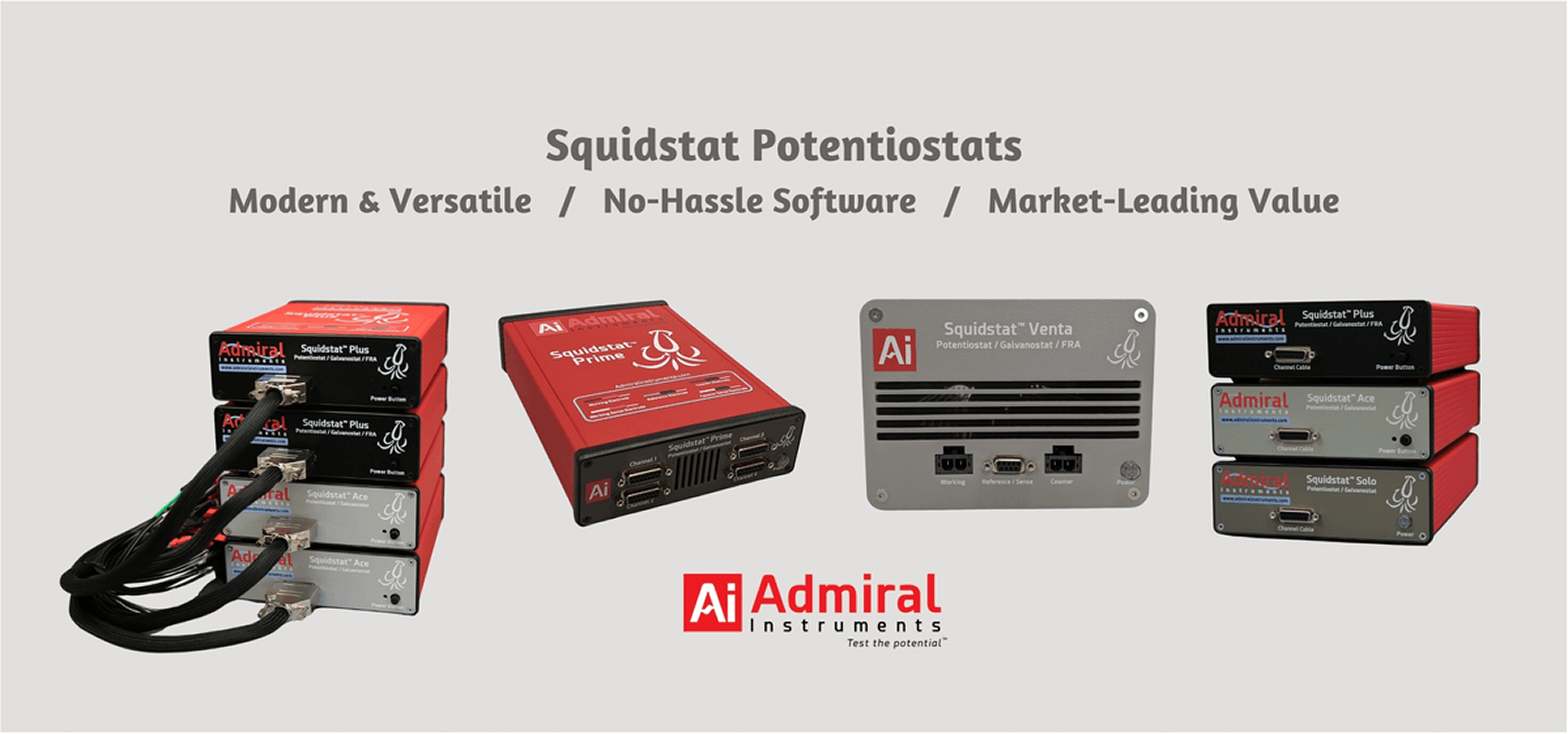
| Squidstat Series (Admiral): Squidstat Plus, Squidstat Prime, Squidstat Solo, Squidstat Penta, Squidstat Decka, Squidstat Venta |
These tools are great for university teaching, fieldwork, and startup or industrial research and development. |
Portable, cost-effective, user-friendly. Bluetooth-enabled (select models) for mobile use. Great for education, field diagnostics, and core battery/corrosion testing. |
| Corrtest Series: CS2350M Bipotentiostat (2-channel, 2-EIS), CS2150M Bipotentiostat (2-channel, No EIS) |
These are used in academic and industrial corrosion labs. They are great for general electrochemistry. |
Robust, focused on specific applications, excellent value. Offers dedicated corrosion instruments, portables with EIS, and multichannel systems for high-throughput testing. |
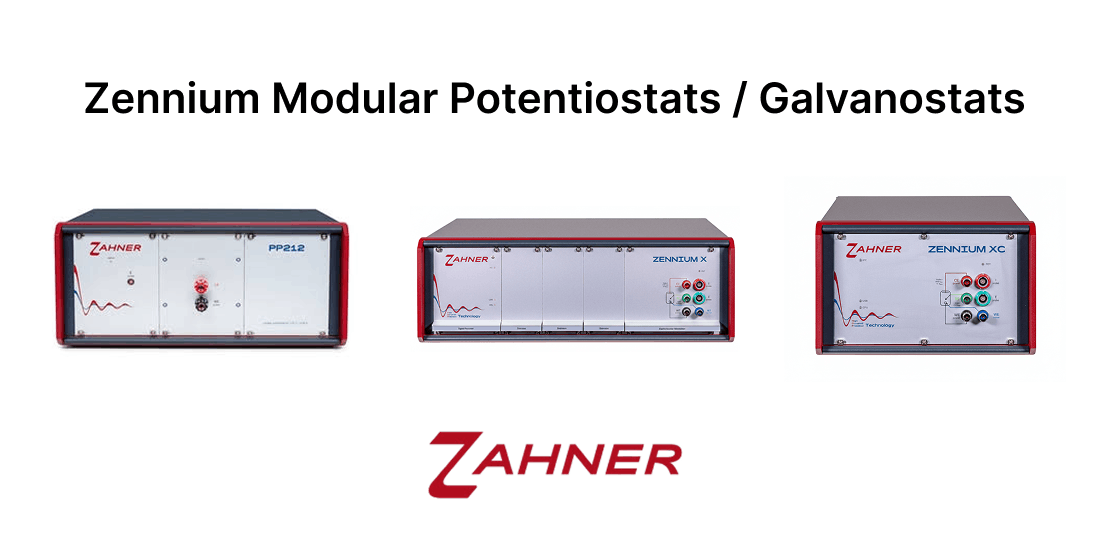
| Zennium Series (Zahner): Zennium XC, Zennium PRO, Zennium X | Advanced Academic & Industrial Research | High-precision, modular, optimised for EIS. Well-suited for advanced research in photoelectrochemistry, impedance analysis, and fuel cell development. |
| Specialised Power & Modules | Industrial R&D, Advanced Energy Research | High-current, high-power, custom configurations. Includes boosters up to ±40A, depending on the setup. It also has electronic loads for fuel cell stacks and parallel impedance cards for stack analysis. |
The ScienceGears Difference: Expert Guidance from PhD Scientists
The voltage range, current range, EIS frequency, and number of channels are important. However, they are just part of the whole picture. The real challenge is matching those specifications to your specific experimental goals, workflow, and plans. This is where the ScienceGears unique selling proposition becomes critical. We provide more than just instruments; we provide direct access to expert guidance from our founding scientists. This means you get advice from specialists who understand your research from both a technical and practical perspective.
Meet Your Scientific Consultants
Our co-founders are active scientists who bring deep, firsthand experience to every consultation:
Dr. Siva Arumugam – PhD | Co-Founder
Dr. Arumugam has over 20 years of international research experience. He specializes in electrochemistry, nanomaterials, and biosensors. He offers expert advice on choosing and using potentiostats, bipotentiostats, and battery cyclers. His research focuses on electrocatalysis, battery studies, and corrosion science. This means he can provide useful insights for your projects in energy storage, fuel cells, and sensor development.
Dr. Kalai Govindasamy – Ph.D. in Raman Spectroscopy | Co-Founder
Dr. Kalai Govindasamy is a materials chemist and instrumentation specialist with over 15 years of experience. Her expertise bridges electrochemistry and advanced spectroscopy, supporting customers with integrated solutions for complex analytical challenges in pharmaceuticals, materials research, and environmental monitoring. Researchers exploring elemental analysis techniques can also refer to our guide on Laser-Induced Breakdown Spectroscopy (LIBS), which explains LIBS principles, instrumentation, and industrial applications
How Our Expert Support Benefits Your Lab
This direct line to PhD-level expertise translates into tangible benefits:
- Application-Focused Recommendations: We don't just quote specs. We discuss your specific research in battery development, corrosion mechanisms, or sensor fabrication and recommend the instrument that will deliver reliable, publishable data.
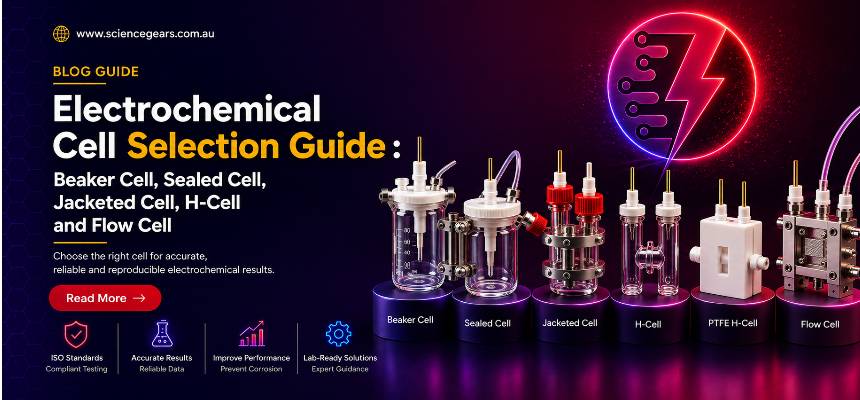
- Workflow Optimisation: We help you design efficient test setups, from choosing the right electrochemical cell to integrating accessories for spectroelectrochemistry or multi-electrode arrays.
- Future-Proofing Your Investment: We offer advice on modular systems that can expand with your research. This way, your instrument stays a valuable asset for many years.
We work with widely used brands such as Zahner Elektrik, Admiral Instruments (Squidstat), and Corrtest. Our expert guidance helps you find the right tool for the job. You will also get quick local support.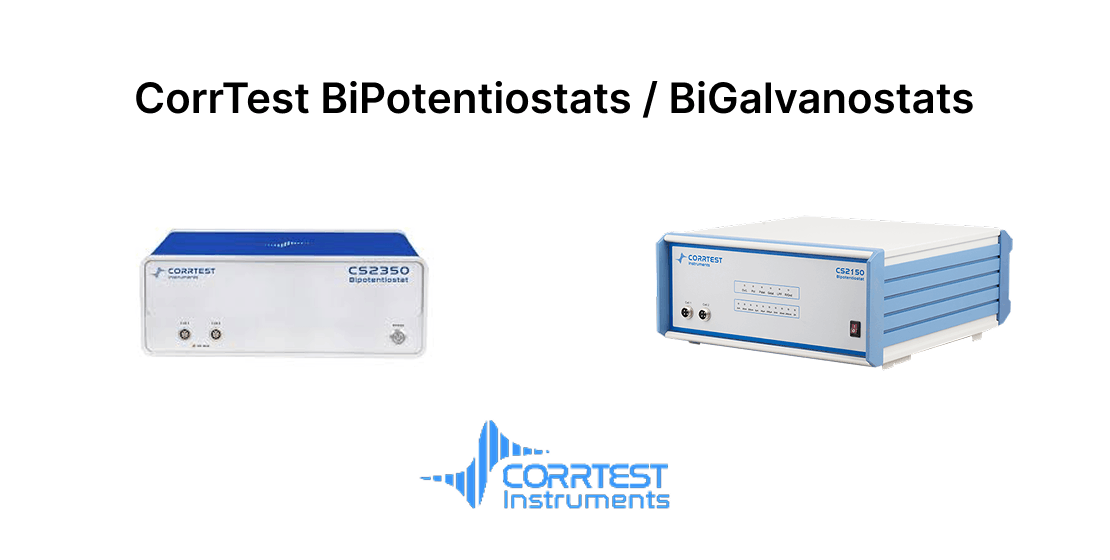
FAQs
- When do I need a bipotentiostat instead of a single-channel potentiostat?
You need a bipotentiostat when you want to control two working electrodes separately. Each electrode must have its own potential. This is common in experiments like generator-collector setups, RRDE/DEMS collection, dual-electrode sensors, and paired electrocatalysis studies. - What current range do I need for my application (corrosion vs batteries vs electrocatalysis)?
Corrosion/coatings: usually low to moderate currents; prioritise low-noise, stable baselines. Sensors/bioelectrochemistry: often very low currents; prioritise pA–nA sensitivity (model-dependent). Batteries/electrolysis/fuel cells: can require high currents; consider systems that can support higher current ranges or external boosters (depending on configuration). - How do I choose an EIS frequency range, and what does it change?
Choose the range based on what you want to solve:
- High frequency: wiring and contact effects, fast interfacial processes.
- Mid-frequency: charge transfer and double-layer behaviour.
- Low frequency: diffusion, mass transport, and slow processes.
- What’s the difference between a potentiostat and a battery cycler, and when should I use each?
Potentiostat/galvanostat: best for electrochemical methods (CV, EIS, LSV, corrosion, sensors) and detailed mechanistic work. Battery cycler: best for high-throughput cycling (formation, long-term cycling, many channels). Use a potentiostat for insight; use a cycler for volume and long-duration cycling (many cells). - Which electrode configuration should I use: 2-electrode or 3-electrode?
3-electrode (WE/RE/CE): best when you need accurate potential control at the working electrode (most research measurements). 2-electrode: common for full-cell battery testing and simple setups, but the measured voltage includes other contributions, so interpretation is less specific. - How can I minimise noise and drift in low-current measurements (pA–nA)?
Use a short, well-shielded cable setup and keep connections clean/tight. Use a stable Faraday cage/shielding where possible. Let the system equilibrate (temperature and open-circuit stability). Use appropriate filters/sampling settings (model-dependent). Confirm your reference electrode is healthy and positioned correctly (for 3-electrode work). - How do I decide between potentiostatic and galvanostatic control?
Use potentiostatic control when you need to hold a specific potential (e.g., electrocatalysis at a set voltage). Use galvanostatic control when you need to hold a specific current (e.g., charge/discharge, electroplating at constant current). Many workflows use both, depending on the experiment stage. - Do I always need EIS, or is CV/LSV enough?
Not always. CV/LSV is often enough for quick screening and basic kinetics. EIS is useful when you want to separate contributions like charge transfer and mass transport. It helps diagnose resistance losses and compare interfaces more thoroughly. The effectiveness of EIS also depends on the instrument's capability. - What accessories commonly matter most for good data quality?
Usually: a suitable electrochemical cell, reliable reference electrode, quality electrodes, and correct cables/connectors. Poor accessories can limit performance even with a strong instrument. - How do I choose the right system if my lab does multiple applications (batteries + corrosion + sensors)?
Prioritise a platform that supports the broad methods you’ll actually use (e.g., CV + CA/CP + EIS if needed), then choose current capability and sensitivity based on the “hardest” use case. If you need parallel cycling, consider adding a battery cycler alongside the potentiostat. - What's the most important thing to consider when choosing a single-channel electrochemical workstation?
The primary balance is between current compliance (power) and measurement precision. High-current units (like the Squidstat VentaMax) are for driving demanding reactions, while high-precision units (like the Zennium X) are for sensitive analytical measurements. - Can you summarize the key differences between the main ScienceGears models?
| Model | Best For | Key Strength | Max Current | Key Spec Highlight |
|---|---|---|---|---|
| Squidstat Prime | General-purpose lab work, education, portability. | Portability & Data Logging | ±1 A | Balanced specs for everyday experiments. |
| Squidstat Plus | Advanced research requiring high precision. | High-End Precision & Modularity | ±2 A | Best current resolution (0.5 nA), wide 5 MHz EIS. |
| Zennium X | Specialized corrosion studies and high-voltage experiments. | Corrosion & High Voltage | ±2 A | Highest compliance voltage (±21 V) for resistive systems. |
| CCS350M / VentaMax | Industrial R&D, battery testing, and electrosynthesis. | High Power & Industrial Use | ±20 A | Massive current output for power-hungry applications. |