
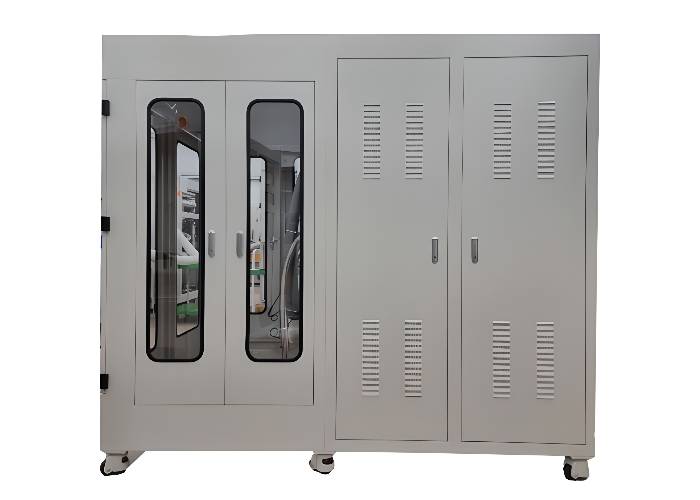
SE200K-PE Stack Test Station (200 kW) – PEM Water Electrolyser (PEMWE)
SE200K-PE Stack Test Station (200 kW)
Overview
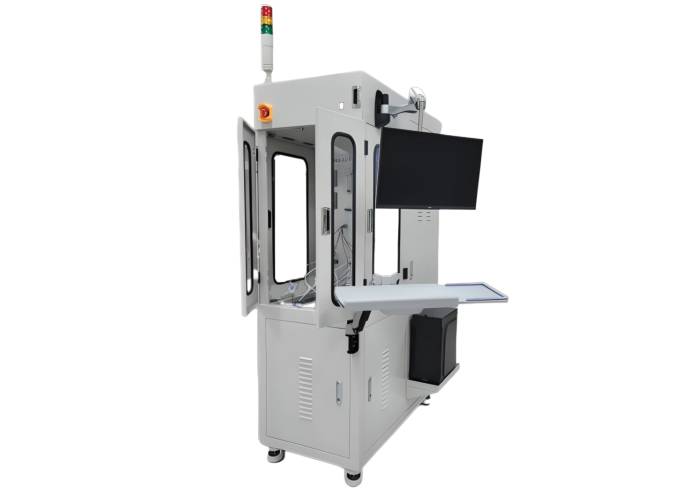
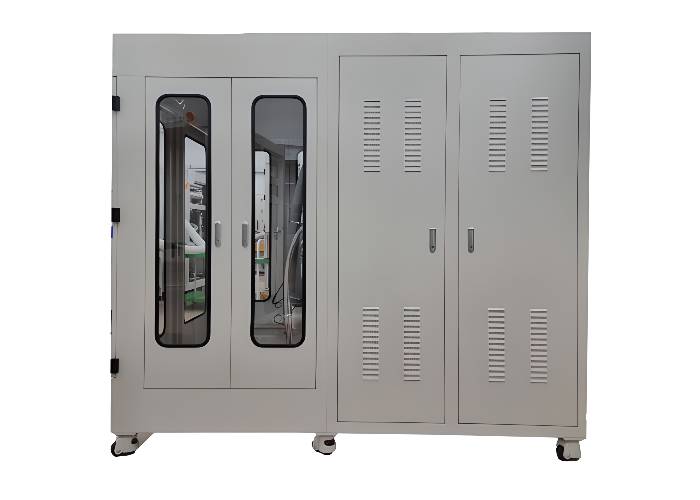
The SE200K-PE Stack Test Station (200 kW) is a floor-standing, fully integrated PEM water electrolyser (PEMWE) test platform designed to validate full stacks under controlled balance-of-plant (BoP) conditions. It combines high-power DC delivery, deionised (DI) water management, gas–liquid separation, safety logic and data acquisition in a single cabinet system (1800 (W) × 4000 (D) × 2200 (H) mm).
Principle of operation
DI water is circulated through the anode side of a PEM electrolyser stack. Under programmed current or voltage, water is oxidised to oxygen, protons and electrons. Protons migrate through the polymer electrolyte membrane to the cathode to form hydrogen, while electrons flow through the external circuit. The station continuously logs electrical, thermal and fluidic parameters to quantify efficiency, stability and operating limits.
Key features and specifications
- Power class: up to 200 kW programmable DC operation for polarisation curves, dynamic loading and endurance tests
- Gas flow monitoring: configured for high-flow PEMWE stacks (hydrogen up to ~1000 slpm; oxygen up to ~500 slpm) with wide turndown mass-flow measurement
- Water loop control: pump + flow metering, filtration, liquid level control/alarm, and RT to ~95 °C temperature control with optional preheating
- Pressure & purge: automatic back-pressure control (10 bar standard, 30 bar optional) and automated nitrogen purge (anode/cathode)
- Safety diagnostics: hydrogen/oxygen monitoring, dewpoint/gas conditioning options, and concentration sensing for crossover checks
- Electrochemical diagnostics (optional): integrated HFR/EIS capability (10 mHz to 10 kHz) for membrane and contact-resistance tracking
- Software: configurable test recipes and custom LabVIEW-based automation for your protocols
Typical applications
- 50–200 kW PEMWE stack commissioning and acceptance testing
- Durability, start/stop cycling and BoP optimisation
- Validation of membranes, catalyst-coated electrodes and PTLs at realistic flows and pressures
For complementary workflows, many labs pair stack stations with potentiostats/EIS tools for detailed diagnostics and gas analysis for purity and crossover verification.
Why ScienceGears
ScienceGears supports researchers and engineers across Australia and New Zealand with local product guidance, configuration support, and system-level integration across electrochemistry, gas handling, and hydrogen energy testing
Customer Reviews
Related Product
Explore our precision instruments designed for electrochemical research and energy applications



Still Wondering About Something?
Explore our FAQ for fast, clear answers to the most common questions—available 24/7.