
Battery Charging and Discharging Observation Cell
Battery Charging and Discharging Observation Cell
Overview
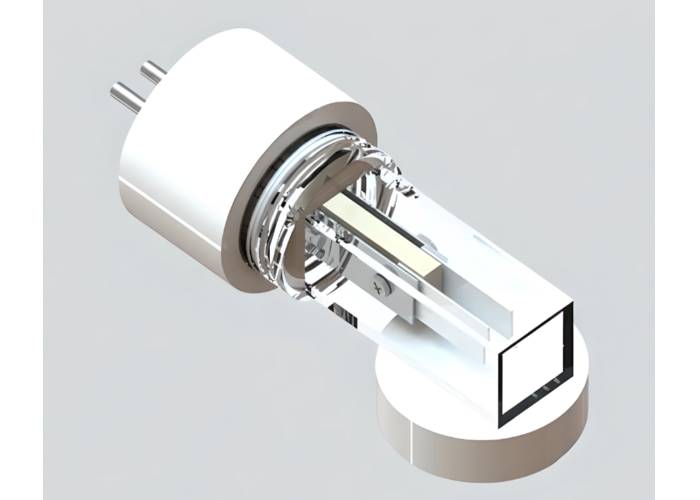
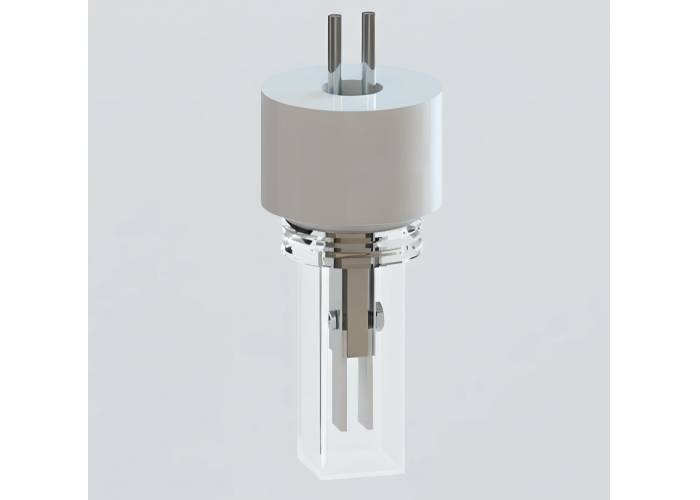
The Battery Charging and Discharging Observation Cell is a compact in-situ battery testing platform for real-time visualisation of electrode changes during electrochemical cycling. The cell is manufactured using a full-quartz melting method and incorporates a PEEK core, stainless-steel presser and screws, and a PTFE lid to balance optical transparency, mechanical rigidity and dependable sealing. The quartz cell size is 12.5 × 12.5 × 52 mm (L × W × H, with the 18 mm screw height included), and the anode–cathode distance is 3 mm.
Principle of operation
Electrodes and separator are mounted using a double-clip structure and compressed to create a stable, reproducible interface. The fully sealed architecture helps preserve electrolyte conditions while the transparent quartz body enables high-magnification optical microscopy of processes such as metal plating/stripping, interfacial roughening, particle detachment and other morphology-driven degradation modes. The manufacturer also notes that UV-compatible optical connection is available for extended imaging configurations.
Key features
- Full quartz construction for robust optical access.
- Fully sealed system to reduce evaporation and contamination.
- Double-clip electrode mounting for rapid, repeatable assembly.
- Dismantlable parts for convenient cleaning and re-use.
- Suitable for observing self-consuming electrodes.
- Custom materials available on request.
Compatibility and applications
This observation cell is well suited to laboratory-scale studies in:
- Lithium-metal and lithium-ion interfacial stability and dendrite screening.
- Sodium-ion or other model battery chemistries.
- Formation and degradation experiments where visual evidence strengthens electrochemical interpretation.
For best results, pair the cell with a potentiostat/galvanostat or battery cycler, and consider complementary in-situ tools (for example, in-situ Raman or in-situ XRD cells) to correlate morphology with chemical and structural evolution. In-situ/operando approaches are widely used to link performance with mechanism.
Why choose ScienceGears
ScienceGears supports researchers across Australia and New Zealand with local technical guidance, integration support with your electrochemistry workstation, and access to a broader ecosystem of in-situ and operando cells and accessories to help you build a publication-ready battery research workflow.
Resources & Downloads
Everything you need to get started

Electrochemical Impedance Spectroscopy (EIS): Core Concepts for Confident Understanding
Squidstat - Admiral
Customer Reviews
Related Product
Explore our precision instruments designed for electrochemical research and energy applications





Still Wondering About Something?
Explore our FAQ for fast, clear answers to the most common questions—available 24/7.