


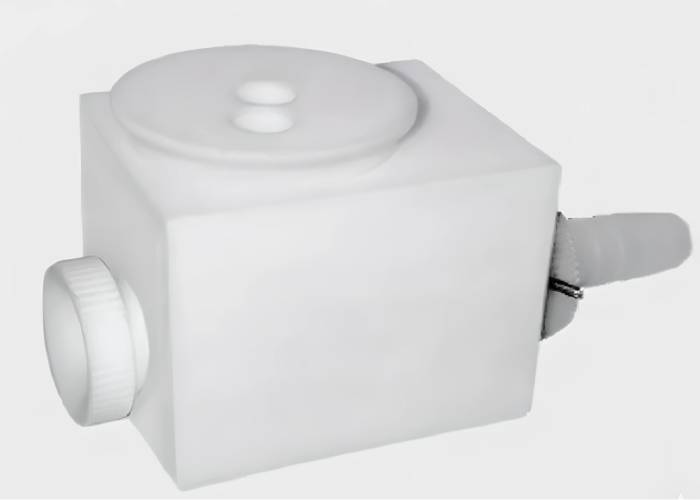
Swagelok Two-Electrode Battery Test Cell
Swagelok Two-Electrode Battery Test Cell
Overview and working principle
The Swagelok two-electrode battery test cell is a compact, compression-sealed electrochemical cell designed for full-cell or symmetric-cell testing using a working electrode and counter electrode only (no reference electrode). The Swagelok-style geometry enables controlled stack compression and reliable electrical contact, making it well suited for reproducible electrochemistry experiments on battery electrodes, current collectors and porous materials.
In a two-electrode configuration, the potentiostat or battery cycler measures the overall cell voltage between the two electrodes. This is the standard arrangement for many battery tests (galvanostatic cycling, rate capability, coulombic efficiency, and impedance measurements), especially when a dedicated reference electrode is not required.
Key specifications (common with the 3-electrode version)
- Electrode core diameter: 6 mm
- Cell inner diameter: 10 mm
- Maximum electrolyte volume: < 1 mL (electrolyte-efficient testing)
- Compression-sealed design: supports stable contact and repeatable assembly
- Adjustable electrode spacing/compression: electrode distance can be minimised and tuned to suit your test method
Electrode bundle options (choose as required)
Available configurations include the cell supplied with two matching electrodes, such as:
- Graphite electrodes
- Glassy carbon electrodes
- Titanium electrodes
- Stainless-steel electrodes
Compatibility and typical applications
Compatible with potentiostats/galvanostats (including EIS) and battery cyclers for:
- Charge/discharge cycling of lab-scale electrode samples
- Symmetric-cell studies (e.g., carbon–carbon, metal–metal)
- Electrolyte screening with low volume consumption
- Impedance spectroscopy of electrode/electrolyte interfaces (two-electrode EIS)
Researchers choose ScienceGears for AU/NZ support and integration guidance across related electrochemistry workflows, including potentiostats, EIS accessories, and specialised electrochemical cells.
Resources & Downloads
Everything you need to get started
Electrochemical Impedance Spectroscopy (EIS): Core Concepts for Confident Understanding
Squidstat - Admiral
Customer Reviews
Related Product
Explore our precision instruments designed for electrochemical research and energy applications



Still Wondering About Something?
Explore our FAQ for fast, clear answers to the most common questions—available 24/7.