


In-Situ Battery Imaging Formation Cell
In-Situ Battery Imaging Formation Cell
Overview
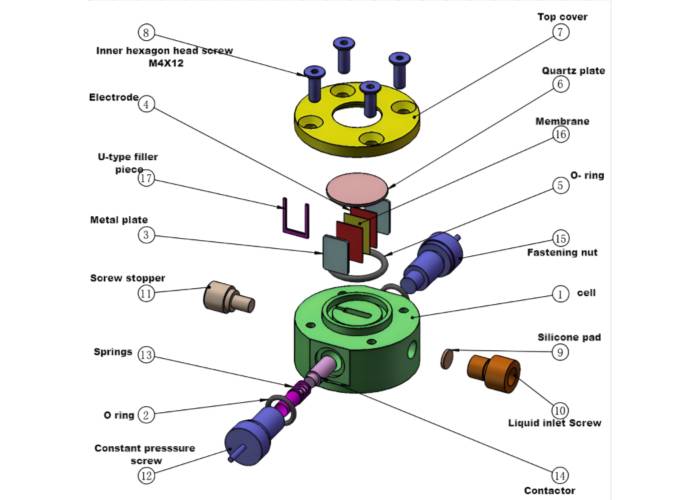
The In-Situ Battery Imaging Formation Cell is a compact, fully sealed research cell designed for in-situ image formation and video recording of the battery side section during formation and early cycling. It enables researchers to visualise morphological changes—particularly lithium dendrite growth through the thickness direction—while performing controlled charge–discharge experiments. In-situ imaging approaches like this are increasingly valuable for linking electrochemical performance with failure pathways and interfacial phenomena. It provides optical access for an optical microscope, enabling researchers to connect electrochemical data with real-time visual changes in thin electrode stacks.
Design and working principle
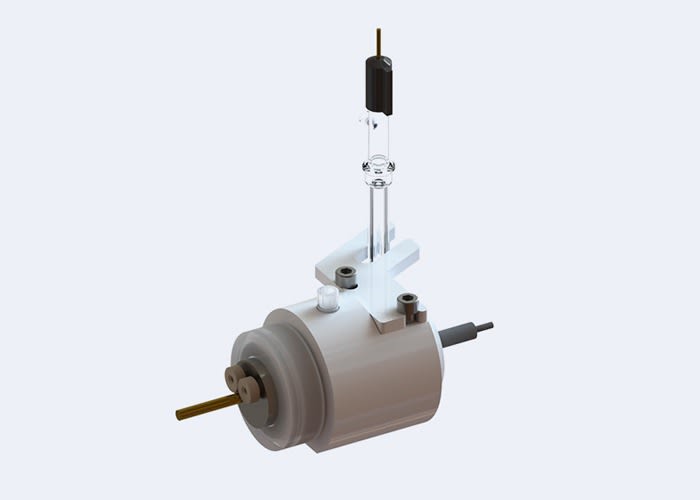
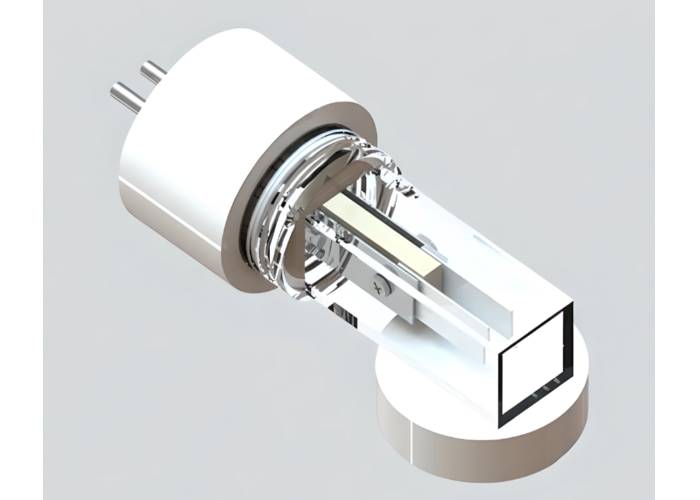
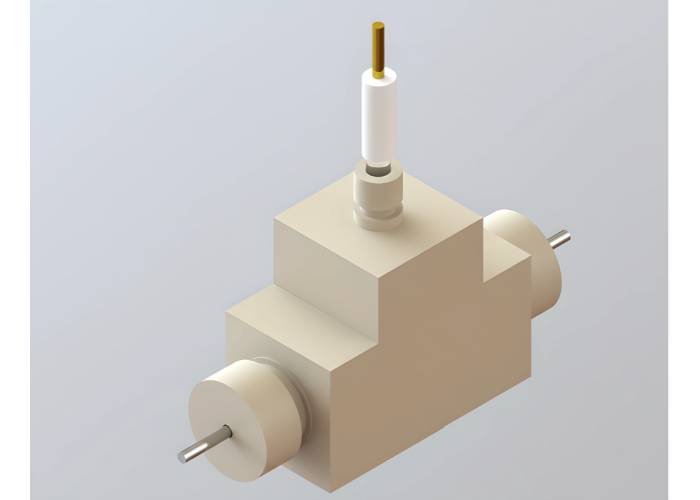
In-Situ Battery Imaging Formation Cell integrates a compact, sealed electrochemical environment with a transparent optical window to support high-magnification microscopy during cycling. The cell body combines PEEK and stainless steel, providing chemical resistance and mechanical stability, while the quartz window offers optical clarity for imaging. A flat specimen stack is assembled and compressed to stabilise interfacial contact while the cell is connected to a compatible potentiostat/galvanostat or battery cycler. The side-on viewing geometry supports time-resolved observation of early interfacial evolution, plating/stripping behaviour and other morphological changes under realistic electrochemical conditions.
Key features
- Cell materials: PEEK + stainless steel
- Window: Quartz plate
- Electrode area format: Anode + cathode size 10 × 14 mm
- Recommended observation: Optical microscope with ≥1000× magnification for dendrite tracking
- Electrode configuration: 2-electrode
- Liquid handling: inlet + outlet for controlled electrolyte management
- Compression method: tightened using a stainless steel column
- Focal length requirement: < 3 mm (supports close-proximity optical observation)
- Specimen size: 14 × 10 × 0.5 mm
- User-friendly design: supplied with specialised tools for assembling electrodes and membranes; components can be disassembled and cleaned for repeat use
Compatibility and typical setup
The cell is suited to standard potentiostat/galvanostat control and can be integrated into broader workflows that include battery cyclers or complementary in-situ platforms (such as Raman-SEC or XRD battery cells) depending on your study goals.
Applications
- Lithium metal anode formation studies
- Dendrite nucleation and growth visualisation under varied electrolytes
- Electrolyte/additive screening
- Early-stage safety and failure-mechanism research
- Lithium metal formation and early morphology studies
- Interfacial stability assessments of thin electrode stacks
Resources & Downloads
Everything you need to get started

Electrochemical Impedance Spectroscopy (EIS): Core Concepts for Confident Understanding
Squidstat - Admiral
Customer Reviews
Related Product
Explore our precision instruments designed for electrochemical research and energy applications





Still Wondering About Something?
Explore our FAQ for fast, clear answers to the most common questions—available 24/7.