
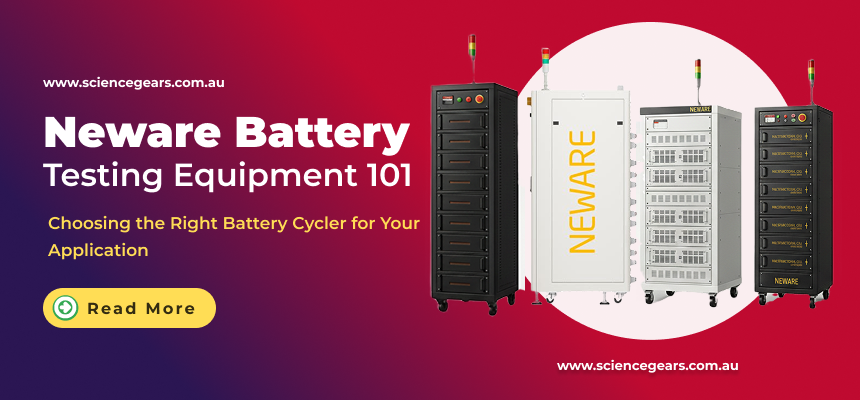
Battery testing has become essential to modern technology innovation, particularly as demand for electric vehicles, renewable energy storage, and portable electronics continues to accelerate globally. Whether you're developing next-generation lithium-ion cells, validating consumer electronics batteries, or researching solid-state technologies, selecting the appropriate battery cycler fundamentally shapes your testing outcomes and research efficiency.
Understanding Battery Cyclers and Their Importance
A battery cycler is a sophisticated testing instrument designed to repeatedly charge and discharge battery cells whilst precisely measuring and recording critical performance parameters. These systems serve as the backbone of battery research and quality control, enabling engineers and scientists to evaluate capacity, efficiency, internal resistance, cycle life, and degradation mechanisms under controlled conditions.
The precision of modern battery cyclers cannot be overstated. Current accuracy can reach approximately ±0.02% of full scale and voltage resolution can be as low as 100 µV (depending on model and configuration) enables detection of subtle performance differences between battery materials and designs. This precision proves indispensable whether you're conducting fundamental electrochemical research or implementing high-volume production quality control.
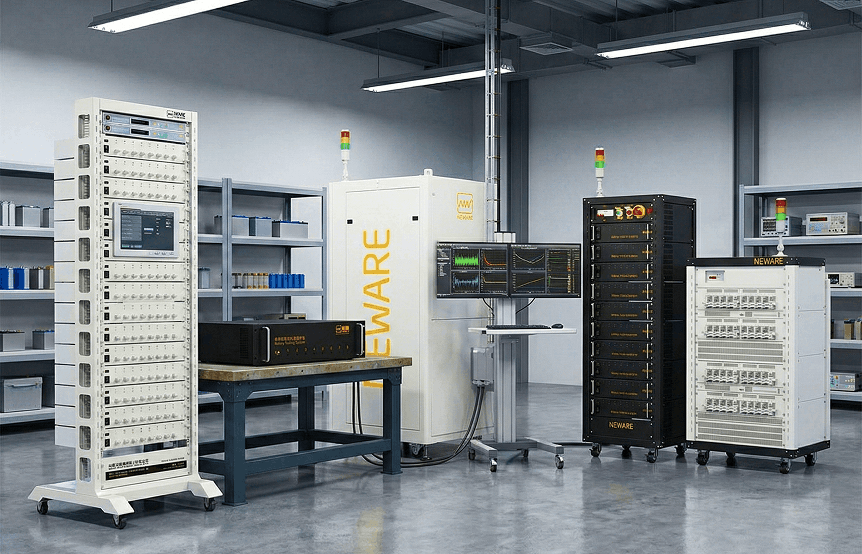
The Battery Cycler Series Landscape
NEWARE battery cyclers represent industry leading solutions specifically designed for diverse testing applications across the battery development lifecycle. Understanding the differences between series and their optimal applications ensures you select equipment aligned with your specific requirements.
Small-Scale Battery Research: The CT-4000 Series Foundation
For laboratory researchers working with coin cells, super capacitors, and three-electrode systems, the CT-4000 Series provides the ideal entry point into precision battery testing. These cyclers deliver exceptional measurement control for laboratory-scale research with multiple models offering current ranges from 50mA to 12A across triple-range configurations.
The triple-range design represents a key innovation, enabling automatic switching between current ranges and providing optimal accuracy across the entire testing spectrum without manual intervention. This feature eliminates labour-intensive manual adjustments and reduces measurement errors caused by inappropriate range selection.
The CT-4000 Series incorporates independent constant-current and constant-voltage sources for each channel, with data recording frequencies up to 10Hz and response times as fast as 1ms. These specifications prove particularly valuable for electrode material research, battery performance evaluation, and small-scale formation testing where precision and reliability are paramount.
Consumer Electronics Battery Testing: Smart Solutions with CT/CTE-5000 Series
Consumer electronics manufacturers face unique battery testing challenges requiring systems that understand Battery Management Systems (BMS) and smart battery protocols. The CT/CTE-5000 Series addresses these requirements directly through integrated SMBUS/I2C communication capability, enabling seamless integration with BMS for comprehensive smart battery diagnostics.
Engineered specifically for testing laptop batteries, tablets, and smartphone battery packs, this series achieves measurement accuracy reaching 0.02% full scale with response times under 10ms. These specifications capture rapid transient behaviours critical for consumer electronics validation, where battery management intelligence determines user experience and device safety.
The CT/CTE-5000 Series incorporates advanced four-quadrant energy feedback technology, efficiently converting electrical energy generated during testing and feeding it back to the power grid. This regenerative capability significantly reduces operational costs, particularly important for manufacturing environments conducting hundreds of test cycles daily across multiple channels.
Automotive Battery Testing at Scale: CE-6000 Series Power Solutions
Electric vehicle development demands robust testing solutions capable of handling high-power cells, modules, and complete battery packs. The CE-6000 Series provides these solutions through a modular platform supporting maximum voltages up to 3000V, making it ideally suited for automotive and industrial applications.
This series combines regenerative energy technology with high-precision measurement capabilities, making it equally suitable for R&D laboratories validating new battery chemistries and production environments conducting capacity grading, cycle life testing, and quality control on manufacturing lines. The CE-6000's modular architecture allows flexible channel configurations and scalability to meet evolving testing demands.
Automotive engineers particularly value the CE-6000's ability to test complete battery packs under realistic operating conditions, enabling comprehensive validation of thermal management systems, BMS performance, and overall energy performance before vehicle integration.
Drive Cycle Simulation and Dynamic Load Testing: CT/CTE-8000 Series
Realistic testing requires more than static charge-discharge cycles—electric vehicles and portable devices operate under continuously varying power demands that battery packs must accommodate. The CT/CTE-8000 Series enables engineers to replicate actual road-driving loads and power consumption patterns through dynamic current and power waveform simulation.
These cyclers load drive profile data from CSV or text files containing millions of data points at intervals as fast as 10ms, enabling effortless implementation of complex drive cycle simulations. This capability proves essential for validating EV battery pack performance, range prediction, and thermal management strategies under authentic operating conditions.
The CT/CTE-8000 Series delivers advanced simulation capabilities through rapid response times (≤20μs charge/discharge switching), high-frequency sampling (up to 1000Hz), and flexible test programming accommodating pulse testing, constant power discharges, and multi-stage complex profiles. These features enable engineers to evaluate battery behaviour under realistic conditions rather than simplified laboratory scenarios.
Cutting-Edge Battery Research: Ultra-Precision with CT-9000 Series
For research institutions pursuing cutting-edge electrochemical studies and material science innovations, the CT-9000 Series represents NEWARE's pinnacle achievement in battery testing technology. In some documentation, this ultra-precision platform may also be referred to as BTS9000. haracterised by ultra-high precision that can reach around 0.005% accuracy, high-frequency data recording (up to ~1000 Hz), four automatic-switch output ranges, and short pulse capability (down to ~400 µs), depending on configuration, the CT-9000 stands as one of the most advanced battery testers available globally.
This series excels at transient performance analysis and detecting minute differences in battery materials, making it the preferred choice for cutting-edge electrochemical research. Leading battery experts from LG Chem, Samsung SDI, General Motors, and prominent universities have highly evaluated and recommended the CT-9000 for its exceptional measurement capabilities and research-grade specifications.
The CT-9000's advanced features prove particularly valuable for developing next-generation solid-state batteries, optimising lithium-metal formulations, and conducting fundamental electrochemical research where detecting subtle changes in battery behaviour provides critical insights into degradation mechanisms and performance optimisation.
Battery Impedance Analysis Simplified: Integrated EIS Technology
Electrochemical Impedance Spectroscopy (EIS) represents a sophisticated non-destructive diagnostic technique that examines battery internal chemistry by measuring electrical impedance across multiple frequencies. However, traditional battery testing workflows required separate EIS equipment and labour-intensive manual battery transfers between systems.
The EIS Battery Cycler Series integrates Electrochemical Impedance Spectroscopy directly into the cycling platform, eliminating these inefficiencies. This integration enables automated switching between DC charge-discharge and AC impedance measurements without repeatedly mounting and unmounting batteries.
EIS functionality provides detailed battery state-of-health analysis, internal resistance profiling, and predictive diagnostics across a broad frequency range (typically around 10 mHz to 100 kHz, depending on model) with high impedance accuracy. A single EIS-equipped tester can support a high channel count (capacity depends on configuration) with flexible test programming allowing simultaneous impedance measurements during DC testing.
This integrated approach dramatically improves testing efficiency by reducing manual labour, minimising measurement errors caused by varying electrical contacts, and enabling continuous impedance monitoring throughout charge-discharge cycling. For battery researchers requiring comprehensive diagnostic information, integrated EIS eliminates equipment redundancy and operational inefficiency.
Key Selection Criteria for Your Battery Testing Needs
Selecting the optimal battery cycler requires evaluating multiple factors aligned with your specific testing objectives and operational requirements.
Battery Format and Chemistry: Coin cells, cylindrical cells, pouch cells, and complete battery packs each require different testing approaches. Similarly, lithium-ion, sodium-ion, solid-state, and other emerging chemistries may have specific testing requirements. Verify that your chosen cycler accommodates your target battery format and chemistry specifications.
Voltage and Current Requirements: Different applications demand vastly different voltage and current capabilities. Small coin cell research demands high sensitivity and low current ranges, whilst electric vehicle battery pack testing requires high voltage and current capacity. Match cycler specifications precisely to your application requirements to ensure measurement accuracy and safety.
Testing Objectives: Research institutions pursuing materials science innovations prioritise ultra-precision measurement capabilities like the CT-9000 Series, whilst manufacturers implementing quality control processes value throughput and automated testing protocols. Consider whether your primary objective involves research, production quality control, or both.
Throughput and Channel Requirements: Production environments may require multi-channel systems enabling simultaneous testing of multiple batteries, whereas laboratory research often requires fewer channels with advanced individual measurement capabilities. Channel flexibility and scalability become important considerations for growing testing operations.
Budget and Operational Costs: Battery cycler pricing varies significantly based on specifications and channel configurations. However, energy-efficient systems with regenerative capabilities significantly reduce long-term operational costs, making higher initial investment potentially justified through operational savings.
Technical Support and Integration: Consider whether vendors provide comprehensive technical support, custom configurations, software integration capabilities, and ongoing training to maximise your testing capabilities and equipment utilisation.
Real-World Applications Across Industries
Battery cyclers serve diverse applications throughout multiple industries and research domains. Understanding real-world applications helps clarify which series best matches your specific requirements.
Automotive manufacturers rely on battery cyclers for comprehensive electric vehicle battery validation, ranging from initial cell and module testing through complete battery pack performance validation. Drive cycle simulation capabilities prove essential for range prediction, thermal management assessment, and BMS validation before vehicle integration.
Consumer electronics manufacturers employ battery cyclers for quality control, capacity grading, and reliability testing of laptop batteries, smartphone batteries, and power bank systems. Smart battery communication capabilities enable BMS integration testing critical for device safety and performance.
Research institutions utilise battery cyclers for fundamental electrochemical research, materials science investigations, and novel battery chemistry development. Ultra-precision measurement capabilities enable detection of subtle performance differences guiding material optimisation and innovative battery architecture development.
Energy storage system developers test stationary battery systems for grid-scale applications, renewable energy integration, and backup power systems. Cyclers capable of handling high voltage and current specifications enable comprehensive testing of complete battery modules designed for industrial and utility-scale applications.
Making Your Final Selection
Choosing the right battery cycler represents an important investment in your testing capability, research efficiency, and product quality. Begin by clearly defining your testing objectives, battery specifications, and operational requirements. Consult with equipment providers about system recommendations aligned with your specific applications.
Consider requesting product demonstrations and technical documentation from potential suppliers. Many vendors provide application notes and case studies demonstrating how their systems address specific testing challenges in your industry or research domain.
Evaluate total cost of ownership including equipment purchase, installation, training, ongoing maintenance, and operational costs. Energy-efficient systems with regenerative capabilities often justify higher initial investment through reduced long-term operational expenses.
Prioritise vendors offering comprehensive technical support, custom configuration options, and software integration capabilities. Battery testing technology continues evolving rapidly, and vendors committed to customer success through ongoing support ensure your investment remains valuable as your testing requirements evolve.
Frequently Asked Questions
What is a battery cycler and how does it work?
A battery cycler is precision laboratory equipment designed to charge and discharge batteries in controlled, repeatable cycles while accurately measuring electrical parameters. It consists of power supplies, measurement electronics, and software that control charge/discharge rates and record voltage, current, capacity, and internal resistance data. The cycler applies programmable current or voltage profiles to simulate real-world usage conditions, enabling researchers and manufacturers to evaluate battery performance, capacity degradation, and lifespan.
What are the main differences between a battery analyzer and a battery cycler?
Battery analyzers typically provide one-time measurements of voltage, capacity, and internal resistance, making them suitable for quick quality checks. Battery cyclers, however, can run continuous cycling tests over extended periods, applying complex test profiles and collecting high-frequency data. Cyclers offer greater versatility for research, formation, and production testing.
How do I choose the right battery cycler for my application?
Assess your target voltage and current ranges, required precision, number of parallel channels, simulation needs, and special protocol support (like EIS or SMBUS). Use the cluster links above to preview detailed specifications and purchase options.
Why is EIS analysis useful in battery testing?
EIS reveals subtle battery characteristics by analysing impedance across frequencies, offering insights into internal resistance, charge transfer, and cycle degradation with NEWARE’s series, you can integrate EIS seamlessly without multiple pieces of equipment.
What factors should I consider when choosing a Neware cycler?
Consider: (1) Voltage and current range matching your battery, (2) Required accuracy for your application, (3) Data recording frequency for your test protocols, (4) Number of channels needed (throughput), (5) Test modes required (DCIR, GITT, pulse, etc.), (6) Channel parallelization capability, (7) Software features, (8) Budget, and (9) Physical space availability in your lab.
What is the difference between CT-4000 and CT-9000 series?
CT-4000 is a cost-effective, entry-level system with 0.05% accuracy, 10Hz recording, and suitable for basic cycling and capacity testing. CT-9000 is a premium research platform with 0.02% accuracy, 1000Hz recording, 400μs pulse width, 4 auto-switch ranges, and ideal for material science, detailed degradation analysis, and EV development. CT-9000 is positioned as a premium research platform; pricing varies significantly by configuration and channel count.
When should I choose the CT/CE-5000 series?
Choose CT/CE-5000 for materials research, 3C electronics (phones, laptops), power tools, basic cycle-life testing, and educational applications. It's an upgrade from CT-4000 with better energy efficiency but less demanding than CT-9000. It's ideal if you need multi-hour tests but don't require ultra-high precision or advanced testing modes.
When should I choose the CT/CE-8000 series?
Choose CT/CE-8000 for EV battery module and pack testing, large-scale production quality control, and battery pack development. It supports higher voltage and current configurations for module- and pack-level testing (specifications vary by model and system architecture) needed for multi-cell configurations and provides driving simulation capabilities essential for automotive applications.
For EV development, should I choose CT/CE-8000 or CT-9000?
This depends on your testing goal. For EV traction battery pack qualification, cycle-life testing, and pulse simulation: use CT/CE-8000 with its higher current handling. For EV cell material research, detailed electrochemistry understanding, and ultra-precise performance characterization: use CT-9000. Many EV companies use both—CT-9000 for R&D, CT/CE-8000 for production.
What is channel count and how does it affect throughput?
Channel count is the number of independent battery samples you can test simultaneously. CT-4000 has 8 channels, CT/CE-5000 ranges 8-40 channels, CT/CE-8000 has 8-200+ channels, and some systems reach 512+ channels. More channels reduce time-to-result for large-scale testing. For research labs,8-16 channels is typical; manufacturers need 40+ channels.
Can I use multi-channel systems for testing at different conditions?
Yes, most Neware multi-channel systems allow independent control of each channel. This enables simultaneous testing of the same battery at different temperatures (with temperature chambers), different C-rates, or different cells. This parallel testing capability significantly accelerates research timelines.
What is energy recycling and why is it important?
Energy recycling (available in ES series and newer models) converts discharge energy back to the power grid instead of dissipating it as heat. This reduces operational costs, heat generation, and power consumption by 25-40%. For high-current, long-duration testing, energy recycling can reduce utility costs by thousands of dollars annually.
Should I consider all-in-one systems with integrated thermal chambers?
yes, if your research requires temperature-dependent testing (which is essential for most battery work). All-in-one systems combine a battery cycler with a temperature-controlled chamber (-40°C to +150°C possible), reducing lab space needs and improving test control. Neware's MHW series exemplifies this approach. However, integrated systems are more expensive than separate equipment.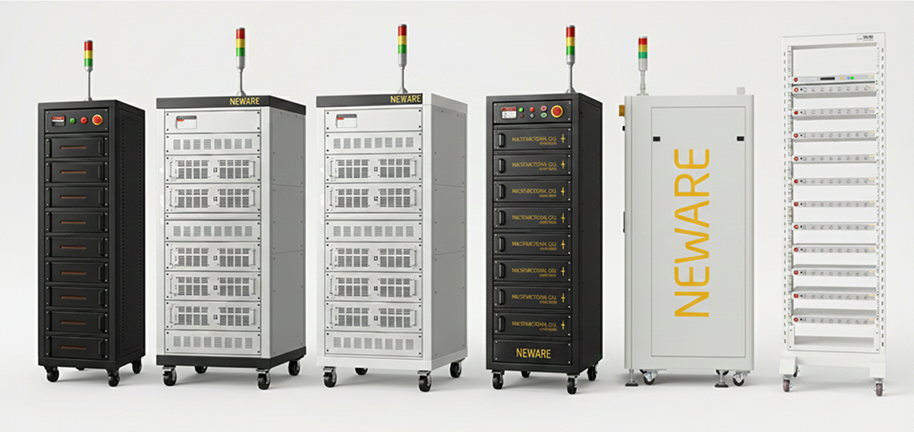
Conclusion
Battery testing equipment selection significantly influences research outcomes, production quality, and development timelines. Whether pursuing laboratory-scale materials research with the CT-4000 Series, consumer electronics validation with the CT/CTE-5000 Series, automotive battery development with the CE-6000 Series, realistic drive cycle simulation with the CT/CTE-8000 Series, or cutting-edge research with the CT-9000 Series, NEWARE battery cyclers provide the precision, reliability, and versatility required for rigorous battery analysis.
Understanding your specific testing requirements and matching them to appropriate equipment ensures optimal outcomes regardless of your industry, research focus, or operational scale. As battery technologies continue advancing and global demand for energy storage solutions accelerates, investing in appropriate testing infrastructure becomes increasingly critical to competitive success and innovation leadership.
Contact ScienceGears today to discuss your specific battery testing requirements and discover how NEWARE battery cyclers can advance your research, development, and quality assurance objectives.