
Introduction
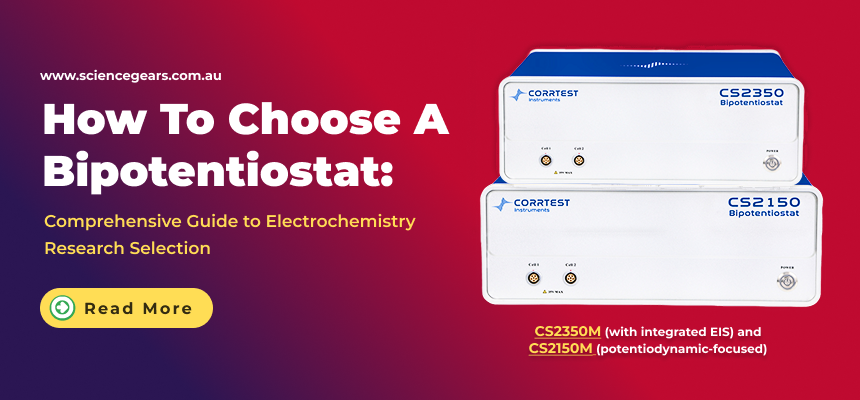
Selecting the right bipotentiostat is a critical decision for electrochemistry researchers working with advanced techniques like rotating ring-disk electrode (RRDE) measurements, dual-electrode systems, or simultaneous electrochemical monitoring. A bipotentiostat differs fundamentally from conventional single-electrode potentiostats, offering unprecedented control over two independent working electrodes within the same electrochemical cell. This comprehensive guide walks you through the essential specifications, application-specific considerations, and technical features to confidently choose between instruments like the CS2350M (with integrated EIS) and CS2150M (potentiodynamic-focused), ensuring your investment aligns with your research objectives.
Understanding Bipotentiostats: Beyond Single-Electrode Potentiostats
What Is a Bipotentiostat?
A bipotentiostat is an electrochemical instrument designed to simultaneously control and measure two working electrodes using a shared reference and counter electrode. This dual-electrode architecture distinguishes it fundamentally from traditional potentiostats, which operate only one working electrode.
In a standard three-electrode potentiostat, the working electrode is where your electrochemical reaction occurs, the reference electrode maintains a constant potential (acting as your measurement reference), and the counter (auxiliary) electrode completes the electrical circuit. A bipotentiostat adds a second working electrode (WE2) to this configuration, creating a four-electrode system:
- Working Electrode 1 (Disk): The primary electrode where electrochemical reactions are initiated
- Working Electrode 2 (Ring): A secondary electrode positioned to detect reaction products or intermediates
- Reference Electrode (RE): Maintains stable, reproducible potential reference for both electrodes
- Counter Electrode (CE): Carries the current necessary to maintain potentiostatic control
Each working electrode can be independently polarized to different potentials, enabling sophisticated experiments impossible with single-electrode systems. The two channels operate in complete electrical isolation, ensuring accurate, synchronized measurements without crosstalk or interference.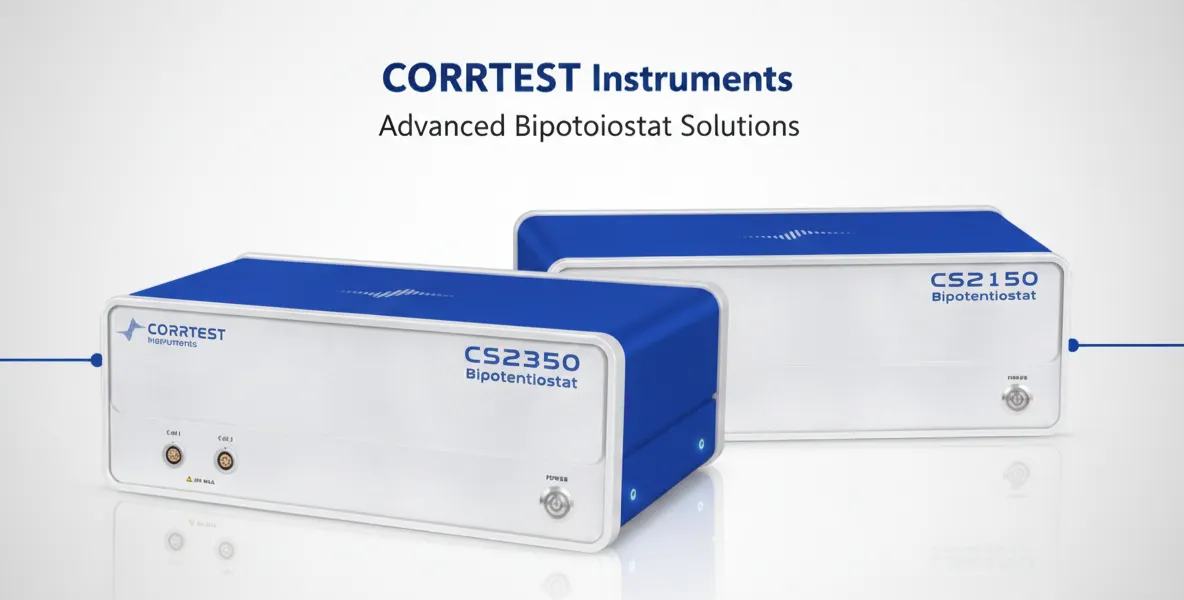
Potentiostat vs. Bipotentiostat: Key Differences
| Feature | Potentiostat | Bipotentiostat |
|---|---|---|
| Working Electrodes | 1 | 2 (independent) |
| Electrode Configuration | 3-electrode system | 4-electrode system |
| Simultaneous Measurements | Single electrode only | Dual electrode simultaneously |
| Applications | CV, LSV, CA, basic EIS | RRDE, dual-electrode, generator-collector, advanced EIS |
| Complexity | Standard | Advanced channel isolation required |
| Cost | Lower | Higher (dual electronics required) |
| Electrode Isolation | N/A | Full floating module, electrical isolation critical |
The bipotentiostat's architecture enables generator-collector configurations where one electrode generates electrochemically active intermediates, and the second electrode (positioned downstream in solution flow) detects and analyzes these short-lived species. This capability revolutionizes mechanistic studies in electrocatalysis, fuel cell development, and reaction pathway analysis.
ScienceGears supplies research-grade bipotentiostats optimised for RRDE and dual-electrode studies.
Why Bipotentiostats Matter: Critical Applications
Rotating Ring-Disk Electrode (RRDE) Experiments
The RRDE is perhaps the most celebrated application for bipotentiostats. This rotating electrode system comprises a central disk electrode surrounded by an isolated ring electrode, all rotating at precisely controlled speeds (typically 50–9800 rpm). As the electrode rotates, solution flows radially outward in a laminar pattern, carrying electrochemically generated species from the disk to the ring.
In RRDE studies:
- A potentiodynamic sweep oxidizes or reduces analytes at the disk electrode
- Reaction products flow radially outward to the ring electrode
- The ring electrode, held at a fixed detection potential, captures and measures intermediate species
- The ring/disk current ratio, commonly expressed as N= –IR/ID under appropriate detection conditions, is used to determine the effective collection efficiency (N) and to quantify product recovery and reaction pathways. For detailed guidance on calculating, measuring, and interpreting this critical parameter in ORR and electrocatalysis studies, see RRDE Collection Efficiency: Calculate, Measure, and Interpret.
This configuration allows researchers to distinguish between direct electron transfer, catalytic reactions, and multi-step pathways. For example, in oxygen reduction reaction (ORR) studies, researchers can determine whether the reaction proceeds through a 2-electron (peroxide-forming) or 4-electron (water-forming) pathway by measuring hydrogen peroxide at the ring while reducing oxygen at the disk.
Electrocatalysis Research: HER, OER, ORR, and CO₂RR
Bipotentiostats enable simultaneous characterization of multiple catalytic materials or provide precise dual-electrode control for complex reactions:
- Hydrogen Evolution Reaction (HER): Requires careful kinetic analysis using cyclic voltammetry and electrochemical impedance spectroscopy to assess overpotential, Tafel slope, and charge transfer resistance. The CS2350M's integrated EIS capability enables complete characterization in a single experimental session.
- Oxygen Evolution Reaction (OER): Often demands extended potential windows (±10V capability) to explore oxidation pathways. Dual-electrode measurements can simultaneously evaluate competing reactions or compare different catalytic surfaces.
- Oxygen Reduction Reaction (ORR): The RRDE with bipotentiostat control definitively identifies electron transfer numbers and intermediate formation, essential for fuel cell and battery cathode development.
- CO₂ Reduction (CO₂RR): This reaction suffers from competing hydrogen evolution; bipotentiostats enable simultaneous monitoring of product selectivity and side reactions across multiple electrodes.
Generator-Collector and Scanning Electrochemical Microscopy (SECM)
In generator-collector configurations, the first electrode generates a redox-active species, while the second collects and quantifies this product. This arrangement characterizes electrode kinetics, homogeneous reaction rates, and reaction mechanisms without bulk electrolysis.
Dual-Electrode Comparison and Blank Measurements
Research often requires simultaneous testing of two electrode materials or comparison of a sample electrode against a reference electrode in identical solution conditions. Bipotentiostats provide synchronized, simultaneous measurements on both electrodes, eliminating time-dependent variations in electrolyte composition or temperature.
Critical Specifications for Bipotentiostat Selection
1. Potential Range (Voltage Control Capability)
The potential range defines the voltage window accessible for your experiments, measured relative to the reference electrode.
Standard Range: ±10V
Both the CS2350M and CS2150M provide ±10V potential control on each channel, accommodating most electrochemistry applications:
- Organic redox chemistry: ±2–5V
- Inorganic complexes: ±5–8V
- Advanced battery and energy conversion: ±8–10V
- Corrosion and passivation studies: ±10V
Extended Range: ±12V (Custom)
The CS2350M is customizable to ±12V for specialized applications requiring access to extreme oxidation or reduction conditions. This extended range becomes critical when studying:
- Water oxidation (OER) in acidic media: potentials exceeding +2V vs. RHE
- Oxygen reduction in alkaline electrolytes
- Carbon material activation and corrosion studies
- Electrochemical oxidation of organic compounds
2. Current Range and Resolution
Current range specifies the minimum and maximum current the instrument can accurately measure and control. This parameter critically affects both sensitivity and dynamic range.
Typical Range: ±1 A per Channel
Both CS2350M and CS2150M deliver ±1 A per channel, suitable for:
- Macroelectrode experiments (1–5 mm diameter electrodes)
- Bioelectrochemistry and sensor applications
- Fuel cell and battery testing
- Industrial electroplating and electrosynthesis research
Resolution and Noise Considerations
Current resolution depends on the bit-depth of the analog-to-digital converters and the selected current range. For bipotentiostats:
- Typical resolution: ~48 pA in the 1 µA range (16-bit conversion)
- Noise floor: typically ~0.1–0.5% of the selected full-scale current range, depending on cabling, shielding, and measurement bandwidth
- Signal-to-noise ratio (SNR): typically 60–80 dB under optimised laboratory conditions
Why This Matters
Experiments measuring small electrochemical currents (e.g. microelectrodes and biosensors) require low-noise instruments. The CS2350M's correlation integral algorithm and dual-channel over-sampling technique reduce high-frequency noise, which is particularly beneficial for EIS measurements at elevated impedances.
3. Electrochemical Impedance Spectroscopy (EIS) Capability
The CS2350M Advantage: Integrated EIS
EIS is a non-destructive technique applying small-amplitude sinusoidal signals across a wide frequency range (typically 10 µHz to 1 MHz) to characterize cell impedance, reaction kinetics, and electrode processes. The CS2350M incorporates:
- Frequency Range: 10 µHz to 1 MHz (five orders of magnitude)
- Correlation Integral Algorithm: Reduces noise and improves SNR
- Dual-Channel Over-sampling: Maintains accuracy across both working electrodes simultaneously
- Strong Anti-interference Design: Essential in high-impedance measurements
Why EIS Matters for Bipotentiostats
EIS reveals:
- Charge Transfer Resistance (Rct): Indicates electrocatalytic activity
- Double-Layer Capacitance (Cdl): Reflects electrode surface area and interfacial structure
- Mass Transport Limitations: Identified through diffusion impedance
- Reaction Pathway Identification: Frequency-dependent impedance spectra unmask mechanistic details
For RRDE experiments, EIS on both disk and ring electrodes simultaneously characterizes electrode kinetics and validates collection efficiency across frequencies.
The CS2150M Trade-off
The CS2150M omits integrated EIS, focusing purely on potentiodynamic techniques (CV, LSV, CA, CC). This represents a strategic choice: researchers exclusively performing kinetic studies via potential sweeps gain cost savings, while those pursuing comprehensive electrode characterization require the CS2350M.
4. Number of Channels and Electrode Configuration
Dual-Channel ArchitectureBoth instruments feature two completely independent channels, each capable of functioning as a standalone potentiostat:
- Full floating module design: Each channel floats independently
- Electrical isolation: No cross-talk between channels
- Synchronized operation: Both channels use the same reference electrode
Electrode System Support: 2, 3, or 4-Electrode Configuration
- 2-Electrode: Working + Counter (rare in research; mainly potentiometric measurements)
- 3-Electrode: Working + Reference + Counter (standard for single-electrode potentiostats)
- 4-Electrode: Working 1 + Working 2 + Reference + Counter (bipotentiostat mode)
5. Sampling Rate and Measurement Bandwidth
Modern bipotentiostats sample analog signals at rates of 10–100 kHz, translating to microsecond-timescale temporal resolution. This high sampling rate is essential for:
- Fast voltammetry: Scan rates exceeding 1 V/s
- Transient response: Characterizing electrode surface changes
- High-frequency EIS: Accurately representing impedance at 1 MHz+
Bandwidth Filter Options
Typical programmable response filters include:
- 1 MHz (raw data, minimal filtering)
- 100 kHz (reduced high-frequency noise)
- 10 kHz (moderate filtering for noisy cells)
- 1 kHz (strong filtering for very noisy environments)
6. Software and Data Acquisition Capabilities
The quality of accompanying software dramatically influences usability and data quality:
Essential Features:
- Real-time impedance fitting (for EIS instruments)
- Multi-technique experimental sequences (combining CV, EIS, CA in single workflow)
- Automated data export (CSV, ASCII, proprietary formats)
- Hardware control: Rotation speed, temperature, automated potential stepping
Advanced Features:
- Modeling and fitting tools: Nyquist/Bode plot analysis
- Kinetic analysis: Tafel slope extraction, order of reaction determination
- Safety limits: Potential/current cutoffs preventing equipment damage
- Multi-file batch processing: Time-efficient for high-throughput studies
Application-Specific Selection Framework
Your research area fundamentally determines optimal instrument choice. This decision tree guides selection:
For RRDE Mechanistic Studies → CS2350M (Recommended)
- Disk electrode EIS reveals oxidation/reduction kinetics
- Ring electrode EIS identifies collection efficiency and intermediate detection
- Combined analysis provides comprehensive mechanistic insight
Example: ORR mechanism determination requires:
- Disk LSV sweeping from reduction to oxidation potentials
- Ring CA at fixed peroxide detection potential
- Dual-electrode EIS quantifying kinetic parameters
For Potentiodynamic Techniques → CS2150M (Cost-Effective)
Why: If your experiments exclusively employ potential-sweep methods without impedance analysis, the CS2150M delivers full functionality at lower cost:- CV, LSV, CA, CC techniques fully supported
- Simultaneous dual-electrode control preserved
- EIS unnecessary, eliminating integrated EIS expense
Experiments Suited to CS2150M:
- Cyclic voltammetry comparing two electrode materials
- Linear sweep voltammetry on dual-electrode RRDE systems (disk and ring)
- Chronoamperometry on generator-collector cells
- Corrosion and passivation studies via potentiodynamic polarization
For Advanced Catalysis Research → CS2350M (Comprehensive Solution)
Typical Workflow:
- Cyclic Voltammetry: Identify oxidation/reduction features
- Linear Sweep Voltammetry: Measure onset potential, current density
- Electrochemical Impedance Spectroscopy: Quantify Rct, Cdl, mass transport
- Chronoamperometry: Test stability and long-term performance
The CS2350M executes this entire workflow on dual electrodes simultaneously, providing mechanistic detail impossible with single-channel instruments.
For Fuel Cell and Battery Testing → CS2350M or CS2150M (Depends on Analysis Depth)
- CS2350M: If impedance analysis is essential (fuel cell internal resistance, battery charge transfer resistance)
- CS2150M: If potentiodynamic characterization (polarization curves, cycling stability) suffices
Multi-Function RRDE System Integration
The ScienceGears Multi-Function RRDE system exemplifies modern bipotentiostat integration, combining rotating electrode hardware with electrochemical control in a unified platform:
RRDE Hardware Specifications
| Parameter | Specification |
|---|---|
| Rotation Speed Range | 50–9800 rpm (closed-loop control, <0.1% deviation) |
| Motor Type | High-precision DC servo motor (Japan import) |
| Motor Power | 10W |
| Electrode Shaft Adjustability | Vertical/horizontal/inverted configuration |
| Electrode Head Run-out | ≤ 0.05 mm (critical for consistent hydrodynamics) |
| Contact Resistance | < 5 Ω |
| Insulation Resistance | > 20 MΩ |
Integration with CS2350M and CS2150M
The RRDE system connects directly to either bipotentiostat via:
- Disk Electrode → Channel 1 (WE1)
- Ring Electrode → Channel 2 (WE2)
- Reference & Counter → Shared electrodes
The dual-channel, full-floating design ensures both electrodes operate at independently controlled potentials without cross-talk, enabling genuine rotating ring-disk measurements.
Supported RRDE Techniques
With bipotentiostat integration, researchers perform:
Cyclic Voltammetry-Chronoamperometry (CV-CA):
- Disk: Potentiodynamic sweep oxidizing/reducing analytes
- Ring: Potentiostatic hold detecting products at fixed potential
Dual Potentiodynamic (DP-DP):
- Both disk and ring swept simultaneously
- Identifies complex redox chemistry involving both electrodes
Fixed Potential-Variable Potential (FP-VP):
- Disk at constant oxidation/reduction potential
- Ring swept to characterize product electrochemistry
Technical Comparison: CS2350M vs. CS2150M
| Feature | CS2350M | CS2150M |
|---|---|---|
| Potentiostat Channels | 2 independent | 2 independent |
| Potential Range | ±10V (customizable ±12V) | ±10V primary, ±10V secondary |
| Current Range | ±1A per channel | ±1A per channel |
| EIS Frequency Range | 10 µHz–1 MHz | Not included |
| EIS Capability | Built-in, integrated | External EIS module option (not integrated) |
| Algorithm | Correlation integral + dual-channel over-sampling | Standard dual-channel control |
| Electrode Systems | 2, 3, or 4-electrode | 2, 3, or 4-electrode |
| Interface | Ethernet | Ethernet |
| Isolation Design | Full floating module, electrical isolation | Full floating module, electrical isolation |
| Best For | Comprehensive electrochemistry (CV+EIS), RRDE studies, catalysis, fuel cells | Potentiodynamic techniques, RRDE kinetics, cost-sensitive applications |
| Primary Advantage | Complete characterization, high SNR for EIS | Lower cost, sufficient for potential-sweep methods |
| Applications | HER/OER/ORR/CO₂RR, electrocatalysis, battery/fuel cell R&D | Corrosion, sensor development, dual-electrode CV |
Practical Considerations: Beyond Technical Specifications
1. Software Ecosystem and Support
Ensure your selected bipotentiostat includes:
- Intuitive Control Software: User-friendly interface reducing training time
- Flexible Experimental Sequences: Combining multiple techniques in automated workflows
- Data Export Capabilities: Compatible with your analysis software (Origin, MATLAB, Python)
- Vendor Support: Responsive technical team and accessible documentation
2. Laboratory Infrastructure Requirements
Bipotentiostat implementation demands proper infrastructure:
- Electromagnetically Shielded Space: Faraday cages reduce external noise interference
- Humidity Control: Electrochemical cells require stable environmental conditions
- Stable Power Supply: Uninterruptible power supplies (UPS) prevent data loss
- Grounding: Proper grounding schemes eliminate ground loops and noise
3. Training and Expertise Development
Maximize instrument value through:
- Operator Training: Hands-on sessions with vendor technical specialists
- Reference Material Studies: Establish baseline measurements on known systems
- Electrode Preparation Protocols: Consistent cleaning and conditioning practices
- Cell Design Optimization: Proper electrode spacing, electrolyte composition, temperature control
4. Maintenance and Consumable Costs
Factor into budget calculations:
- Reference Electrode Conditioning: Regular refilling (Ag/AgCl) or replacement (RHE)
- Cell Glassware and Components: Counter electrodes, electrode rods, separators
- Lubricant Maintenance (for RRDE): Periodic rotor/stator servicing
- Software Updates and Licensing: Annual support contracts
Advanced Considerations: When Bipotentiostats Are Indispensable
RRDE Mechanism Elucidation
Suppose you're characterizing a novel ORR electrocatalyst. Comparative potentiostat approaches fail:
Suboptimal Approach (Two Sequential Measurements):
- Measure disk oxidation kinetics at fixed rotation speed
- Measure ring reduction kinetics after disk experiment
- Problem: Electrolyte composition changes, temperature drift, electrode passivation between measurements
Optimal Approach (Simultaneous RRDE with Bipotentiostat):
- Disk electrode: LSV (0.2–1.2 V vs. RHE) at 1600 rpm
- Ring electrode: CA (0.5 V vs. RHE) simultaneous detection of peroxide
- Collection efficiency calculated directly from synchronized currents
- Advantage: Identical experimental conditions, unambiguous mechanistic interpretation
Generator-Collector Sensor Development
Developing an electrochemical sensor for detecting short-lived reaction intermediates requires bipotentiostat capability:
- Generator Electrode: Produces intermediates electrochemically
- Collector Electrode: Detects products in downstream solution flow
- Simultaneous Control: Independent potential optimization on both electrodes
- Sensitivity Enhancement: Potential gradient between generator and collector accelerates product transport
Bifunctional Catalyst Screening
Evaluating catalysts for both HER and OER (bidirectional reactions) benefits from bipotentiostat architecture:
- Channel 1: HER characterization (negative potentials)
- Channel 2: OER characterization (positive potentials)
- Simultaneous Measurements: Identify cross-talk and potential interactions between cathodic and anodic reactions
Troubleshooting Common Bipotentiostat Challenges
Issue: High Noise Levels in Dual-Channel Measurements
Root Causes:
- Inadequate shielding between channel leads
- Poor electrical grounding in laboratory
Solutions:
- Employ twisted, shielded cables separating working electrode leads
- Install Faraday cage around electrochemical cell
- Establish star-point grounding scheme with dedicated ground rod
- Use CS2350M's correlation integral algorithm for enhanced noise rejection
Issue: Inconsistent Collection Efficiency in RRDE Measurements
Root Causes:
- Variable rotation speed or vibration affecting hydrodynamics
- Electrode misalignment or contamination
- Electrolyte composition changes during experiment
Solutions:
- Verify RRDE motor closed-loop control maintains <0.1% speed deviation
- Inspect electrode spacing and alignment under microscope
- Deaerate electrolyte thoroughly; store under nitrogen/argon
- Perform pilot measurements on known reference systems (e.g., Fe(CN)64−/³⁻ couple)
Issue: EIS Artifacts at Extreme Frequencies (1 MHz+)
Root Causes:
- Stray capacitance in cell leads or electrode connections
- Reference electrode high impedance at elevated frequencies
Solutions:
- Use Reversible Hydrogen Electrode (RHE) for EIS studies (~1 Ω impedance vs. Ag/AgCl ~10 kΩ)
- Minimize lead lengths connecting bipotentiostat to cell
- Shield all signal leads with grounded outer conductors
- Apply appropriate frequency filtering (e.g., 100 kHz filter for high-impedance cells)
Conclusion: Strategic Selection for Research Excellence
Choosing between CS2350M and CS2150M bipotentiostats (or evaluating alternative instruments) requires balancing technical capabilities against experimental requirements and budget constraints. The CS2350M emerges as the comprehensive solution for researchers pursuing mechanistic insight through multi-technique analysis, EIS characterization, and simultaneous dual-electrode RRDE studies. Its integrated impedance spectroscopy, extended potential range customization, and advanced noise rejection algorithm position it as the research-grade standard.
The CS2150M serves researchers exclusively employing potentiodynamic techniques, offering cost-effective dual-electrode control for CV, LSV, and RRDE kinetic studies where impedance analysis is unnecessary.
Ultimately, superior bipotentiostat selection ensures high-quality, publishable electrochemistry research. Invest time in understanding your experimental requirements, consult with vendor technical specialists, and implement proper laboratory infrastructure. The right bipotentiostat transforms electrochemistry from exploratory investigation into precision science, revealing mechanistic details and enabling discoveries impossible with conventional single-electrode instruments.
Whether your focus is electrocatalysis, fuel cell development, battery research, or mechanistic electrochemistry, the bipotentiostat remains an indispensable tool for modern electrochemical research. Choose wisely, implement thoroughly, and unlock the full potential of your electrochemistry research program.
Frequently Asked Questions
What is a bipotentiostat and how does it differ from a regular potentiostat?
A bipotentiostat is an electrochemical instrument with two independent working electrodes controlled simultaneously, while a regular potentiostat has only one working electrode. Bipotentiostats are essential for RRDE experiments, dual-electrode systems, and simultaneous measurements requiring generator-collector configurations. The two working electrodes connect to shared reference and counter electrodes, enabling precise dual-electrode control in a single cell.
What are the key specifications to consider when choosing a bipotentiostat?
Critical specifications include:
- Potential Range: ±10V to ±12V for advanced research
- Current Range: Typically ±1A per channel
- EIS Capability: Frequency range 10 µHz to 1 MHz (if included)
- Number of Channels: 2 independent channels minimum
- Electrode System Support: 2, 3, or 4-electrode configurations
- Sampling Rate: 10–100 kHz for fast transient measurements
- Noise Levels: <0.5% of full-scale range for sensitive applications
- Software Quality: Real-time control, multi-technique sequencing, automated analysis
Which bipotentiostat is better: CS2350M or CS2150M?
The CS2350M includes built-in EIS capability (10 µHz–1 MHz), making it ideal for comprehensive impedance spectroscopy studies alongside potentiodynamic techniques. The CS2150M lacks EIS but offers identical potential (±10V) and current (±1A) ranges at lower cost. Choose CS2350M for advanced electrochemistry requiring impedance analysis; CS2150M for potentiodynamic techniques (CV, LSV, CA) without impedance needs. Both excel in RRDE setups where accurate collection efficiency (N) is essential—learn precise measurement protocols in RRDE Collection Efficiency: Calculate, Measure, and Interpret.
What are typical applications for bipotentiostats?
Common applications include:
- RRDE measurements for reaction mechanism studies
- HER/OER/ORR/CO₂RR electrocatalysis research
- Fuel cell and battery testing
- Electroplating and electrodeposition
- Generator-collector and scanning electrochemical microscopy (SECM)
- Dual-electrode comparison experiments
- Bifunctional catalyst evaluation
- Corrosion and passivation studies with multiple electrodes
Why is EIS important in electrochemistry research?
Electrochemical Impedance Spectroscopy (EIS) enables non-destructive characterization of reaction kinetics, electrode process modeling, and device performance evaluation. By applying sinusoidal potential signals across frequencies (typically 10 µHz–1 MHz), EIS reveals charge transfer resistance (Rct), double-layer capacitance (Cdl), and diffusion impedance—parameters inaccessible through potentiodynamic techniques alone. The CS2350M's wide EIS frequency range allows comprehensive impedance measurements across different timescales, essential for HER/OER catalyst screening and fuel cell development.
Can I use a bipotentiostat for single-electrode experiments?
Yes. Bipotentiostats can operate as standard potentiostats by using only one working electrode channel. However, this approach underutilizes the instrument's capabilities and represents poor value proposition. Dedicated single-electrode potentiostats are more cost-effective for exclusively single-electrode research.
What electrode materials are compatible with bipotentiostats?
Both CS2350M and CS2150M support standard electrochemistry electrode materials:
- Disk/Ring Electrodes: Platinum, gold, silver, copper, glassy carbon
- Counter Electrodes: Platinum mesh, graphite rods
- Reference Electrodes: Ag/AgCl (saturated KCl), Reversible Hydrogen Electrode (RHE), Saturated Calomel Electrode (SCE)
- Separator Materials: PTFE (Teflon), PEEK
How do I ensure accurate RRDE measurements with my bipotentiostat?
Reliable RRDE measurements demand:
- Verify electrode alignment (run-out ≤ 0.05 mm)
- Confirm closed-loop rotation control (<0.1% speed deviation)
- Perform baseline measurements on known reference systems (e.g., Fe(CN)64−/³⁻)
- Establish collection efficiency curves across rotation speeds
- Maintain consistent electrode surface preparation between experiments
- Store electrodes and electrolyte under inert atmosphere (N₂/Ar)
What is the typical cost difference between CS2350M and CS2150M?
Pricing varies by region and distributor. The CS2350M commands approximately 30–50% premium over CS2150M due to integrated EIS electronics and correlation integral algorithm implementation. Contact ScienceGears directly for current pricing and customized quotes based on your configuration requirements.