

H-Type 3-Port Jacketed Photoelectrochemical Cell with Quartz Window
H-Type 3-Port Jacketed Photoelectrochemical Cell with Quartz Window
Overview
The H-Type 3-Port Jacketed Photoelectrochemical (PEC) Cell is a dual-compartment, membrane-separated reactor designed for controlled light-driven electrochemistry. An optically transparent quartz window enables illumination of photoelectrodes, while the H-type architecture physically separates anolyte and catholyte to minimise product crossover and enable cleaner mechanistic interpretation.
Principle of operation
A working photoelectrode is illuminated through the quartz window to generate charge carriers and drive interfacial redox reactions. The second chamber houses the counter electrode, and the compartments are separated by a replaceable ion-exchange membrane (e.g., proton exchange or anion exchange), supporting selective ion transport while limiting bulk mixing. A circulating water jacket stabilises temperature, improving kinetic reproducibility and helping manage exothermic or light-induced heating effects.
Key features and materials
- High-purity borosilicate glass body for chemical resistance and easy cleaning
- Removable quartz optical window for high UV–Vis transmission and straightforward replacement
- Water-jacketed design for connection to a recirculating chiller or water bath
- Three-port configuration to support flexible electrode and gas-handling layouts (e.g., working, reference, gas inlet/outlet, sampling, or auxiliary feedthroughs)
- Membrane-separated chambers to enable differential electrolytes, pH gradients, or product isolation
- Sealed operation to support inert-gas purging and low-oxygen experiments
Compatibility
Suitable for standard three-electrode photoelectrochemistry with potentiostats/galvanostats (including EIS-capable systems), common reference electrodes, gas lines (N₂/Ar/CO₂), and interchangeable membranes. Pairs naturally with related ScienceGears categories such as potentiostats, electrochemical cells, Raman-SEC cells, and battery/energy test systems for integrated workflows.
Typical applications
- Photoanode/photocathode screening (water splitting, oxygen evolution, hydrogen evolution)
- CO₂ reduction and solar fuels research with controlled gas atmospheres
- Semiconductor stability studies and light-intensity/temperature-dependence measurements
- Membrane selectivity and crossover evaluation under illumination
Why choose ScienceGears
ScienceGears supports Australia & New Zealand researchers with practical configuration guidance, membrane and accessory selection, and seamless integration with electrochemical instrumentation for reproducible PEC testing.
For further information or to discuss your specific research requirements, please contact us.
Technical Specifications
Precision engineering for accurate measurements
| Capacity | 20ML, 30ml, 50ml, 100ml, 150ml, 200ml, 250ml |
|---|
Resources & Downloads
Everything you need to get started
Electrochemical Impedance Spectroscopy (EIS): Core Concepts for Confident Understanding
Squidstat - Admiral
Customer Reviews
Related Product
Explore our precision instruments designed for electrochemical research and energy applications
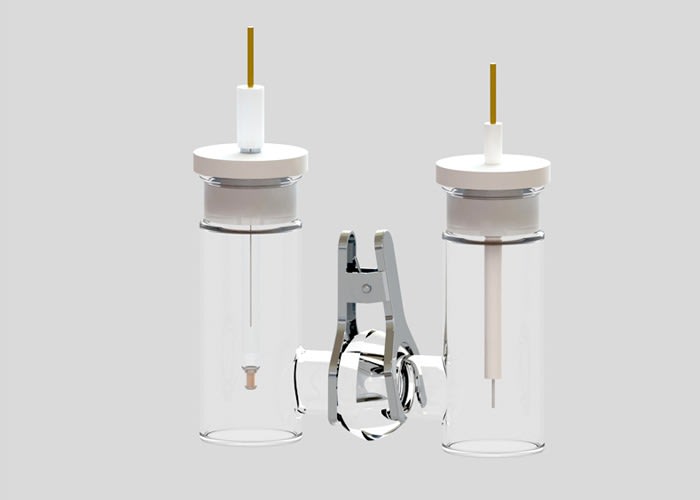
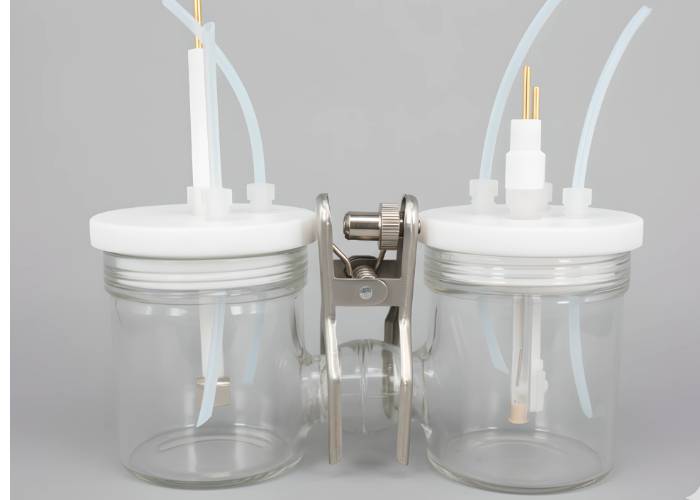
Sealed H-Cell – Gas-Tight Dual-Compartment Electrochemical Cell
- Capacity: 20ML, 30ml, 50ml, 100ml, 150ml, 200ml, 250ml
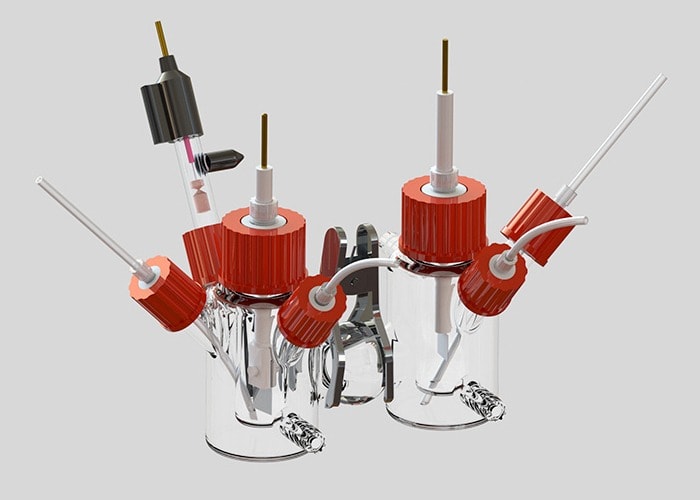
Jacketed H-Type Membrane Cell (Temperature-Controlled Dual-Compartment Electrochemical Cell)
- Capacity: 20ML, 30ml, 50ml, 100ml, 150ml, 200ml, 250ml
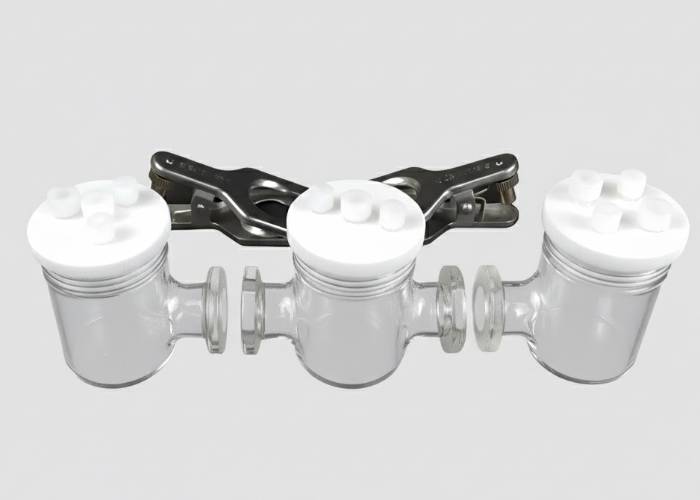
Three-Chamber H-Cell (Triple H-Cell) – Gas-Tight Electrochemical Cell
- Capacity: 20ML, 30ml, 50ml, 100ml, 150ml, 200ml, 250ml

Still Wondering About Something?
Explore our FAQ for fast, clear answers to the most common questions—available 24/7.