
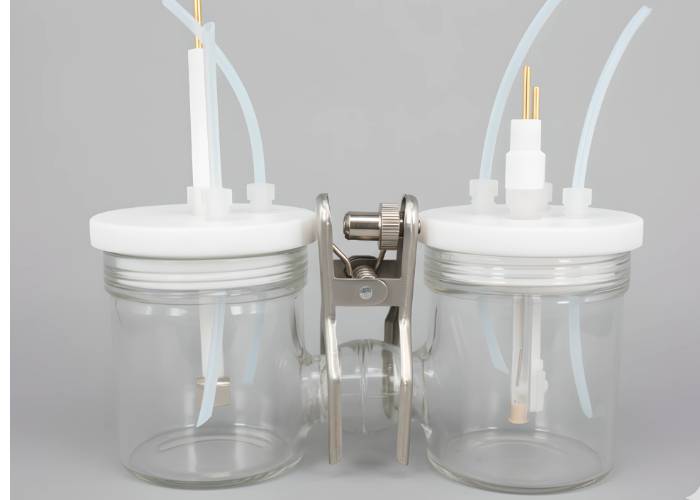

Sealed H-Cell – Gas-Tight Dual-Compartment Electrochemical Cell
Sealed H-Cell – Gas-Tight Dual-Compartment Electrochemical Cell
Principle and operation
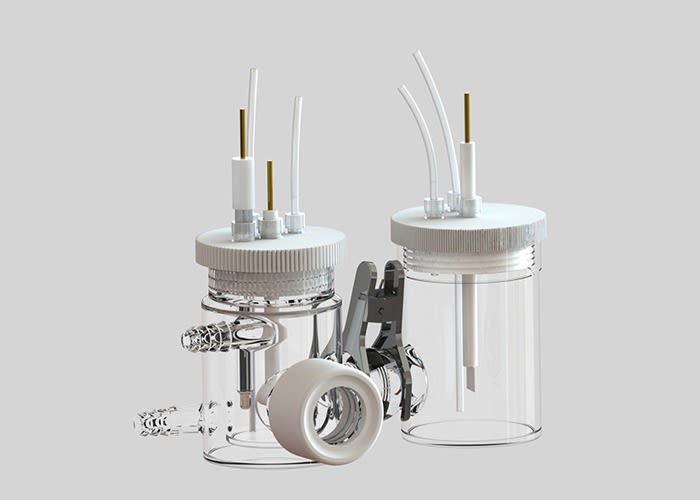
A sealed H-cell is a dual-compartment electrochemical reactor designed to keep two reaction environments separated while still enabling ionic conduction through an ion-exchange membrane (or a fritted separator). Each half-cell can contain a different electrolyte, pH, catalyst, or dissolved gas. Electrode feedthroughs in the lids support a standard three-electrode configuration and make it straightforward to run the working electrode and counter electrode in different chambers to minimise product crossover and back-reactions. A gas-tight architecture also enables reliable degassing and controlled-atmosphere experiments (e.g., N₂/Ar purging or CO₂ saturation) with reduced oxygen ingress.
Key features and materials
- Borosilicate glass chambers with chemically resistant PTFE caps and O-ring sealing
- User-replaceable membrane interface for common separators (e.g., Nafion™, AEM/CEM, bipolar membranes)
- Multiple ports for working, counter and reference electrodes, plus optional gas inlet/outlet for purging and degassing
- Interchangeable chamber volumes suited to both low-volume screening and longer electrolysis runs
Compatibility and typical applications
The Sealed H-Cell integrates directly with potentiostats/bipotentiostats and common electrode formats (wires, foils, rods, mesh and thin films). Typical uses include:
- CO₂ reduction and electrosynthesis (separating anodic/cathodic products)
- HER/OER catalyst benchmarking under controlled gas atmospheres
- Membrane screening (selectivity, crossover, H₂ permeation)
- Corrosion and redox-couple studies where compartment isolation improves data quality
Why choose ScienceGears
ScienceGears supports researchers across Australia and New Zealand with practical configuration guidance (membrane choice, port allocation, gas handling and sampling). We can also bundle complementary tools—ion-exchange membranes, electrodes, and compatible instrumentation such as potentiostats and other electrochemical cells—to help you move from setup to reproducible, publishable data faster.
For further information or to discuss your specific research requirements, please contact us.
Technical Specifications
Precision engineering for accurate measurements
| Capacity | 20ML, 30ml, 50ml, 100ml, 150ml, 200ml, 250ml |
|---|
Resources & Downloads
Everything you need to get started

Electrochemical Impedance Spectroscopy (EIS): Core Concepts for Confident Understanding
Squidstat - Admiral
Customer Reviews
Related Product
Explore our precision instruments designed for electrochemical research and energy applications
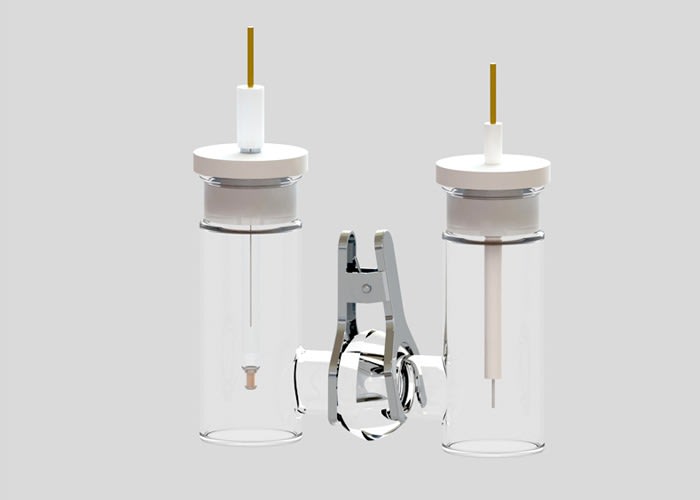
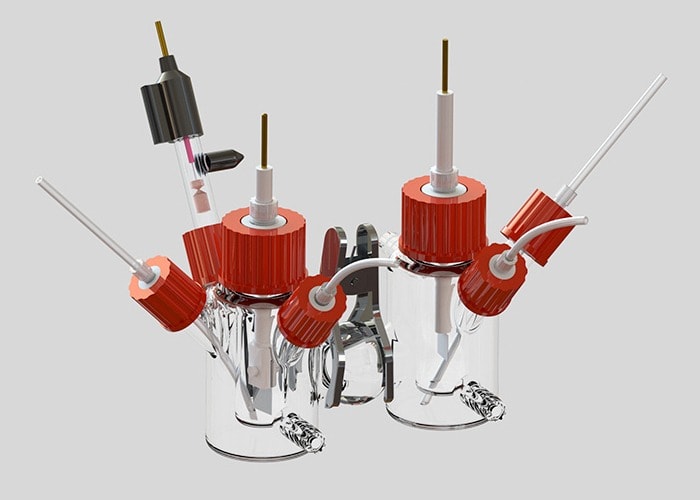
Jacketed H-Type Membrane Cell (Temperature-Controlled Dual-Compartment Electrochemical Cell)
- Capacity: 20ML, 30ml, 50ml, 100ml, 150ml, 200ml, 250ml

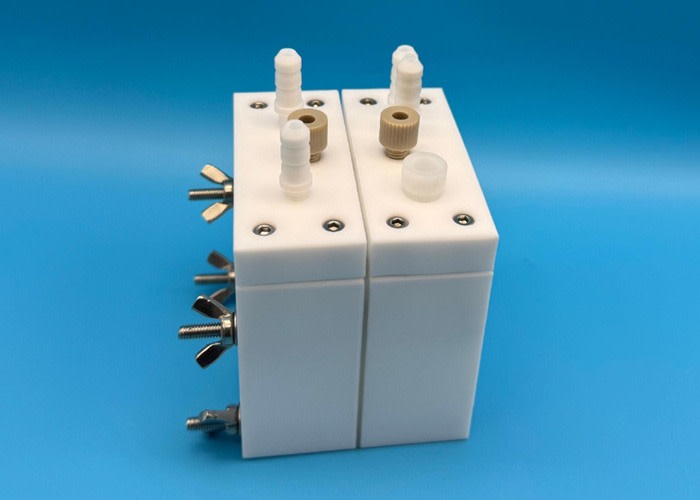
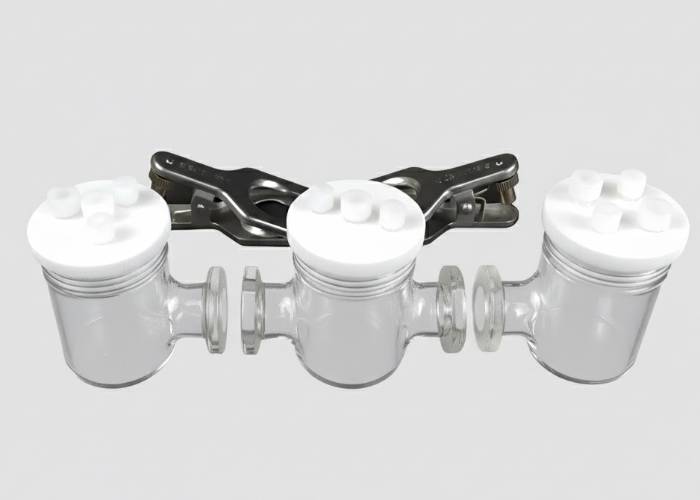
Three-Chamber H-Cell (Triple H-Cell) – Gas-Tight Electrochemical Cell
- Capacity: 20ML, 30ml, 50ml, 100ml, 150ml, 200ml, 250ml

Still Wondering About Something?
Explore our FAQ for fast, clear answers to the most common questions—available 24/7.