


Absolutely Sealed Gas-Tight Replaceable Membrane H-Cell
Absolutely Sealed Gas-Tight Replaceable Membrane H-Cell
What it is and how it works
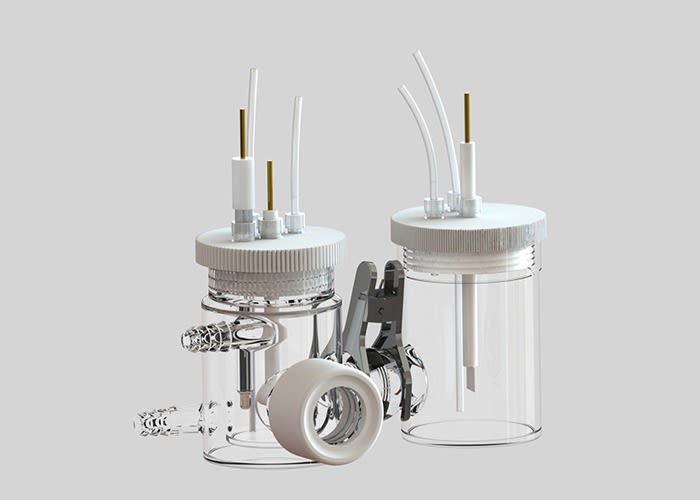
The Absolutely Sealed Gas-Tight Replaceable Membrane H-Cell is a two-compartment electrochemical reactor designed for experiments that require (i) separation of anode and cathode products and (ii) controlled headspace conditions. The compartments are separated by an ion-exchange membrane (AEM/CEM), which allows ionic conduction while reducing molecular crossover. This improves selectivity and interpretability in electrolysis and electrocatalysis studies, especially when products are sampled for analysis.
Standard construction features
- Cell body: chemically resistant borosilicate glass for aqueous and many non-aqueous electrolytes
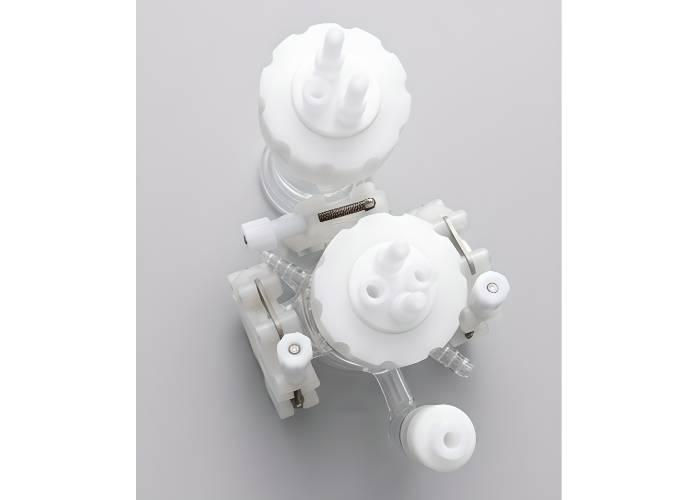
- Replaceable membrane clamp: compression sealing for repeatable assembly and rapid membrane swaps
- Gas-tight electrode ports: PTFE cap/cover with O-ring or compression sealing to minimise oxygen ingress and solvent evaporation
- Two-chamber geometry: supports independent electrolyte compositions (e.g., different pH, different supporting salts, different catalysts)
Optional configurations & accessories (application-driven)
- Valve / gas-handling ports: for purge/vent, controlled gas feed (e.g., CO₂), headspace sampling, and pressure equalisation
- Optical window (e.g., quartz): for photoelectrochemistry or spectroelectrochemistry where optical access is required
- Jacketed temperature-control version: for circulating thermostated fluid to stabilise kinetics, solubility, and gas–liquid equilibria
- Electrode fixtures/adaptors: to suit planar electrodes, gas-diffusion electrodes, or specific reference electrode formats
Gas-tight (absolutely sealed) vs standard screw-cap H-cell: which to choose
Choose gas-tight when you need:
- Quantitative gas experiments (CO₂RR/HER/OER) where leaks or air ingress distort faradaic efficiency and gas composition
- Stable electrolyte concentration during long runs (reduced evaporation and CO₂ loss)
- Air-sensitive chemistries (oxygen/moisture-sensitive catalysts, non-aqueous electrolytes, metal plating/stripping)
- Reproducible headspace control for mechanistic comparisons across conditions
Choose a screw-cap H-cell when:
- Running routine aqueous screening where minor air exchange is acceptable
- You are not quantifying gas products and short experiments minimise evaporation impacts
- You prioritise fast setup and lower complexity for early-stage catalyst benchmarking or teaching labs
Typical applications and instrumentation pairing
Common uses include CO₂ reduction, selective electrolysis with product separation, membrane screening, corrosion inhibitor studies, and half-cell investigations. Pair with a suitable potentiostat/galvanostat, reference electrodes, and (when needed) gas handling and downstream analytics. ScienceGears can help specify membrane type, sealing consumables, and compatible electrochemical instrumentation and accessories.
Resources & Downloads
Everything you need to get started

Electrochemical Impedance Spectroscopy (EIS): Core Concepts for Confident Understanding
Squidstat - Admiral
Customer Reviews
Related Product
Explore our precision instruments designed for electrochemical research and energy applications
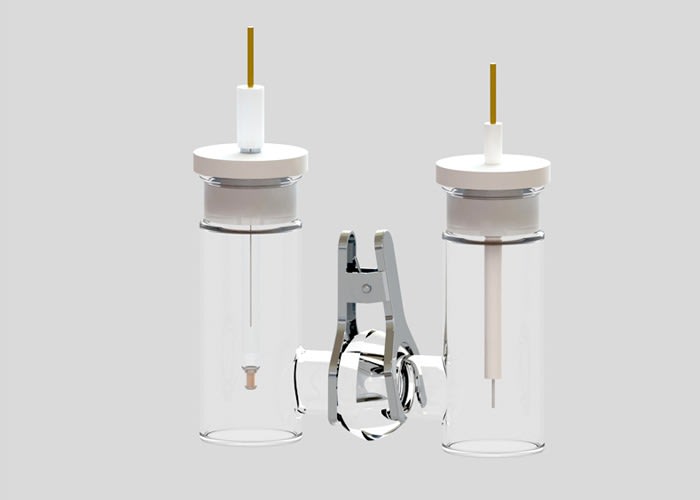
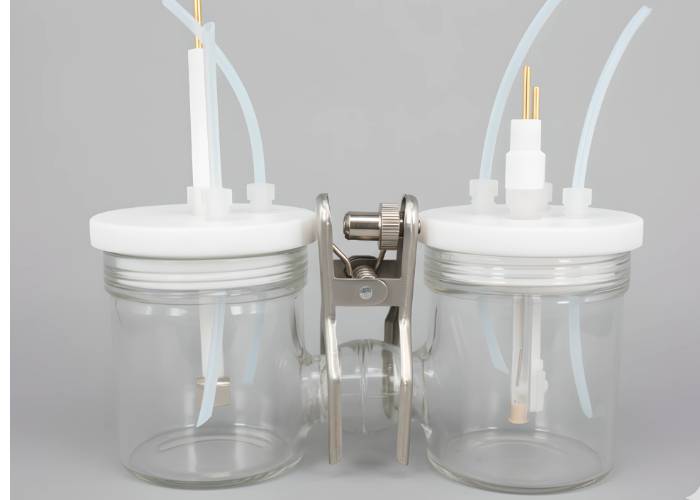
Sealed H-Cell – Gas-Tight Dual-Compartment Electrochemical Cell
- Capacity: 20ML, 30ml, 50ml, 100ml, 150ml, 200ml, 250ml
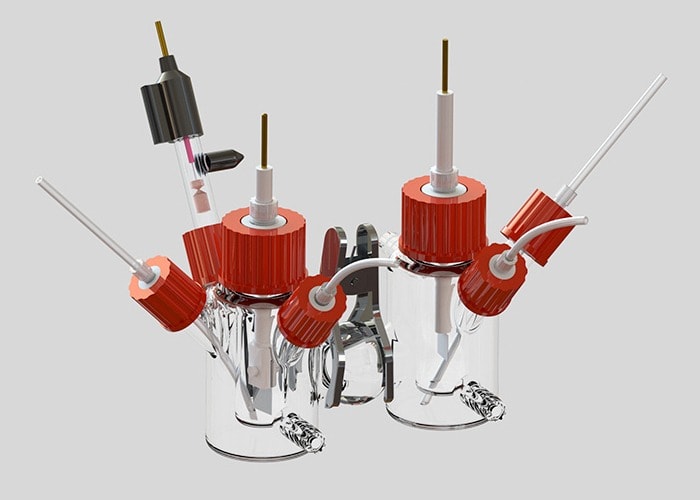
Jacketed H-Type Membrane Cell (Temperature-Controlled Dual-Compartment Electrochemical Cell)
- Capacity: 20ML, 30ml, 50ml, 100ml, 150ml, 200ml, 250ml

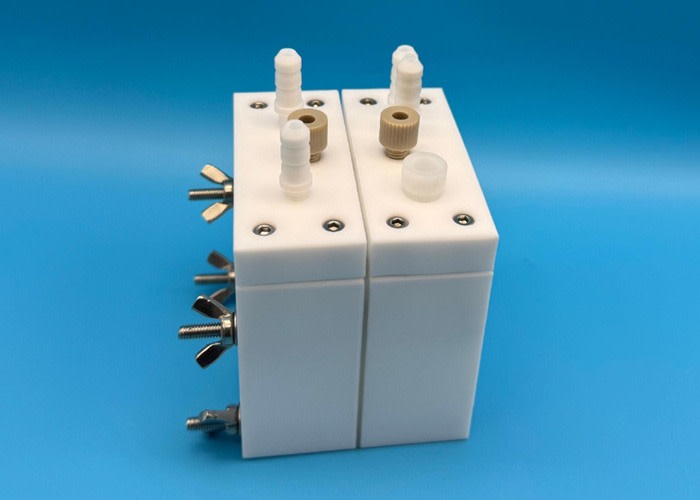
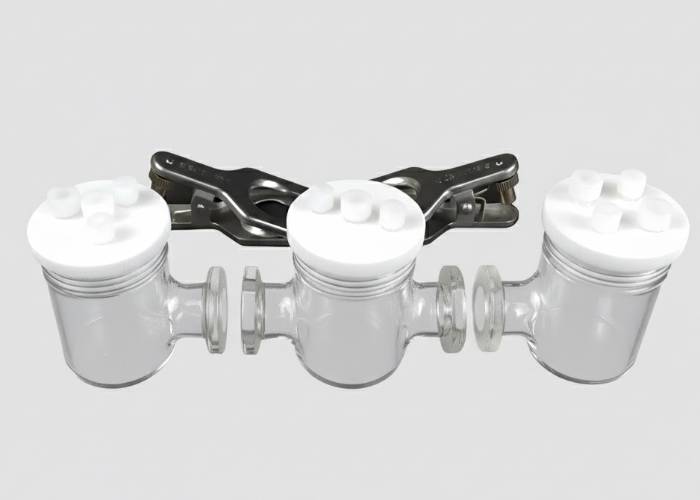
Three-Chamber H-Cell (Triple H-Cell) – Gas-Tight Electrochemical Cell
- Capacity: 20ML, 30ml, 50ml, 100ml, 150ml, 200ml, 250ml
Still Wondering About Something?
Explore our FAQ for fast, clear answers to the most common questions—available 24/7.