
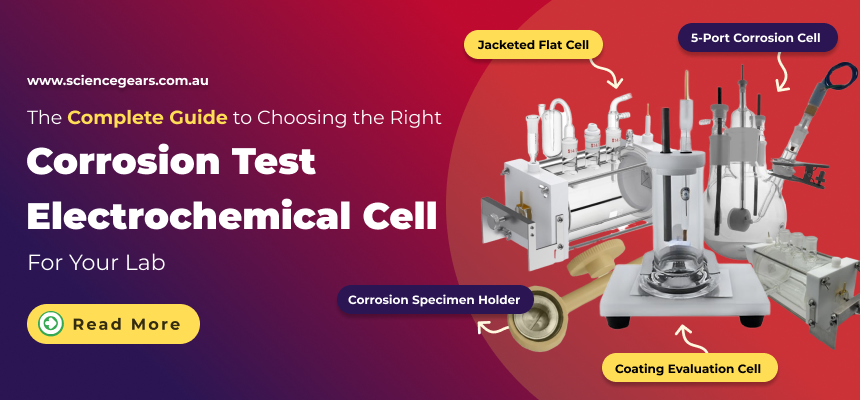
Choosing the right corrosion test electrochemical cell can feel confusing, even for experienced engineers and researchers. There are many configurations, volumes, and accessories to consider and choosing the wrong setup can lead to poor data, wasted time, and frustrated teams.
By the end of this guide, you will know:
- Which type of corrosion test electrochemical cell is right for your samples and test methods
- When to choose a flat corrosion cell, a jacketed flat corrosion cell, a coating evaluation cell, a 5-port corrosion cell, or a corrosion specimen holder
- How to build a complete, reliable corrosion testing setup for research or quality control
- Why ScienceGears is the trusted supplier for these critical tools
If you are planning a new lab in Sydney, upgrading a coatings line in Melbourne, or optimising an R&D programme in Auckland or Wellington, this guide will help you choose the right equipment with confidence.
Understanding Your Corrosion Testing Requirements
Before looking at individual products, it is important to understand what you are actually trying to measure and under which conditions. A clear picture of your requirements will make the selection process straightforward and help you avoid over- or under-specifying your setup.
Here are the four key factors to clarify.
1. Types of samples: bare metal vs coated
Ask yourself:
- Are you mainly testing bare metal samples?
- Or are you focusing on coated panels, paint systems, conversion coatings, or inhibitors?
If you primarily test bare metals (for example, steel, aluminium, copper or alloys), you will typically:
- Use flat corrosion cells for standard DC polarisation, Tafel analysis, and linear polarisation resistance (LPR)
- Focus on corrosion rate, corrosion potential, and passivation behaviour
If you mainly work with coated samples (for example, marine coatings, architectural paints, powder coatings, protective systems), you will typically:
- Use coating evaluation cells designed specifically for paint and protective layers
- Focus on coating resistance, adhesion, under-film corrosion, and long-term performance
- Run tests such as EIS (Electrochemical Impedance Spectroscopy) and REAP (Rapid Electrochemical Assessment of Paint)
Many labs test both bare and coated samples. In that case, you may need a combination of a flat corrosion cell and a coating evaluation cell, supported by a good quality corrosion specimen holder.
2. Temperature requirements: ambient vs controlled
Next, consider whether temperature control is important for your work.
Choose ambient (non-jacketed) cells when:
- You are running short tests at or near room temperature
- You mainly need rapid DC polarisation, Tafel, or LPR measurements
- The environment is fairly stable (for example, an air-conditioned lab)
Choose jacketed (temperature-controlled) cells when:
- You test at elevated temperatures, such as simulating warm process fluids, geothermal conditions, or tropical marine environments
- You need long-term EIS measurements where even small temperature variations can affect data quality
- You are running kinetic studies where corrosion rate changes with temperature
In places where ambient temperatures can vary significantly, temperature control is especially important for long-term stability and for comparing data between seasons or sites.
3. Testing methods: DC polarisation, EIS, Tafel analysis, and more
Different methods suit different questions. Think about which techniques you use most often.
- DC polarisation / potentiodynamic scans
- Used to determine corrosion rate, corrosion potential, and Tafel slopes
- Works very well with flat corrosion cells and 5-port cells
- Tafel analysis
- A specific analysis of the anodic and cathodic branches of a polarisation curve
- Requires stable, reproducible conditions and good specimen preparation
- Flat corrosion cells are an excellent choice
- LPR (Linear Polarisation Resistance)
- Fast, semi-quantitative check of corrosion rate
- Common in monitoring and quick screening
- Flat corrosion cells and 5-port cells are suitable
- EIS (Electrochemical Impedance Spectroscopy)
- Ideal for coatings, inhibitors, and long-term performance
- Sensitive to temperature and stability
- Best paired with jacketed flat cells and coating evaluation cells
- REAP and coating-focused methods
- Used for rapid paint and coating evaluation
- Best matched with coating evaluation cells and a well-designed specimen holder
Matching your method to your cell type is one of the easiest ways to improve data quality.
4. Throughput needs: single tests vs high volume
Finally, consider how many tests you need to run and how quickly.
- For low to moderate throughput, a single flat corrosion cell and one coating evaluation cell may be enough.
- For higher throughput, where multiple samples must be tested each day, a 5-port corrosion cell can:
- Support more complex electrode setups
- Facilitate more efficient workflows with reduced downtime between tests
- For multi-site testing on the same panel, a corrosion specimen holder can allow repeated measurements at different positions, saving time and material.
Being clear about throughput helps you decide whether a simple single-cell configuration is enough or whether multi-port or multi-site solutions are worth the investment.
Flat Corrosion Cell – The Versatile Foundation for Standard Testing
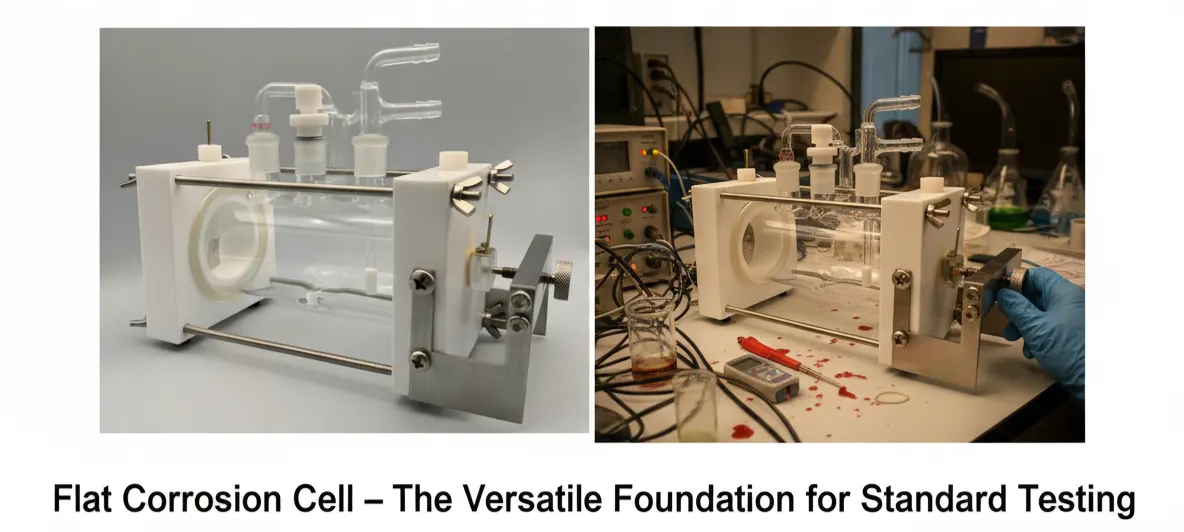
The flat corrosion cell is often the “workhorse” of a corrosion testing lab. It is a versatile option that supports the most widely used electrochemical methods and works well with a broad range of metals and alloys.
Best for
- DC polarisation and potentiodynamic scans
- Tafel curve measurements
- Linear polarisation resistance (LPR) for corrosion rate estimation
- General bare metal corrosion studies
Key features
Most flat corrosion cells include:
- A flat mounting area for your specimen
- Multiple electrode ports to accommodate:
- Working electrode (your specimen)
- Reference electrode
- Counter (auxiliary) electrode
- Gas purging capability (for example, nitrogen) to:
- Remove dissolved oxygen
- Simulate specific environments
- A suitable volume (for example, around 250 ml) to provide enough electrolyte without excessive waste
These features give you a robust, repeatable setup that is ideal for:
- Material comparison (for example, different steel grades)
- Alloy development
- Inhibitor screening on bare metals
Ideal when
A flat corrosion cell is an excellent choice when:
- You need reliable, reproducible results for bare metal corrosion rate determination
- Your main methods are DC polarisation, Tafel analysis, and LPR
- You want a simple, flexible setup that can be used by multiple operators
For many labs, a flat corrosion cell is the first and most essential cell to purchase, forming the foundation of the corrosion testing suite.
View Flat Corrosion Cell specifications and confirm compatibility with your potentiostat and electrode set to ensure a plug-and-play experience.
Jacketed Flat Corrosion Cell – When Temperature Control is Critical
When temperature matters, a jacketed flat corrosion cell becomes essential. It offers all the benefits of a standard flat cell, with the added advantage of precise thermal control.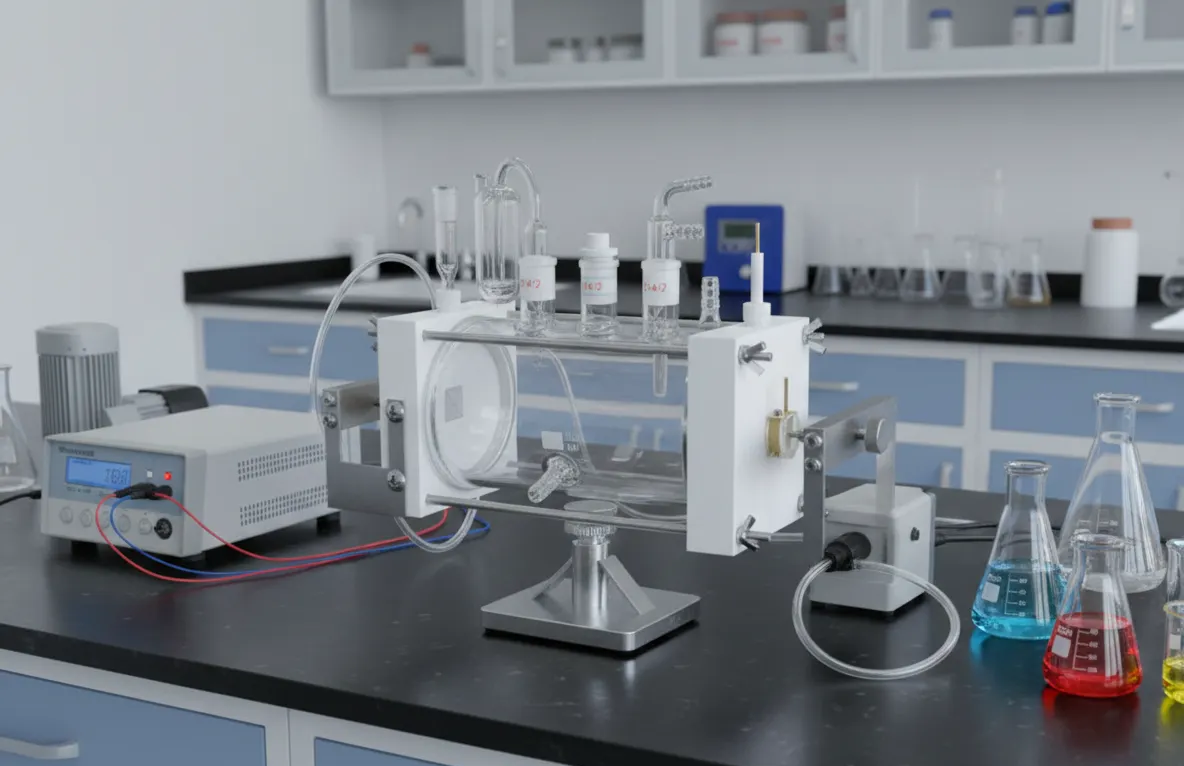
Best for
- Temperature-dependent corrosion studies
- Long-term EIS measurements where stability is critical
- Kinetic analysis of corrosion reactions
- Simulating real-world operating conditions (for example, warm process fluids, geothermal environments, or high-temperature service)
Key features
A jacketed flat corrosion cell typically includes:
- A water jacket surrounding the main cell body
- Inlet and outlet ports to connect to a circulating bath or chiller
- Multiple volume options (for example, around 250 ml to 1000 ml) to:
- Match your specimen size and electrolyte volume needs
- Standard electrode ports for:
- Reference electrode
- Counter electrode
- Gas inlet
- Temperature probe (where applicable)
Using a temperature-controlled bath, you can maintain a stable test temperature, for example:
- 25 °C for standard lab studies
- 40–60 °C for process simulation
- Other temperatures required by internal test procedures or international standards
Ideal when
A jacketed flat corrosion cell is the right choice when:
- Your research or testing programme requires elevated or precisely controlled temperatures
- You are running EIS over long durations and need excellent stability
- You need to compare results across time, seasons, or locations with minimal temperature influence
This is especially useful in laboratories worldwide where ambient conditions can change between morning and afternoon or across seasons, including regions such as Australia and New Zealand.
Explore Jacketed Flat Corrosion Cell options and check the available volumes and connection fittings for your existing thermostatic bath or chiller.
Coating Evaluation Cell – Purpose-Built for Paint & Protective Layer Testing
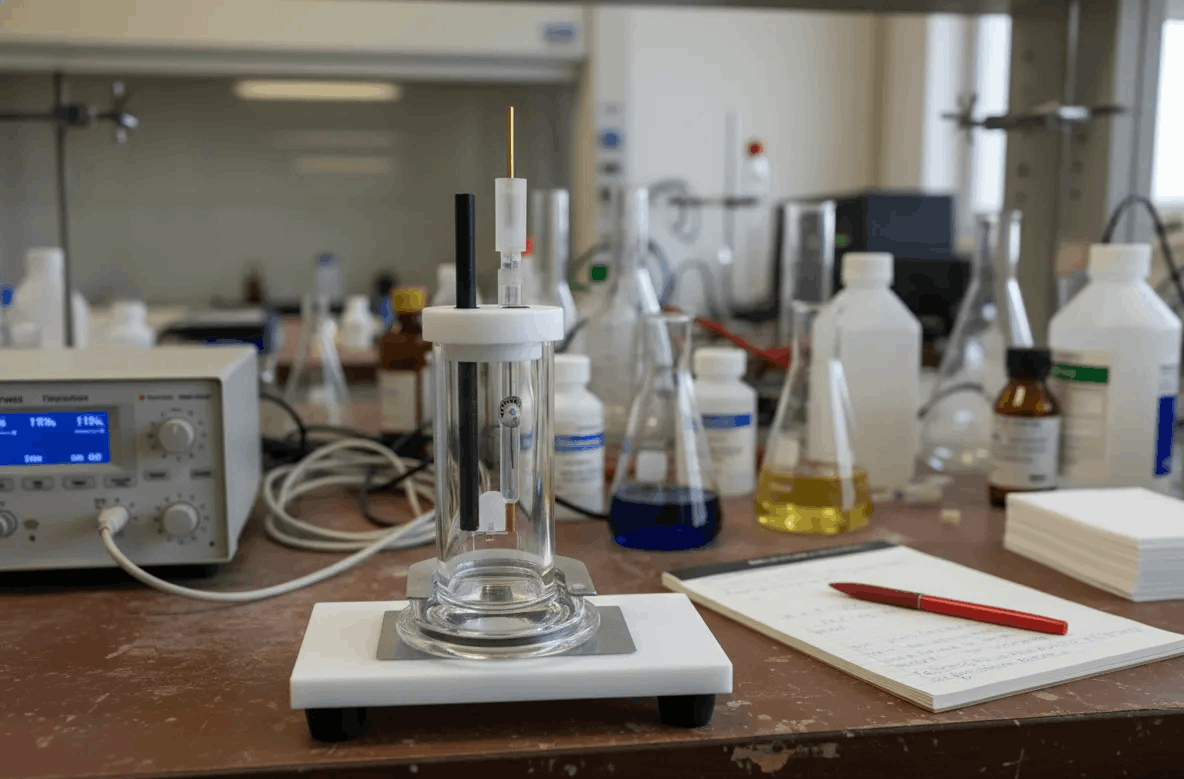
Coating evaluation cells are designed specifically for assessing paints, protective coatings, and inhibitor-containing systems. They are optimised for fast, sensitive measurements on coated panels.
Best for
- REAP (Rapid Electrochemical Assessment of Paint)
- Non-destructive coating assessment
- Quality control (QC) on production lines
- Performance comparison of coating systems and formulations
Key features
Common characteristics of coating evaluation cells include:
- Compact design, typically around 5 ml to 50 ml electrolyte volume
- A seal or gasket system to define a known exposed area on the coating
- Easy mounting on flat coated panels
- Compatibility with EIS and other electrochemical techniques
The compact volume has clear benefits:
- Faster stabilisation
- Less electrolyte required per test
- Ideal for rapid screening of multiple coatings in a short period
Ideal when
A coating evaluation cell is the perfect choice when:
- Your main focus is testing paints and protective coatings
- You need non-destructive methods to preserve specimens for further analysis (for example, salt spray, cross-sectioning, or adhesion tests)
- You want to establish clear QC criteria, such as minimum impedance values or maximum coating capacitance
For manufacturers and applicators serving the marine, construction, infrastructure, and transport sectors, a coating evaluation cell is a key tool for proving coating performance and consistency.
See Coating Evaluation Cell details and confirm the available gasket sizes to match your standard coated panel formats.
5-Port Corrosion Cell – Maximum Flexibility for Complex Configurations
The 5-port corrosion cell is designed for flexibility and advanced setups. It gives you more access points to configure your electrochemical system exactly as required.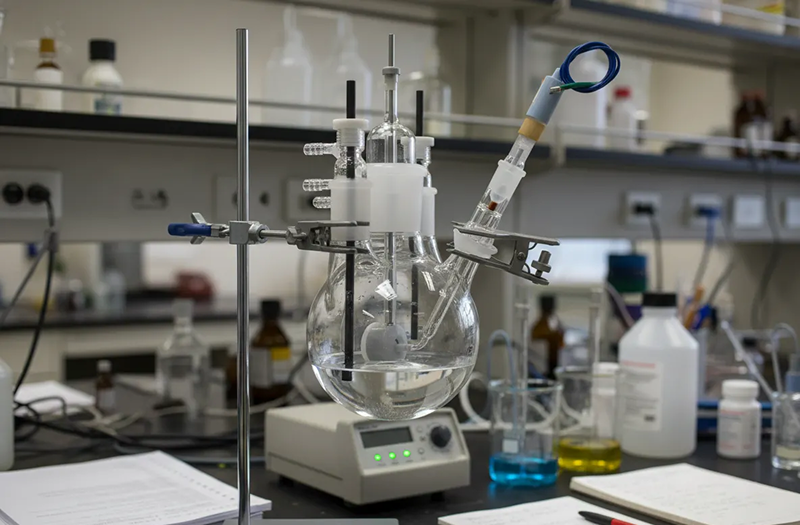
Best for
- Dual counter electrode configurations
- Parallel testing or multi-electrode arrangements
- Advanced research setups, including specialised reference electrode placements
- Experiments requiring gas purging, sampling, and additional sensors
Key features
A 5-port corrosion cell typically offers:
- Five independent access ports with standard joint sizes
- Approximate 500 ml cell volume, suitable for a wide range of specimen sizes
- Room for:
- Working electrode
- Reference electrode
- One or two counter electrodes
- Gas inlet
- Temperature probe or other sensors
This makes it possible to:
- Improve current distribution using dual counter electrodes
- Implement more complex geometries and configurations
- Integrate monitoring sensors without compromising sealing
Ideal when
A 5-port corrosion cell is the ideal choice when:
- You need multiple electrode arrangements for advanced research projects
- You are running high-throughput or multi-parameter experiments
- You want to future-proof your lab with a flexible cell that can adapt to new methods and projects
It is particularly useful in research labs, universities, and specialised testing centres across the world that support multiple projects or industrial partners.
Discover 5-Port Corrosion Cell features and assess which configurations match your current and planned electrochemical experiments.
Corrosion Specimen Holder – The Critical Accessory for Accurate Results
Even the best corrosion cell cannot deliver high-quality data if the specimen is poorly mounted. A corrosion specimen holder is a crucial accessory that ensures consistent exposure area and reliable sealing.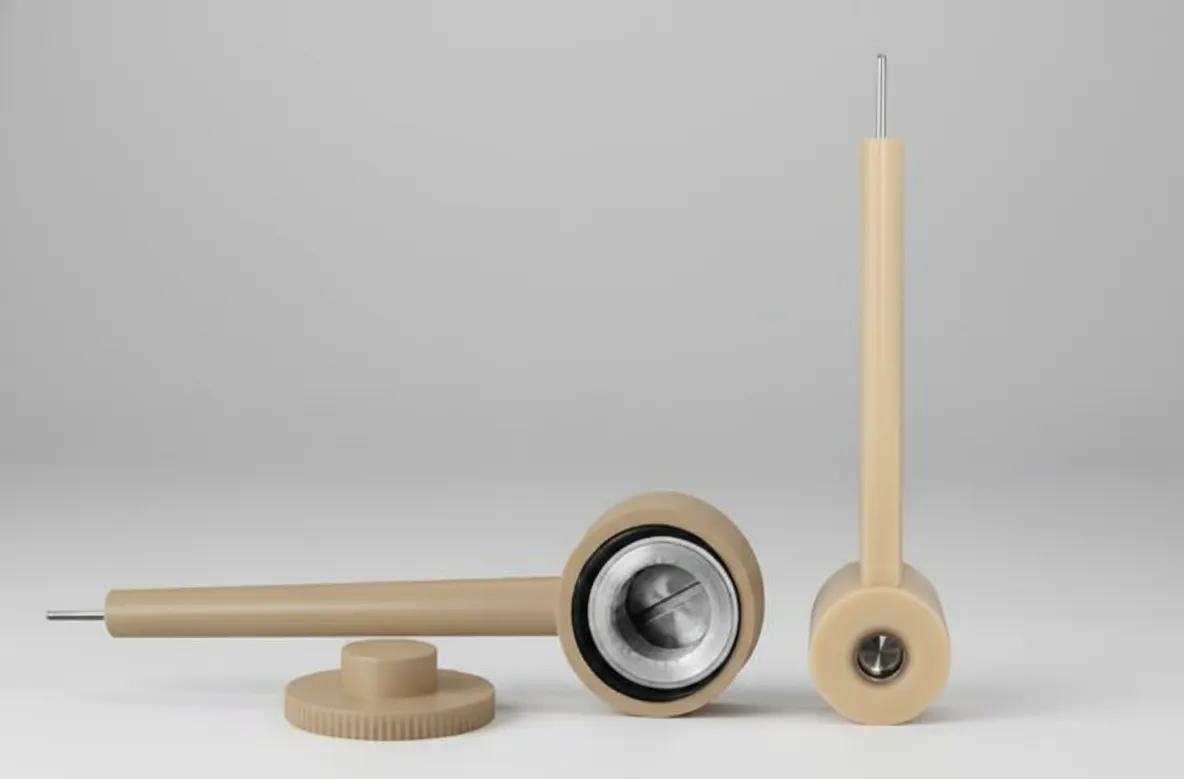
Best for
- Precise specimen mounting
- Leak-free electrochemical measurements
- Multi-site testing on a single panel
Key features
A well-designed corrosion specimen holder provides:
- Consistent contact pressure to secure the specimen against seals or gaskets
- Proper electrical isolation to ensure that only the defined area is exposed
- Compatibility with flat corrosion cells, coating evaluation cells, and other setups
- Options for different sample sizes and thicknesses
By controlling the exposed area and ensuring a tight seal:
- Measurement noise is reduced
- Leakage and crevice corrosion at the edges are minimised
- Results are more reproducible between tests and operators
Why essential
A corrosion specimen holder is essential because:
- Poor specimen preparation is one of the most common sources of bad data
- Even a high-end potentiostat and cell cannot compensate for an incorrectly mounted sample
- For coatings, an inaccurate exposed area can make your EIS data impossible to interpret properly
If you want accurate, trusted corrosion test results, a good specimen holder is not optional – it is fundamental.
Add a Corrosion Specimen Holder to your setup to stabilise your testing workflow and protect data quality across your lab.
Quick Selection Matrix – Which Cell Do You Need?
To make selection fast and clear, use the following matrix as a quick reference.
| Your requirement: | Recommended cell: |
|---|---|
| Standard DC polarisation and Tafel analysis | Flat Corrosion Cell |
| Temperature-controlled EIS studies or temperature-dependent corrosion tests | Jacketed Flat Corrosion Cell |
| Paint and coating quality control, non-destructive coating evaluation | Coating Evaluation Cell |
| Complex multi-electrode configurations, dual counter electrodes, or advanced research setups | 5-Port Corrosion Cell |
| Accurate specimen mounting, leak-free measurements, consistent exposed area | Corrosion Specimen Holder |
Building Your Complete Corrosion Testing Setup
Once you understand each component, it becomes easier to design a complete corrosion testing setup that matches your lab’s size, budget, and objectives.
Starter lab configuration
Ideal for:
- New university labs
- Small R&D teams
- Early-stage testing capability
Typical setup:
- 1 × Flat Corrosion Cell
- 1 × Corrosion Specimen Holder
- Basic electrode set (reference, counter, working connections)
- Suitable potentiostat
This configuration lets you:
- Perform DC polarisation, Tafel, and LPR
- Generate reliable corrosion rate data
- Begin comparing materials and environments
Advanced research configuration
Ideal for:
- Universities and research institutes
- Industrial R&D labs
- Multi-project teams
Typical setup:
- 1 × Flat Corrosion Cell
- 1 × Jacketed Flat Corrosion Cell
- 1 × 5-Port Corrosion Cell
- 1 × Corrosion Specimen Holder
- Temperature control unit (circulating bath or chiller)
- Full electrode sets and reference electrodes for different electrolytes
This configuration supports:
- DC polarisation, Tafel, LPR
- EIS at controlled temperatures
- Complex configurations and advanced methods
Production QC configuration
Ideal for:
- Coating manufacturers
- Fabricators and applicators
- Industrial plants needing routine checks
Typical setup:
- 1–2 × Coating Evaluation Cells (to allow parallel tests)
- 1 × Flat Corrosion Cell (for bare metal or pre-treatment testing)
- 1 × Corrosion Specimen Holder
- Standardised electrode kits
- Clear, documented test procedures
This configuration allows:
- Rapid screening of coatings
- Non-destructive QC tests
- Consistent data for customer assurance and internal quality audits
FAQ
Q1. What is the difference between jacketed and non-jacketed corrosion cells?
A non-jacketed corrosion cell operates at ambient temperature and is suitable for shorter tests where temperature variation is not critical. A jacketed corrosion cell has a built-in water jacket that connects to a temperature-controlled bath or chiller. This allows you to maintain a stable, elevated, or specific temperature during testing, which is essential for long-term EIS, kinetic studies, and simulating real service conditions.
Q2. Which corrosion cell is best for coating evaluation?
For coating evaluation, especially non-destructive methods such as EIS and REAP, a dedicated coating evaluation cell is the best choice. It uses a compact volume and a defined exposed area on the coated panel. This design provides sensitive, repeatable measurements that are ideal for quality control and comparative studies of paints and protective systems.
Q3. How do I choose the right cell capacity?
Choose cell capacity based on:
- Sample size
- Required electrolyte volume
- Method type
Smaller volumes (for example, 5–50 ml) are ideal for coating evaluation cells, where rapid screening and reduced electrolyte use are important. Medium volumes (around 250 ml) work well for most flat corrosion cells. Larger volumes (up to around 1000 ml) are useful when you test larger specimens or need more stable conditions. Always ensure the cell volume matches your specimen area and your test method requirements.
Q4. Can I use one cell for multiple testing methods?
Yes, many corrosion cells are versatile and can support several techniques. For example, a flat corrosion cell can usually be used for DC polarisation, Tafel analysis, and LPR. With appropriate electrodes, it may also support EIS on bare metals. However, for specialised work, such as sensitive coating evaluation or complex multi-electrode configurations, dedicated cells like coating evaluation cells or 5-port cells will deliver better results and more flexibility.
Q5. How do I ensure my corrosion cell is compatible with my potentiostat?
Check that your potentiostat supports the required current range, voltage window, and number of electrodes for your chosen cell. For example, multi-electrode and 5-port configurations may need additional channels or auxiliary inputs. It is also important to confirm that your reference and counter electrodes use connectors supported by your instrument. If you are unsure, contact ScienceGears with your potentiostat model and planned methods for guidance.
Q6. What materials should I choose for seals and gaskets in aggressive environments?
For most aqueous electrolytes, PTFE and similar inert polymers provide excellent chemical resistance and low contamination. For more demanding environments, such as strong acids, solvents, or high-temperature brines, alternative materials like FKM, EPDM, or PEEK-based components may be recommended. ScienceGears can advise on seal material selection based on your specific electrolyte and temperature range.
Q7. How often should I replace gaskets and sealing components?
Replacement frequency depends on chemical exposure, temperature, and mechanical wear. Visible cracking, deformation, or persistent leakage are clear signs that seals should be replaced. As a preventive measure, many labs keep spare gasket sets and implement a replacement schedule aligned with internal maintenance procedures or the number of test cycles.
Q8. Can I retrofit temperature control to an existing non-jacketed cell?
In some cases, external temperature control methods (such as placing the entire cell in a thermostated chamber) can be used, but this may be less precise and slower to stabilise. For applications where temperature is a critical variable, a dedicated jacketed flat corrosion cell connected to a circulating bath or chiller will usually provide better reproducibility and control.
Q9. What are common sources of noise or instability in corrosion measurements, and how do cells help?
Common issues include poor specimen mounting, leakage around seals, unstable reference electrodes, temperature drift, and inadequate shielding of cables. Well-designed corrosion cells, together with a good specimen holder, reduce many of these problems by controlling exposed area, providing robust sealing, and accommodating reference electrodes in stable positions.
Q10. How can I scale from R&D testing to routine production QC?
Many labs begin with a single flat corrosion cell or coating evaluation cell for method development, then add additional cells for parallel testing as QC requirements grow. Standardised procedures, fixed exposed areas, and consistent cell configurations make it easier to translate research methods into routine production checks. ScienceGears can help design a pathway from single-cell R&D setups to multi-cell production workflows.
Why ScienceGears Corrosion Test Electrochemical Cells?
Now that you understand which cell configuration suits your needs, the next question is equally important: who should supply your equipment? Choosing the right supplier is as critical as choosing the right cell. ScienceGears stands out as the preferred partner for corrosion testing electrochemical cells and here’s why.
Founded by Researchers, for Researchers
ScienceGears is not just another equipment supplier. The company was founded and is led by passionate electrochemists who have worked in labs themselves. This means the team understands the real-world challenges researchers face – because they have faced them too.
When working with ScienceGears, you are not speaking to salespeople or engineers reading from a product sheet. You are speaking to scientists who have:
- Designed and optimised corrosion testing workflows
- Managed complex research projects requiring precision electrochemistry
- Debugged equipment problems before important deadlines
- Understood why a corrosion cell that works perfectly in theory sometimes fails in practice
This foundation makes a genuine difference. ScienceGears designs corrosion cells not based solely on technical specifications, but based on practical experience in Australian and New Zealand research environments. Every product is performance-tested and backed by real lab experience, ensuring scientific rigour and usability.
PhD-Trained Scientists on Your Team
ScienceGears employs a team of PhD-trained scientists who bring decades of combined experience in electrochemistry and spectroscopy. When contacting ScienceGears for advice on cell selection or experimental setup:
- You receive consultation from experienced researchers, not sales consultants
- Your technical questions are answered with genuine scientific insight
- Complex or unusual experimental needs are treated as research challenges
- Custom modifications or specialised setups are understood and implemented correctly
This expertise is embedded in every interaction – from initial enquiry through installation, training, and ongoing support.
Scientifically Rigorous Product Design
ScienceGears corrosion cells are engineered with scientific precision. Material selection includes borosilicate glass chambers for superior chemical and thermal resistance, PTFE sealing systems using inert polymer construction that prevents contamination, stainless steel components for extended service life, and optional PEEK elements for demanding applications requiring maximum chemical resistance.
Each cell configuration is optimised for specific electrochemical techniques:
- Flat Corrosion Cells feature optimised geometry ensuring reproducible current paths in DC polarisation and EIS measurements
- Jacketed Flat Corrosion Cells include magnetic stirrer accommodation with indented bottom design for enhanced diffusion performance
- Coating Evaluation Cells employ rigid construction with chemical-resistant seals ensuring consistent contact pressure and leak-free measurements
- 5-Port Corrosion Cells provide flexible multi-port configurations supporting complex experimental setups
Complete Technical Support Throughout Your Journey
Choosing ScienceGears means gaining access to comprehensive technical support at every stage. From initial consultation where ScienceGears experts understand specific research objectives and match cell specifications to experimental requirements, through pre-installation planning with clear guidance on lab preparation, to hands-on training upon installation covering cell operation, best practices, and troubleshooting.
After installation, you continue to benefit from expert assistance for troubleshooting and optimisation, application consultation for new or complex experiments, custom configuration advice as research evolves, and technical support available when challenges arise. This level of support is rare in scientific equipment supply.
Standards Compliance and Quality Assurance
ScienceGears corrosion cells are designed to support electrochemical testing methods described in relevant international standards, including:
- ASTM G59: Potentiodynamic polarisation resistance measurements
- ASTM G61: Corrosion susceptibility testing protocols
- ISO Standards: International electrochemical testing specifications
- Industry Guidelines: Petroleum, aerospace, and marine industry requirements
Every cell undergoes rigorous quality assurance protocols before shipment, with individual testing ensuring consistent performance from day one.
Local Presence, Global Expertise
With established distribution networks across Australia and New Zealand, ScienceGears combines local responsiveness with global reach. Advantages for Australian and New Zealand labs include:
- Local inventory ensuring immediate availability for standard products
- Regional support with on-site service and technical assistance capability
- Understanding of local conditions including ambient temperature variations and environmental factors affecting long-term testing
- Rapid delivery with express shipping options for urgent requirements
- Competitive pricing through direct manufacturer relationships ensuring genuine value
ScienceGears works closely with leading global manufacturers to deliver the best instrumentation available, ensure rapid lead times for custom configurations, and provide trusted, long-term service relationships.
Custom Solutions for Specialised Applications
Not all corrosion testing needs fit into standard product configurations. ScienceGears excels at developing custom solutions including modified cell volumes for unique specimen sizes, specialised electrode configurations for advanced research setups, custom materials or seals for aggressive chemical environments, and integrated monitoring systems incorporating temperature probes or other sensors.
Rather than forcing applications into standard products, ScienceGears works with clients to engineer solutions that truly match specific requirements.
Supporting Your Career Development
ScienceGears recognises that investing in your team’s capability matters. The company provides educational materials and technical documentation, webinars and workshops on advanced corrosion testing techniques, guidance on new methodologies and emerging applications, and connections to the broader electrochemistry community.
The ScienceGears Difference: Three Key Points
- Scientists Understanding Scientists You are not working with equipment salespeople. You are working with researchers who speak your language and understand your challenges because they have lived them.
- Precision Without CompromiseEvery ScienceGears corrosion cell is designed with scientific rigour at the core. Materials, geometry, and construction are optimised for accuracy and reproducibility – not just cost efficiency.
- Partnership, Not Just SupplyScienceGears sees itself as a partner in your research journey. From initial consultation through years of ongoing support, you are backed by genuine expertise and commitment to your success.
Conclusion & Strong Call to Action
Selecting the right corrosion test electrochemical cell does not need to be complicated. By focusing on four key questions – your sample type, temperature requirements, test methods, and throughput – you can quickly narrow your options and build a setup that delivers reliable, reproducible results.
Summary:
- Use a Flat Corrosion Cell as your core tool for standard DC polarisation, Tafel analysis, and LPR on bare metals.
- Add a Jacketed Flat Corrosion Cell when temperature control and long-term stability are essential.
- Choose a Coating Evaluation Cell for rapid, non-destructive testing of paints and protective coatings.
- Select a 5-Port Corrosion Cell for advanced research and flexible, multi-electrode configurations.
- Include a Corrosion Specimen Holder to guarantee accurate, leak-free mounting and consistent exposed areas.
Together, these components create a complete corrosion testing solution that is ready for the demands of modern laboratories and industrial facilities across the world.
Ready to equip your lab? Browse the complete range of ScienceGears corrosion test electrochemical cells or contact the team for personalised recommendations based on your applications, standards, and throughput targets. Why settle for equipment when you can have partnership? Choose ScienceGears – the preferred supplier of corrosion testing electrochemical cells across, backed by PhD-trained scientists who understand your research, your challenges, and your goals.
Key Advantages of ScienceGears at a Glance
| Advantage | Why It Matters |
|---|---|
| Founded by Researchers | Real understanding of lab challenges and practical solutions |
| PhD-Trained Team | Expert consultation and genuine scientific insight |
| Rigorous Product Design | Premium materials and optimised configurations for accuracy |
| Comprehensive Support | Technical guidance from enquiry through lifetime use |
| Standards Compliant | ASTM and ISO certified with individual quality testing |
| Local Presence | Rapid delivery and on-site support across Australia and New Zealand |
| Custom Solutions | Engineered configurations for specialised applications |
| Partnership Approach | Long-term commitment to your success and professional development |