
What Is a Reference Electrode and Why Does It Matter in Electrochemical Testing?
A reference electrode is a critical component in electrochemical measurement systems. It provides a stable, well-defined electrical potential against which the working electrode potential can be measured and controlled. In any three-electrode electrochemical cell, the reference electrode maintains a fixed potential without carrying electrical current, allowing the potentiostat to precisely regulate the working electrode’s voltage relative to a known standard.
Understanding reference electrodes is essential for accurate electrochemical measurements. Poor reference electrode selection or maintenance leads to common problems including noisy voltammograms, shifted corrosion potentials, and irreproducible sensor data—issues that can compromise research validity and product quality.
How Reference Electrodes Function: The Science Behind Stability
Reference electrodes achieve their stability through a thermodynamic principle called the second-kind electrode concept. Most laboratory reference electrodes consist of a metal in equilibrium with its sparingly soluble salt and an electrolyte containing a common ion. For example:
- Silver/Silver chloride (Ag/AgCl):A silver metal wire in contact with silver chloride, suspended in potassium chloride (KCl) solution
- Saturated calomel electrode (SCE):Mercury in equilibrium with mercurous chloride (Hg₂Cl₂) in saturated KCl
- Mercury/Mercuric oxide (Hg/HgO):Mercury in equilibrium with mercuric oxide in alkaline solution
When the internal solution composition is correct and the liquid junction remains healthy, these electrodes deliver highly reproducible potentials at 25°C. This reliability makes them indispensable in research, quality control, and industrial electrochemistry.
Quick Reference Guide: Selecting the Right Reference Electrode for Your Application
Choosing the correct reference electrode requires matching it to your specific electrochemical environment. This decision matrix helps scientists, engineers, and laboratory managers make informed selections quickly:
| Application Type | Recommended Reference Electrode | Key Advantages | Critical Considerations |
|---|---|---|---|
| General aqueous electrochemistry (cyclic voltammetry, linear sweep voltammetry, electrochemical impedance spectroscopy, teaching labs) | Ag/AgCl (KCl-filled) | Mercury-free, robust, widely accepted in literature, easy to maintain | Avoid if chloride contamination is a problem; consider double-junction design for sensitive samples |
| Chloride-sensitive or silver-precipitating systems | Mercury/mercury sulphate (Hg/Hg₂SO₄) or double-junction Ag/AgCl with intermediate bridge | Eliminates chloride interference, prevents silver precipitation | Higher complexity; requires careful maintenance of sulphate saturation |
| Strongly alkaline environments (KOH solutions, alkaline batteries, fuel cell research) | Mercury/mercuric oxide (Hg/HgO) in alkaline medium | Matches alkaline matrix, provides more stable potential in high-pH conditions | Mercury handling and disposal requirements; avoid in chloride-contaminated solutions |
| Elevated temperatures (>50–60°C) | Ag/AgCl rated for high-temperature use with manufacturer-provided correction factors | Temperature-compensated performance, maintains electrochemical stability | SCE not recommended; verify manufacturer specifications for your temperature range |
| Non-aqueous and mixed organic solvents | Ag/Ag⁺ prepared in the same solvent and supporting electrolyte as your test solution | Minimizes large liquid-junction potentials, improves measurement accuracy | Exact composition must be reported; requires precise solvent matching |
| Ultra-sensitive applications (biological samples, environmental monitoring) | Double-junction reference or leak-free miniature design | Prevents sample contamination from chloride, sulphate, or mercury leakage | Higher cost; more complex maintenance requirements |
Common Reference Electrodes: Potentials, Properties, and Performance Standards
Reference electrodes are standardized against the standard hydrogen electrode (SHE) to enable consistent comparison across laboratories and literature. All potentials listed below are measured at 25°C unless otherwise specified.
Ag/AgCl Reference Electrode: The Modern Laboratory Standard
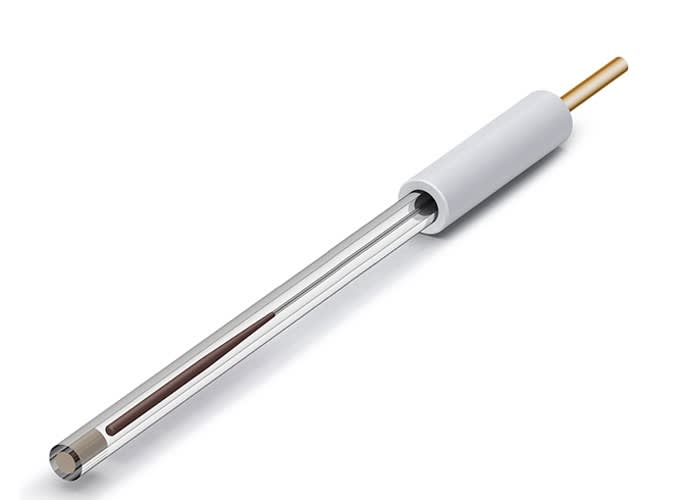
Typical Potential:
E ≈ +0.197 V vs. SHE (saturated KCl); variations based on KCl concentration
The silver/silver chloride electrode has become the preferred reference electrode across most electrochemical laboratories worldwide. It consists of a silver wire coated with silver chloride, immersed in a potassium chloride solution at standardized concentration.
Strengths: - Mercury-free composition (improved safety) - Robust and reliable across diverse aqueous systems - Easy to maintain and refurbish - Widely accepted by the electrochemistry community - Available in multiple KCl concentrations (1 M, 3 M, saturated) - Suitable for automated systems and continuous monitoring
Important Variations: The exact potential depends on KCl concentration: - Saturated KCl: E ≈ +0.197 V vs. SHE - 3 M KCl: E ≈ +0.210 V vs. SHE
- 1 M KCl: E ≈ +0.235 V vs. SHE
Always report the filling solution concentration in your methodology section.
When to Avoid: Chloride-sensitive analytical targets, systems where silver precipitation occurs, highly sensitive biological or environmental samples prone to chloride contamination.
Best Use: Corrosion testing, organic voltammetry, impedance spectroscopy, biosensors, teaching laboratories, routine electrochemical research.
Silver Wire Pseudo Reference Electrode: A Practical Quasi-Reference
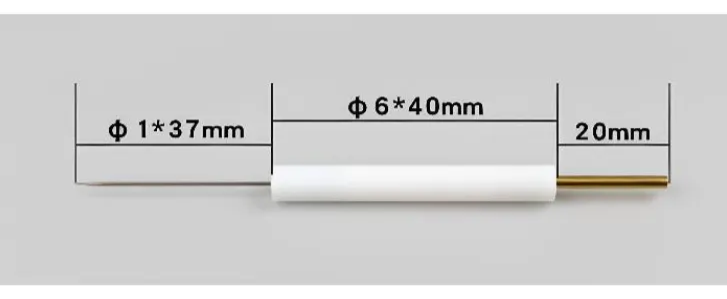
A silver wire pseudo reference electrode is widely used as a quasi-reference in non-aqueous and mixed-solvent electrochemistry when a fully matched Ag/Ag⁺ reference is not practical. Unlike true reference electrodes, a silver wire pseudo reference does not have a fixed, universally defined potential. Its apparent potential can shift with solvent, supporting electrolyte, trace impurities, and surface condition.
For publishable and cross-laboratory comparable data, researchers should calibrate the pseudo reference against an internal redox standard measured in the same solution. Where appropriate, many researchers also report potentials versus an internal standard such as ferrocene/ferrocenium (Fc/Fc⁺) to improve cross-laboratory comparability.
Non-aqueous Ag/Ag⁺ Reference Electrode: The Preferred Organic Standard
Potential Dependence: Solvent and salt-dependent; must be reported with measurement
For non-aqueous and mixed-solvent electrochemistry, aqueous reference electrodes create substantial liquid-junction potentials that distort measurements. The Ag/Ag⁺ reference electrode, prepared in the same solvent and supporting electrolyte as your measurement solution, provides dramatic improvement.
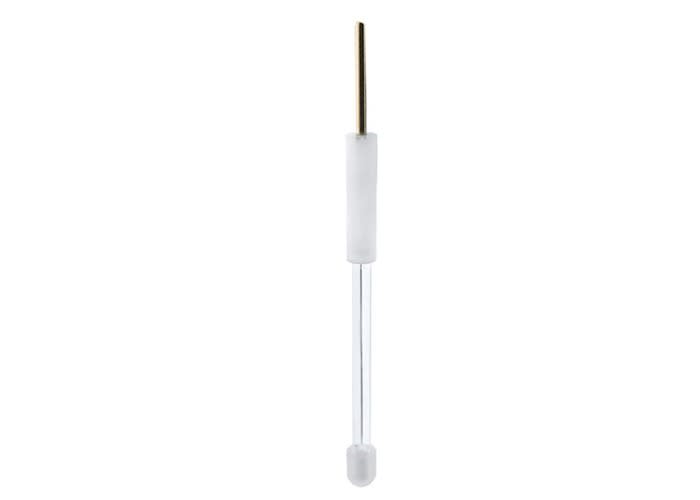
Strengths: - Minimizes liquid-junction potentials in organic systems - Improves measurement reproducibility in non-aqueous conditions - Enables consistent voltage scale across solvent types - Essential for organic electrochemistry and ionic liquid work
Critical Requirements: - Must be prepared in identical solvent and supporting electrolyte - Composition must be explicitly reported with every measurement - Potential values are system-specific (cannot be universally standardized) - Requires careful calibration and verification
Best Use: Acetonitrile electrochemistry, dimethyl sulfoxide (DMSO) systems, aprotic solvents, ionic liquid electrochemistry, organic synthesis electrochemistry.
Saturated Calomel Electrode (SCE - Hg|Hg₂Cl₂(s)|KCl(sat)): Historical Standard with Modern Limitations
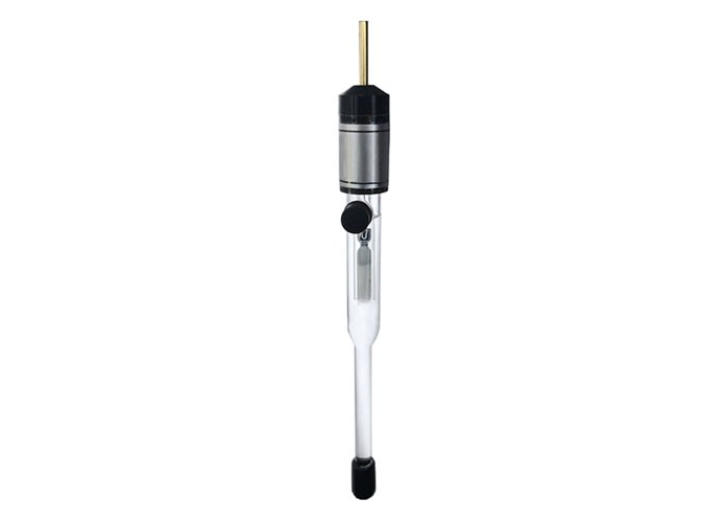
Typical Potential: E ≈ +0.242 V vs. SHE (saturated KCl)
The saturated calomel electrode was the dominant reference electrode for decades due to its exceptional stability and reproducibility. Its construction involves a mercury metal pool in equilibrium with calomel (mercurous chloride) suspended in saturated potassium chloride solution.
Strengths: - Exceptionally stable potential over time - Highly reproducible measurements - Well-established in electrochemical literature - Excellent long-term performance in aqueous systems
Limitations: - Contains mercury, requiring special handling and disposal protocols - Performance deteriorates at elevated temperatures (not recommended above 50–60°C) - Environmental and health concerns regarding mercury content - Being phased out in many regulatory jurisdictions
Best Use: Historical research, legacy systems where mercury safety is managed, specialised applications requiring extreme stability.
Double Salt Bridge Saturated Calomel Electrode: Reduced Contamination Variant
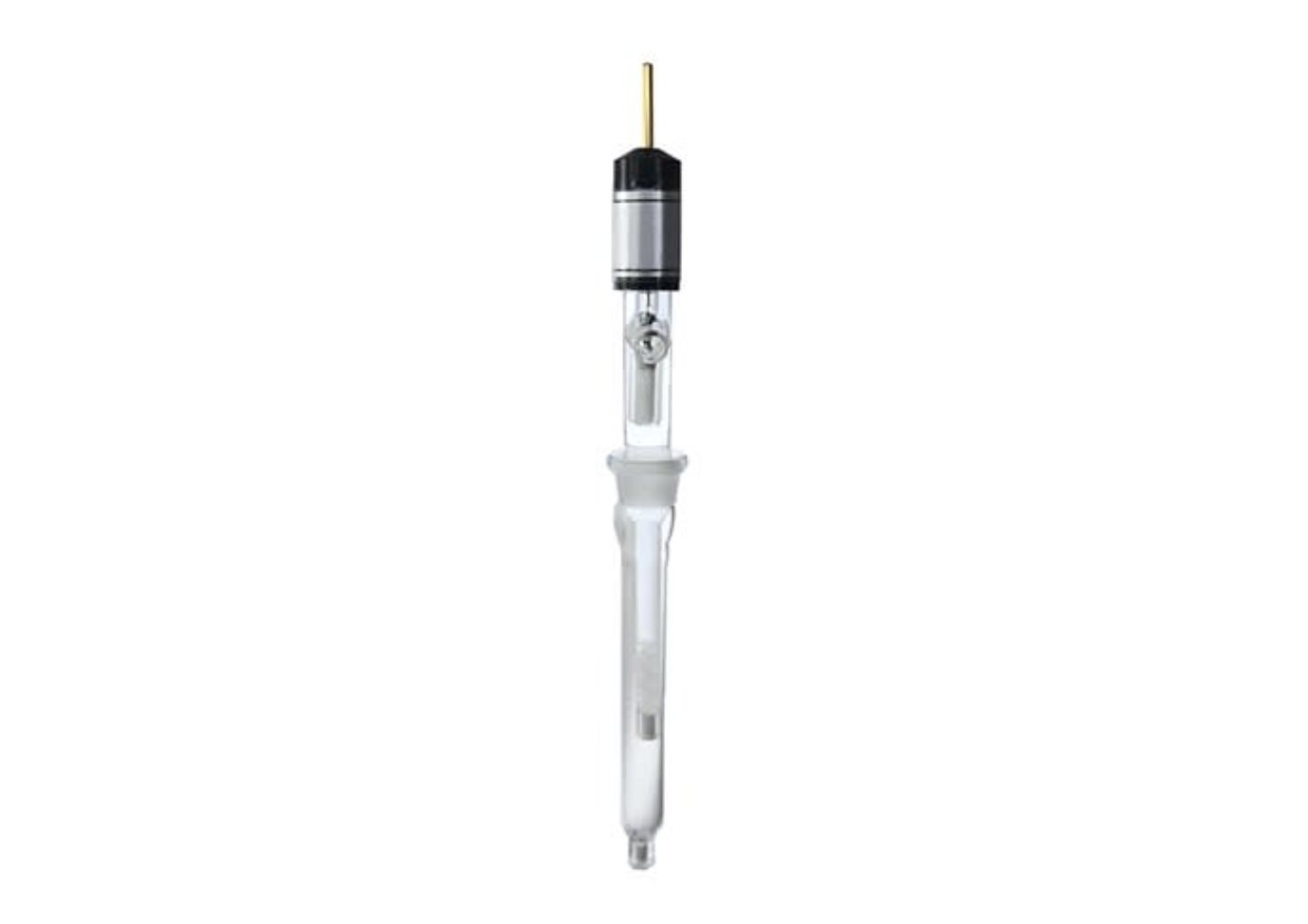
A double salt bridge saturated calomel electrode retains the stable calomel reference system while adding an intermediate bridge layer to reduce direct chloride crossover into the test solution. This design is valuable when researchers need the historical stability or legacy comparability of SCE but must minimise contamination risks in chloride-sensitive or complex matrices.
As with all double-junction or multi-bridge designs, the outer bridge electrolyte should be chosen to match the sample chemistry and minimise junction potential artefacts. This variant is best reserved for specialised aqueous applications where mercury handling protocols are well established and alternative mercury-free references are not suitable.
Mercury/Mercuric Oxide (Hg/HgO): The Alkaline Systems Specialist
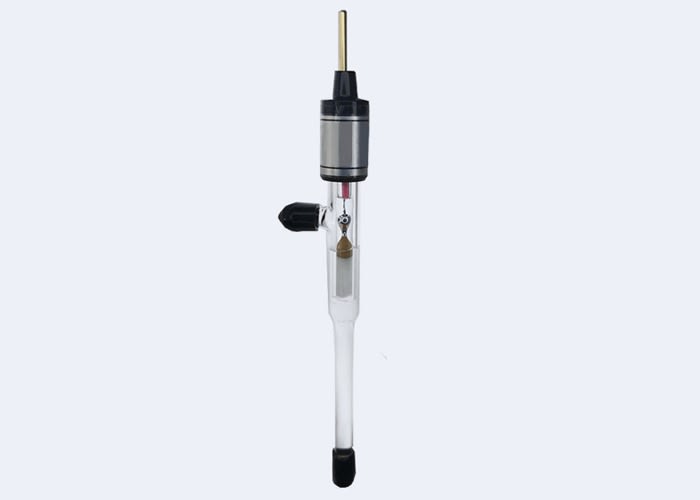
Typical Potential: Depends on alkaline concentration (NaOH or KOH solution used)
The mercury/mercuric oxide electrode is specifically designed for high-pH electrochemical environments. It maintains superior stability in alkaline media where standard Ag/AgCl electrodes degrade.
Strengths: - optimised performance in strongly alkaline matrices - Matches ionic composition of alkaline batteries and fuel cells - Provides more stable potential than Ag/AgCl in pH > 10 conditions - Well-suited for battery research and fuel cell testing
Limitations: - Mercury content (safety, regulatory, disposal) - Not suitable for chloride-containing systems - Temperature sensitivity similar to SCE - Less commonly used than Ag/AgCl in aqueous work
Best Use: Alkaline battery research, fuel cell testing, alkaline fuel cell development, KOH-containing electrochemical cells, pH > 10 environments.
Mercury/Mercury sulphate (Hg/Hg₂SO₄): The Chloride-Free Alternative
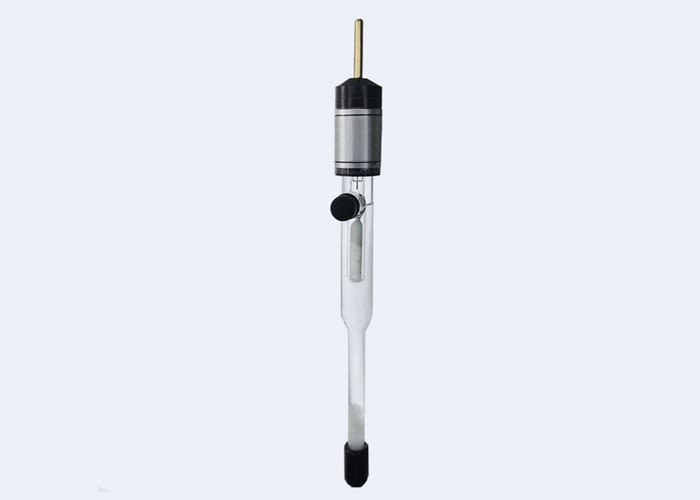
Typical Potential: E ≈ +0.64 V vs. SHE (saturated K₂SO₄); varies with sulphate concentration
This electrode provides a chloride-free alternative for applications where chloride ions interfere with measurements or contaminate sensitive analytical targets. It consists of mercury metal in equilibrium with mercury(I) sulphate suspended in saturated potassium sulphate solution.
Strengths: - Eliminates chloride interference completely - Excellent stability when properly maintained - Suitable for sulphate-containing systems - Prevents chloride-induced errors in analysis
Limitations: - Contains mercury (handling and disposal concerns) - More complex preparation than Ag/AgCl - Higher cost - sulphate saturation must be maintained - Less commonly available than Ag/AgCl
Best Use: Chloride-interference applications, environmental samples with chloride sensitivity, analytical systems where silver precipitation must be prevented.
Reversible Hydrogen Electrode (RHE): pH-Relevant Practical Standard for Electrocatalysis
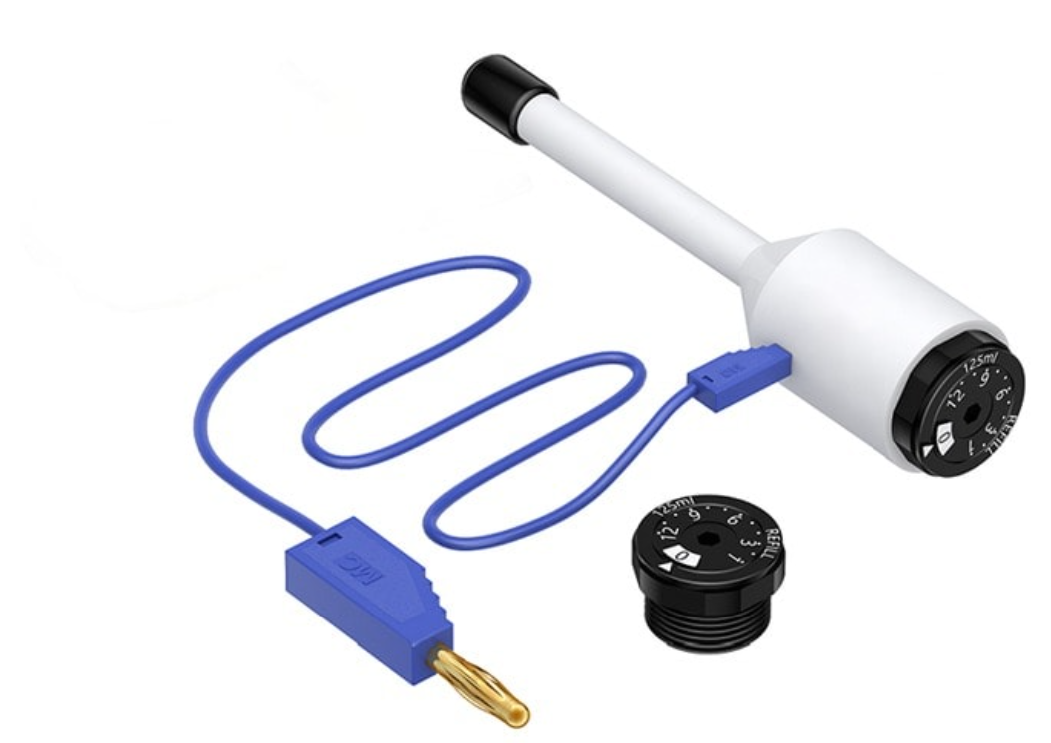
The reversible hydrogen electrode is a practical hydrogen reference that accounts for the pH of the electrolyte. It is widely used in electrocatalysis, fuel cell research, and water electrolysis because it provides a convenient potential scale for hydrogen evolution and oxygen evolution studies in the same solution environment.
Unlike fixed-potential secondary references, the RHE potential is inherently linked to proton activity, so the relationship between RHE and SHE shifts with pH. When reporting data in alkaline or buffered systems, converting values to the RHE scale can significantly improve comparability across studies that use different reference electrodes.
Researchers should clearly state the reference electrode used, the electrolyte composition and pH, and any conversion method applied in the methodology to ensure reproducibility and correct interpretation.
In practice, RHE is often established using a hydrogen-saturated platinum electrode in the same electrolyte, or calculated from a measured reference potential with a clearly stated conversion.
Electrochemistry in Aqueous Systems: Why Ag/AgCl Dominates
Understanding Aqueous Electrochemistry Requirements
Aqueous electrochemistry encompasses the vast majority of laboratory and industrial electrochemical applications. These systems include corrosion testing, voltammetry of dissolved species, biosensor development, environmental monitoring, and teaching laboratories.
The aqueous environment creates specific requirements for reference electrodes: The electrode must remain stable in water-based solutions - It must not introduce contaminants that alter analytical targets - It should facilitate comparison with extensive historical literature - It must provide reliable potential over typical experimental timescales (hours to weeks)
Why Ag/AgCl Is the First Choice for Aqueous Work
The silver/silver chloride electrode in saturated KCl solution has become the global standard for aqueous electrochemistry because it satisfies all these requirements simultaneously.
Compatibility with Aqueous Systems: Water provides an ideal medium for the Ag/AgCl/KCl equilibrium, allowing the electrode to maintain its reference potential with minimal drift.
Historical Precedent: Decades of published electrochemical data reference Ag/AgCl potentials, enabling direct comparison and validation of new research against established baselines.
Practical Advantages: The electrode is straightforward to refurbish, relatively inexpensive, and available from multiple manufacturers in standardized configurations.
Mercury-Free Composition: Growing environmental and health regulations have phased out mercury-containing electrodes in many jurisdictions, making Ag/AgCl the regulatory-compliant choice.
When to Avoid Standard Ag/AgCl in Aqueous Systems
Three specific situations demand alternative reference electrode designs:
- Chloride Contamination Sensitivity: If your analytical target reacts with, precipitates with, or is interfered by chloride ions, standard Ag/AgCl is inappropriate. The inevitable chloride leakage from the electrode reference solution will compromise your measurements. In these cases, adopt a double-junction design with an outer bridge solution that matches your test electrolyte.
- Silver Precipitation: Some analytical systems contain reagents or dissolved species that precipitate silver ions. Direct contact with Ag/AgCl will result in continuous silver dissolution and erratic potential drift. Again, a double-junction configuration with an appropriate outer electrolyte solves this problem.
- **Ultra-Sensitive Biological or Environmental Samples:**Biological systems (cell cultures, physiological fluids) and environmental samples (river water, soil extracts) often contain trace contaminants that can affect electrode performance. For these applications, consider leak-free or miniature reference electrodes that minimize internal solution contact with the sample.
Alkaline Electrochemistry: Matching the Reference Electrode to High-pH Environments
The Challenge of Alkaline Systems
Alkaline environments—strongly basic solutions with pH > 10—present unique electrochemical challenges. The high hydroxide ion concentration and low proton activity fundamentally alter electrode behaviour.
In strongly alkaline media, standard Ag/AgCl electrodes experience: - Gradual potential drift caused by hydroxide ion attack on the silver chloride layer - Altered liquid-junction potential at the glass frit - Reduced long-term reproducibility compared to aqueous neutral solutions - Accelerated corrosion of the electrode structure
These problems directly translate to noisier voltammograms, irreproducible scan-to-scan results, and measurement uncertainty that compromises data quality.
Mercury/Mercuric Oxide (Hg/HgO): optimised for Alkaline Chemistry
The mercury/mercuric oxide electrode in alkaline solution (NaOH or KOH) provides superior performance in high-pH environments because its thermodynamic basis matches the alkaline chemistry.
Why Hg/HgO Works Better in Alkaline Systems: - The HgO/Hg²⁺ equilibrium is thermodynamically well suited to strongly alkaline media - The electrode composition matches the ionic environment of alkaline solutions - The reference potential remains more stable against hydroxide ion interference - Historical data from fuel cell and battery research provides extensive validation
Performance Characteristics: The exact potential depends on the hydroxide concentration and temperature. Research laboratories using Hg/HgO in alkaline systems typically maintain detailed calibration records specific to their electrolyte composition.
Double-Junction Ag/AgCl Alternative for Alkaline Work
A double-junction Ag/AgCl reference electrode with an outer bridge solution that matches your test electrolyte (KOH or NaOH) offers another solution for alkaline electrochemistry.
Advantages of the Double-Junction Approach: - Maintains the practical benefits of Ag/AgCl (availability, familiarity) - The outer bridge electrolyte prevents direct contact between the reference solution and the test cell - The bridge solution can be adjusted to match your experimental matrix - Mercury-free design aligns with modern environmental regulations
Trade-offs: - Slightly increased complexity compared to single-junction electrodes - Requires careful bridge solution preparation and maintenance - Introduces a second liquid junction, potentially increasing junction potential - Higher cost than standard Ag/AgCl
Best Practices for Alkaline Electrochemistry
When conducting electrochemical experiments in alkaline systems:
- Select Your Reference: Choose between Hg/HgO (superior alkaline performance) or double-junction Ag/AgCl (mercury-free alternative) based on your regulatory environment and performance requirements.
- Report Your System: Always document the specific hydroxide concentration (e.g., 1 M KOH, 6 M NaOH) and reference electrode type in your methodology.
- Calibration is Critical: Perform periodic calibration against a known electrochemical standard prepared in the same alkaline solution to verify reference potential stability.
- Monitor Reference Condition: Check the reference electrode impedance regularly; increasing resistance indicates frit fouling or junction degradation.
Non-Aqueous and Mixed-Solvent Electrochemistry: Solving the Liquid-Junction Problem
The Liquid-Junction Potential: A Hidden Source of Error
When an aqueous reference electrode contacts a non-aqueous test solution, a phenomenon called the liquid-junction potential emerges. This is an electrical potential that develops at the interface between two solutions of different compositions—and it can be unpredictably large.
In typical non-aqueous electrochemistry, liquid-junction potentials can exceed 100 mV, completely overwhelming the measurement signal and destroying electrochemical reversibility. This is why using an aqueous Ag/AgCl reference directly in acetonitrile, dimethyl sulfoxide (DMSO), or other organic solvents produces wildly unreproducible results.
The Physical Basis: Liquid-junction potentials arise from differential ion mobilities at the solution interface. The various ions in your aqueous reference solution diffuse into the non-aqueous test solution at different rates, creating a charge separation and associated electrical potential. This potential is not stable; it drifts as diffusion proceeds, resulting in noisy, unreproducible measurements.
The Solution: Ag/Ag⁺ References in Non-Aqueous Media
For non-aqueous electrochemistry, the most reliable solution is to prepare your reference electrode in the identical solvent and supporting electrolyte that you use in your test cell.
Why Ag/Ag⁺ Works in Non-Aqueous Systems: - Liquid-junction potentials are minimised when the reference solution and test solution are chemically identical.
- The Ag⁺ ion concentration in your reference half-cell defines a known potential in that solvent.
- Liquid-junction potentials are greatly reduced, enabling cleaner and more reproducible electrochemistry.
- Measurement reversibility improves dramatically.
Preparation Requirements: A non-aqueous Ag/Ag⁺ reference consists of: - A silver wire electrode - Suspended in a solution of known Ag⁺ concentration (typically 0.01 M) - In your exact solvent system (acetonitrile, DMSO, etc.) - With your exact supporting electrolyte (tetrabutylammonium hexafluorophosphate, etc.)
Critical Documentation: The complete reference electrode composition must be reported alongside every measurement. Where appropriate, many researchers also report potentials versus an internal standard such as ferrocene/ferrocenium (Fc/Fc⁺) to improve cross-laboratory comparability. For example: “0.01 M Ag⁺/Ag in acetonitrile with 0.1 M TBAPF₆” is appropriate reporting. This specificity enables other researchers to reproduce your work and compare results.
When Aqueous References Must Be Used: Partial Solutions with Limitations
Sometimes experimental constraints force the use of an aqueous reference in non-aqueous systems. While not ideal, certain techniques can minimize (but not eliminate) the resulting junction potential problems.
Salt Bridge Approach: A salt bridge containing a high concentration of an inert, organic-compatible electrolyte can be introduced between the aqueous reference and the non-aqueous test cell. This reduces—but does not eliminate—the junction potential by creating an intermediate electrochemical interface. Common bridge solutions include LiClO₄ in acetonitrile.
Luggin Capillary Method: A capillary containing the same electrolyte solution as your test cell can be placed adjacent to the working electrode. This capillary connects the reference electrode region to the solution near the working electrode, reducing the overall potential drop. The Luggin capillary does not solve the fundamental junction potential problem, but it can improve measurement stability in some applications.
Practical Reality: Both approaches represent compromises. They work reasonably well for rough electrochemistry or preliminary measurements, but for rigorous, publishable research in non-aqueous systems, a properly prepared Ag/Ag⁺ reference in matching solvent is essential.
Double-Junction and Leak-Free Reference Electrodes: Specialized Designs for Demanding Applications
Understanding Double-Junction Reference Electrode Architecture
A double-junction reference electrode consists of two concentric chambers:
Inner Chamber: Contains the standard reference system (typically Ag/AgCl or mercury-based electrode system) suspended in its traditional filling solution (saturated KCl for Ag/AgCl).
Outer Chamber: Surrounds the inner reference system and contains a different electrolyte solution—one that is chemically compatible with your test system. This outer solution is the interface that contacts your working electrode and test cell.
The Junction: Instead of a single porous frit connecting the reference solution directly to the test cell, a double-junction electrode has two junctions: 1. Between the inner reference solution and outer bridge electrolyte 2. Between the outer bridge electrolyte and the test cell
Why Double-Junction Designs Eliminate Contamination Problems
Scenario 1 - Standard Single-Junction Reference: When using a standard Ag/AgCl reference in a chloride-sensitive test system: - Chloride continuously leaks from the saturated KCl filling solution through the porous frit - This chloride enters your test cell and interferes with analytical targets - Your measurement becomes progressively contaminated
Scenario 2 - Double-Junction Reference with Appropriate Bridge: When using an Ag/AgCl double-junction reference with a chloride-free bridge solution: - The inner reference solution (saturated KCl) remains isolated in the inner chamber - The outer bridge solution (perhaps saturated K₂SO₄) contacts the test cell - Chloride contamination is virtually eliminated - Your analytical target remains uncontaminated
Applications Demanding Double-Junction References
Biological Systems: Cell cultures, physiological fluid measurements, and tissue electrode studies require ultra-low contamination. Chloride or mercury leakage can alter cellular behaviour or interfere with biological markers.
Environmental Monitoring: River water, groundwater, and soil pore fluid analysis often target low concentrations of specific ions. A single-junction reference introduces uncontrolled background contamination that degrades detection limits.
Pharmaceutical and Clinical Analysis: Bioanalytical electrochemistry (measuring drug metabolites, biomarkers, or therapeutic ions) requires reference electrodes that introduce no interference.
Sensitive Spectroelectrochemistry: When combining electrochemistry with optical methods (Raman, UV-Vis, etc.), dissolved reference electrode components can absorb or scatter light, compromising spectroscopic measurements.
Leak-Free and Miniature Reference Electrode Designs
Leak-free references use specialized junction designs that minimize internal solution leakage. Common approaches include:
Capillary Tube Junctions: Instead of a porous frit, a narrow capillary maintains ionic contact with the test cell while dramatically reducing diffusion rates.
Hydrophobic Membrane Junctions: Specialized membranes allow ion transport while minimizing bulk solution mixing.
Ceramic fibre Junctions: Tightly packed ceramic fibres provide high-resistance paths that restrict electrolyte flow while maintaining electrochemical function.
Miniature and Micro-References: For small-volume cells, micro-electrodes, and in vivo measurements, miniature reference electrodes with reduced dimensions maintain the same electrochemical principles while fitting confined spaces.
Advantages: - Minimal internal solution leakage - Extended usable life between refills - Suitable for long-term continuous monitoring - Reduced contamination of sensitive samples
Trade-offs: - Higher electrical impedance (typically 10⁴–10⁶ ohms vs. 10³–10⁴ ohms for standard references) - Slower response to potential changes - More complex preparation and maintenance - Significantly higher cost
Temperature Effects on Reference Electrode Performance: Beyond 25°C
How Temperature Affects Reference Electrode Potentials
Reference electrodes are standardized at 25°C (298.15 K), but most electrochemical experiments operate outside this ideal condition. Temperature changes shift the reference potential according to the Nernst equation.
For a given reference system, the temperature coefficient determines how the potential changes:
Temperature Coefficient (TC) = dE/dT
Common reference electrodes have these approximate temperature coefficients:
- Ag/AgCl (3 M KCl):TC ≈ −0.72 mV/K (potential decreases with increasing temperature)
- Ag/AgCl (saturated KCl):TC ≈ −0.65 mV/K
- SCE (saturated KCl):TC ≈ −0.58 mV/K
- Hg/Hg₂SO₄ (saturated K₂SO₄):TC ≈ −0.76 mV/K
- Hg/HgO (1 M KOH):TC varies; typically negative
Practical Impact: At 60°C (35°C above the standard reference temperature), an Ag/AgCl reference potential will shift by approximately 25 mV. This drift is large enough to compromise peak identification, distort corrosion potential measurements, and introduce reproducibility errors.
When Temperature Control Becomes Critical
High-Temperature Electrochemistry (>50–60°C): - Corrosion testing at operating temperatures (power plant conditions, automotive systems) - Battery and fuel cell research at realistic operating temperatures - Industrial electrochemical processes (electrosynthesis, electroplating) - In vivo electrochemical sensing (implanted biosensors, body-temperature measurements)
In these applications, the reference electrode’s temperature stability is as important as its potential accuracy.
Temperature Compensation Strategies
Strategy 1: Isothermal Control Maintain the reference electrode at a fixed temperature (typically 25°C) using a water jacket or external temperature controller, even while your test cell operates at elevated temperature. This introduces a temperature gradient in your measurement cell but preserves reference potential stability.
Advantages: - Simple to implement - Reference potential remains known and stable - Works with standard reference electrodes
Disadvantages: - Creates an artificial temperature gradient - Requires additional equipment (temperature controller, water bath) - Some electrochemical phenomena may be affected by the temperature difference
Strategy 2: Temperature-Compensated Reference Electrodes Manufacturers produce reference electrodes specifically rated for elevated temperature operation. These designs incorporate: - Enhanced sealing to prevent filling solution evaporation at high temperature - Special internal geometry to maintain electrode stability - Pre-characterized temperature coefficients specific to the electrode design
Requirements: - Must obtain manufacturer’s calibration data and temperature correction factors - Reference electrode cost is significantly higher - Limited temperature range (typically to 80–120°C)
Proper Use: Apply the manufacturer’s correction formula: E(T) = E(25°C) + TC × (T − 25)
Example: For an Ag/AgCl electrode with TC = −0.72 mV/K operating at 70°C: E(70°C) = E(25°C) + (−0.72 mV/K) × (70−25)K = E(25°C) − 32.4 mV
Strategy 3: Avoid SCE at Elevated Temperature The saturated calomel electrode is explicitly not recommended for high-temperature work. The mercury can volatilize or the KCl saturation can shift unpredictably, causing massive reference potential drift and measurement unreliability. Do not use SCE above 50–60°C.
Best Practices for Temperature-Dependent Electrochemistry
- Select an appropriate reference electrode:For routine aqueous work at moderate elevation, standard Ag/AgCl suffices with temperature correction. For sustained high-temperature operation, specify an electrode rated for elevated temperature.
- Characterize the temperature coefficient:Run calibration experiments to measure your specific electrode’s temperature coefficient. Published values are guidelines; your actual system may differ slightly.
- Document temperature during experiments:Record the temperature of both the test cell and reference electrode chamber during measurements. Report these values explicitly.
- Apply correction factors consistently:If using temperature-corrected reference electrodes, apply the manufacturer’s correction factors uniformly across all measurements in your study.
- Consider temperature stability in your protocol design:Design experiments to minimize uncontrolled temperature fluctuations. An unstable temperature creates an unstable reference potential and unstable results.
Care, Storage, and Maintenance: Extending Reference Electrode Lifespan and Performance
Reference electrode lifespan and measurement reliability depend almost entirely on proper maintenance. A well-maintained electrode can provide years of reproducible measurements; a neglected electrode deteriorates rapidly.
The Junction: Critical Component Requiring Constant Attention
The porous frit (or capillary junction, depending on electrode design) is the electrochemically active interface between the internal reference solution and the test cell. This small component often determines whether your reference electrode works flawlessly or fails unpredictably.
Never Let the Junction Dry Out: The most common cause of reference electrode failure is allowing the internal solution to evaporate, leaving the porous frit dry. Once dry, the frit’s pore structure collapses and cannot be reliably restored.
Prevention: - Store the electrode with its tip immersed in appropriate solution (manufacturer-recommended storage solution, typically matching the filling solution) - Cover the electrode cap to minimize evaporation when not in use - Check electrode tip appearance regularly; a wet appearance indicates proper hydration
What Happens When a Junction Dries: - Electrical impedance increases dramatically (from 10³–10⁴ ohms to 10⁶–10⁷ ohms or higher) - Potentiostat cannot control the electrode potential reliably - Measurements become extremely noisy - Even brief measurements may show massive potential drift
Maintaining Reference Solution Saturation
For electrodes with specific electrolyte concentrations (saturated KCl for Ag/AgCl, saturated K₂SO₄ for Hg/Hg₂SO₄, alkaline solutions for Hg/HgO), maintaining proper saturation is essential.
Why Saturation Matters: - The reference potential depends on maintaining equilibrium between the metal/salt couple and the electrolyte solution - Dilution (from water influx during storage or use) shifts the solution composition and alters the reference potential - Saturation must be maintained continuously for consistent potential
Maintenance Procedures: 1. Regular Top-Ups: Periodically add a small volume of the correct filling solution (e.g., saturated KCl) through the filling hole. Check your specific electrode design for the proper top-up procedure.
- Saturation Verification: If you are uncertain about current saturation status, prepare a small vial of the filling solution (identical concentration) and observe it for salt crystals. If your electrode’s internal solution appears more dilute (clearer), it likely needs restoration.
- Complete Refilling: if the electrode has been in storage for extended periods or if solution clarity has noticeably changed, perform a complete refill with fresh, proper-concentration filling solution. This is a straightforward procedure: carefully pour out the old solution, rinse the internal chamber several times with fresh distilled water, and refill with new solution of the correct concentration.
Impedance Monitoring: Your Early Warning System
The electrode impedance (measured in ohms) indicates the overall electrical resistance of the electrode system. Regular impedance measurements reveal problems before they compromise measurements.
Normal Impedance Values: - Standard reference electrodes: 10³–10⁴ ohms (1,000–10,000 ohms) - Miniature and low-leakage references: 10⁴–10⁶ ohms (higher impedance is expected)
What Rising Impedance Indicates: - 10⁴–10⁵ ohms: Junction beginning to foul; consider electrode cleaning or partial refilling - 10⁵–10⁶ ohms: Significant fouling; electrode performance may be compromised; immediate attention needed - >10⁶ ohms: Electrode function is severely degraded; refilling or replacement likely necessary
Impedance Measurement: Most electrochemical workstations can measure electrode impedance. Establish a baseline impedance for your electrode type and measure it monthly. A doubling of impedance signals that maintenance is needed.
Specialized Maintenance: Mercury-Containing Electrodes
Mercury-containing reference electrodes (SCE, Hg/Hg₂SO₄, Hg/HgO) require additional care due to mercury’s unique properties and regulatory status.
Storage Requirements: - Store in a secondary containment vessel to contain any potential spills - Keep away from heat sources that might increase mercury vapour pressure - Use in well-ventilated areas or fume hoods - Never store mercury-containing electrodes in ordinary laboratory drawers
Hazardous Waste Disposal: - Mercury-containing electrodes must be handled as hazardous waste - Never place them in standard laboratory trash - Contact your institutional environmental health and safety (EHS) department for proper disposal procedures - Maintain disposal records for regulatory compliance
Exposure Prevention: - Never expose electrodes to elevated temperatures that might vaporise mercury - Never open sealed mercury-containing electrodes - In case of breakage or mercury spill, evacuate the area and contact EHS immediately
Reference Electrode Cleaning and Restoration
Over months or years of use, electrodes may accumulate deposits (salts, corrosion products, biological fouling) that increase impedance without compromising the underlying electrode system.
Light Cleaning (Suitable for Standard Ag/AgCl Electrodes): 1. Gently wipe the electrode body with a soft cloth dampened with distilled water 2. Rinse under a stream of distilled water 3. Do not scrub the porous frit; aggressive mechanical cleaning damages it 4. Air-dry on a lint-free paper towel 5. Restore to storage solution
Deep Cleaning (When Light Cleaning Is Insufficient): Some manufacturers provide specific cleaning procedures for their electrodes. Common approaches include: - Brief immersion (5–10 minutes) in dilute hydrochloric acid to remove salt deposits - Gentle ultrasonic cleaning at low power - Complete internal refilling with fresh solution
Consult your electrode’s instruction manual before attempting any deep cleaning procedure.
Storage Best Practices for Extended Periods
If you will not use a reference electrode for weeks or months:
- Rinse thoroughlywith distilled water and air-dry
- Refill with appropriate storage solution(typically the same as the reference filling solution, but some manufacturers specify an alternative storage electrolyte)
- Seal the top openingwith the manufacturer’s cap or a laboratory film to minimize evaporation
- Store uprightor as recommended by the manufacturer
- Check monthlyfor visual signs of deterioration (solution darkening, salt crystallization) or impedance drift
Converting Reference Electrode Potentials: Standardizing Results Across Laboratory Systems
Different laboratories use different reference electrodes. When comparing literature data or combining measurements from different sources, converting between reference electrode systems is essential.
The Conversion Principle: Shifting to a Common Standard
All reference electrodes are related through the standard hydrogen electrode (SHE) potential scale. To convert a measurement from one reference electrode to another:
Step 1: Convert from the reported reference electrode to SHE using that electrode’s standard potential.
Step 2: Convert from SHE to the target reference electrode.
Formula: E(Target Reference) = E(Reported Reference) + E(Reported vs SHE) − E(Target vs SHE)
Common Conversion Examples
Converting from Ag/AgCl (sat’d KCl) to SCE:
Given: A measurement reports a peak potential of +0.50 V vs. Ag/AgCl (sat’d KCl)
- E(Ag/AgCl sat’d KCl vs SHE) = +0.197 V
- E(SCE sat’d KCl vs SHE) = +0.242 V
- E(Target) = 0.50 + 0.197 − 0.242 = +0.455 V vs. SCE
Converting from Ag/AgCl (3 M KCl) to SHE:
Given: A corrosion potential measurement of −0.85 V vs. Ag/AgCl (3 M KCl)
- E(Ag/AgCl 3 M KCl vs SHE) = +0.210 V
- E(Target) = −0.85 + 0.210 = −0.640 V vs. SHE
Converting from Hg/Hg₂SO₄ (sat’d K₂SO₄) to Ag/AgCl (3 M KCl):
Given: An impedance spectroscopy measurement at +0.30 V vs. Hg/Hg₂SO₄
- E(Hg/Hg₂SO₄ sat’d K₂SO₄ vs SHE) = +0.64 V
- E(Ag/AgCl 3 M KCl vs SHE) = +0.210 V
- E(Target) = 0.30 + 0.64 − 0.210 = +0.73 V vs. Ag/AgCl (3 M KCl)
Establishing a Reference Electrode Conversion Table
For frequently used combinations, create a quick reference table specific to your laboratory:
| From | To | Conversion |
|---|---|---|
| Ag/AgCl (sat'd KCl) | SCE | Add 0.045 V |
| Ag/AgCl (3 M KCl) | Ag/AgCl (sat'd KCl) | Subtract 0.013 V |
| Hg/Hg₂SO₄ | Ag/AgCl (sat'd KCl) | Subtract 0.443 V |
| Any | SHE | Use the reference electrode's vs. SHE value |
Store this table in your laboratory SOP (standard operating procedure) document for quick access.
Reporting Reference Electrode Information in Your Research
Scientific integrity and reproducibility require complete disclosure of reference electrode information. Vague reporting (“Ag/AgCl reference”) makes result comparison difficult and can create ambiguity about measurement validity.
Essential Information to Report
Every electrochemical measurement should include:
- Reference electrode type(e.g., silver/silver chloride, saturated calomel)
- Filling solution composition and saturation status(e.g., saturated KCl, 3 M KCl, 1 M KCl)
- Reference electrode geometry(if non-standard, e.g., double-junction, miniature, leak-free)
- Temperature during measurement(reference electrode potentials shift with temperature)
- Potential reference system used(vs. SHE, vs. specific Ag/AgCl variant, etc.)
Example Methodology Statements
Poor Reporting (Ambiguous): > “Electrochemical measurements were conducted in a three-electrode cell with an Ag/AgCl reference electrode.”
Improved Reporting (Clear and Complete): > “Electrochemical measurements were conducted at 25°C in a three-electrode cell using a silver/silver chloride reference electrode (Ag/AgCl in saturated KCl, +0.197 V vs. SHE). All potentials are reported vs. this Ag/AgCl reference. The reference electrode was stored in saturated KCl between measurements.”
Comprehensive Reporting (For Publication): > “Cyclic voltammetry and electrochemical impedance spectroscopy measurements were conducted at 25 ± 2°C using a three-electrode configuration with a working electrode [material], platinum wire counter electrode, and double-junction reference electrode (inner Ag/AgCl in saturated KCl, outer bridge solution 0.1 M KNO₃). All potentials are reported vs. the Ag/AgCl inner reference (+0.197 V vs. SHE). Reference electrode impedance was monitored monthly and remained in the range 3–5 kΩ throughout the study.”
Key Takeaways: Quick Reference for Reference Electrode Selection
For Routine Aqueous Electrochemistry: Use Ag/AgCl in saturated or 3 M KCl. It is mercury-free, widely available, and well-documented in the literature.
When Chloride Contamination Is Problematic: Switch to a double-junction Ag/AgCl reference with an outer bridge solution that matches your analytical matrix, or consider Hg/Hg₂SO₄.
For Alkaline Systems (KOH, Alkaline Batteries, Fuel Cells): Hg/HgO electrodes provide superior stability in high-pH environments, though double-junction Ag/AgCl offers a mercury-free alternative.
For Non-Aqueous Electrochemistry: Prepare Ag/Ag⁺ references in the identical solvent and supporting electrolyte as your measurement solution to eliminate liquid-junction potentials.
For Elevated-Temperature Operation: Use Ag/AgCl electrodes specifically rated for high-temperature work, avoid SCE, and apply manufacturer-provided temperature correction factors.
For Ultra-Sensitive Biological or Environmental Applications: Employ double-junction or leak-free reference electrode designs to minimize sample contamination.
Regardless of Choice: Never allow the porous frit to dry, maintain proper electrolyte saturation, monitor impedance regularly, and report complete reference electrode information in every research publication or technical report.
Frequently Asked Questions About Reference Electrodes
Q: Can I use an Ag/AgCl reference electrode prepared in 1 M KCl interchangeably with one prepared in 3 M KCl?
No. The two electrodes have different potentials (+0.235 V vs. SHE for 1 M KCl; +0.210 V vs. SHE for 3 M KCl). If you must switch, convert all your existing measurements using the conversion formula. For consistency, establish a laboratory standard and use the same concentration for all work unless specific methodology requires otherwise.
Q: How can I tell if my reference electrode’s filling solution needs topping up?
Prepare a test sample of the specified filling solution at the correct concentration in a vial. Compare the appearance of your electrode’s internal solution to the test sample. If the electrode solution appears more dilute or cloudy, top-up or refilling is needed. Monthly visual inspection of all electrodes is good laboratory practice.
Q: Is it acceptable to use an aqueous Ag/AgCl reference in a non-aqueous system (acetonitrile) if I accept some measurement uncertainty?
Not for rigorous electrochemistry. The liquid-junction potential in non-aqueous systems is not simply an offset; it drifts continuously, creating noisy, unreproducible data. Rigorous electrochemistry requires a reference electrode prepared in your exact solvent. For preliminary tests or rough measurements, a Luggin capillary with bridge solution can help, but this is not acceptable for publishable research.
Q: Can I recycle or repair a broken reference electrode?
Simple repairs (refilling with new solution, gently cleaning the frit) can restore a neglected but not physically damaged electrode. However, if the porous frit is cracked, the body is broken, or there is visible deterioration, the electrode should be replaced. Attempting to use a compromised electrode introduces unpredictable errors.
Q: My reference electrode impedance has increased from 3 kΩ to 25 kΩ. Should I replace it?
Not immediately. Try gentle cleaning and refilling with fresh filling solution. Many electrodes can be restored to acceptable performance with maintenance. If impedance remains above 10 kΩ after cleaning and refilling, consider replacement, as the electrode may not respond reliably to fast voltage scans or to precise potentiostat control.
Q: How do I store reference electrodes for maximum lifespan?
Always store with the tip immersed in the manufacturer-recommended storage solution (usually matching the filling solution). Cover the electrode to minimize evaporation. For mercury containing electrodes, use secondary containment vessels and store in a well-ventilated area. Check monthly for visual degradation.
Conclusion: Mastering Reference Electrode Selection for Superior Electrochemical Measurements
Reference electrodes are far more than passive measurement components. They are precision instruments that define the electrochemical voltage scale against which all your measurements are conducted. Selecting the right reference electrode for your application, maintaining it meticulously, and reporting it transparently are hallmarks of rigorous electrochemistry.
The investment in understanding reference electrode principles—from basic thermodynamic equilibrium to practical maintenance procedures—pays dividends in measurement quality, data reproducibility, and scientific credibility. Whether you are conducting corrosion testing in aqueous systems, exploring fuel cell chemistry in alkaline environments, or pioneering organic electrochemistry in non-aqueous solvents, matching the reference electrode to your electrochemical environment transforms noisy, irreproducible data into clean, reliable results that advance science and engineering.
Use this comprehensive guide as your reference for electrode selection, maintenance, and reporting. A well-chosen, properly maintained reference electrode becomes a trusted partner in electrochemical discovery.
Professional Support from ScienceGears
Navigating reference electrode selection and electrochemical measurement optimisation requires expertise spanning thermodynamic principles, practical laboratory techniques, and regulatory considerations. ScienceGears provides expert consultation to help you select the right reference electrode for your specific research requirements. Whether you require guidance on electrode choice, maintenance protocols, or troubleshooting measurement problems, the ScienceGears team brings deep knowledge of electrochemical systems across aqueous, alkaline, and non-aqueous environments. Their expertise in scientific equipment ensures that your electrochemical measurements achieve the quality and reproducibility essential for publication and industrial application.