

Introduction: The Heart of the Green Hydrogen Revolution
As the global push for decarbonisation accelerates, green hydrogen produced via proton exchange membrane water electrolysis (PEMWE) has emerged as a cornerstone technology. Its ability to produce high-purity hydrogen using renewable electricity makes it indispensable for a sustainable energy future. However, the efficiency, cost, and durability of a PEM Electrolyser are not merely a function of its components; they are fundamentally governed by two pivotal operational parameters: current density and cell voltage. Understanding their intricate relationship and design implications is crucial for anyone involved in specifying, operating, or innovating within this field.
This deep dive explores the electrochemistry behind these parameters, their direct impact on system design, efficiency, and lifetime, and what this means for selecting the right PEMWE technology for your application.
The Electrochemical Fundamentals: A Quick Primer
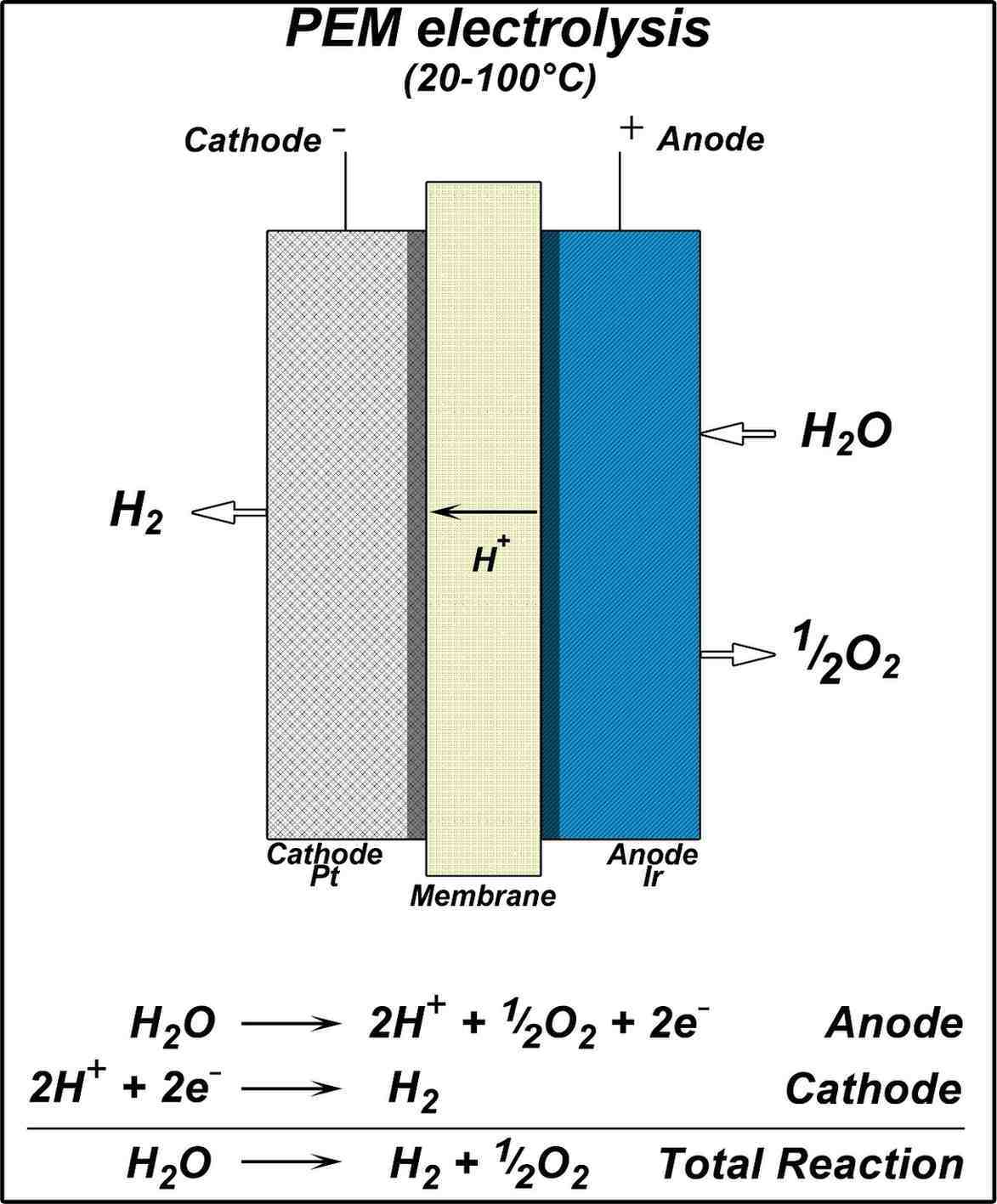
At its core, a PEM electrolyser cell splits water (H₂O) into hydrogen (H₂) and oxygen (O₂) using electricity. The core reaction occurs at two electrodes separated by a solid polymer electrolyte membrane:
- Anode: 2H₂O → O₂ + 4H⁺ + 4e⁻
- Cathode: 4H⁺ + 4e⁻ → 2H₂
The speed of this reaction is directly proportional to the current density—the electrical current per unit area of the membrane (typically expressed in kA/m² or A/cm²). The driving force needed to achieve this reaction rate is the cell voltage.
The total cell voltage (V_cell) is the sum of several contributions:
- Thermodynamic Voltage (E_thermo): ~1.23 V at 25°C. The minimum energy required to split water.
- Activation Overpotential (η_act): Extra voltage to overcome the energy barrier of the oxygen evolution reaction (OER) at the anode.
- Ohmic Overpotential (η_ohm): Voltage loss due to resistance in the membrane, electrodes, and interfaces.
- Concentration Overpotential (η_conc): Losses due to mass transport limitations of water and gases at high reaction rates.
The relationship is captured in the polarisation curve, the most critical diagnostic tool in electrolysis, which plots cell voltage against current density.
A typical polarisation curve for a PEM Electrolyser, illustrating how total cell voltage rises with current density due to increasing overpotentials.
Current Density: The Engine of Production Rate
Current density is the primary lever controlling hydrogen production output. Double the current density, and you theoretically double the hydrogen flow rate from a given cell area.
The High Current Density Paradigm: Pros and Cons
Modern PEMWE design is increasingly moving towards high current density operation (often above 2 A/cm² or 20 kA/m²). The benefits are compelling from a capital expenditure (CAPEX) perspective:
- Reduced Stack Size & Footprint: For a given hydrogen output, a stack operating at high current density requires fewer cells and a smaller membrane area. This leads to a more compact, lightweight system with lower material costs for frames, housings, and balance-of-plant (BOP) components.
- Lower Cost per kW: The stack is the most expensive component. Maximising output per unit area directly reduces the cost-per-kW metric, a key figure for project financiers.
However, this shift is not without significant trade-offs, primarily impacting operational expenditure (OPEX) and durability:
- Increased Voltage & Efficiency Loss: As the polarisation curve shows, pushing current density higher increases cell voltage substantially due to rising ohmic and concentration overpotentials. This means lower voltage efficiency and higher specific energy consumption (kWh/kg H₂).
- Accelerated Degradation: High current densities place immense stress on cell components. Catalyst layer erosion, membrane chemical attack, and porous transport layer (PTL) corrosion can all accelerate, potentially shortening stack lifetime.
- Thermal Management Challenges: The increased ohmic heating (I²R losses) at high current density generates more waste heat. This requires more sophisticated and energy-intensive cooling systems to maintain optimal membrane hydration and prevent hot spots.
Cell Voltage: The Arbiter of Efficiency and Degradation
While current density dictates the "how much," cell voltage determines the "at what cost"—both in energy and long-term health.
The Quest for Lower Voltage Operation
The design goal is to minimise the voltage required to achieve a target current density. This is where advanced materials and engineering excel:
- Membrane Development: Thinner, highly conductive membranes (like reinforced perfluorosulfonic acid types) directly reduce ohmic losses (η_ohm).
- Catalyst Innovation: High-activity, low-loading iridium-based OER catalysts and platinum-based HER catalysts reduce the activation overpotential (η_act). Research into non-precious metal catalysts aims to tackle cost and supply constraints here.
- Porous Transport Layer (PTL) Optimisation: Titanium PTLs with tailored pore structure, hydrophilicity, and interface design ensure efficient water delivery to and gas removal from the catalyst layer, minimising concentration losses (η_conc).
The Voltage-Degradation Link
Operating at unnecessarily high voltage not only wastes energy but is a primary degradation driver. Elevated voltage can accelerate:
- Membrane Chemical Degradation: Formation of reactive oxygen species that attack the polymer.
- Catalyst Dissolution: Particularly of iridium at the anode under high-potential, dynamic conditions.
- Bipolar Plate Corrosion: Even coated titanium plates can suffer at the harsh anodic potential.
Therefore, a stack designed for low-voltage operation at its nominal current density is inherently likely to offer longer service life and lower lifetime levelised cost of hydrogen (LCOH).
Design Implications: Striking the Optimal Balance
The interplay between current density and voltage defines the entire system architecture. Here’s what it means for practical design choices:
1. Stack Design & Materials Selection
- High-Performance Stacks: Aimed at high current density operation, these utilise ultra-thin membranes, advanced low-loading catalysts, and precision-engineered PTLs. They are designed to manage the associated thermal and degradation stresses, often commanding a premium price. The ScienceGears PEMWE Stacks exemplify this approach, integrating advanced components intended to support robust operation at higher current densities (final performance depends on configuration and operating conditions).
- Efficiency-Optimised Stacks: Designed for steady, high-efficiency operation at moderate current densities, these may prioritise longevity and energy savings over compactness. They are ideal for applications with consistently high electricity costs.
2. Balance of Plant (BOP) Complexity
A system designed for a high current density / high output will require:
- More Powerful Power Conversion Units (Rectifiers): To deliver the required high current.
- Advanced Thermal Management: Larger coolant pumps, heat exchangers, and sophisticated control logic to handle greater heat loads.
- Enhanced Gas Processing: Higher gas flow rates demand larger or more efficient separation and drying systems.
3. Operational Strategy and Control
The optimal point on the polarisation curve is not static. Smart control systems dynamically adjust current density based on:
- Electricity Price: Leveraging low-cost renewable power by ramping up to high current density.
- Grid Demand Response: Providing flexibility by reducing load (and current density) when required.
- Stack Health: Gradually increasing voltage setpoints to compensate for performance decay over time, a key consideration for maintenance planning.
4. Application-Specific Optimization
- For Limited Space (e.g., refuelling stations): A high-current-density stack minimises footprint, even with some efficiency trade-off.
- For Off-Grid Renewable Integration (e.g., solar/wind farms): Where capital cost is critical and operation may be intermittent, a robust high-density design can be optimal.
- For Grid-Connected Baseload Production: Where electricity costs are constant and high, maximising efficiency (lower voltage at moderate current density) over decades of operation may yield the lowest LCOH.
FAQs
Q1: What is current density in a PEM electrolyser, and why does it matter?
A: Current density measures how much electric current flows per unit area of the cell (in A/cm²). It's a critical indicator of performance and compactness. A higher current density means the electrolyser can produce more hydrogen in a smaller space, making the system more powerful and cost-effective per unit of output. Many current systems operate in the ~1.5–2.5 A/cm² range (depending on stack design and operating conditions). The U.S. Department of Energy (DOE) has published programme targets around 3.0 A/cm² (timelines and definitions vary by programme year).
Q2: How is the efficiency of an electrolyser calculated?
A: Efficiency is most commonly expressed as the electrical energy required to produce one kilogram of hydrogen, measured in kWh/kg H₂ (using its Lower Heating Value - LHV). A lower number means higher efficiency.
- Current Status: Modern PEM systems are often reported around ~51–53 kWh/kg H₂ (LHV basis), depending on system configuration and operating conditions.
- DOE Target: DOE roadmaps have cited targets around ~48 kWh/kg H₂ (≈69% LHV efficiency); target year and test conditions depend on the specific DOE programme and reporting basis. This is calculated by dividing the energy content of the hydrogen produced by the total electrical energy input.
Q3: What is the typical lifespan of a PEM electrolyser stack?
A: The lifespan is measured in operational hours before significant performance loss. Reported PEM stack lifetimes are commonly in the ~40,000–60,000 hour range (depending on duty cycle and operating conditions). Industry and DOE roadmaps often cite targets around ~80,000 hours, noting that results are application- and protocol-dependent. Durability can be reduced by harsh operating conditions like rapid load cycling and frequent startups/shutdowns.
Q4: Why are PEM electrolysers so expensive?
A: The high cost is primarily driven by expensive, scarce materials:
- Precious Metal Catalysts: The anode requires iridium, a very rare and costly metal. The cathode uses platinum.
- Specialized Materials: Components must withstand a highly corrosive environment. Titanium is used for bipolar plates and porous transport layers, often needing additional precious metal coatings.
- Complex Manufacturing: Advanced techniques are needed to apply ultra-thin catalyst layers and assemble the delicate membrane electrode assembly (MEA).
Q5: What is the main advantage of PEM over alkaline electrolysis?
A: The primary advantage is operational flexibility. PEM electrolysers can respond rapidly to changes in power input (from seconds to minutes) and operate across a wide load range; the practical turndown and any short-duration overrating are system- and manufacturer-dependent. This makes them ideally suited for pairing with variable renewable energy sources like solar and wind power.
Q6: What is the biggest challenge for PEM technology?
A: The single biggest challenge is reducing capital cost to achieve widespread commercial adoption. This hinges on:
- Dramatically reducing or eliminating the use of iridium through low-loading catalysts or alternative materials.
- Developing cheaper, high-performance alternatives to titanium components and expensive membranes.
- Scaling up automated manufacturing to bring down production costs.
If you are looking for information on a specific manufacturer's product specifications or detailed technical reports, please let me know so I can assist you further.
Conclusion: A Synergistic Approach for Performance and Longevity
The narrative is not about choosing between high current density or low voltage. Leading PEMWE designs aim to combine higher current-density operation with improved efficiency; how well this is achieved depends on materials, stack architecture, and operating strategy. This synergy results from relentless innovation in catalyst design, membrane conductivity, fluid dynamics, and interfacial engineering.
When evaluating a PEM Electrolyser stack or system, looking beyond simple power ratings is essential. Scrutinise the polarisation curve. Ask: What is the cell voltage at the nominal operating current density? What degradation rate is projected at that point? How does the system manage heat and gas transport at peak load?
For engineers, researchers, and project developers, mastering the implications of these two parameters is key to specifying technology that delivers not just hydrogen, but hydrogen at the right efficiency, cost, and reliability for your specific energy transition challenge.
Explore how these principles are embodied in cutting-edge technology. Discover the ScienceGears range of PEMWE Stacks and Integrated Systems, engineered to offer superior performance across the polarisation curve, balancing high output with durability for your demanding applications.
PEMWE _ Related Products :
University PEM Water Electrolyzer Test Station – Single Cell (SE300U-PE) | PEM Water Electrolyzer Single-Cell Test Station (SE300-PE / SE500-PE) | PEM Water Electrolyzer Stack Test Station (1–3 kW) – SE1K-PE / SE3K-PE | PEM Water Electrolyzer Stack Test Station (5–10 kW) – SE5K-PE / SE10K-PE | PEM Water Electrolyzer Stack Test Station (30–50 kW) (SE30K-PE, SE50K-PE)| SE100K-PE Stack Test Station (100 kW) for PEM Water Electrolyzer Stacks | SE200K-PE Stack Test Station (200 kW) – PEM Water Electrolyzer (PEMWE)