


Admiral Instruments ECR-6100 Complete RDE/RRDE Package
Configurable 80–8000 rpm rotator, controller, electrode and 100 mL cell system
Description
The Admiral Instruments ECR-6100 Complete RDE/RRDE Package is a ScienceGears-configured rotating-electrode solution for controlled mass-transport and dual-working-electrode electrochemistry. The package basis combines the angle-adjustable ECR-6100 rotator, ECR-6000/6100 controller, a selected rotating disk or rotating ring-disk electrode, and the VR100-S 100 mL cell kit. Potentiostat channels, reference and counter electrodes, leads, polishing accessories and temperature-control options are defined during quotation so the supplied configuration matches the intended experiment.
Controlled Hydrodynamic Electrochemistry
Rotating disk electrode (RDE) and rotating ring-disk electrode (RRDE) methods create reproducible convective transport at the electrode surface. Rotation draws electrolyte towards the disk and moves it radially across the electrode, producing a controlled diffusion layer whose behaviour changes predictably with rotation speed.
In an RDE experiment, the disk is the only working electrode. Measurements at different rotational speeds can help distinguish kinetic limitations from mass-transport effects and support Levich or Koutecky–Levich analysis under appropriate experimental conditions.
An RRDE adds a concentric ring around the disk. The disk drives the primary reaction, while the ring is held at a separately controlled potential to detect selected products or intermediates transported away from the disk. The disk and ring currents can therefore provide information about reaction pathways, product selectivity, collection efficiency and the stability of electrochemically generated species.
Configurable Package
The recommended core package consists of:
- ADM-ECR-6100: angle-adjustable rotating-electrode main unit
- ECF-21109: ECR-6000/6100 rotation controller
- One selected RDE or RRDE electrode
- ECF-17001 VR100-S: 100 mL rotating-electrode cell starter kit
The VR100-S starter kit includes a Pyrex glass cell, PTFE cap, sealing components and PTFE purge tube. The final quotation can also include the required reference electrode, counter electrode, electrochemical leads, polishing kit, sample holder and potentiostat electronics.
For temperature-controlled experiments, the standard glass cell can be replaced or supplemented with the V100A 100 mL jacketed Pyrex glass cell and a suitable circulating temperature-control system.
Electrode Options
Rotating Disk Electrodes
RDE shafts are available with:
- 3 mm glassy-carbon disk
- 3 mm gold disk
- 3 mm platinum disk
- 4 mm glassy-carbon disk
- 4 mm gold disk
- 4 mm platinum disk
The rotating-electrode bodies use PEEK and SUS304 construction and have a 13 mm body outer diameter.
Rotating Ring-Disk Electrodes
The standard RRDE options use a platinum ring with a 4 mm central disk:
- Glassy-carbon disk with platinum ring — ECF-01060
- Gold disk with platinum ring — ECF-01061
- Platinum disk with platinum ring — ECF-01062
The RRDE body has a 13 mm outer diameter. The platinum ring has a 7 mm outer diameter and 5 mm inner diameter surrounding the 4 mm disk.
Key Features
- Rotation range from 80 to 8000 rpm
- 1 rpm rotational-speed resolution
- Brushless motor
- Angle-adjustable main unit that can be positioned and held through 360°
- Manual controller operation or external rotation-control input
- Compatible with RDE, RRDE and rotating sample-holder configurations
- Selection of glassy-carbon, gold and platinum disk materials
- Standard and jacketed 100 mL cell options
- Configurable for one-working-electrode RDE or two-working-electrode RRDE measurements
- Optional integration with Squidstat potentiostats for coordinated electrochemical and rotation control
Technical Specifications
Rotator main unit: ADM-ECR-6100
Rotation range: 80–8000 rpm
Rotation resolution: 1 rpm
Rotation accuracy: ±2 rpm from 80–200 rpm; ±1% of the reading from 200–8000 rpm
Motor: Brushless motor
Angular positioning: Adjustable and retainable through 360°
Main-unit dimensions: 140 mm W × 175 mm D × 270 mm H, excluding projections
Main-unit weight: Approximately 4 kg
Operating environment: 10–40 °C and 30–80% relative humidity, non-condensing
Controller: ECF-21109 ECR-6000/6100 controller
External speed-control input: Selectable 1, 2 or 4 rpm/mV
Rotation-speed output: 2 rpm/mV
Controller power: 24 V DC, 2.5 A AC adaptor
Controller dimensions: 160 mm W × 120 mm D × 70 mm H
Controller weight: Approximately 0.9 kg
Standard cell: VR100-S, 100 mL Pyrex glass cell with PTFE cap and purge tube
Optional cell: V100A, 100 mL jacketed Pyrex glass cell
RDE disk options: 3 or 4 mm glassy carbon, gold or platinum
RRDE disk options: 4 mm glassy carbon, gold or platinum
RRDE ring: Platinum, 7 mm outer diameter and 5 mm inner diameter
Typical Applications
- Oxygen reduction reaction and hydrogen peroxide selectivity studies
- Fuel-cell and electrocatalyst evaluation
- Levich and Koutecky–Levich analysis
- Reaction-intermediate and product detection
- Redox kinetics and diffusion studies
- Corrosion and inhibitor research under controlled convection
- Catalyst-film and electrode-material screening
- Sensor and electroanalytical method development
Potentiostat and Bipotentiostat Requirements
A conventional RDE experiment uses one working electrode, one counter electrode and one reference electrode, so one suitable potentiostat channel is normally required.
An RRDE experiment contains two independently controlled working electrodes: the disk and the ring. The two working electrodes share the counter and reference electrodes. RRDE operation therefore requires a bipotentiostat or two suitable potentiostat channels that can be coordinated safely.
When two Squidstat instruments are used for disk and ring measurements, both measurement instruments must be set to float mode to prevent an electrical ground loop. Admiral’s RRDE workflow also recommends selecting suitable fixed expected-current ranges rather than allowing current-range switching during coordinated disk and ring acquisition.
The controller supports external speed control. An advanced arrangement can use a separate compatible control channel to automate rotation changes, but the signal scaling, wiring and grounding configuration should be confirmed before commissioning.
Selection Guidance
Before requesting a quotation, confirm:
- Whether the work requires RDE, RRDE or both
- Preferred disk material and diameter
- Whether a platinum ring is suitable for the intended detection reaction
- Standard or jacketed 100 mL cell
- Required reference- and counter-electrode chemistry
- One-channel potentiostat or dual-working-electrode control
- Expected current and potential ranges
- Whether electrochemical impedance spectroscopy is required
- Purging, temperature control and polishing requirements
- Manual or externally programmed rotation control
- Whether a rotating sample holder is required for user-prepared specimens
Why Source This Package Through ScienceGears?
ScienceGears can configure the rotator, controller, electrode geometry, glass cell, reference electrode, counter electrode, potentiostat channels and connecting leads as one clearly defined experimental solution. Support is available for configuration review, quotation, connection planning, commissioning guidance and application discussion for laboratories across Australia and New Zealand.
Frequently Asked Questions
What is included in the package?
The standard package basis includes the ECR-6100 rotator, ECF-21109 controller, one selected RDE or RRDE electrode and the VR100-S 100 mL cell starter kit. Reference and counter electrodes, leads, polishing items, temperature control and potentiostat electronics are included only when identified in the quotation.
Can the same rotator perform both RDE and RRDE measurements?
Yes. The ECR-6100 accepts compatible rotating disk electrodes, rotating ring-disk electrodes and a rotating sample holder. The selected electrode shaft and electrochemical control arrangement determine the measurement type.
What is the difference between RDE and RRDE?
RDE uses one rotating disk to study kinetics and mass transport. RRDE adds a surrounding ring that detects selected products or intermediates leaving the disk, providing additional information about reaction pathways, selectivity and collection efficiency.
Does an RRDE experiment require a bipotentiostat?
Yes. The disk and ring must be controlled independently while sharing the same counter and reference electrodes. This can be achieved with a bipotentiostat or two appropriately configured potentiostat channels.
Which disk material should be selected?
Glassy carbon is commonly selected as a catalyst-support substrate, while platinum and gold provide different catalytic and electrochemical surface behaviour. The best choice depends on the electrolyte, potential window, catalyst, background response and target reaction.
Can the electrolyte temperature be controlled?
Yes. The optional V100A jacketed 100 mL cell can be connected to an appropriate circulating temperature-control system. Confirm tubing, seal and electrolyte compatibility before ordering.
Is RRDE collection efficiency the same for every electrode?
No. The theoretical collection efficiency depends on the disk diameter, ring dimensions and insulating gap. It should be experimentally checked with a suitable control redox system before quantitative product or intermediate analysis.
Contact ScienceGears to discuss the required RDE or RRDE configuration, electrode materials, cell, potentiostat channels, accessories and application conditions.
Methods/Techniques
Want to learn more about these techniques?
Check out our Introduction to Electrochemical Techniques blog for an in-depth overview of their principles and applications.
Resources & Downloads
Everything you need to get started
ScienceGears_Multi_Function_RRDE_Brochure
Customer Reviews
Related Product
Explore our precision instruments designed for electrochemical research and energy applications
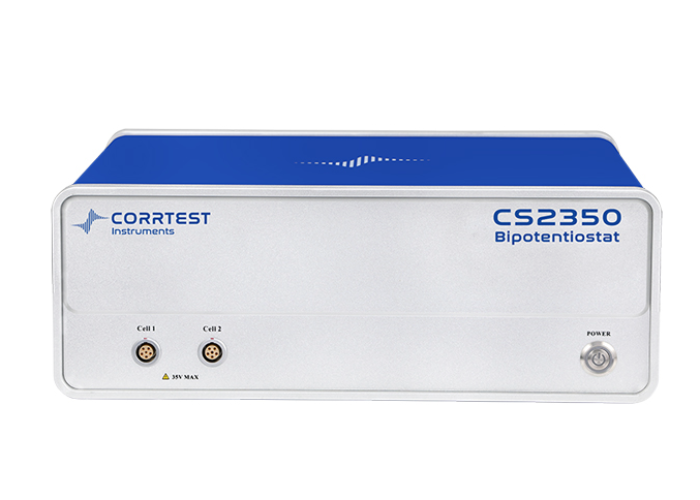
CS2350M Bipotentiostat (2-channel, with EIS)
- Potential Range: ±10 V (customizable to ±12 V)
- Current Range: ±1 A
- EIS Frequency Range: 10 µHz to 1 MHz
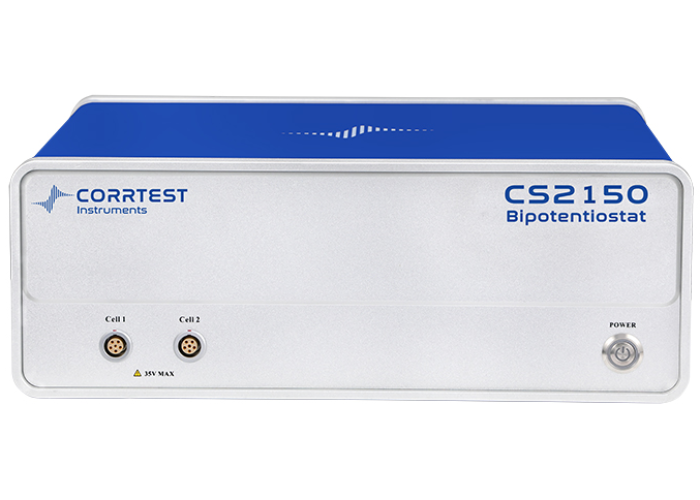
CS2150M Bipotentiostat (2-channel, No EIS)
- Support 2-, 3- or 4-electrode system: Interface: Ethernet
- Potential control range: Primary Channel: ±10V second Channel: ±10V: Current control range: ±1A for each channel

Multi-Function RRDE system
- Rotation Speed: 50–9800 rpm (closed-loop control, <0.1% deviation)
- Speed Control: Manual or via potentiostat (remote control)
- Spin Coating: Supported (with integrated spin functionality)
- Motor Type: High-precision DC servo motor (Japan import)
- Electrode Shaft: Adjustable (vertical/horizontal/inverted)
Still Wondering About Something?
Explore our FAQ for fast, clear answers to the most common questions—available 24/7.