
ATP9110 Series Full-Range Field Spectroradiometers
Fibre-probe systems spanning VNIR, SWIR and extended infrared with configurable resolution and control
Description
The ATP9110 Series provides transportable fibre-probe field spectroradiometers for applications requiring broader spectral coverage than a conventional handheld VNIR system. Configurations span 300–1700 nm, full-range 300–2500 nm, and extended infrared options reaching 5 µm or 11 µm. Standard- and high-resolution configurations are complemented by touchscreen, light-intensity-compensation and spectral-compensation variants, allowing the system to be configured around the measurement rather than one fixed specification.
Product Overview
Full-range field spectroradiometry becomes important when a project depends on spectral information outside the visible and conventional near-infrared regions.
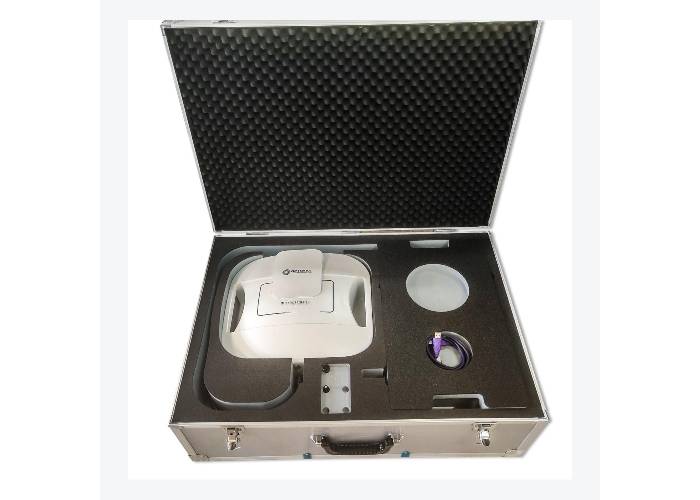
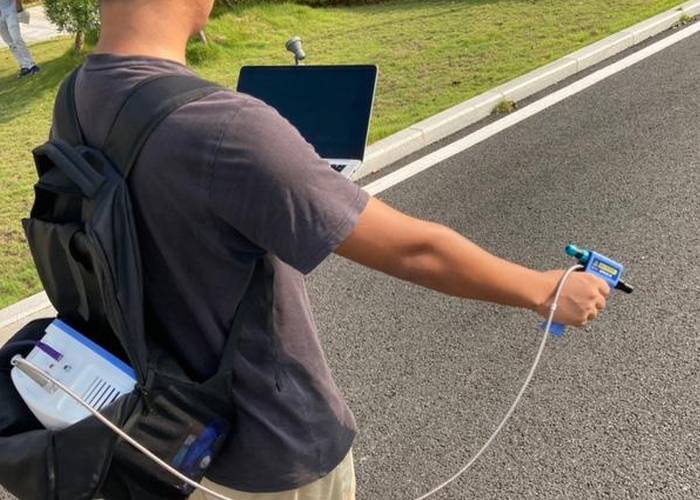
The ATP9110 Series uses a separate main instrument and fibre-optic measurement probe. This arrangement allows the measurement head to be positioned independently while the instrument remains protected in a case, backpack or field station.
Different detector technologies are used according to wavelength range. Visible and near-infrared regions use array detection, while wider configurations add InGaAs and, for extended infrared versions, other detector technologies appropriate to the longer wavelengths.
Model Selection
| Model / platform | Spectral scope | Primary distinction |
|---|---|---|
| ATP9110-17 | 300–1700 nm | Extended-NIR portable configuration |
| ATP9110-25 | 300–2500 nm | Standard-resolution full-range configuration |
| ATP9110-25H | 300–2500 nm | High-resolution full-range configuration |
| ATP9110-50 | 300–5000 nm | Extended mid-infrared configuration |
| ATP9110-110 | 300 nm–11 µm | Ultra-broadband configuration |
| ATP9110TP | Model dependent | 7-inch touchscreen platform |
| ATP9110Plus | Model dependent | Light-intensity compensation |
| ATP9110Pro | Model dependent | Spectral-compensation platform |
The TP, Plus and Pro designations describe platform or compensation features and may be combined with a wavelength/configuration suffix. The complete model code should therefore be confirmed before ordering.
How It Works
Light from the target is collected through a fibre-connected field probe. The selected field-of-view optic and working distance determine the physical measurement footprint.
The instrument records the spectral signal through the appropriate detector regions and combines them into the configured wavelength range.
For field reflectance, the target is measured relative to a suitable characterised reference. Consistent illumination, viewing angle, reference timing and probe positioning remain important because changes in geometry can affect the measurement independently of the instrument.
Shared Configuration Features
Depending on model, the ATP9110 platform provides:
- 1.5 m fibre-bundle input as the documented standard arrangement
- 25° standard field-of-view configuration with narrower optics available
- 650 nm targeting laser
- built-in GPS
- probe-angle sensing
- temperature, humidity, altitude and pressure sensing
- USB communication
- replaceable portable battery operation
- PC software control
- configurable detector architecture according to wavelength range
Standard Field Package
The current family datasheet documents the following standard field items:
- 12 V / 5 A battery charger
- two 12 V lithium batteries
- 1.5 m USB data cable
- 1.5 m pistol-grip connection cable
- metal dust cap
- 25° field-of-view lens
- nominal 95% reflectance reference
- 64 GB USB drive
- cosine lens
Final inclusions should be checked against the exact quoted configuration, particularly for TP, extended-infrared and compensated versions.
Applications
- mineral and geological prospecting
- rock, soil and drill-core spectral characterisation
- crop and vegetation monitoring
- forestry and ecosystem studies
- moisture-sensitive material investigations
- remote-sensing calibration and validation
- water and environmental research
- spectral-library development
Choosing the Configuration
Choose ATP9110-17 when extended NIR coverage to 1700 nm is sufficient.
Choose ATP9110-25 for general 300–2500 nm field spectroscopy.
Choose ATP9110-25H when the same full-range coverage is needed with the high-resolution configuration.
Choose ATP9110-50 or ATP9110-110 only when the scientific objective genuinely requires wavelengths beyond 2500 nm.
Select ATP9110TP when integrated touchscreen operation is useful. Consider ATP9110Plus when the intended method requires light-intensity compensation and ATP9110Pro where the corresponding spectral-compensation capability is relevant.
Why Source Through ScienceGears
ScienceGears can help define the wavelength region actually required by the sample, determine whether standard or high resolution is appropriate, and review fibre length, field of view, reference method, power and software requirements before quotation.
Frequently Asked Questions
What is the main difference between ATP9110-25 and ATP9110-25H?
Both cover 300–2500 nm. ATP9110-25 is the standard-resolution configuration, while ATP9110-25H is the high-resolution option.
Why use ATP9110 instead of a handheld ATP9100 Series instrument?
ATP9110 is appropriate when the application requires broader full-range capability, higher-resolution options, fibre-probe operation or extended infrared wavelengths.
What do TP, Plus and Pro mean?
TP identifies the touchscreen platform. Plus is associated with light-intensity compensation, while Pro identifies the spectral-compensation platform. The final complete model code may combine these designations with wavelength-range options.
Do I need the 5 µm or 11 µm configurations?
Only if the analytical problem depends on spectral information beyond 2500 nm. For conventional reflected-solar remote sensing, vegetation and many geology applications, the 300–2500 nm configurations are usually the more relevant starting point.
Is ATP9110 a handheld instrument?
It is field-portable rather than a compact one-piece handheld. The main instrument is carried separately and connected to a fibre-optic probe.
Is a white reference still required?
A suitable characterised reflectance reference is normally required when the measurement objective is reflectance.
Contact ScienceGears
Contact ScienceGears with your sample type, required wavelength region, anticipated absorption features, measurement geometry and field conditions to select the appropriate ATP9110 configuration.
Customer Reviews
Still Wondering About Something?
Explore our FAQ for fast, clear answers to the most common questions—available 24/7.