
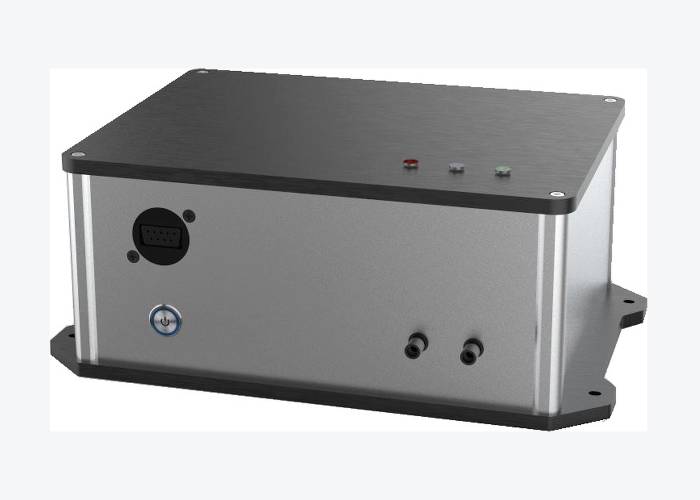
Online Field Spectroradiometer Systems
Fixed and multi-channel spectral monitoring for unattended vegetation, remote-sensing and environmental measurements
Description
Online Field Spectroradiometer Systems are designed for fixed, repeated and unattended spectral measurements where manually visiting the site for every reading is impractical. The current range includes fixed VNIR and broadband systems, a four-channel ATP9100 platform and the ATP9160 field in-situ monitoring family. Depending on configuration, systems can monitor target and incident-light spectra, collect environmental metadata, calculate vegetation-related indices and transmit data remotely for long-term agricultural, ecological and remote-sensing research.
Product Overview
Portable field spectroradiometers are appropriate when an operator moves from target to target. Online systems address a different requirement: repeatedly measuring the same site, canopy, reference direction or environmental target over days, months or seasons.
The systems can be installed at a fixed location and combined with solar power, remote communications, local storage and multi-channel optical inputs.
This makes them suitable for time-series studies in which changes in illumination and target response need to be monitored continuously or at scheduled intervals.
Current System Families
| System | Main role | Current verified capability |
|---|---|---|
| ATP9100OL | Fixed online VNIR monitoring | 300–1100 nm online spectral measurements |
| ATP9110OL | Fixed online broadband monitoring | Broadband online measurements extending to 2500 nm |
| ATP9100-4CH | Multi-direction / multi-target monitoring | Four optical channels; standard VNIR with wider-range options |
| ATP9160 Series | Field in-situ spectral monitoring platform | VNIR/SWIR, multi-channel and specialised monitoring configurations |
ATP9100-4CH
ATP9100-4CH is designed for multi-channel fixed monitoring rather than conventional handheld operation.
The documented system supports:
- four optical input channels
- sequential multi-direction or multi-target measurements
- standard 300–1100 nm configuration
- wider 1700 nm and 2500 nm options
- remote data communication
- RS485 connectivity
- 4G/5G communications
- vegetation-index processing
- optional solar-powered field operation
This can be useful where several viewing directions, targets or reference conditions must be sampled from the same monitoring station.
ATP9160 Series
ATP9160 is the current field in-situ monitoring platform and should be treated as a central part of the new online portfolio.
Current documentation provides configurations including:
| Configuration | Purpose |
|---|---|
| ATP9160 | General online field spectroscopy |
| ATP9160-17 | Extended-NIR monitoring |
| ATP9160-25 | SWIR monitoring to 2500 nm |
| ATP9160-25H | High-resolution SWIR configuration |
| ATP9160-SIF | Sun-induced fluorescence measurement |
| ATP9160-4CH | Four-channel optical monitoring |
The platform supports multi-channel inputs and can be configured to monitor incident sky light together with reflected target or plant spectra.
How Online Monitoring Works
A fixed field installation positions one or more optical channels toward the required target or illumination direction.
The system acquires spectra at programmed times and can use an incident-light channel or suitable reference strategy to account for changing solar illumination.
Depending on configuration, recorded data and associated sensor information can be stored locally and transmitted to a central location through wired or wireless communications.
For long-term vegetation studies, a multi-channel system can monitor both the canopy and the illumination environment, helping separate changes in target reflectance from changes caused simply by incoming sunlight.
Project Configuration
Unlike a handheld product, an online system should be treated as a configured monitoring installation.
The final system may need consideration of:
- wavelength range
- number of channels
- viewing angle
- optical fibre and probe configuration
- reference or incident-light channel
- mounting structure
- solar and battery power
- enclosure/environmental protection
- communications method
- local storage
- acquisition interval
- remote software and data export
These requirements should be established before quotation rather than assuming one universal package.
Applications
- crop-growth monitoring
- canopy and phenology studies
- vegetation-index time series
- sun-induced fluorescence research
- flux-station spectral monitoring
- ecosystem and forest monitoring
- long-term remote-sensing validation
- soil and environmental-change studies
- geological or mining-site spectral monitoring
Choosing the Appropriate Online System
Choose ATP9100OL when fixed 300–1100 nm monitoring is sufficient.
Choose ATP9110OL where broadband monitoring through the SWIR region is required.
Choose ATP9100-4CH where the main requirement is four separate optical channels or measurement directions.
Choose the ATP9160 Series for current-generation in-situ installations requiring flexible spectral range, multi-channel monitoring, solar operation, remote communications or specialised options such as SIF.
Why Source Through ScienceGears
Online spectral monitoring requires more system design than purchasing a handheld instrument. ScienceGears can help define the measurement channels, spectral range, mounting geometry, illumination/reference method, data connection and power requirements before the monitoring system is specified.
Frequently Asked Questions
What is the difference between an online and handheld field spectroradiometer?
A handheld instrument is operated manually at each measurement location. An online system is installed at a fixed site and performs repeated measurements according to a planned acquisition schedule.
Why use more than one optical channel?
Multiple channels can measure different targets, viewing directions or illumination conditions. For vegetation research, one channel may observe the canopy while another monitors incident sky light.
Can these systems operate remotely?
Current online platforms support remote communication options and can be configured for unattended field operation.
Is solar power available?
Solar-powered operation is supported on current online systems, but the power package must be sized for the selected instrument, communications hardware and field conditions.
What is ATP9160-SIF?
ATP9160-SIF is a configuration intended for sun-induced fluorescence measurements rather than general broadband reflectance alone.
Is ATP9100-4CH the same as the handheld ATP9100?
No. Although it shares the ATP9100 family designation, ATP9100-4CH is an online multi-channel system and belongs in this monitoring subcategory.
Do I need a permanent internet connection?
Not necessarily. System configuration can include local storage and different communication approaches. The required data-transfer method should be selected according to site connectivity and how quickly the data must be retrieved.
Contact ScienceGears
Contact ScienceGears with the required number of monitoring channels, wavelength range, target geometry, site location, power availability and data-communication requirements to develop the appropriate online field spectroradiometer configuration.
Customer Reviews
Still Wondering About Something?
Explore our FAQ for fast, clear answers to the most common questions—available 24/7.