

Photoelectrochemical CO₂ Reduction Flow Cell with Quartz Window
Photoelectrochemical CO₂ Reduction Flow Cell with Quartz Window
Overview and working principle
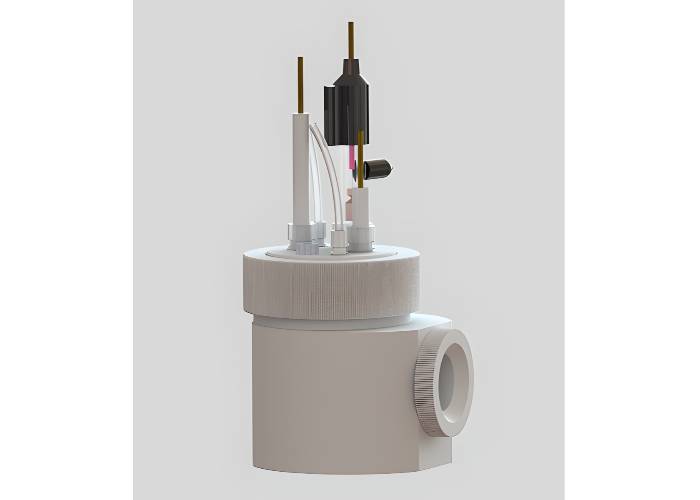
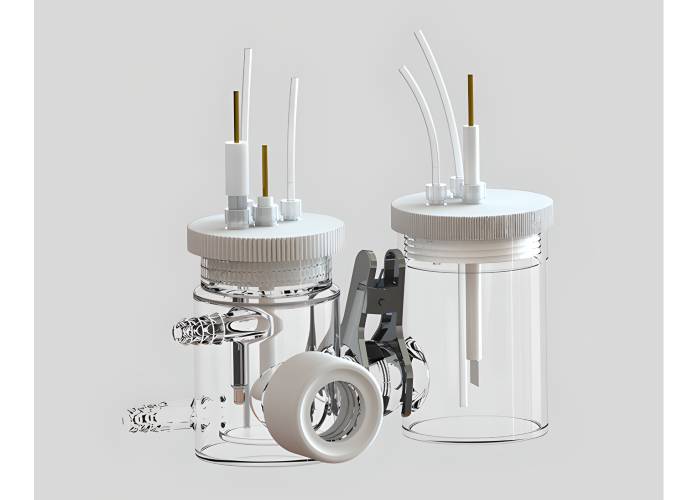
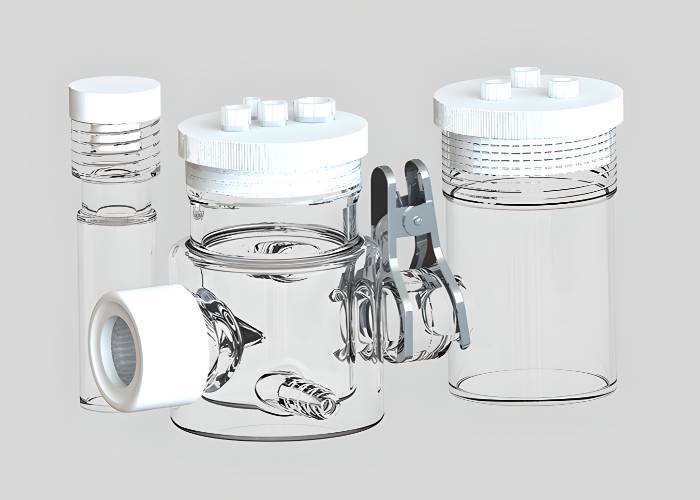
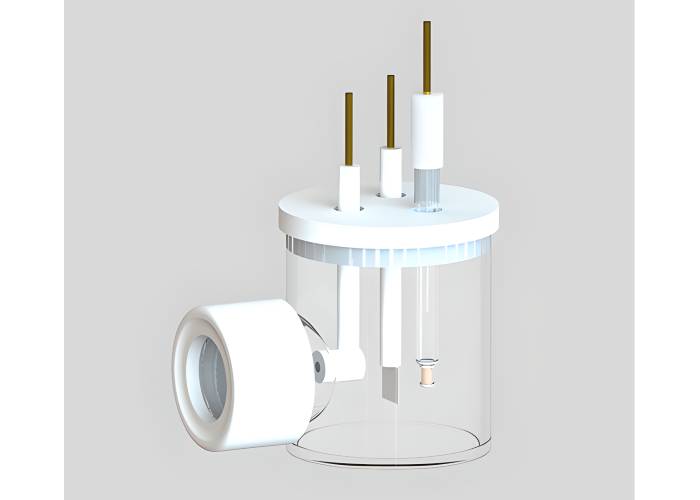
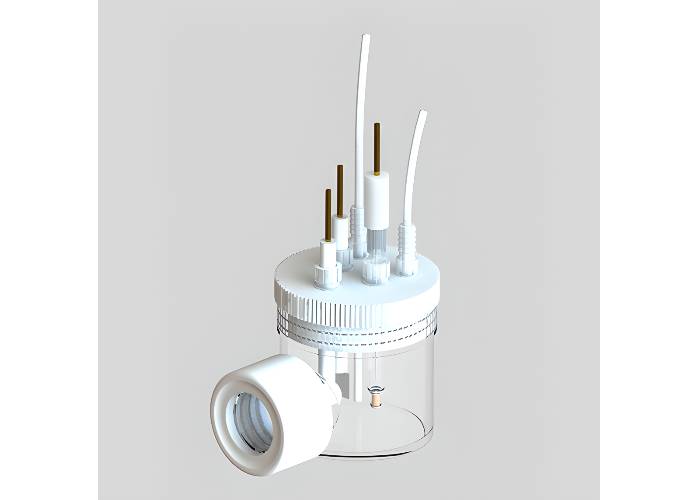
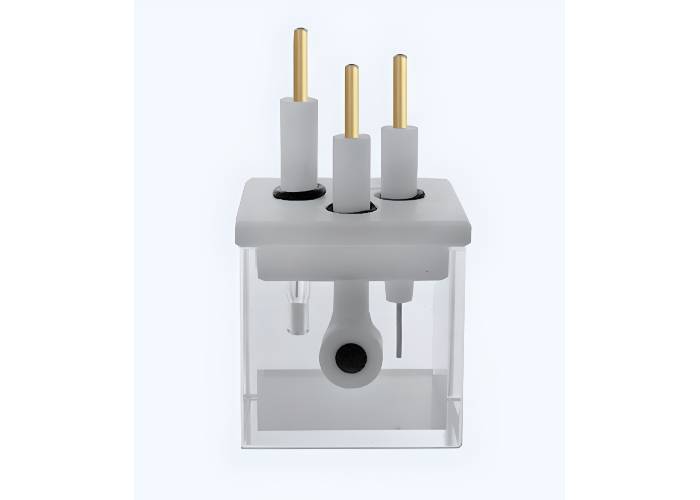
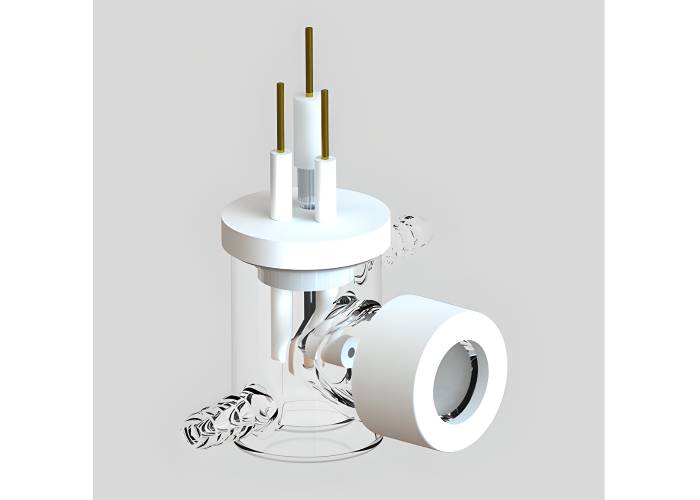
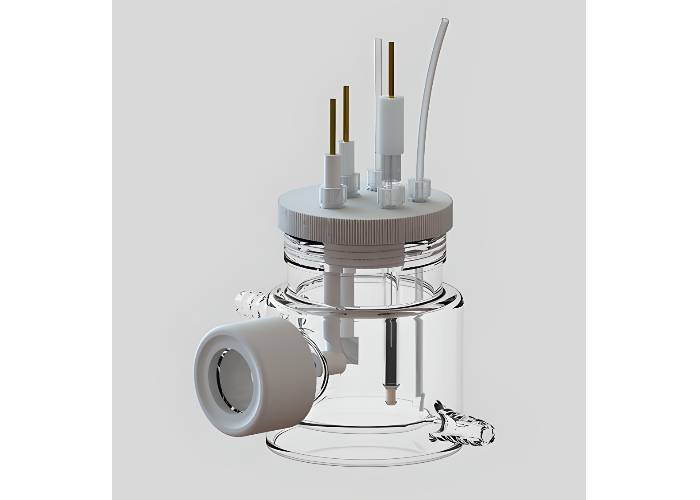
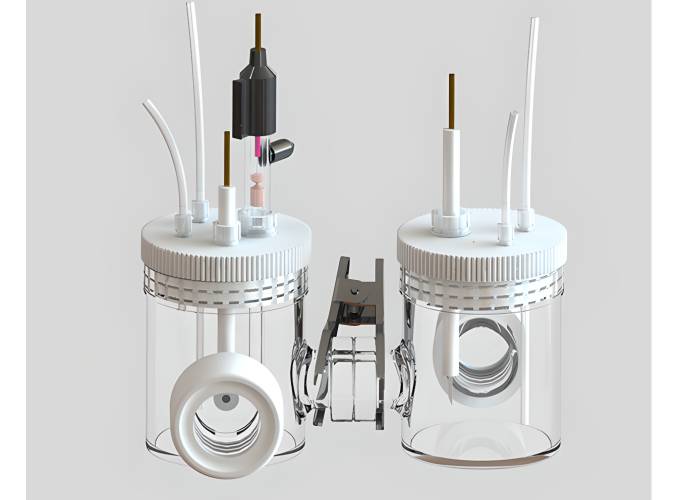
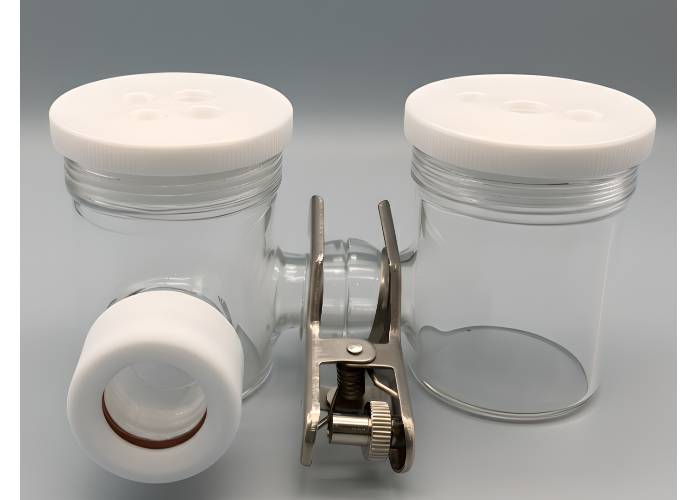
The Photoelectrochemical (PEC) CO₂ Reduction Flow Cell is a compact, modular reactor designed to combine controlled illumination, gas-fed CO₂ delivery, and three-electrode electrochemistry in a sealed, serviceable stack. CO₂ is delivered through an integrated flow-field / flow plate to the gas side of a gas diffusion electrode (GDE) or membrane–electrode (MEA-style) working electrode, forming a stable three-phase interface (gas–catalyst–electrolyte). Illumination is introduced through a chemically robust quartz optical window, enabling photoelectrode alignment and repeatable light exposure during PEC CO₂ reduction experiments.
Cell architecture and key features
- Working / photoelectrode chamber (cathode side): gasketed, clamped stack for consistent compression, stable wetting, and reliable sealing.
- Quartz window module: removable and replaceable for cleaning and maintenance; provides high optical transmission and chemical resistance.
- Reference electrode location: positioned in the main electrolyte compartment near the working region to support accurate potential control and reduced uncompensated resistance.
- Separate counter electrode compartment (anode side): physically isolates anodic reactions to reduce cross-interference and improve selectivity interpretation (especially important for CO₂R product analysis).
- Three-electrode compatible: working (photoelectrode/GDE), reference (main chamber), counter (separate compartment).
Compatibility and typical use
Compatible with catalyst-coated carbon paper/cloth, PTFE-treated GDLs, protected semiconductor photocathodes, and MEA-style assemblies. Typical electrodes include Pt mesh/foil/wire or carbon-based counters, and common reference formats (e.g., Ag/AgCl for aqueous, Ag/Ag⁺ for non-aqueous systems).
Applications and why ScienceGears
Ideal for gas-fed PEC CO₂ reduction catalyst screening, membrane and flow-field comparison studies, and experiments requiring cleaner separation of anode/cathode products. Similar GDE-PEC flow cell concepts are used internationally; ScienceGears supports AU/NZ researchers with local supply, documentation, and integration with related platforms such as potentiostats, electrochemical cell accessories, and spectroscopy-enabled electrochemical setups.
Customer Reviews
Related Product
Explore our precision instruments designed for electrochemical research and energy applications
Still Wondering About Something?
Explore our FAQ for fast, clear answers to the most common questions—available 24/7.