
In-situ Raman CO2RR MEA Cell with Interchangeable Optical Windows
In-situ Raman CO2RR MEA Cell with Interchangeable Optical Windows
In-situ Raman CO2RR MEA Cell for operando electrochemistry
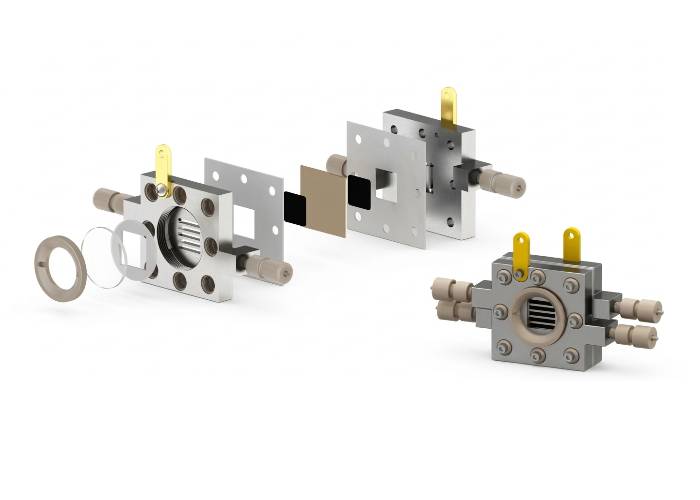
The In-situ Raman CO2RR MEA Cell with Interchangeable Optical Windows is designed for real-time Raman investigation of membrane electrode assembly (MEA) electrolysers during electrochemical CO2 reduction. In this configuration, the catalyst-coated electrode is positioned close to the optical window so the Raman probe can collect spectra from the active reaction zone while the cell operates under gas-flow and current load. This approach helps researchers correlate cell voltage, current density, catalyst state, and reaction intermediates during CO2RR and related electrocatalytic studies. In-situ Raman is widely used to probe surface-bound intermediates and catalyst transformations, while quartz and sapphire are both established window materials for Raman-compatible electrochemical cells.
Key Design Features
- Interchangeable optical windows, including sapphire and quartz, to suit different laser wavelengths, optical preferences, and chemical environments
- MEA-style architecture for gas-fed CO2 electrolysis and operando catalyst evaluation
- Titanium cell body for robust mechanical strength, corrosion resistance, and suitability in demanding electrochemical environments
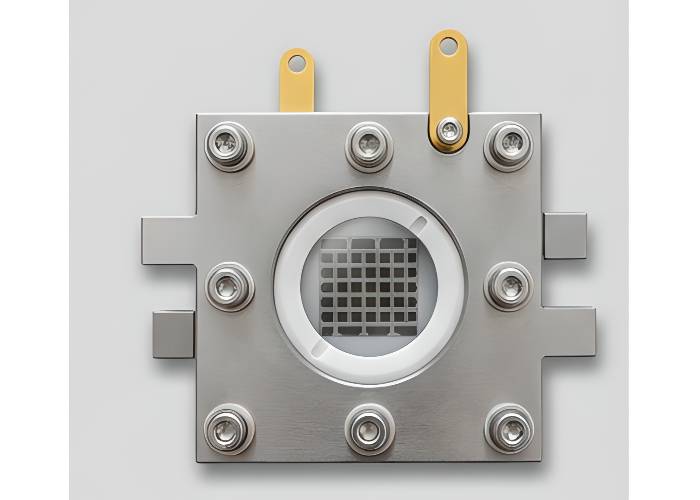
- Approximate 4 cm² flow-field area for practical laboratory-scale screening and comparative studies
- Short specimen-to-window distance of less than 5 mm to support efficient signal collection and optical access
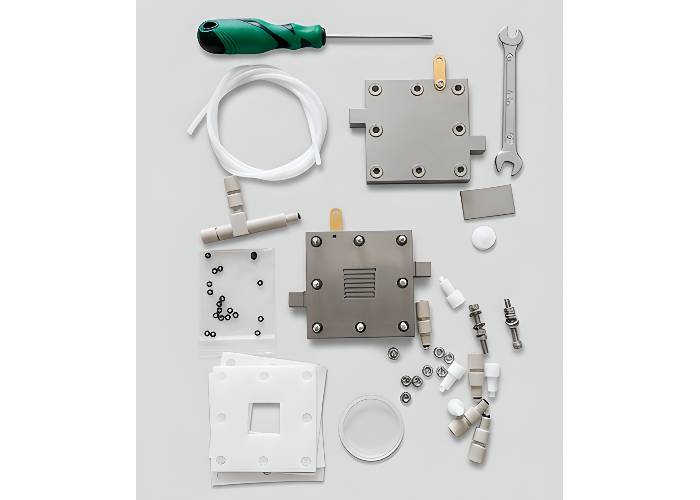
- Gold-plated electrical terminals and compact flow-cell layout for integration into advanced electrochemistry test systems
Technical Specifications
The In-situ Raman CO2RR MEA Cell is designed as a compact optical electrochemical cell for gas-fed CO2 reduction studies, Raman spectroelectrochemistry and MEA-based catalyst evaluation. The configuration can be adapted depending on the end-user’s experimental setup, Raman microscope geometry and electrochemical testing requirements.
Key specifications include:
- Active anode/cathode area: approximately 4 cm², equivalent to a circular area of about Ø 2.3 cm
- Flow-field / flow-channel area: approximately 4 cm²
- Cell body material: titanium (Ti) for mechanical strength and corrosion resistance
- Optical window materials: interchangeable sapphire and quartz windows
- Optical window size: approximately 0.5 cm² clear window area, equivalent to about Ø 0.8 cm
- Window configuration: replaceable optical window design for Raman access to the catalyst/electrode surface
- Specimen-to-window distance: less than 5 mm to support efficient Raman signal collection
- Electrode compatibility: suitable for gas diffusion layers, including carbon paper and carbon cloth
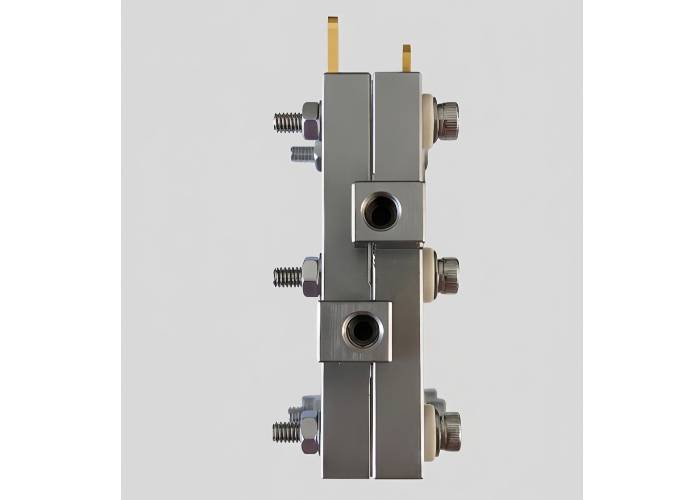
- Fluidic connections: electrolyte and gas inlet/outlet options available for CO2RR and related flow-cell experiments
- Optical compatibility: suitable for Raman measurements using a 50x objective, subject to microscope working distance and alignment
- Included window set: sapphire window and quartz window options can be supplied depending on the selected configuration
Customisation
The cell can be customised according to the end-user’s requirements, including optical window material, flow-field geometry, inlet/outlet configuration, gasket arrangement, electrode area, tubing/fitting compatibility and Raman microscope setup.
Applications and Compatibility
This Raman-compatible CO2RR MEA cell is suitable for studying catalyst surface reconstruction, adsorbed intermediates, carbonate or bicarbonate effects, gas diffusion electrode behaviour, membrane effects, flooding, product selectivity trends and stability during electrolysis. It can be used with confocal Raman microscopes, potentiostats, galvanostats, EIS-capable systems, gas handling accessories and CO2 electrolysis test stations.
Why Choose ScienceGears
ScienceGears supports Australian and New Zealand researchers with practical electrochemistry and spectroscopy knowledge, not just product supply. We can help match the cell configuration with your Raman setup, working distance, laser wavelength, potentiostat, tubing, fittings and CO2RR workflow. Related solutions include potentiostats, Raman spectroelectrochemical cells, MEA test cells, GDE flow cells and complete energy research test systems.
FAQs
1. What is this in-situ Raman CO2RR MEA cell used for?
It is used to study electrochemical CO2 reduction in an MEA flow-cell format while collecting Raman spectra from the catalyst layer during operation.
2. Which optical windows are available?
The cell supports interchangeable sapphire and quartz optical windows, allowing researchers to select the window material based on optical transmission, laser wavelength and chemical compatibility.
3. Can this cell be used with a potentiostat?
Yes. It can be integrated with potentiostats, galvanostats, EIS-capable electrochemical systems, gas handling accessories and Raman microscopes.
4. Can ScienceGears customise this cell?
Yes. ScienceGears can discuss customisation of optical window material, flow-field design, fittings, tubing and cell configuration for specific CO2RR and spectroelectrochemistry workflows.
For further information or to discuss your specific research requirements,please contact us.
Resources & Downloads
Everything you need to get started

Electrochemical Impedance Spectroscopy (EIS): Core Concepts for Confident Understanding
Squidstat - Admiral
Customer Reviews
Related Product
Explore our precision instruments designed for electrochemical research and energy applications
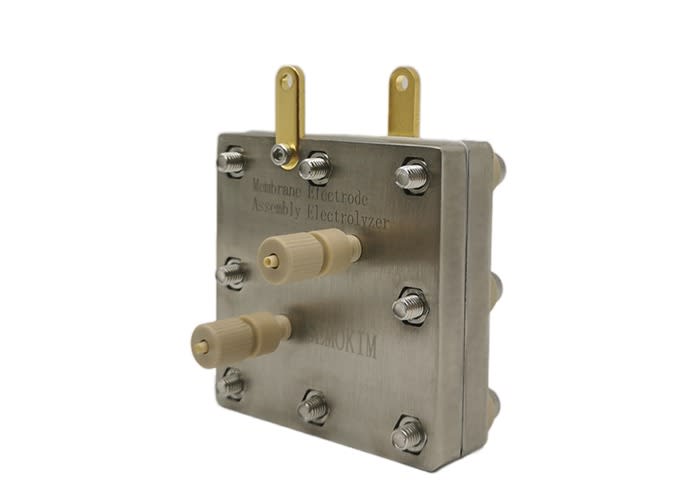
Metal Bipolar Plate MEA Electrolysis Test Cell (Ti/Ni/SS)
- Flow channel: 10*10mm; 20*20mm; 30*30mm; 50*50mm, or other customized flow field size.
- Cell material: High-purity titanium or nickel or stainless steel
- Terminal material: Gold-plated Copper

Graphite Bipolar Plate MEA Electrolysis Test Cell
- Single-cell MEA hardware: Flow fields: 10×10 to 1000×1000 mm or customisation available
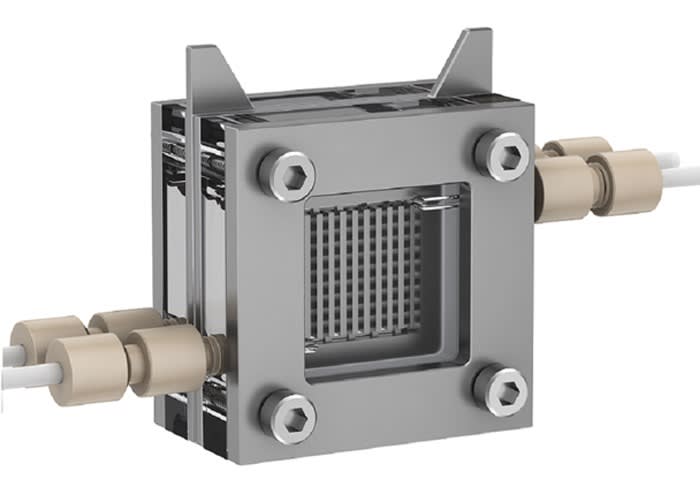
Visual MEA Electrolysis Test Cell
- Flow channel Specification: 10*10mm; 20*20mm; 30*30mm; 50*50mm or other customized flow field size.
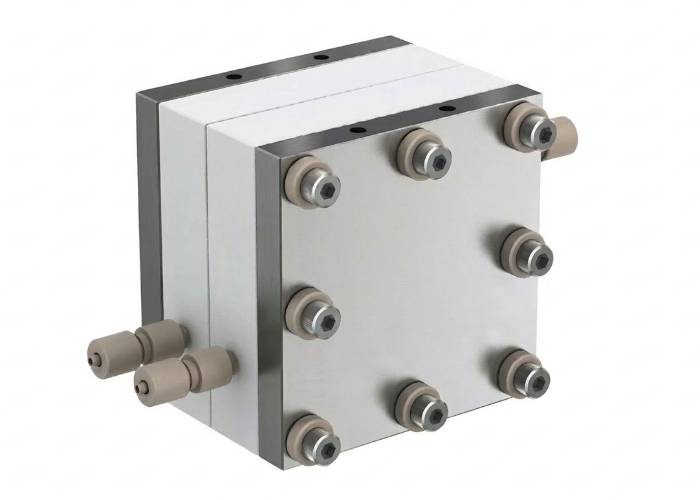
Interchangeable Flow Field MEA Electrolysis Test Cell
- Flow channel Specification: 10*10mm; 20*20mm; 30*30mm; 50*50mm or other customized flow field size.
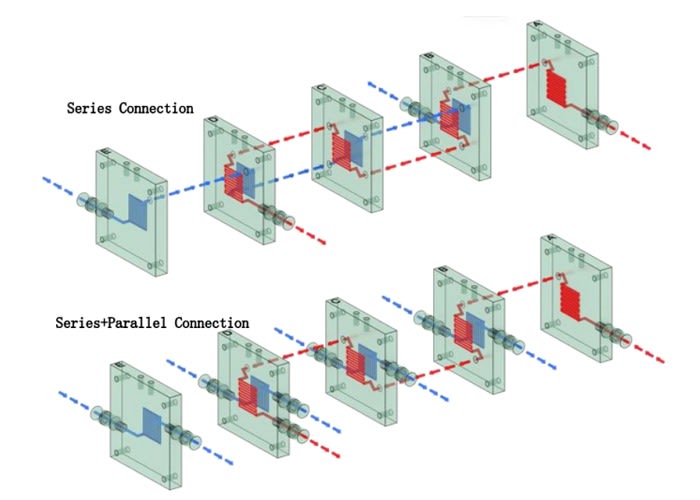
MEA Electrolysis Cell Stack
- Flow channel: 10*10mm; 20*20mm; 30*30mm; 50*50mm, or other customized flow field size.
- Cell material: High-purity titanium or nickel or stainless steel plate.
- Terminal material: Gold-plated Copper
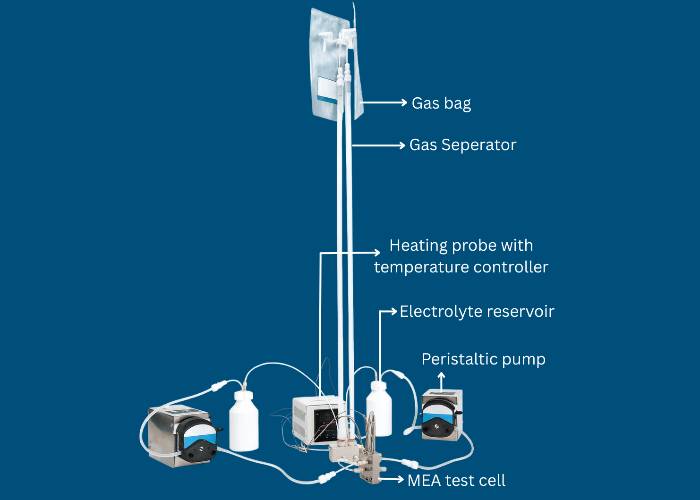
Turnkey MEA Electrolysis Test Cell Package
- All components included : - cell + fittings + tubing + auxiliaries

Still Wondering About Something?
Explore our FAQ for fast, clear answers to the most common questions—available 24/7.