


Sealed Electrochemical Cell
Sealed screw-cap cell with fixed electrode positioning and gas purging
Description
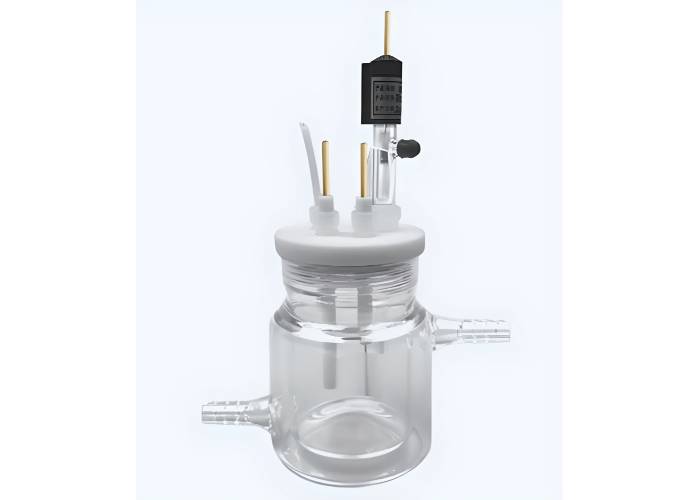
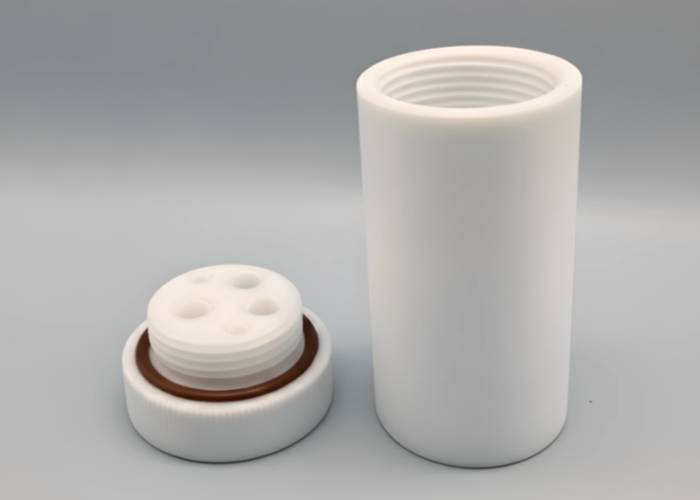
The Sealed Electrochemical Cell is a non-jacketed glass cell for two- or three-electrode measurements where stable electrode positioning, gas purging and a closed headspace are important. Available in nominal 20 mL, 30 mL and 50 mL and larger sizes. It uses an O-ring-sealed PTFE screw cap with individual screw-in fittings that firmly hold each electrode and gas tube at the selected position. Unused ports can be closed with the supplied septum, enabling flexible low-volume configurations.
Product overview and operation
The cell supports cyclic voltammetry, chronoamperometry, chronopotentiometry, electrochemical impedance spectroscopy, electrocatalysis, electrolysis and other solution-phase measurements. Its transparent glass body allows the electrolyte level, electrode immersion and gas-bubble behaviour to be checked during operation.
The screw cap compresses an O-ring against the glass body. Each electrode and gas connection passes through its own screw fitting. Electrode depth and spacing can therefore be adjusted and then secured, limiting unintended upward, downward or sideways movement during purging, cable connection and measurement.
For a conventional three-electrode experiment, the cap accommodates working, counter and reference electrodes. For two-electrode operation, the unused electrode opening can be closed with the supplied septum or sealing plug. The gas connections can be used for atmosphere exchange or deaeration, and an unused gas port can also be sealed.
Standard package
- Glass cell in the selected size
- PTFE screw cap with connections for three electrodes and gas purging
- Gas-purging tubes with screw-in retaining fittings
- Sealing O-ring for the screw cap
- Septum or sealing plug for an unused electrode or gas port
Electrodes are not included. Compatible options can be selected separately, including platinum helix and platinum sheet electrodes.
Key features
- O-ring-sealed screw-cap construction
- Individual fittings that secure electrode depth and lateral position
- Stable electrode geometry after tightening
- Configurable for three-electrode or two-electrode measurements
- Mechanically secured gas-purging connections
- Supplied seal for an unused electrode or gas port
- Low-volume operation by positioning electrodes close to the base
- Removable cap and fittings for assembly and cleaning
Technical specifications
- Cell format: Single-compartment, non-jacketed sealed electrochemical cell
- Nominal sizes: 20 mL, 30 mL and 50 mL and larger customisable sizes
- Electrode arrangement: Three electrodes as standard; adaptable to two electrodes
- Cap and main seal: PTFE screw cap with O-ring
- Port retention: Individual screw-in fittings for electrodes and gas tubes
- Approximate working volume: About 5–20 mL for the 20 mL cell and about 20–50 mL for the 50 mL cell, depending on electrode geometry and immersion depth
- Electrodes included: No
- Pressure rating: Not specified; do not use as a pressurised reactor unless a suitable rating is separately confirmed
Selection guidance
Choose the 20 mL version when electrolyte is limited and the electrodes can be immersed at a low liquid level. Its smaller diameter produces greater liquid height from a small volume, and the electrodes can be lowered towards the base. Depending on electrode geometry, operation with approximately 5–10 mL may be practical.
Choose the 50 mL version when a larger electrode assembly, more electrolyte or additional headspace is required. By lowering the electrodes, it can also be used with approximately 20 mL where the geometry permits.
Electrode shape influences the minimum liquid level. A platinum helix provides a larger exposed area, but more of the helix must be submerged. A compact platinum sheet can often be covered at a lower volume. Before ordering, confirm the electrode-body diameter and length, immersion depth, electrolyte and solvent compatibility, and the preferred gas-line arrangement.
Typical applications include electrochemical characterisation, catalyst and electrode-material screening, redox studies, electrolysis, solution-phase corrosion measurements and experiments requiring gas purging or reduced exposure to the surrounding atmosphere.
Why source through ScienceGears
ScienceGears can help select the cell size and electrodes, confirm the two- or three-electrode configuration, and review gas-purging and potentiostat connection requirements for laboratories in Australia and New Zealand.
Frequently asked questions
Are electrodes included?
No. The standard package includes the cell, cap, gas-purging components, O-ring and unused-port seal. Electrodes are selected separately.
Can the cell be used as a two-electrode cell?
Yes. Install the two required electrodes and seal the unused third electrode port.
What is the minimum solution volume?
It depends on electrode length, exposed area and immersion requirements. The 20 mL cell may operate from approximately 5–10 mL, while the 50 mL cell may operate from approximately 20 mL with suitable compact electrodes.
Why use screw-in electrode fittings?
They allow electrode depth and spacing to be adjusted and then held firmly, reducing accidental movement between setup and measurement.
Should I choose a platinum helix or platinum sheet?
A helix is useful when greater exposed area is required but normally needs a higher liquid level. A sheet is compact and may be preferable for lower-volume operation.
Contact ScienceGears to request a quotation or discuss cell size, electrode selection, gas-purging configuration and compatibility with your experiment.
Resources & Downloads
Everything you need to get started

Electrochemical Impedance Spectroscopy (EIS): Core Concepts for Confident Understanding
Squidstat - Admiral
Customer Reviews
Related Product
Explore our precision instruments designed for electrochemical research and energy applications



Still Wondering About Something?
Explore our FAQ for fast, clear answers to the most common questions—available 24/7.