
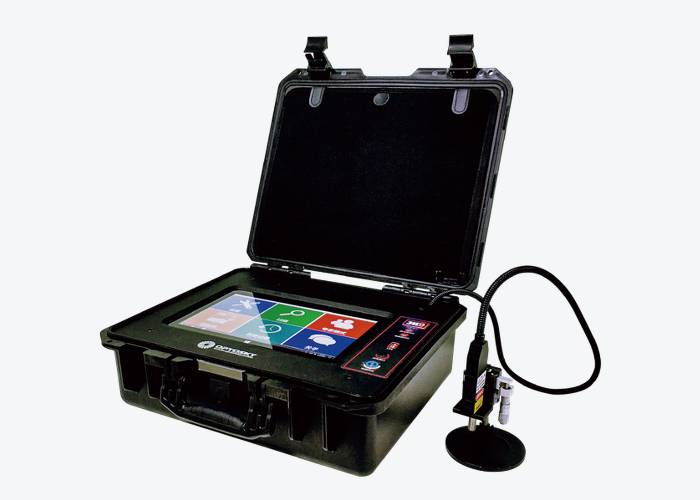
ATR3000 Series Portable Raman Spectrometers
Portable case-based Raman spectroscopy with visible, 785 nm and low-fluorescence 1064 nm configurations
Description
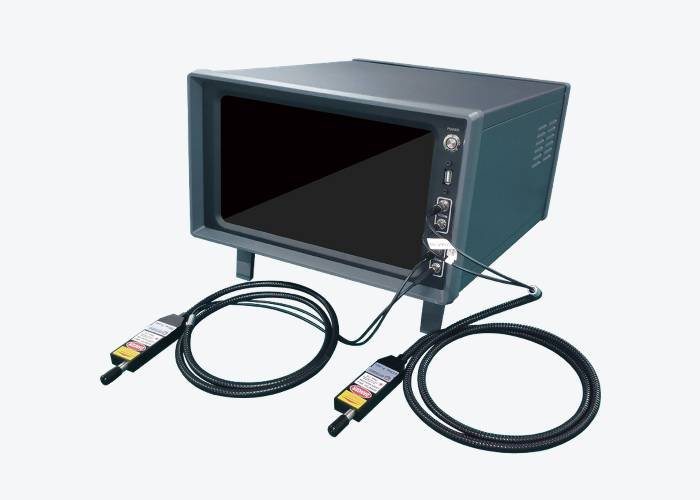
The ATR3000 Series is a transportable Raman platform for researchers who need laboratory-style spectral acquisition in a self-contained field format. The family includes conventional 785 nm, 532 nm and 1064 nm pathways, together with application-specific library configurations. Integrated controls, rechargeable operation and a fibre Raman probe allow spectra to be collected closer to the sample without requiring a permanently installed laboratory workstation.
Product Overview
ATR3000 sits between compact benchtop Raman and handheld identification instruments.
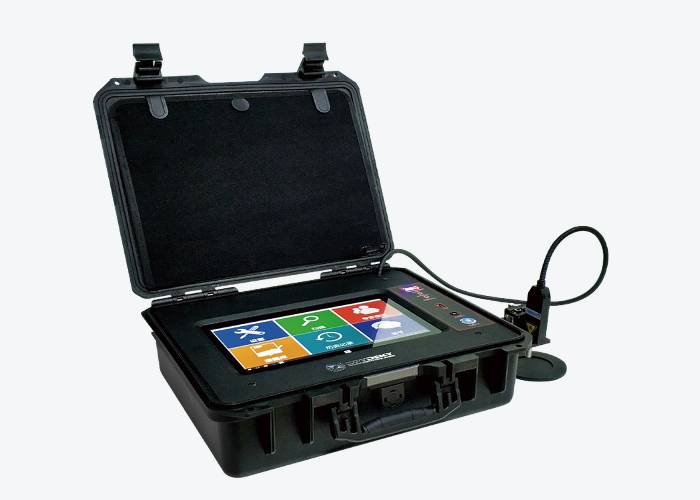
It is larger than a one-handed Raman analyser, but the protective case provides space for the spectrometer, laser, controls, power and probe in one transportable system.
This format is useful for:
- field research
- temporary laboratory setups
- industrial locations
- archaeological or geological work
- applications where the sample cannot easily be moved to a conventional Raman instrument
Excitation Options
Current product listings identify:
- ATR3000 — 785 nm research platform
- ATR3000-532 — 532 nm excitation
- ATR3000-1064 — 1064 nm excitation
Application-specific database versions also exist for selected identification workflows.
How It Works
The selected Raman laser travels through the fibre probe to the sample. Raman scattering from the sample is collected by the probe, filtered to remove the excitation wavelength and measured by the spectrometer.
Spectra can then be analysed directly or compared with reference data where a library is configured.
Because the platform is spectroscopic rather than purely identification-focused, it can also be used for research spectra where the operator interprets Raman peaks rather than relying only on automatic library matching.
1064 nm Configuration
The 1064 nm configuration is particularly relevant to:
- coloured polymers
- biological materials
- oils
- fuels
- pigments
- pharmaceutical samples
- dark materials
- other fluorescence-prone samples
Longer-wavelength excitation often generates less fluorescence than 532 or 785 nm, although Raman scattering intensity is also lower and an infrared-sensitive detector is required.
Key Features
- Portable protective-case architecture.
- Integrated display/control system.
- Rechargeable field operation.
- Fibre Raman probe.
- Multiple excitation-wavelength configurations.
- Cooled detector configurations.
- Library-based identification where configured.
- Spectral-analysis software.
- Remote data access/communications on supported versions.
- Replaceable or optional sample-probe accessories depending on configuration.
Applications
- geological and mineral field analysis
- pharmaceuticals
- archaeology and cultural heritage
- forensic materials
- polymers
- pigments
- oils and fuels
- food and agricultural samples
- biological research
- materials identification
Compatibility and Selection Guidance
Choose the wavelength before choosing the application package.
532 nm can offer strong Raman scattering for compatible materials but is more susceptible to fluorescence.
785 nm is a widely used general-purpose Raman wavelength.
1064 nm is valuable when fluorescence makes shorter wavelengths difficult.
If the laboratory mainly works at a bench and needs cooled high-sensitivity research spectroscopy rather than field mobility, ATR3110 may be more appropriate.
If the requirement is fast one-handed identification rather than full spectra and research flexibility, the ATR6xxx handheld range should be considered.
Why Source Through ScienceGears
ScienceGears can help compare 532, 785 and 1064 nm configurations using representative sample information and then define the appropriate probe, spectral range, detector and library options.
Frequently Asked Questions
Which ATR3000 wavelength is best?
There is no universal best wavelength. The choice depends mainly on sample fluorescence, Raman scattering strength and the Raman range required.
Why would I choose 1064 nm?
It can reduce fluorescence dramatically in many dark, coloured or biological materials.
Can ATR3000 measure through glass?
Raman can often measure through transparent containers, but glass itself can produce Raman or fluorescence background. Container material and laser wavelength should be tested.
Can it analyse powders and liquids?
Yes, using appropriate probes or sample holders.
Is library identification mandatory?
No. Raman spectra can be analysed directly; library matching is an additional workflow where configured.
How is it different from ATR6500?
ATR3000 is a larger portable research/field platform. ATR6500 is a compact handheld identification analyser.
Contact ScienceGears
Contact ScienceGears with representative sample types and likely fluorescence behaviour so the appropriate ATR3000 excitation wavelength, detector, probe and application configuration can be selected.
Customer Reviews
Related Product
Explore our precision instruments designed for electrochemical research and energy applications
Still Wondering About Something?
Explore our FAQ for fast, clear answers to the most common questions—available 24/7.