
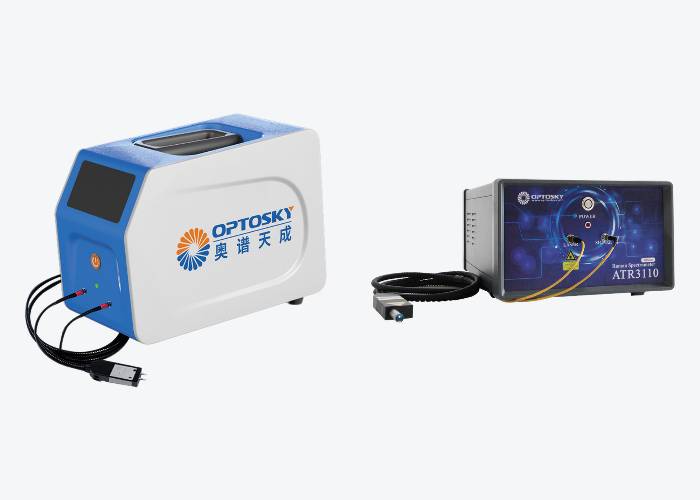
ATR3100 & ATR3110 Scientific Portable Raman Spectrometers
Cooled research Raman systems with multiple excitation wavelengths and fibre-probe sampling
Description
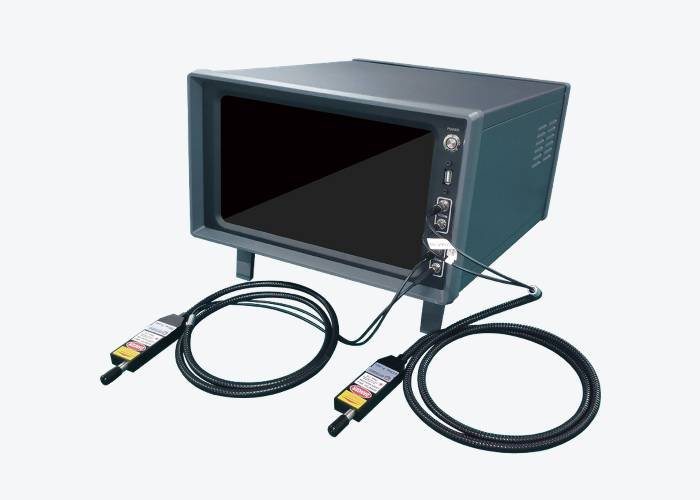
The ATR3100 and ATR3110 platforms are research-oriented Raman spectrometers with cooled detection and fibre-probe sampling. ATR3100 provides a more integrated scientific instrument architecture, while ATR3110 is oriented toward computer-controlled laboratory Raman work with extensive wavelength, Raman-range and detector options. Together they form the flexible research core of the ATR3xxx range for materials, pharmaceutical, biological and spectroscopic studies.
Product Overview
These platforms are intended for users who need actual Raman spectra and instrument configuration flexibility rather than only automatic material identification.
Both systems use narrow-linewidth excitation, a Raman probe, a cooled detector and analysis software. Their configurability makes them particularly useful in university laboratories where one instrument may support several sample types.
ATR3100 Configurations
Current manufacturer information identifies:
- ATR3100-473
- ATR3100-532
- ATR3100-785 configurations
- ATR3100-830
- ATR3100-1064
The current research product page also describes detector cooling to approximately −15 °C on the enhanced configuration.
ATR3110 Configurations
The 2026 selection guide identifies:
- ATR3110-27
- ATR3110-35
- ATR3110-43
- ATR3110-532
- ATR3110-633
- ATR3110-830
- ATR3110-1064
- ATR3110PS
- ATR3110LT
Why Multiple Excitation Wavelengths Matter
Laser wavelength has a major effect on Raman performance.
532 nm can provide strong Raman scattering and is useful for selected carbon, oxide and resonant systems, but fluorescence may be high.
633 nm provides an intermediate visible option.
785 nm is a common general-purpose research wavelength.
830 nm moves further into the near-infrared.
1064 nm is valuable for samples that fluoresce strongly with shorter wavelengths.
How It Works
The laser travels through the Raman probe and illuminates the sample. Raman-scattered light is collected by the same probe, filtered and transferred to the spectrometer.
The cooled CCD or infrared detector reduces detector noise and records the spectrum. PC software converts the wavelength data into Raman shift and provides processing, display and analysis.
ATR3110 Technical Reference
| Parameter | Documented standard information |
|---|---|
| Interface | USB 2.0 / Wi-Fi on documented version |
| Operating system | Windows |
| Integration time | 4 ms–120 s on standard document |
| Standard instrument weight | ~5 kg |
| Spectral stability | σ/µ <0.5% over stated 8 h condition |
| Temperature shift | ≤1 cm⁻¹ from 10–40 °C |
| Detector | Rapid-cooled high-sensitivity CCD on visible/NIR configurations |
| Detector effective pixels | 2048 × 64 on documented configuration |
| Standard 785 nm laser | ≥500 mW documented |
| Probe working distance | 6 mm |
| Probe NA | 0.3 |
LT and other detector configurations extend the integration/cooling capability beyond the standard platform.
Key Features
- Research-oriented Raman acquisition.
- Multiple excitation wavelengths.
- Cooled detector.
- Fibre Raman probe.
- Configurable Raman range.
- Long-integration detector options.
- PC spectral-analysis software.
- Low-noise electronics.
- USB communication.
- Laboratory and transportable configurations.
Applications
- graphene and carbon materials
- metal oxides
- semiconductors
- pharmaceutical materials
- polymers
- pigments
- biological samples
- SERS research
- minerals
- catalysts
- general molecular identification
Compatibility and Selection Guidance
Select ATR3100 where an integrated scientific platform is preferred.
Select ATR3110 where the priority is a flexible PC-controlled research system with numerous wavelength and detector choices.
The PS and LT configurations should be considered according to signal level and required integration time.
Do not choose 1064 nm automatically for every sample. It helps suppress fluorescence but generally provides weaker Raman scattering and requires infrared-sensitive detection.
Why Source Through ScienceGears
ScienceGears can help match excitation wavelength, detector cooling, Raman range and probe configuration to representative samples before selecting between ATR3100 and ATR3110.
Frequently Asked Questions
Why are ATR3100 and ATR3110 grouped together?
They occupy the same research/portable Raman segment and share many wavelength options, but use different instrument and control architectures.
Which is better for a permanently installed university laboratory?
ATR3110 is particularly well suited to PC-controlled laboratory work, although the final choice depends on detector and wavelength requirements.
What does LT mean?
It identifies a long-integration/deeper-cooled ATR3110 configuration.
Can I order 1064 nm?
Yes, a 1064 nm ATR3110 configuration is documented.
Can the Raman probe be changed?
Probe options exist, but optical compatibility, laser wavelength and connector type should be confirmed.
What if I do not know which wavelength is best?
Provide information about the sample colour, fluorescence and expected Raman bands so the wavelength can be selected scientifically rather than by default.
Contact ScienceGears
Contact ScienceGears with your materials, sample geometry, fluorescence behaviour, Raman range and detector requirements to compare ATR3100 and ATR3110 configurations.
Customer Reviews
Related Product
Explore our precision instruments designed for electrochemical research and energy applications
Still Wondering About Something?
Explore our FAQ for fast, clear answers to the most common questions—available 24/7.