
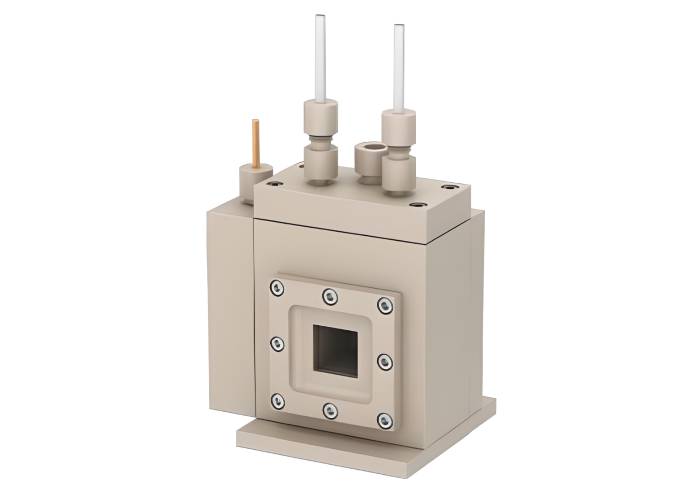
In-situ/Operando XAS H-Cell (XAHC) — Dual-Compartment with Membrane
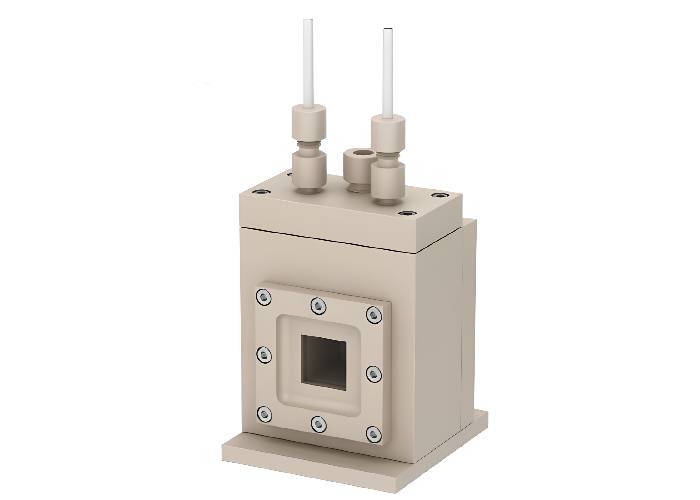
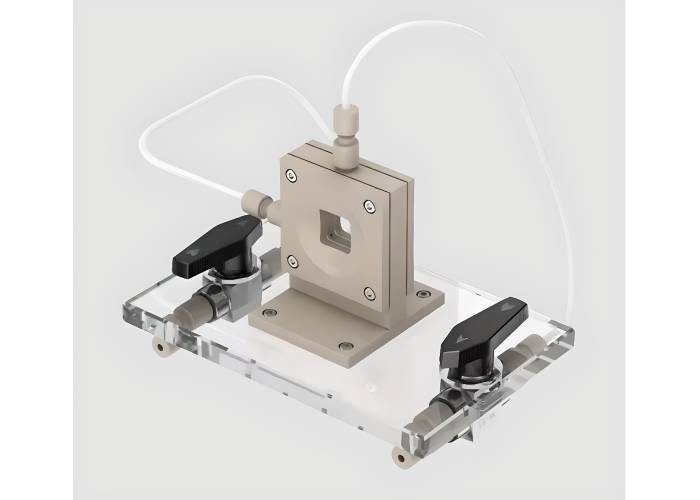
Dual-compartment In-situ/Operando XAS H-cell with PEEK body
Overview
The In-situ/Operando XAS H-Cell (XAHC) is a dual-compartment electrochemical reaction cell designed for operando X-ray Absorption Spectroscopy (XAS) at synchrotron beamlines. A replaceable ion-exchange membrane separates the anode and cathode chambers to reduce bulk crossover while maintaining an X-ray transparent measurement zone via Kapton window films. This configuration helps researchers correlate oxidation state, coordination environment (XANES/EXAFS), and electrochemical performance under realistic split-cell conditions.
Design and working principle
Electrolyte is contained in two chemically robust compartments aligned to the beam path. Under potentiostatic or galvanostatic control, catalyst structure and speciation can be monitored in real time during electrochemical reactions. Integrated gas inlet/outlet ports support controlled atmospheres (e.g., CO₂, N₂, Ar, O₂) and improved gas-tight operation—useful for gas-involved electrocatalysis and electrolysis workflows.
Key features
- Dual-compartment H-type architecture with replaceable membrane to minimise cross-contamination
- PEEK cell body for chemical resistance and beamline-friendly durability
- Kapton window compatibility for X-ray access (films typically user-supplied)
- Configurable 2-electrode or 3-electrode operation
- Customisable working electrode formats (e.g., foils, coated substrates, catalyst layers)
- Simple assembly and cleaning; cell volume can be tailored to experimental requirements
Compatibility and typical applications
Compatible with standard potentiostats/galvanostats and common reference/counter electrode options. Typical applications include:
- CO₂ reduction (CO₂RR) with separate anodic OER compartment
- HER/OER mechanistic studies with controlled gas feed and crossover suppression
- Operando tracking of transition-metal catalysts, supported nanoparticles, and single-atom catalysts
- Membrane/compartmentalisation studies (selectivity, crossover, stability)
Why choose ScienceGears
ScienceGears supports researchers in Australia and New Zealand with local technical guidance and a coherent operando workflow ecosystem—pair this H-cell with potentiostats, complementary in-situ Raman spectroelectrochemical cells, or battery cyclers where multi-modal characterisation is required.
Resources & Downloads
Everything you need to get started
Electrochemical Impedance Spectroscopy (EIS): Core Concepts for Confident Understanding
Squidstat - Admiral
Customer Reviews
Related Product
Explore our precision instruments designed for electrochemical research and energy applications









Still Wondering About Something?
Explore our FAQ for fast, clear answers to the most common questions—available 24/7.