


Modular Multifunctional In-Situ XRD XAS Raman Electrochemical Flow Cell
In-Situ Electrochemical Flow Cell for XRD, XAS and Raman Analysis
Modular Multifunctional In-Situ XRD/XAS/Raman Electrochemical Flow Cell
In-situ electrochemical flow cell for Raman, XRD and XAS analysis
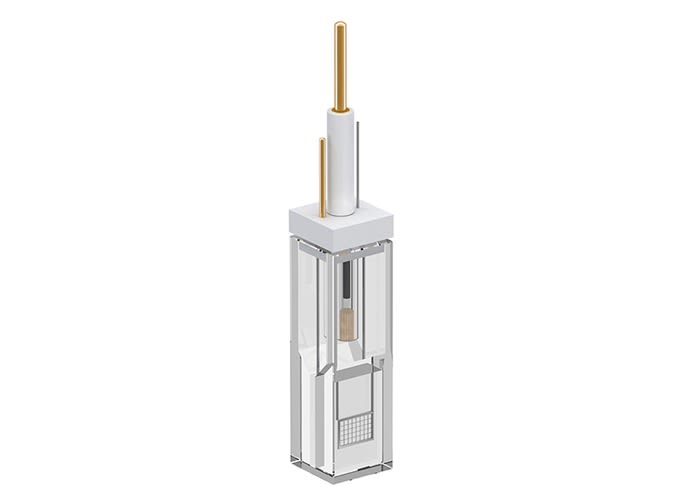
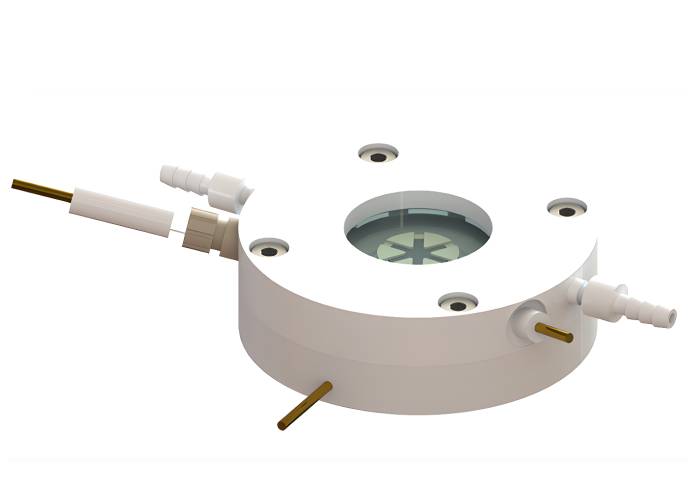
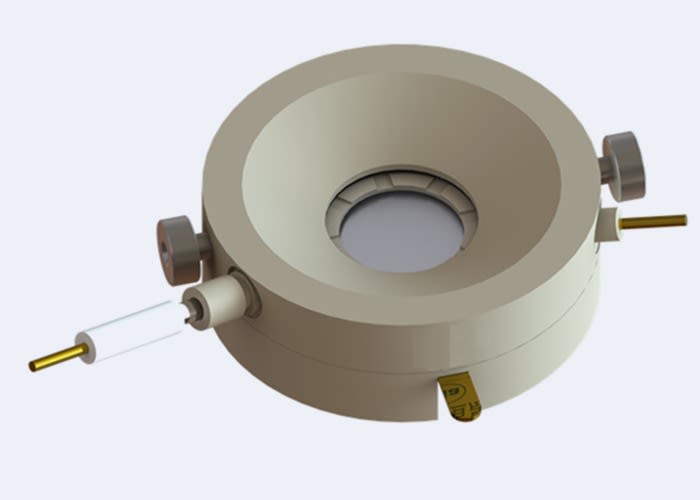
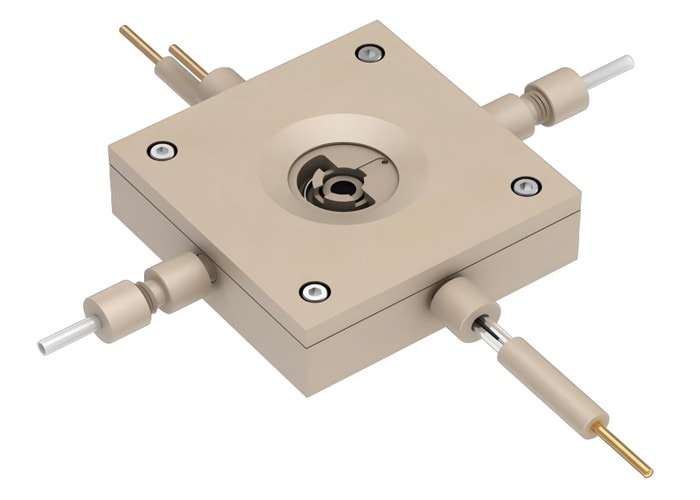
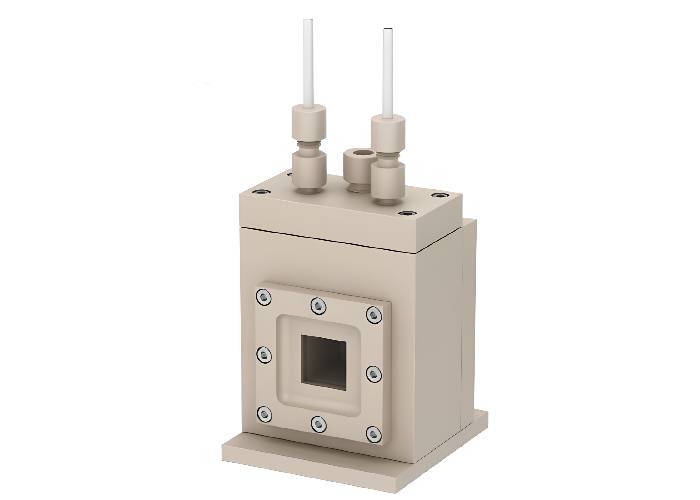
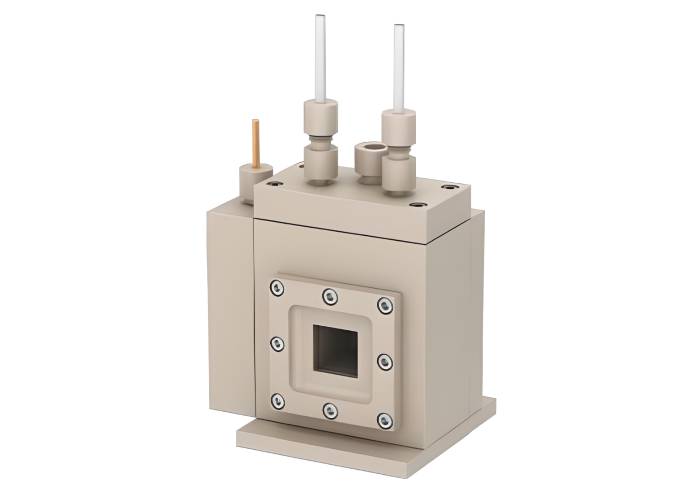
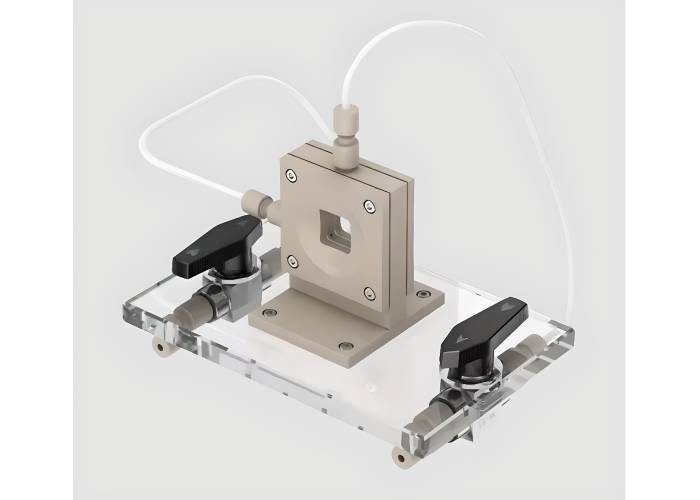
The Modular Multifunctional In-Situ XRD/XAS/Raman Electrochemical Flow Cell is designed for researchers who need to study electrochemical reactions while simultaneously monitoring structural, spectroscopic or interfacial changes. The cell combines controlled three-electrode flow electrochemistry with interchangeable analytical window options, allowing the same compact electrochemical platform to be configured for Raman, XRD or XAS measurements.
This modular approach is useful for laboratories working across electrocatalysis, battery materials, supercapacitors, corrosion, electrodeposition and energy-conversion research, where different characterisation techniques may be required during different stages of a project.
Best suited for
- Operando Raman studies of electrocatalysts, battery materials, supercapacitor electrodes and corrosion interfaces
- Aqueous and selected non-aqueous electrochemical studies requiring optical or X-ray access to the working electrode
- Multi-technique research where the same electrochemical cell body may be adapted for Raman, XRD or XAS measurements
- Flow electrochemistry under potentiostatic or galvanostatic control
- Studies involving porous electrodes, catalyst-coated substrates, thin films, metal foams, carbon-based electrodes or gas-diffusion electrode configurations
- Research laboratories that need a flexible in-situ platform rather than separate dedicated cells for every analytical technique
Principle of operation
During operation, electrolyte enters the reaction cavity through the reference electrode region, contacts the working electrode surface, then passes towards the counter electrode before exiting the cell. This creates a controlled flow path across the active electrode area while supporting electrochemical measurements using a potentiostat or galvanostat.
The working electrode section can be configured in standard contact mode or gas-diffusion contact mode, depending on the experiment. This flexibility makes the cell suitable for a wide range of electrochemical studies, including catalyst testing, battery-interface analysis, supercapacitor research and reaction-mechanism investigations.
Technique and window configuration
| Technique | Recommended window | Typical use | Important compatibility point |
|---|---|---|---|
| Raman / optical microscopy / UV–Vis | Quartz or sapphire | Optical monitoring of electrode surfaces, intermediates and interfacial changes | Check objective working distance, laser focus through the window and microscope-stage clearance |
| XRD | Beryllium window | Operando or in-situ structural analysis of crystalline phases | Check XRD geometry, incident/diffracted beam path, required 2θ range, window aperture and stage clearance |
| XAS / XAFS | Kapton film | Synchrotron-based oxidation-state and local-structure studies | Check beamline holder geometry, beam size, transmission path and safety requirements |
Key features and materials
- Modular front-window design for Raman, UV–Vis, XRD, XAS and XAFS experiments
- Quartz or sapphire window options for Raman and optical measurements
- Beryllium window option for XRD measurements
- Kapton film option for XAS/XAFS and synchrotron-based absorption studies
- Three-electrode electrochemical configuration with working, reference and counter electrode arrangement
- Controlled electrolyte flow path across the working electrode area
- Standard and gas-diffusion working electrode contact modes
- Chemically resistant PEEK and high-purity titanium construction
- Compact reaction cavity: 15 × 15 × 1.2 mm
- Suitable for coupling with research potentiostats, galvanostats and selected battery cyclers
- Custom configuration available depending on electrode type, electrolyte, window material and instrument geometry
Important XRD compatibility note
The cell body can be configured for XRD by using an appropriate X-ray-transparent window. However, final XRD compatibility depends on the customer’s specific XRD instrument geometry, incident beam angle, diffracted beam path, required 2θ range, beam footprint, window aperture and sample-stage clearance.
For this reason, ScienceGears recommends confirming the XRD instrument model and measurement geometry before finalising the XRD configuration. Raman compatibility is usually more straightforward for microscope-based backscattering measurements, while XRD requires careful consideration of beam access and angular clearance.
Applications
- Operando Raman electrochemistry
- In-situ XRD electrochemical studies
- In-situ XAS/XAFS electrochemical studies
- Electrocatalysis and catalyst stability testing
- Hydrogen evolution reaction, oxygen evolution reaction and oxygen reduction reaction studies
- CO₂ electroreduction and gas-diffusion electrode research
- Battery and supercapacitor electrode-interface studies
- Aqueous metal-ion battery research
- Corrosion and electrodeposition studies
- Catalyst oxidation-state and phase-transition investigations
- Thin-film, porous electrode and current-collector studies
Information required before quotation
To recommend the most suitable configuration, please provide:
- Primary technique required: Raman, XRD, XAS or multi-technique use
- Instrument model and sample-stage geometry
- Working electrode material, size, thickness and exposed area
- Electrolyte composition and operating potential/current range
- Static or flowing electrolyte requirement
- Preferred reference electrode type
- Required window material: quartz, sapphire, beryllium or Kapton
- For XRD: required 2θ range, incident beam geometry and available stage clearance
- For Raman: objective magnification, working distance and laser wavelength
- Any requirements for gas-diffusion electrode operation or porous current collectors
Why choose ScienceGears
ScienceGears supports Australian and New Zealand research laboratories with technical product selection, electrochemical cell configuration and compatible instrumentation. We can help match this modular in-situ cell with potentiostats, Raman microscopes, XRD systems, XAS beamline requirements and related electrochemical accessories.
This makes the Modular Multifunctional In-Situ XRD/XAS/Raman Electrochemical Flow Cell a practical choice for laboratories that need one flexible electrochemical platform for multi-technique in-situ and operando analysis.
Customer Reviews
Related Product
Explore our precision instruments designed for electrochemical research and energy applications









Still Wondering About Something?
Explore our FAQ for fast, clear answers to the most common questions—available 24/7.