

Sulfonated Poly(ether ether ketone) (SPEEK) Membrane
Fluorine-free ion-exchange membrane for flow batteries and electrodialysis
Description
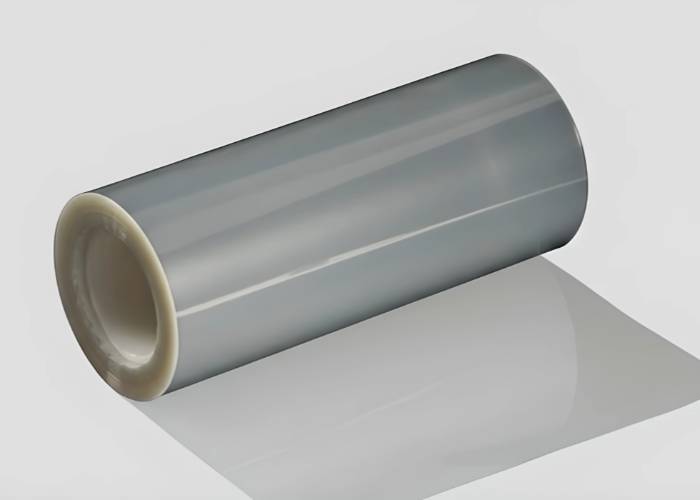
Sulfonated poly(ether ether ketone) (SPEEK) membrane is a fluorine-free ion-exchange membrane for laboratory flow-battery and electrodialysis studies. Sulfonic acid groups provide ion-conducting sites, while the aromatic polyetheretherketone backbone supports mechanical integrity and chemical resistance. Standard membranes are colourless and transparent, with 25, 50 and 75 µm thickness options and a nominal degree of sulfonation of 60%. Custom thicknesses and membrane areas may also be available.
Product Overview
SPEEK is produced by introducing sulfonic acid groups into a polyetheretherketone polymer backbone. This modification converts the otherwise hydrophobic engineering polymer into an ion-conducting membrane while retaining the mechanical properties associated with its aromatic structure.
The membrane is designed for ion separation in redox flow batteries, including zinc–manganese, zinc–bromine, zinc–iron and all-iron systems. It can also be considered for electrodialysis and laboratory membrane-characterisation studies. Suitability must be confirmed against the electrolyte composition, concentration, pH, temperature and active redox species used in the intended system.
How It Works
When hydrated, the sulfonic acid groups form ion-transport pathways through the polymer. These pathways permit ionic conduction between the two half-cells while the membrane electronically isolates the electrodes and helps restrict direct mixing of the electrolytes.
The degree of sulfonation influences conductivity, water uptake, dimensional stability and species crossover. Increasing sulfonation generally creates more ion-conducting sites, but it can also increase swelling and permeability. Membrane thickness and conditioning should therefore be selected for the complete electrochemical system rather than from conductivity alone.
Key Features
- Fluorine-free sulfonated aromatic polymer construction
- Standard thicknesses of 25, 50 and 75 µm
- Nominal degree of sulfonation of 60%
- Reported ionic conductivity of 15–20 mS cm⁻¹
- Tensile strength of 24–28 MPa
- Elongation at break of 28–32%
- Colourless, transparent membrane format
- Custom membrane thicknesses from approximately 15–100 µm may be available
- Membrane area can be customised for laboratory cells or larger fixtures
- May be used directly or conditioned in an acid or alkaline solution matching the operating electrolyte
Technical Specifications
| Parameter | Specification |
|---|---|
| Membrane chemistry | Sulfonated poly(ether ether ketone) |
| Appearance | Colourless and transparent |
| Standard thicknesses | 25, 50 or 75 µm |
| Custom thickness range | Approximately 15–100 µm, subject to confirmation |
| Degree of sulfonation | 60% |
| Reported ionic conductivity | 15–20 mS cm⁻¹ |
| Tensile strength | 24–28 MPa |
| Elongation at break | 28–32% |
| Membrane area | Customisable |
Conductivity and mechanical-property values should be interpreted using the applicable test method and measurement conditions. Confirm these conditions when comparing the membrane directly with other ion-exchange materials.
Applications
- Zinc–manganese flow-battery research
- Zinc–bromine flow batteries
- Zinc–iron and all-iron flow batteries
- Screening of fluorine-free ion-exchange materials
- Electrodialysis and ion-separation experiments
- Membrane conductivity, permeability and dimensional-stability studies
- Development of laboratory-scale flow cells and electrochemical reactors
Compatibility and Selection Guidance
Before ordering, confirm the required active area, overall cut dimensions, gasket compression, electrolyte chemistry and preferred thickness. A thinner membrane generally reduces the ion-transport distance but requires careful handling and crossover evaluation. A thicker membrane may provide easier handling, although its effect on area-specific resistance should be assessed in the intended cell.
For initial use, the membrane may be installed directly or immersed in an acid or alkaline solution having the same concentration as the operating electrolyte. The most suitable conditioning procedure should be validated for the specific battery chemistry rather than applying a generic treatment to every system.
Handling and Storage
Handle the membrane in a dry, clean environment and inspect it for holes, wrinkles or transport damage. Do not wipe the surface if slight wetting or precipitation is visible.
Store unused membrane at room temperature, below approximately 50% relative humidity, away from direct sunlight and in its sealed packaging. Protect it from temperatures below 2 °C and prevent freezing. After opening, reseal any unused material promptly.
A membrane removed from an operating system for short-term storage should be kept immersed in an appropriate protective solution and must not be allowed to dry. Drying after use may irreversibly alter its hydrated microstructure and reduce ion conductivity.
Why Source Through ScienceGears
ScienceGears can assist researchers in Australia and New Zealand with membrane-thickness selection, custom dimensions, conditioning considerations and compatibility with flow cells, pumps, electrodes, gaskets and electrochemical test equipment. Configuration requirements can be reviewed before quotation to help ensure the supplied membrane suits the intended experiment.
Frequently Asked Questions
Can the SPEEK membrane be used without pretreatment?
It may be used directly. Alternatively, it can be conditioned in an acid or alkaline solution matching the concentration of the operating electrolyte. The preferred approach depends on the specific flow-battery chemistry.
Which thickness should I choose?
The standard options are 25, 50 and 75 µm. Selection should balance ionic resistance, mechanical handling, pressure differential and crossover requirements.
What does a 60% degree of sulfonation mean?
It describes the extent to which sulfonic acid functionality has been introduced into the polymer. This influences ionic conductivity, hydration, swelling and ion selectivity.
Is the reported conductivity valid for every electrolyte?
No. The stated 15–20 mS cm⁻¹ is a reported product value. Actual conductivity depends on hydration, temperature, electrolyte composition and the measurement method.
Can the membrane dimensions be customised?
Yes. Custom membrane area and thickness may be supplied, subject to confirmation of manufacturing and minimum-order requirements.
Is this membrane suitable for every redox flow battery?
No membrane is universally compatible with every electrolyte. Chemical stability, crossover and dimensional behaviour should be validated for the intended redox couple and operating conditions.
How should a membrane be stored after use?
Keep it immersed in a suitable protective solution and do not allow it to dry. Periodically inspect the solution concentration and pH during extended short-term storage.
Customer Reviews
Related Product
Explore our precision instruments designed for electrochemical research and energy applications




Still Wondering About Something?
Explore our FAQ for fast, clear answers to the most common questions—available 24/7.