
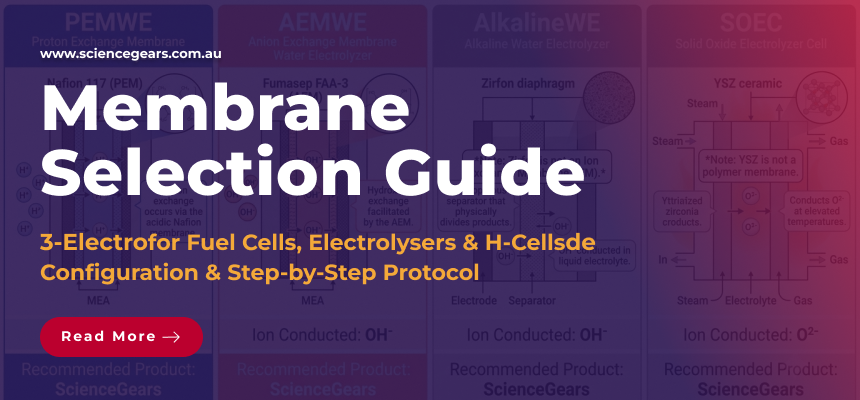
1 The Decision Point — From Understanding to Ordering
The previous three articles in this cluster series established the landscape: how Nafion grades differ in thickness, resistance, and gas crossover; how proton exchange, anion exchange, cation exchange, and bipolar membranes compare as families; and the practical handling, pre-treatment, and storage requirements that determine whether a membrane performs as its datasheet predicts. If you have arrived at this article without reading those three, the master decision matrix in Section 7 will still be directly usable — but the rationale behind each recommendation will make more sense with that foundation.
This article answers the final question: given my specific application and cell format, which membrane do I actually order?
It is the most practically useful article in the series precisely because it is the most specific. For each of the twelve major electrochemical applications covered, the recommendation is not a family of membranes — it is a specific product, with the rationale, the critical constraint, and the failure mode you need to know before your first experiment.
The membranes discussed in this guide are available through ScienceGears' ion-exchange membrane range. Local AU/NZ stock is subject to availability.
2 The Three Cell Formats and Why Each Demands a Different Membrane
Before making a membrane selection, you must understand which cell format your experiment uses — because the same membrane can be the correct choice in one format and the wrong choice in another, even for the same electrochemical reaction.
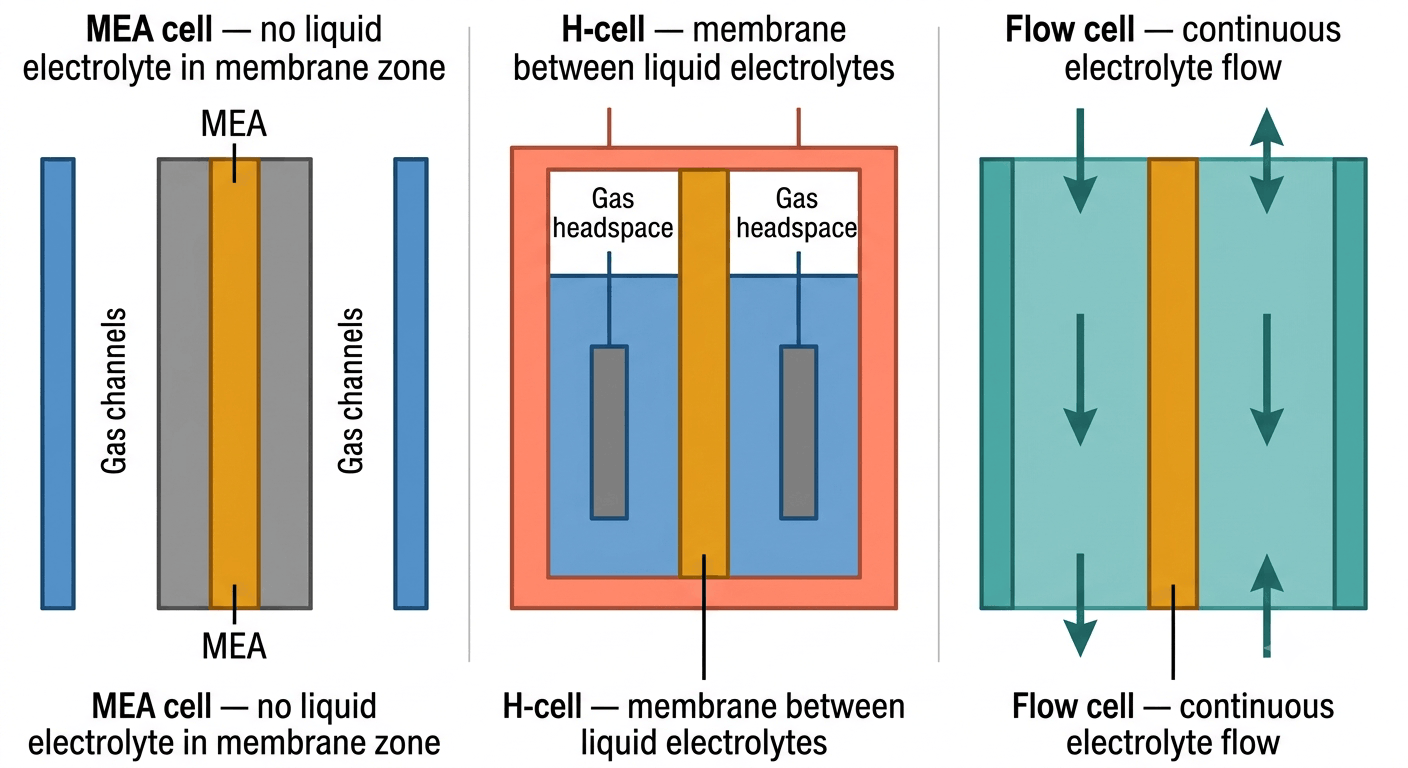
Caption: The membrane's operating environment differs fundamentally across the three cell formats. In an MEA cell, the membrane contacts only gas-phase reactants and catalyst layers. In an H-cell, it sits between liquid electrolytes at atmospheric pressure. In a flow cell, it operates under continuous electrolyte flow at potentially elevated pressure. The correct membrane grade and type for each format is different.
2.1 MEA-Based Cells — Fuel Cells and Electrolysers
In a membrane electrode assembly, the membrane is directly sandwiched between two catalyst-coated electrode layers — either hot-pressed as a catalyst-coated membrane (CCM) or assembled as separate MEA components in a test cell. There is no bulk liquid electrolyte between the membrane and the electrodes. The membrane must simultaneously serve as the proton or hydroxide conductor, the gas separator, and the mechanical substrate that keeps the catalyst layers positioned and compressed
Three membrane parameters dominate the selection decision in MEA cells:
Area-specific resistance (ASR): Every 0.1 Ω cm² of additional membrane ASR produces approximately 100 mV of additional cell voltage at 1 A cm⁻². In a PEMFC test station or PEMWE test station where you are evaluating catalyst performance at high current density, that voltage difference is the difference between a competitive and a disappointing polarisation curve.
Gas crossover: In PEMWE, hydrogen produced at the cathode permeates through the membrane to the anode, diluting the oxygen stream. Above 4% H₂ in O₂, the mixture becomes flammable — a safety-critical threshold. Crossover scales inversely with membrane thickness, which is why Nafion 117 (183 µm) is preferred over Nafion 212 (51 µm) in pressurised PEMWE despite its higher ASR.
Dimensional stability under compression: The MEA assembly applies mechanical compression across the active area. A membrane that swells non-uniformly or changes dimensions during hydration will alter the active area geometry between runs, introducing variability that is indistinguishable from catalyst performance variation.
PEM water electrolysis can operate at high pressure and high current density and can produce high-purity hydrogen when the membrane, catalyst layers, sealing, hardware, and operating conditions are correctly selected.
2.2 H-Cell — Dual-Chamber Reactor
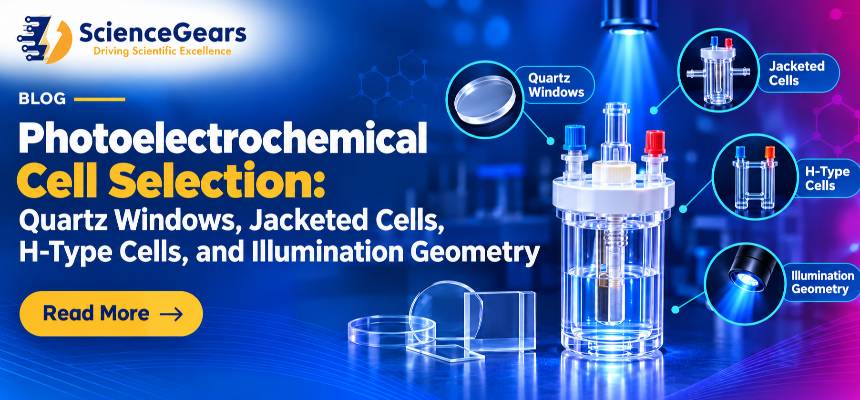
In a ScienceGears H-cell, the membrane separates two liquid-filled compartments at atmospheric pressure. The working electrode sits submerged in one chamber; the counter and reference electrodes sit in the other. There is no compression, no gas-phase membrane contact, and no hot-pressing requirement. The dual-compartment design helps minimise product oxidation at the counter electrode while supporting controlled pH conditions in each chamber, and facilitates accurate Faradaic efficiency measurements and long-term catalyst stability testing.
Because compression stress is absent and gas crossover is usually less dominant at atmospheric pressure, the membrane selection criteria shift: chemical compatibility with the electrolyte, robustness under repeated assembly, and the absence of membrane-induced measurement artefacts take priority over ASR optimisation. Common grades for H-cell use include Nafion 115 (127 µm), Nafion 117 (183 µm) — with Nafion 117 as a practical default for its robustness and its status as the most widely cited H-cell membrane in the literature.2.3 Flow Cell — Electrolyser and Continuous Reactor
In a flow cell CO₂ reduction test station or continuous electrosynthesis reactor, electrolyte flows continuously across the membrane face under pressure. The membrane must withstand sustained hydraulic pressure differentials across its face, resist delamination and swelling under continuous flow conditions, and maintain stable ionic transport over extended operation times. Membrane selection in flow cells must account for the flow regime, pressure drop, and residence time distribution alongside the standard ionic and chemical compatibility criteria.
3 Fuel Cell Applications — Membrane Selection
3.1 PEMFC — Performance Evaluation
For performance-focused PEMFC research using ScienceGears PEMFC test stations, Nafion has remained the most used membrane material over the past decades, with high chemical stability and strong proton conductivity under well-humidified conditions, depending on membrane grade, temperature, humidity, and test method — making it the benchmark against which all PEMFC membrane comparisons are measured.
Recommended membrane: Nafion 212
Nafion 212's low ASR (~0.04–0.05 Ω cm²) minimises the membrane's contribution to total cell overpotential, enabling competitive power density figures at high current density. Nafion 212 is commonly used as a PEMFC performance reference membrane. If a specific percentage advantage is retained, cite the study, MEA design, operating temperature, humidity, catalyst loading, and test protocol.
Critical operating condition: The proton conductivity of Nafion 212 decreases nearly five-fold when relative humidity drops from 80% to 40% at 80 °C, and by approximately 1.5 times when temperature decreases from 80 °C to 60 °C at 80% RH. Maintaining adequate humidification is essential for reproducible PEMFC measurements because Nafion conductivity is strongly hydration-dependent. If your test station does not include active humidification, the membrane's apparent performance will be significantly lower than its rated conductivity.
When to use Nafion 117 instead: For PEMFC durability studies targeting thousands of hours of cycling, the mechanical robustness and lower gas crossover of Nafion 117 are preferred over the performance advantage of 212. Long-duration degradation studies require a membrane that survives repeated hydration–dehydration cycling without pinhole formation
When to use Nafion 115: For iterative MEA prototyping where the cell is assembled and disassembled repeatedly — for example, when screening multiple catalyst loadings or GDL compression settings — Nafion 115 offers a practical balance between the handleability of 117 and the resistance advantage of 212.
3.2 Direct Methanol Fuel Cell (DMFC)
For DMFC research, Nafion 117 is preferred over thinner grades. Methanol crossover — the permeation of methanol from the anode to the cathode, where it poisons the ORR catalyst — scales inversely with membrane thickness. Nafion 212's lower ASR advantage is outweighed by its higher methanol permeability in this configuration. Nafion 117's greater thickness provides meaningful crossover suppression that translates directly into improved selectivity at the cathode.
3.3 Microbial Fuel Cell (MFC)
In microbial fuel cells, Nafion 117 is the standard reference membrane. Research comparing Nafion 117 against alternative membranes including agar-based separators found that whilst alternative membranes showed lower internal resistance (~90 Ω), they delivered only 4–40% of the power of cells fitted with Nafion 117. For MFC research, membrane robustness over weeks-to-months of continuous operation in biological media is the primary criterion — Nafion 117's durability in complex aqueous environments makes it the appropriate default.
4 Electrolyser Applications — Membrane Selection
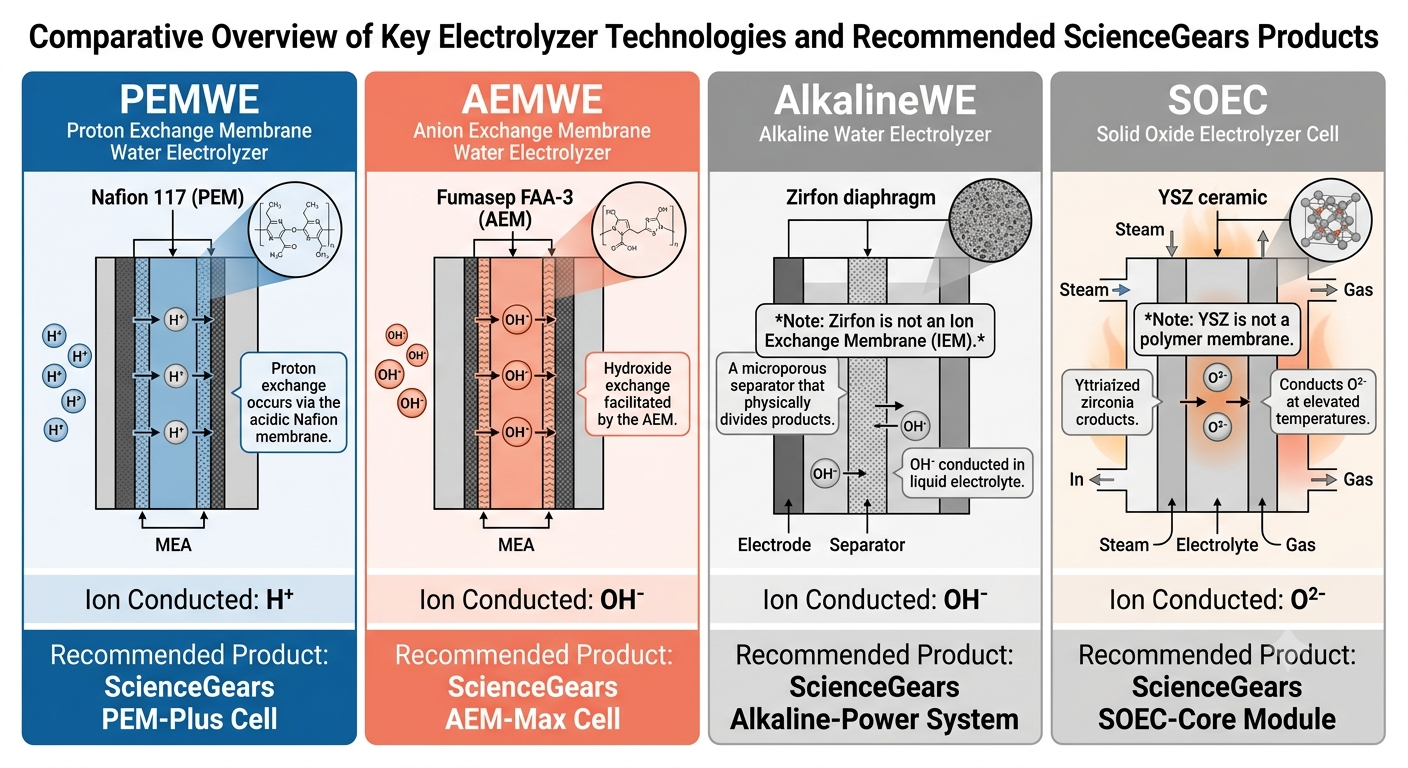
Caption: Each electrolyser type uses a categorically different separator technology. Only PEMWE and AEMWE use polymer ion-exchange membranes from the ScienceGears membrane range. AlkalineWE and SOEC use fundamentally different separator types — important to clarify before specifying membranes for a new electrolyser project.
4.1 PEMWE — The Green Hydrogen Workhorse
A key component of a PEMWE cell is the proton exchange membrane, which conducts protons from the anode to the cathode and prevents the permeation of produced hydrogen to the anode side. The current state-of-the-art membrane material is perfluorosulfonic acid (PFSA) such as Nafion, due to its excellent proton conductivity and chemical stability for PEMWE applications.
For ScienceGears PEMWE test stations:
Primary recommendation: Nafion 117 —Gas crossover safety is the dominant selection criterion in PEMWE. At elevated cathode pressures or high current densities, hydrogen permeability through Nafion 212 is materially higher than through Nafion 117 — a safety concern and a product purity concern simultaneously. Nafion 117's 183 µm dry thickness provides the lowest hydrogen crossover of the standard commercial PFSA grades whilst still delivering adequate proton conductivity for research-scale experiments.
Secondary recommendation: Nafion 212 (high current density focus) —For PEMWE experiments specifically targeting current density above 2 A cm⁻² where ohmic losses are the primary efficiency constraint, Nafion 212's lower ASR produces measurably lower cell voltage. This is appropriate when benchmarking catalyst activity at high current rather than characterising stack-level durability. Crossover monitoring is mandatory — do not operate Nafion 212 in pressurised PEMWE above 5 bar without measuring H₂ content in the O₂ outlet stream.
Nafion 211 is generally not recommended for PEMWE unless the cell hardware and operating conditions have been specifically validated for very thin membranes. At 25 µm dry thickness, it is more vulnerable to mechanical damage and higher hydrogen crossover than thicker grades, especially in pressurised operation.
4.2 AEMWE — Alkaline Membrane Electrolysis
For AEMWE test stations, the membrane must conduct OH⁻ in 1 M KOH, remain dimensionally stable under alkaline conditions, and withstand the oxidative anode environment. The membrane selection decisions for AEMWE are completely separate from those for PEMWE — do not use Nafion in an AEMWE cell.
| Research Objective | Recommended Membrane | Notes |
|---|---|---|
| Performance evaluation | Fumasep FAA-3-50 | Most-cited AEM in AEMWE literature; lowest ASR in FAA-3 series |
| Durability / lifetime study | Fumasep FAA-3-PK-75 | PEEK reinforcement improves mechanical stability over thousands of cycles |
| First experiment / new group | Fumasep FAA-3-PK-130 | Easiest handling; forgiving to assembly errors; good baseline |
| Ultra-high current density | Fumasep FAA-3-PE-30 | PE reinforcement maintains conductivity at thinner cross-section |
Operating temperature limit: do not operate FAA-3 series membranes above 60 °C in KOH concentrations above 2 M for extended periods. Hofmann elimination of the quaternary ammonium head groups accelerates above this threshold.
4.3 AlkalineWE — Conventional Alkaline Electrolysis
For alkaline water electrolysis test stations, conventional alkaline electrolysis uses a microporous diaphragm — most commonly Zirfon Perl — rather than an ion-exchange membrane. A Zirfon diaphragm is a porous polymer composite that prevents bulk gas mixing through physical separation rather than through selective ion transport. It is not an ion-exchange membrane in the Nafion or Fumasep sense and should be specified separately from polymer IEM electrochemistry. Contact the ScienceGears technical team for alkaline diaphragm specifications.
4.4 PEAL — PEM and Alkaline Hybrid Electrolysis
The PEAL test station combines PEM electrolysis with an alkaline anode environment — enabling earth-abundant anode catalysts compatible with alkaline media while retaining the high-pressure, high-purity hydrogen production of PEM at the cathode.
Membrane selection for PEAL is not reducible to a standard product recommendation. Standard Nafion grades degrade in alkaline media at the anode interface; standard Fumasep AEM grades are not designed for the acidic cathode environment; the hybrid BPM approach has known WDE limitations at extended operation. This is the application in this guide that most requires direct pre-order technical consultation. Contact our technical team before specifying a membrane for a PEAL configuration.
4.5 SOEC — Solid Oxide Electrolysis
SOEC test stations operate at 600–900 °C using a solid oxide ceramic electrolyte — typically yttria-stabilised zirconia (YSZ) conducting O²⁻ ions. This is not an ion-exchange membrane in the polymer sense. SOEC electrolytes are sourced from specialist ceramic suppliers and are not part of the ScienceGears membrane range. If you are setting up SOEC research and require test station hardware, contact us for cell and hardware recommendations.
4.6 CO₂ Reduction Test Station — Flow Cell Format
For CO₂ reduction test stations operating in continuous flow cell format, the membrane selection is a three-way strategic decision between CEM, AEM, and BPM — each producing a fundamentally different experimental outcome.
CEM (Nafion 212 or thinner) — best carbon efficiency: A cation exchange membrane is suitable for a zero-gap CO₂ electrolyser system. A key advantage is that carbonation can be avoided and carbon efficiency is improved. Higher CO Faradaic efficiency as well as energy efficiency is achieved by thinner Nafion membranes — making Nafion 212 or even Nafion 211 the preferred choice when maximising carbon efficiency is the primary research objective. The trade-off is that acidic anolyte conditions require a platinum-group metal anode stable under acidic oxygen evolution reaction conditions
AEM (Fumasep FAA-3-50) — earth-abundant anode compatibility: AEM enables alkaline anolyte and therefore earth-abundant, non-platinum anode catalysts. The trade-off is carbonate and bicarbonate crossover from the CO₂-containing catholyte, which reduces Faradaic efficiency and must be corrected for in all product quantification. Pre-convert the FAA-3 membrane to bicarbonate form before use for CO₂RR applications.
BPM (Fumasep FBM-PK, reverse bias) — independent pH gradient: A reverse-biased BPM maintains an alkaline anolyte (enabling earth-abundant anodes) whilst permitting a near-neutral or mildly acidic cathode environment. This suppresses carbonate formation relative to AEM operation and — in principle — enables iridium-free anode operation. The practical constraint is that BPM water-dissociation efficiency and long-term stability depend strongly on membrane design, MEA architecture, current density, and operating conditions. If retaining the 98%, 99.8%, or 10,000-hour figures, cite the source and define the exact configuration. At sub-100% WDE, co-ion crossover gradually acidifies the anolyte and corrodes nickel-based anodes. This makes BPM the most technically ambitious choice — and the most appropriate for fundamental CO₂RR research rather than prototype device testing.
5 H-Cell Applications — Membrane Selection
5.1 CO₂ Electroreduction — H-Cell
For H-cell CO₂RR catalyst screening and initial performance characterisation using ScienceGears H-cells, the membrane selection depends on the catholyte pH.
Acidic or near-neutral catholyte → Nafion 117: Cation exchange membranes are commonly employed in batch-type H-cell reactors for initial catalyst development where CO₂-saturated aqueous electrolytes are used. Nafion 117 is the correct default: it is the most-cited H-cell CO₂RR membrane in the literature, enabling direct benchmarking against published datasets, and its robustness under repeated assembly/disassembly across a screening campaign makes it the practical choice for experiments running multiple catalyst variants.
Alkaline catholyte → Fumasep FAA-3-50 (pre-converted to HCOゃ⁻ form): When alkaline catholyte conditions (0.1–1 M KOH) are required for the catalyst chemistry, Fumasep FAA-3-50 enables OH⁻ transport whilst blocking proton crossover. Account explicitly for carbonate crossover in your Faradaic efficiency calculations — it is a thermodynamic inevitability in CO₂-containing alkaline media, not a membrane defect.
5.2 Nitrogen Reduction Reaction (NRR) — A Critical Membrane Warning
This is the most important application-specific membrane warning in this entire guide, and it is absent from the vast majority of published methods sections.
If you are using Nafion as your H-cell membrane separator for electrochemical nitrogen reduction (eNRR) experiments, your ammonia quantification data may be unreliable regardless of how carefully you have designed every other aspect of your experimental protocol.
The mechanism is specific and well-documented: Nafion adsorbs and desorbs NH₃, leading to erroneous measurements and making reproducibility extremely difficult. Minute quantities of synthesised NH₃ persist within the membrane — the ammonium ion (NH₄⁺) competes with protons (H⁺) for the sulphonate exchange sites in Nafion's ionic channels. The membrane can then desorb this retained NH₃ under conditions where ammonia synthesis is not thermodynamically viable, producing a false-positive signal in your product quantification.
This does not affect Nafion's ion conductivity or resistivity — the membrane appears to function normally in every electrochemical measurement whilst simultaneously contaminating your product analysis. It is one of the most debated reproducibility issues in the eNRR literature, where many early reports of high ammonia yields have subsequently been attributed in part to Nafion-derived NH₃ background.
What to use instead:
- Alkaline eNRR conditions: Fumasep FAA-3-50 (AEM) — AEMs do not use the same Nafion sulphonate-site mechanism; however, rigorous blank and contamination-control experiments are still required for eNRR., making it the mechanistically appropriate separator for alkaline NRR H-cell experiments
- If Nafion is required for experimental comparability: Run a comprehensive blank protocol — pre-condition the membrane in the exact experimental electrolyte for at least 24 hours, measure the NH₃ background release over that period, and subtract it from all experimental yields. This is laborious but is the minimum standard for publishable NRR data with Nafion
- Document your membrane choice: Always report the specific Nafion grade, pre-treatment protocol, and blank correction procedure in your methods section — reviewers in leading electrochemistry journals now routinely request this information for NRR manuscripts
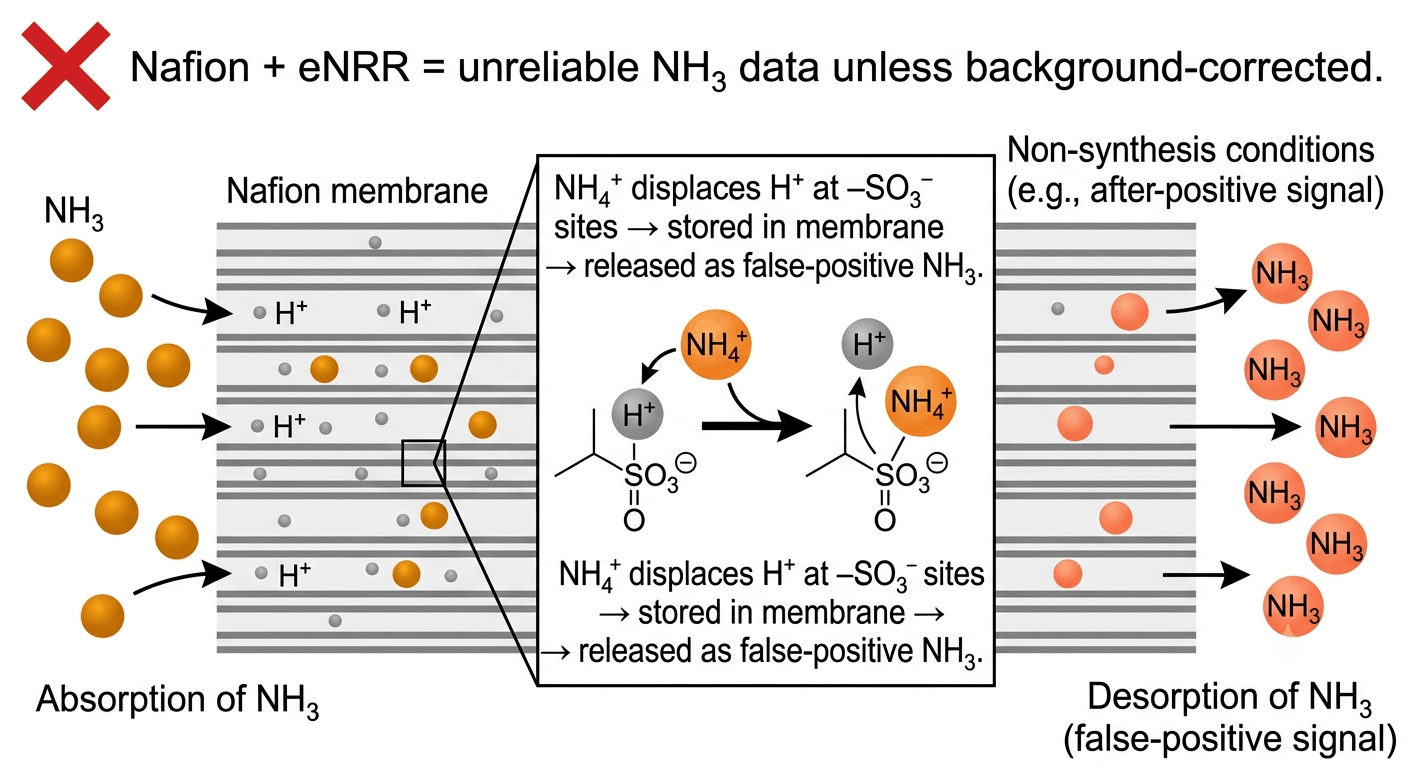
Caption: NH₄⁺ competes with H⁺ for Nafion's sulphonate exchange sites during eNRR experiments. Retained NH₃ is released under conditions where synthesis is not viable, generating false-positive ammonia yields. Use Fumasep FAA-3-50 (AEM) for alkaline NRR experiments, or apply a rigorous blank correction protocol if Nafion must be used for experimental comparability.
5.3 HER and OER — Water Splitting in H-Cell
For hydrogen evolution reaction (HER) and oxygen evolution reaction (OER) characterisation in an H-cell, the membrane's role is to separate H₂ and O₂ gas streams and prevent product mixing, not to maximise ionic conductivity. Nafion 117 is the correct choice: its robustness under repeated assembly, its well-characterised electrochemical baseline, and its physical durability across extended HER/OER campaigns make it the universal default. Both sealed and jacketed H-cell configurations from ScienceGears are fully compatible with Nafion 117.
For alkaline HER/OER (0.1–2 M KOH): Fumasep FAA-3-PK-130 — robust enough for handling in concentrated alkali, suitable for alkaline operation within validated concentration, temperature, and exposure-time limits, compatible with the 1 M KOH electrolyte standard in alkaline HER benchmarking.
5.4 Organic Electrosynthesis and Paired Reactions
For general electrochemical synthesis in an H-cell — reductions, oxidations, or paired synthesis reactions where both half-reactions produce valuable products:
| Electrolyte Conditions | Required Membrane Function | Recommended Membrane |
|---|---|---|
| Acidic or neutral catholyte | Proton transport, cation balance | Nafion 117 |
| Alkaline catholyte | OH⁻ transport, H⁺ blocking | Fumasep FAA-3-50 |
| Independent pH optimisation required | Simultaneous acid/base maintenance | Fumasep FBM-PK (BPM, reverse bias) |
| Ion separation, non-PEM application | Selective cation transport | Fumasep FKS-50 (CEM) |
For spectroelectrochemical experiments combining H-cell geometry with in-situ or operando cells, Nafion 117 is preferred — its well-characterised optical and electrochemical properties provide the cleanest background for simultaneous spectroscopic measurements.
5.5 Corrosion and Electrodeposition
For corrosion test cells and electrodeposition H-cell experiments: Nafion 117. Its resistance to many acidic and chloride-containing aqueous media can make it suitable for many corrosion studies, but compatibility should be checked for strong alkali, organic solvents, complexing agents, and metal-ion-rich electrolytes. Replace when yellowing or visible discolouration indicates metal ion contamination at the sulphonate sites — particularly when working with iron, nickel, or cobalt-containing electrolytes, which exchange into the membrane and suppress proton conductivity.
6 Redox Flow Battery — Membrane Selection
For Redox Flow Battery Test Station, membrane selection is governed by three criteria in strict priority order:
1. Active species crossover — vanadium ion permeation through the membrane is the primary cause of capacity fade and self-discharge in VRFB. Lower crossover is always preferred, even at the cost of higher ASR.
2. Ionic conductivity at operating current density — RFB research operates at significantly lower current densities (typically 50–240 mA cm⁻²) than electrolysis, meaning the penalty for higher-ASR membranes is lower than in PEMWE or PEMFC.
3. Cost over operating lifetime —RFB membranes are consumed over thousands of cycles; the cost-performance balance matters more than in a research cell used for a single campaign.
| Research Objective | Recommended Membrane | Rationale |
|---|---|---|
| Vanadium RFB — overall performance | Nafion 115 | Highest energy efficiency and electrolyte utilisation at 120–240 mA cm⁻² amongst standard Nafion grades |
| Vanadium RFB — voltage efficiency priority | Nafion 212 | Lower ASR gives better voltage and energy efficiency; capacity fade slightly higher |
| Vanadium RFB — cost screening | Fumasep FKS-50 | potentially lower cost, depending on sheet size, grade, and supplier pricing at comparable monovalent cation selectivity; appropriate for early-stage studies |
| Aqueous organic RFB (AORFB) | Nafion 212 | Superior voltage efficiency and energy efficiency vs Nafion 117 in AORFB configurations |
| Non-vanadium cation RFB (Na⁺, K⁺) | Fumasep FKS-50 | CEM engineered for monovalent selectivity in non-proton cation systems |
For all RFB membrane selections, also link the battery test cell options page for compatible cell hardware.
7 Master Application Decision Matrix
This table is the decisional endpoint of the entire Pillar 1 series. It consolidates every recommendation from Sections 3–6 into a single reference. Print it, bookmark it, or return to it each time you set up a new experiment.
| Application | Cell Format | Recommended Membrane | Specific Product | Key Rationale | Primary Constraint |
|---|---|---|---|---|---|
| PEMFC — performance | MEA | Nafion 212 | Buy Nafion 212 → | Lowest ASR; competitive power density | Maintain ≥80% RH at 80 °C or conductivity drops 5× |
| PEMFC — durability study | MEA | Nafion 117 | Buy Nafion 117 → | Mechanical robustness over thousands of cycles | Higher ohmic loss; accept vs performance baseline |
| PEMFC — iterative prototyping | MEA | Nafion 115 | Buy Nafion 115 → | Balance of ASR and handleability for repeated assembly | Less literature baseline data than 117 or 212 |
| PEMWE — moderate pressure / standard | MEA | Nafion 117 | Buy Nafion 117 → | Low H₂ crossover; safety margin at pressure | Design gasket to hydrated thickness (~230 μm) |
| PEMWE — high current density | MEA | Nafion 212 | Buy Nafion 212 → | Low ASR critical above 2 A cm⁻² | Monitor H₂ crossover; restrict to ≤5 bar cathode pressure |
| AEMWE — performance | MEA | Fumasep FAA-3-50 | Buy Fumasep FAA-3-50 → | Standard AEMWE research AEM; most-cited grade | Do not exceed 60 °C in KOH >2 M |
| AEMWE — durability | MEA | Fumasep FAA-3-PK-75 | Buy Fumasep FAA-3-PK-75 → | PEEK reinforcement for long-duration stability | Lower conductivity vs unreinforced FAA-3-50 |
| CO₂RR flow cell — carbon efficiency | Flow cell | Nafion 212 (CEM) | Buy Nafion 212 → | Suppresses carbonate formation; maximises carbon efficiency | Requires PGM-stable anode under acidic OER |
| CO₂RR flow cell — earth-abundant anode | Flow cell | Fumasep FAA-3-50 (AEM) | Buy Fumasep FAA-3-50 → | Alkaline anolyte enables non-PGM anode catalysts | Carbonate crossover reduces FE; correct in calculations |
| CO₂RR flow cell — pH gradient | Flow cell | Fumasep FBM-PK (BPM) | Buy Fumasep FBM-PK → | Independent pH maintenance; reduced carbonate vs AEM | WDE <100% causes anolyte drift at extended operation |
| CO₂RR H-cell — acidic/neutral | H-cell | Nafion 117 | Buy Nafion 117 → | Literature standard; direct benchmarking | Pre-treat before use; replace if yellowing |
| CO₂RR H-cell — alkaline | H-cell | Fumasep FAA-3-50 | Buy Fumasep FAA-3-50 → | OH⁻ transport; alkaline catholyte compatible | Convert to HCOゃ⁻ form before use |
| eNRR H-cell | H-cell | Fumasep FAA-3-50 | Buy Fumasep FAA-3-50 → | Avoids NHゃ adsorption/desorption artefact of Nafion | Alkaline conditions required; run NHゃ blank regardless |
| HER / OER H-cell — acidic | H-cell | Nafion 117 | Buy Nafion 117 → | Robust; gas separation at atmospheric pressure | Standard pre-treatment mandatory |
| HER / OER H-cell — alkaline | H-cell | Fumasep FAA-3-PK-130 | Buy Fumasep FAA-3-PK-130 → | Stable pH 14; handles well in 1 M KOH | Replace if visible discolouration after extended runs |
| MEA fabrication (CCM hotpress) | MEA | Nafion 211 or 212 | Buy Nafion 211 → / Buy Nafion 212 → | Ultra-thin film; low ASR; good CCM adhesion | Handle 211 with extreme care; wrinkles invalidate MEA |
| Vanadium RFB | Flow cell | Nafion 115 | Buy Nafion 115 → | Highest EE and utilisation at 120–240 mA cm⁻² | FKS-50 for cost screening |
| Aqueous organic RFB | Flow cell | Nafion 212 | Buy Nafion 212 → | Superior VE and EE vs 117 in AORFB | Capacity decay slightly higher at 40 °C |
| Organic electrosynthesis H-cell | H-cell | Nafion 117 or FAA-3-50 | Buy Nafion 117 → / Buy FAA-3-50 → | Depends on catholyte pH | See Section 5.4 table for pH-specific selection |
| pH-gradient electrosynthesis | H-cell or flow cell | Fumasep FBM-PK | Buy Fumasep FBM-PK → | Simultaneous acid/base; CEL faces cathode | Orientation critical — check "Cathode Side" label |
| Corrosion / electrodeposition H-cell | H-cell | Nafion 117 | Buy Nafion 117 → | Inorganic acid resistance; robust in chloride media | Replace when yellowing from metal ion contamination |
| Photoelectrochemical (PEC) | PEC cell | Nafion 117 (acidic) or FAA-3-50 (alkaline) | Buy Nafion 117 → / Buy FAA-3-50 → | Depends on electrolyte; low current density regime | See PEC cells → for cell format |
| Electrodialysis (ED) | Stack | Fumasep FKS-50 + FAB-PK-130 | Buy Fumasep FKS/FKB Series → / Buy FAB-PK-130 → | Alternating CEM/AEM creates dilute/concentrate streams | See Cation & Anion Membrane Ion Exchange Guide → |
| BMED (acid/base from salt) | Stack | FBM-PK + FKB-PK + FAB-PK-130 | Buy FBM-PK → / Buy FKS/FKB Series → / Buy FAB-PK-130 → | Three-membrane unit cell; BPM in reverse bias | See Bipolar Membrane Ion Exchange Guide → |
8 Five Questions to Ask Before Ordering
These are the questions the ScienceGears technical team asks every researcher who contacts us before placing a membrane order. Working through them yourself — before you reach out — will either confirm your selection from this guide or identify the specific uncertainty that needs resolving.
Question 1: What is your cell format?
MEA, H-cell, or flow cell. This single filter eliminates more wrong choices than any other question. If you are assembling an MEA, you need a thin-film membrane (Nafion 211, 212, or FAA-3-20/30). If you are using an H-cell at atmospheric pressure, you need a robust membrane (Nafion 117, FAA-3-PK-130). If you are using a flow cell under pressure, you need to evaluate crossover explicitly. Confirm this before anything else.
Question 2: What is your electrolyte pH and chemistry?
Acidic (pH < 6) → PEM or CEM family. Alkaline (pH > 9) → AEM family. Need pH gradient across membrane → bipolar. If your electrolyte contains species that adsorb into Nafion (NH₃, certain amines), flag this — the standard membrane recommendation may not apply.
Question 3: What is your target current density and operating pressure?
Below 500 mA cm⁻² at atmospheric pressure → membrane ASR is rarely the limiting factor; prioritise robustness. Above 1 A cm⁻² or above 5 bar cathode pressure in PEMWE → ASR and crossover both become critical; the grade selection matters significantly.
Question 4: Is this a performance experiment, a durability study, or a screening campaign?
Performance → lowest ASR grade appropriate for your format (Nafion 212, FAA-3-50). Durability → most mechanically robust grade (Nafion 117, FAA-3-PK-130). Screening → a grade that survives repeated assembly; Nafion 115 or FAA-3-PK-130.
Question 5: How long will the experiment run?
Hours to days → standard commercial grades are appropriate; fresh pre-treated membrane for each run. Weeks → evaluate membrane degradation rate for your specific electrolyte; consider reinforced grades. Months → contact the technical team; long-duration membrane stability in non-standard electrolytes requires case-by-case assessment.
If you can answer all five questions before ordering, you can confirm your membrane selection from this guide without needing to contact us. If any answer is unclear, that uncertainty is the signal to reach out before ordering rather than after.
9 Frequently Asked Questions
For broader questions about ScienceGears products, ordering, and shipping, visit our main FAQ page.
Q1 Can I use the same Nafion membrane for both my PEMFC and PEMWE experiments?
The same grade — yes. Nafion 117 is chemically compatible with both PEMFC and PEMWE environments. The same piece of membrane — no. A membrane with PEMFC operating history carries catalyst contamination, electrolyte residue, and accumulated chemical degradation from the fuel cell environment into a subsequent PEMWE experiment, in ways that are difficult to quantify and impossible to fully remove by re-treatment. Use a fresh, pre-treated membrane for each experimental campaign. The cost of a fresh membrane is negligible compared to the cost of irreproducible data.
Q2 Why does my H-cell CO₂RR experiment produce inconsistent Faradaic efficiency data — could the membrane be causing this?
Membrane-related FE inconsistency in H-cell CO₂RR has several distinct causes:
- CO₃²⁻, which migrate through the AEM and carry carbon away from the cathode — reducing apparent CO₂RR FE. This is a thermodynamic inevitability, not a membrane defect. Quantify the carbon crossover and correct your FE calculations.
- H⁺ crossover (with Nafion in alkaline catholyte): If the anolyte is acidic and the catholyte is alkaline and you are using Nafion, proton crossover will progressively acidify the catholyte over the course of the experiment. Track catholyte pH throughout the run.
- Membrane drying between runs: If the membrane dries out between experimental sessions, its hydration state at the start of each run will vary, producing run-to-run variability in cell resistance and ion transport. Store pre-treated membranes submerged in deionised water between runs.
- Nafion contamination in NRR experiments: See Section 5.2. If your CO₂RR experiment is being conducted under conditions where trace ammonia is a concern, the Nafion contamination mechanism applies.
Q3 Which membrane is best for a researcher setting up their first electrochemical cell from scratch?
Nafion 117. It is the most forgiving membrane to handle (183 µm dry thickness, robust against tearing and wrinkling), the most extensively characterised in the literature (making results immediately comparable to published work), and the most appropriate for the broadest range of first experiments — H-cell characterisation, baseline HER/OER, CO₂RR screening, and simple PEMFC/PEMWE tests. Once you have established your experimental system and understand your specific performance requirements, you can make an informed decision about switching grades or membrane types. Start with 117, know the system, then optimise
Q4 I am switching from H-cell to flow cell format for CO₂RR — do I need a different membrane?
Almost certainly yes. In an H-cell, Nafion 117 at atmospheric pressure is the default. In a flow cell CO₂RR setup, the operating pressure, current density, and continuous electrolyte flow change the selection criteria. Higher operating pressure means crossover through thicker Nafion becomes the relevant trade-off; higher current density makes ASR more important. The strategic three-way choice between CEM, AEM, and BPM for CO₂RR flow cells — described in Section 4.6 — should be revisited fresh when you change cell formats, because a choice that was appropriate in an H-cell may not be optimal in a flow cell and vice versa. Contact the ScienceGears technical team when making this transition — the format change often has implications for the entire experimental system, not just the membrane.
Q5 What membrane should I use for an alkaline HER study at very high pH (>13)?
At pH above 13 (above approximately 0.1 M KOH), Nafion membrane stability degrades over time — the strongly alkaline conditions attack the sulphonate groups and the polymer ether linkages. For short experiments (less than a few hours) at pH 13–14, Nafion 117 is generally acceptable. For extended experiments in concentrated KOH (1 M+), use Fumasep FAA-3-PK-130 — it is specifically formulated for alkaline stability in 1 M KOH and handles reliably in the H-cell format most commonly used for alkaline HER characterisation.
Q6 My eNRR results show unexpectedly high ammonia yields — could Nafion be contributing false positives?
Yes, this is a well-documented and significant risk. Nafion adsorbs and desorbs NH₃ through ammonium–proton competition at the sulphonate exchange sites. If you are using Nafion 117 as your H-cell separator for eNRR and have not run a rigorous NH₃ background correction protocol, a portion of your measured ammonia yield may originate from the membrane rather than from nitrogen reduction at your catalyst.
The minimum standard for publication-quality eNRR data with Nafion is: (1) pre-condition the membrane in your exact experimental electrolyte for at least 24 hours prior to testing; (2) run the experiment under identical conditions with Ar-saturated (nitrogen-free) electrolyte and quantify the NH₃ released — this is your Nafion background; (3) subtract the background from all N₂-experiment yields; (4) report the background value and correction procedure in your methods section explicitly.
The more reliable approach for new eNRR studies is to switch to Fumasep FAA-3-50 in alkaline conditions, where the NH₃ adsorption mechanism does not operate. Use the ScienceGears AEMWE test station cell architecture as a reference for compatible alkaline electrolyser cell design.
10 Expert Support — How ScienceGears Works Alongside Your Research
ScienceGears is founded and directed by PhD-trained electrochemists who have worked across PEMFC, PEMWE, AEMWE, CO₂RR, NRR, RFB, and electrodialysis applications. These recommendations combine ScienceGears' electrochemistry experience with manufacturer documentation and literature context.
What Expert Support Looks Like in Practice
The five-question pre-order consultation
Section 8 gives you the five questions we ask every researcher before confirming a membrane recommendation. If you work through them and the answer to any question is unclear, that ambiguity is exactly the reason to contact us before ordering. One conversation of 10 minutes prevents weeks of troubleshooting.
Talk to our technical team before ordering →
PEAL and hybrid system configurations: As noted in Section 4.4, the PEAL (PEM + alkaline hybrid) electrolyser represents the configuration in this guide where a standard product recommendation is not sufficient. If you are setting up a PEAL experiment, contact us directly — the membrane specification in this context requires discussion of your specific electrode materials, operating conditions, and target current density before a recommendation can be made responsibly.
eNRR background correction protocol: If you have been using Nafion in H-cell NRR experiments and are concerned about the false-positive contamination issue described in Section 5.2, our technical team can walk you through the background correction protocol and advise on transitioning to FAA-3-50 for future experiments without losing comparability with your existing dataset.
Complete system supply — membrane plus hardware plus instrument: Every membrane in this guide is designed to work with the ScienceGears test station and cell hardware ecosystem. We can confirm a complete system specification — membrane grade, cell format, gasket thickness, and potentiostat configuration — as a single integrated recommendation:
- Ion-Exchange Membranes — Nafion 115/117/211/212, Fumasep FAA-3, FKS, FBM
- MEA test cells
- H-cells — sealed and jacketed
- PEMWE test stations
- AEMWE test stations
- PEMFC test stations
- CO₂ reduction test stations
- Redox flow battery test stations
- Potentiostats and galvanostats
- Application notes
Local AU/NZ supply — stock and dispatch timing subject to confirmation
Commonly requested membranes may be available from local Australian inventory, subject to stock confirmation. When you need a membrane at short notice — at the start of a new experiment, after an unexpected failure, or when changing formats mid-campaign — you are not waiting 4–8 weeks for international freight.
"The question is never just which membrane. It is which membrane, in which cell, at which current density, under which electrolyte conditions, for how long. Get that combination right and the membrane becomes invisible in your data — which is exactly where it should be."
— ScienceGears Technical Team
11 Further Reading
- Nafion 117 vs 212 vs 115 — which grade is right for your experiment?
- Nafion vs Fumasep AEM — PEM vs AEM for water electrolysis
- Cation vs anion vs bipolar membranes — a complete ion exchange membrane guide
- Which membrane should you choose for electrochemical research?
ScienceGears resources:
Get in Touch
Have a question the five-question checklist did not resolve? Unsure which membrane fits your specific cell design, electrolyte, or operating conditions? Contact our technical team — we will work through the selection with you before you order.